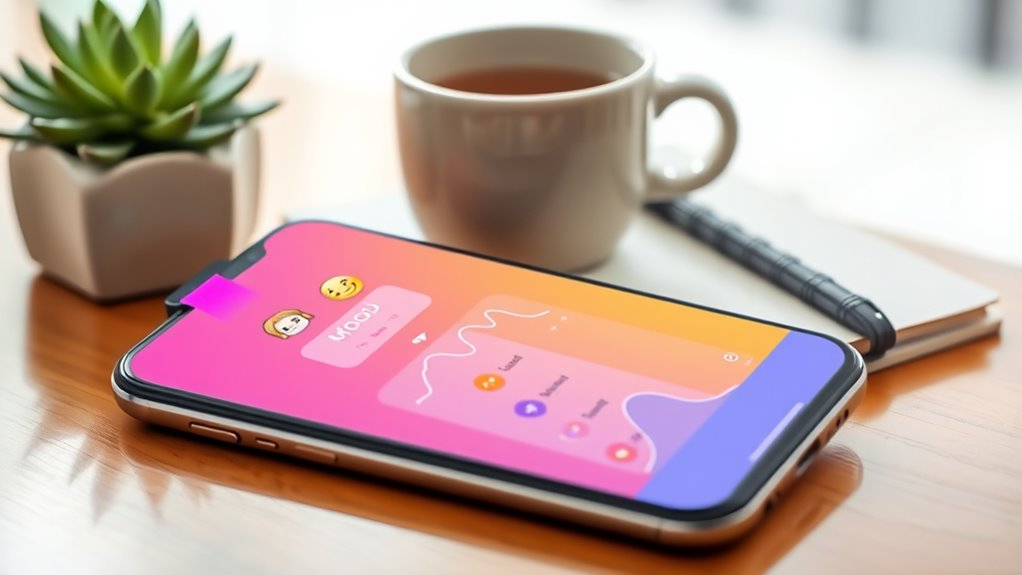

Using mood-tracking apps can substantially boost your wellbeing by helping you become more aware of your emotions, recognize patterns, and understand what triggers certain feelings. Easy-to-use features encourage consistent logging, which supports insight into your mental landscape. With these insights, you can make targeted self-care changes and develop healthier habits. Keep exploring to discover how these tools can become a key part of your mental health journey.

Get wellness gear delivered free — and shop member deals
- Fast, free delivery on millions of items
- Access to Prime Big Deal Days deals on October 6–7
- Prime Video, Amazon Music and more included
Key Takeaways
- Logging emotions increases emotional awareness and helps identify patterns and triggers affecting mental wellbeing.
- Consistent mood tracking provides valuable data for understanding mental health and guiding targeted improvements.
- User-friendly apps with simple features promote regular engagement and more accurate, comprehensive emotional insights.
- Integrating mood logs with wellness tools encourages holistic mental health management and positive habit formation.
- Overall, accessible and easy-to-use mood-tracking apps support better emotional regulation and long-term wellbeing.

Mood-tracking apps have become popular tools for understanding and managing your emotional health. When you start using one, you might notice how it enhances your emotional awareness by encouraging you to pay closer attention to your feelings throughout the day. These apps often prompt you to log your mood at different times, helping you recognize patterns and triggers that influence your emotional state. As a result, you gain a clearer picture of your mental landscape, which can be a vital step toward improving overall wellbeing. The key to this process is app usability—if the app is easy to navigate and quick to use, you’re more likely to stick with it and incorporate mood tracking into your daily routine.
A user-friendly interface makes a significant difference. When you’re able to quickly select your mood, add notes, or log activities without frustration, you become more consistent. Many apps offer simple color-coded mood scales or emojis that allow you to record how you’re feeling in seconds, reducing the effort needed to maintain the habit. The more seamless the logging process, the less likely you are to skip days, which helps you gather more accurate data over time. This usability factor directly impacts your ability to develop emotional awareness because it removes barriers that could discourage ongoing use.
Beyond ease of use, these apps often include features that deepen your understanding of emotional patterns. For example, some allow you to add contextual tags or journal entries, giving you insights into what might be affecting your mood—whether it’s sleep, diet, social interactions, or work stress. As you review your logs, you’ll start to notice trends, making it easier to identify cause-and-effect relationships. This increased emotional awareness encourages you to make small changes aimed at improving your mental health, like adjusting your routines or seeking support when certain patterns emerge. Moreover, engaging with features that support high color accuracy can help you better interpret visual mood indicators, enhancing your overall insight.
In addition, many mood-tracking apps integrate with other wellness tools, such as meditation guides, breathing exercises, or sleep trackers. This integration fosters a holistic approach to mental health, empowering you to take proactive steps based on your logged data. When app usability is optimized, you’re more likely to engage with these supplementary features regularly, further reinforcing positive habits. Overall, mood-tracking apps can be powerful allies in your mental health journey, but their effectiveness hinges on how accessible and intuitive they are to use. When you find an app that’s easy to navigate, you give yourself the best chance to build emotional awareness and, ultimately, improve your wellbeing.
best mood tracking app for emotional awareness
As an affiliate, we earn on qualifying purchases.
As an affiliate, we earn on qualifying purchases.
Frequently Asked Questions
Can Mood-Tracking Apps Diagnose Mental Health Conditions?
Mood-tracking apps can’t diagnose mental health conditions because of their diagnostic limitations. While they can improve mental health accuracy by helping you recognize patterns and triggers, they aren’t designed for clinical diagnosis. You might notice mood shifts, but you should consult a mental health professional for an accurate assessment. These apps are useful tools for self-awareness, yet they don’t replace professional evaluation or treatment.
How Secure Is My Emotional Data in These Apps?
Your emotional data in mood-tracking apps is generally secure if the app uses strong data encryption. However, privacy concerns remain because some apps might share your data with third parties or have weak security measures. To protect yourself, choose apps with transparent privacy policies, check their encryption standards, and limit the amount of sensitive information you log. Staying cautious helps guarantee your emotional data stays private.
Do Mood Logs Help in Long-Term Emotional Regulation?
Logging your moods can be a game-changer for long-term emotional regulation, transforming you into a master of emotional awareness. By consistently tracking your feelings, you identify patterns and triggers that lead to behavioral change. This process helps you manage emotions more effectively over time, making emotional ups and downs less overwhelming. Regular mood logs empower you to build resilience, fostering healthier responses and a more balanced, stable emotional life.
Are Mood-Tracking Apps Suitable for Children or Teenagers?
You might find mood-tracking apps suitable for children and teenagers if they feature child-friendly interfaces that make logging emotions easy and engaging. However, you should also consider teen privacy concerns, ensuring the app respects their confidentiality and allows appropriate data control. Selecting apps designed specifically for younger users helps promote healthy emotional awareness without compromising privacy, making them a useful tool for emotional understanding and regulation.
What Features Should I Look for in an Effective Mood App?
Think of an effective mood app as your emotional compass. Look for features like tracking accuracy, so your feelings are recorded precisely, and a user interface that’s easy to navigate. You want an app that feels intuitive, making logging quick and effortless, like flipping through a well-organized diary. Prioritize customizable entries and insightful analytics to understand patterns. These features help you stay connected to your emotions and boost your wellbeing.
color-coded mood journal for mental health
As an affiliate, we earn on qualifying purchases.
As an affiliate, we earn on qualifying purchases.
Conclusion
Research shows that about 70% of users report feeling more aware of their emotions after using mood-tracking apps. By consistently logging your feelings, you can identify patterns and triggers that improve your wellbeing. So, if you’re looking for a simple way to boost your emotional health, giving these apps a try might just make a difference. Remember, small daily insights can lead to big positive changes over time. Why not start today?
integrated wellness app with sleep tracker
As an affiliate, we earn on qualifying purchases.
As an affiliate, we earn on qualifying purchases.
As an affiliate, we earn on qualifying purchases.
Fall Picks
fall essentials
As an affiliate, we earn on qualifying purchases.