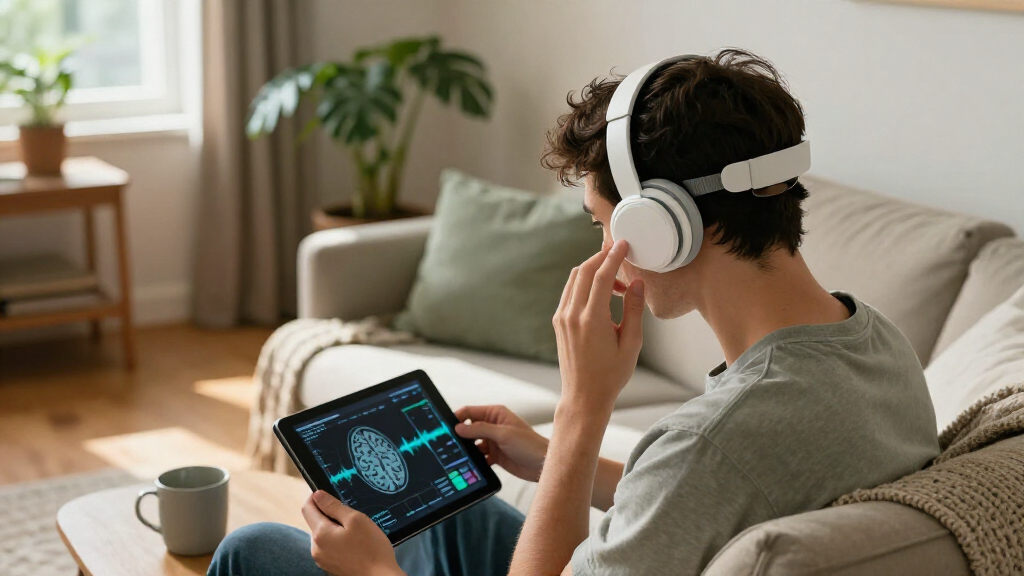

For meditation feedback, the Muse 2 is my strongest all-around pick: it pairs EEG sensing with a focused app experience and session feedback. If you want more body metrics alongside brainwave tracking, Flowtime adds heart rate and HRV in a light 29-gram design. For sleep tracking and broader recovery features, the Muse S Athena has the widest stated sensor set, while the SereniBrain stands out for its free companion app and included hydrogel sensor pads.

Get wellness gear delivered free with Prime
- Fast, free delivery on millions of items
- Prime Video, Amazon Music and more included
- Member-only deals all year
These headsets are consumer wellness tools, not clinical EEG systems, and they differ most in what they track, how much their apps offer without a subscription, and whether their focus is meditation or sleep. I ranked them by how clearly their stated features serve a specific buyer, the usefulness of their accompanying app, and how transparent the tradeoffs are. The right choice depends less on a headline sensor count than on the sessions you plan to do and how much app support you want.
Complete the kit


Key Takeaways
- Muse 2 is my best overall choice for meditation-focused buyers who want EEG feedback and session tracking in an established app ecosystem.
- Flowtime combines brainwave tracking with heart rate and HRV, making it the clearest pick for buyers who want broader meditation-session data.
- Muse S Athena is the sleep-oriented option, with EEG and fNIRS sensing and support for sleep, focus, and recovery.
- SereniBrain includes a companion app without a subscription fee and hydrogel pads, but its battery life and signal performance are not specified in the supplied details.
- None of these headsets should be treated as a clinical diagnostic device; fit, sensor contact, phone compatibility, and app requirements all shape the experience.
| Muse 2 Brain Sensing Headband |  | Best Overall for Meditation Feedback | Brand: Muse | Model: MS-03-OP-ML | Connectivity: Wireless Bluetooth | VIEW LATEST PRICE | See Our Full Breakdown |
| EEG Neurofeedback Headband for Meditation & Brainwave Monitoring |  | Best Value for Subscription-Free App Access | Brand: SereniBrain | Model: TH21A | Sensor type: EEG with hydrogel signal-collecting pads | VIEW LATEST PRICE | See Our Full Breakdown |
| Flowtime Biosensing Meditation Headband |  | Best for Broader Meditation Session Metrics | Brand: Entertech | Model: ET-BIO-001 | Weight: 29 g | VIEW LATEST PRICE | See Our Full Breakdown |
| Muse S Athena 3rd Gen Brain Sensing Sleep Tracking Headband |  | Best for Sleep and Recovery-Oriented Tracking | Generation: 3rd Gen | Sensors: EEG and fNIRS | Connectivity: Bluetooth | VIEW LATEST PRICE | See Our Full Breakdown |
| consumer EEG headset | Connectivity | Brand | Model | App |
|---|---|---|---|---|
| Muse 2 Brain Sensing Headband | Wireless Bluetooth | Muse | MS-03-OP-ML | Muse app |
| EEG Neurofeedback Headband for | Bluetooth | SereniBrain | TH21A | Companion app with no subscription fee stated |
| Flowtime Biosensing Meditation | Bluetooth | Entertech | ET-BIO-001 | — |
| Muse S Athena 3rd Gen Brain Se | Bluetooth | — | — | Muse app |
More Details on Our Top Picks
Muse 2 Brain Sensing Headband
The Muse 2 is the clearest match for someone who wants an EEG headset mainly to support meditation. It pairs wirelessly with the Muse app and gives session feedback, including a calm score, so brain sensing becomes part of a repeatable practice rather than just a stream of readings. Its role is narrower than Flowtime’s: the supplied information emphasizes meditation neurofeedback rather than a wider dashboard of heart rate and HRV data.
That focus helps make the choice easier. Compared with the SereniBrain, Muse 2 offers a more specifically described meditation feedback loop, while SereniBrain’s appeal is a free app and hydrogel pads. Compared with Muse S Athena, Muse 2 is the more straightforward meditation pick; Athena is positioned across sleep, focus, and recovery as well. Buyers who want just a headband and guided or tracked sessions may prefer Muse 2’s simpler purpose over Athena’s broader feature set.
The main caveat is the app’s feature boundary. The AI Coach and expanded meditation library are optional subscription features, so buyers should check what is available without paying before choosing it. The supplied specifications list iOS compatibility, which is a meaningful constraint for Android owners. Headphones are not included, and the device has no display, so use depends on pairing it with a phone and arranging audio separately. I would choose it for app-led meditation, not for clinical monitoring or as a cross-platform sleep wearable.
Pros:- EEG-based feedback and a calm score connect session activity to meditation practice.
- Bluetooth pairing supports session tracking in the Muse app.
- Optional AI Coach and additional guided content provide a route to more app support.
- Its meditation-centered purpose is easier to match to a routine than a general-purpose brain tracker.
Cons:- Some additional app features require an optional subscription.
- Supplied compatibility details list iOS, not Android.
- Headphones are not included, and there is no built-in display.
Best for: Meditators who use an iPhone and want EEG-based session feedback with an optional path to more guided content.
Not ideal for: Android users, buyers avoiding subscriptions entirely, or anyone seeking a clinical EEG device or a headset primarily for sleep tracking.
- Brand:Muse
- Model:MS-03-OP-ML
- Connectivity:Wireless Bluetooth
- Stated compatibility:iOS
- Primary use:Meditation tracking and EEG neurofeedback
- App:Muse app
- Display:No display
- Optional app features:AI Coach and additional guided meditation content
Our verdict“I recommend Muse 2 for iOS users who want a focused EEG meditation companion and can accept optional paid app features.”
EEG Neurofeedback Headband for Meditation & Brainwave Monitoring
SereniBrain is the straightforward choice for buyers who want a companion app without an ongoing subscription. Its supplied description covers guided meditation, neurofeedback exercises, and progress tracking for focus, relaxation, and sleep preparation. That makes it more flexible in stated practice areas than the meditation-first Muse 2, although the descriptions do not establish that its measurements are more accurate or that its exercises match a specialist sleep product.
The included hydrogel signal-collecting pads are a distinctive practical detail: the package lists six pads, a carrying case, charging cable, and manual. That gives a buyer more of the setup in the box than the Muse 2 description, which does not include headphones. The free app also contrasts with Muse’s optional subscription features. However, “free” access does not by itself tell buyers how polished or extensive the exercises are, so I would treat it as an advantage in ongoing app cost, not as proof of a richer coaching experience.
There are information gaps that keep SereniBrain below Flowtime. Battery life is not provided, and the product details do not give a comparable usage duration or independent signal-accuracy data. It needs a compatible iOS or Android phone or tablet, and the manufacturer notes that its signal may not match clinical-grade EEG. The one-year warranty is useful to have specified, but buyers should still confirm fit, sensor-pad care, and current device compatibility. I’d choose it when subscription-free app access matters more than published battery detail or a broader set of body metrics.
Pros:- The companion app is described as free, unlike optional premium features on the Muse models.
- Hydrogel sensors and six signal-collecting pads are included.
- The app covers guided meditation, neurofeedback, and progress tracking.
- Compatible-device details include iOS 14+ and Android 10+ phones or tablets.
Cons:- Battery life is not specified in the supplied product details.
- It requires a compatible phone or tablet to operate.
- The manufacturer cautions that signal accuracy may not match clinical-grade EEG.
Best for: Buyers who want app-based meditation and neurofeedback without a stated subscription fee, and who use a supported iOS or Android device.
Not ideal for: People who need clearly published battery runtime, clinical-grade readings, or richer documented body metrics such as heart rate and HRV.
- Brand:SereniBrain
- Model:TH21A
- Sensor type:EEG with hydrogel signal-collecting pads
- Compatible devices:iOS 14+ and Android 10+ phones or tablets
- Connectivity:Bluetooth
- App:Companion app with no subscription fee stated
- Included components:Headband, carrying case, USB charging cable, manual, six signal-collecting pads
- Warranty:One year
Our verdict“I’d pick SereniBrain when free app access and included sensor accessories matter more than documented runtime or advanced body metrics.”
Flowtime Biosensing Meditation Headband
Flowtime is the strongest pick here for buyers who want more than brainwave feedback during meditation. Its stated tracking includes heart rate, HRV, relaxation, attention, and pressure, alongside brainwaves. That wider set can help someone review how a session feels across multiple signals, whereas Muse 2 keeps the stated value proposition more tightly centered on EEG meditation feedback.
At 29 grams, Flowtime is also the most clearly quantified lightweight option in this lineup. It works with iOS and Android smartphones, and the app offers guided lessons plus an unguided mode, leaving room for both structured sessions and independent practice. Its stated battery life—about eight hours of use and up to 50 days on standby—gives buyers a clearer expectation than SereniBrain, whose battery runtime is not supplied. That makes Flowtime easier to plan around, even though the stated active-use time is not especially long for frequent daily sessions.
The tradeoff is that this is still an app-dependent meditation device, not a standalone monitor. It has no display, needs a compatible phone, and is not water resistant, so it should be kept away from sweat-heavy workouts and moisture. Its additional metrics make it more data-rich than Muse 2, but extra readings are only useful if the buyer wants to review them; they do not establish clinical accuracy. Compared with Muse S Athena, Flowtime’s described strength is multi-signal meditation tracking, not sleep and recovery support. Choose it for session data, not for overnight wear or wet conditions.
Pros:- Tracks brainwaves alongside heart rate and HRV.
- At 29 grams, it has a stated lightweight build.
- The app includes guided lessons and an unguided mode.
- Battery information is specified as about eight hours of use and up to 50 days on standby.
Cons:- It is not water resistant.
- A compatible smartphone and app are required.
- About eight hours of active use may require frequent charging for regular sessions.
Best for: Meditators who want brainwave readings alongside heart rate and HRV, and who value a lightweight headset with iOS and Android support.
Not ideal for: Buyers seeking sleep-first features, water resistance, standalone operation, or long active-use time between charges.
- Brand:Entertech
- Model:ET-BIO-001
- Weight:29 g
- Sensors and measures:Brainwaves, heart rate, HRV, relaxation, attention, and pressure
- Connectivity:Bluetooth
- Compatibility:iOS and Android smartphones
- Battery:About eight hours of use; up to 50 days standby
- Water resistance:Not water resistant
- Warranty:One year
Our verdict“Flowtime is my pick for meditation buyers who want multiple session metrics and clearer runtime information than SereniBrain provides.”
Muse S Athena 3rd Gen Brain Sensing Sleep Tracking Headband
The Muse S Athena is the most sleep-oriented headset in this group. It combines EEG and fNIRS sensors and is described for sleep, focus, and recovery through the Muse app. That makes it a better fit than Muse 2 for a buyer who wants one headband to support sleep assistance as well as meditation and brain training. The difference is purpose: Muse 2 is the more focused meditation recommendation, while Athena aims to cover a broader daily wellness routine.
Its soft, adjustable headband is a practical feature for a product positioned around sleep use, where fit matters over longer sessions. The app also includes deep sleep support and sleep assistance. Still, the supplied description does not give battery life, weight, water resistance, or detailed compatibility information, so shoppers should verify those points before buying. The addition of fNIRS does not establish superior accuracy for every use; the product information does not provide independent comparative test results.
Athena’s cost of ownership also depends on which app features a buyer wants. The AI Coach, deeper brain insights, and library of more than 500 meditations are listed as optional Premium features. That resembles the Muse 2’s subscription caveat, but Athena’s broader sleep-and-recovery framing gives it a different reason to choose the Muse platform. It is less compelling than Flowtime for buyers focused on heart rate and HRV, since those metrics are not listed in the supplied Athena details. Pick Athena for its sleep and recovery emphasis, not simply because it has more sensor types.
Pros:- Combines EEG and fNIRS sensors for the product’s stated sleep, focus, and recovery use.
- The app includes sleep assistance, meditation, and brain training.
- Soft, adjustable headband design supports a more adaptable fit.
- Optional AI Coach and an expanded meditation library add further app content.
Cons:- AI Coach, deeper insights, and additional meditations require an optional Premium subscription.
- The supplied specifications do not state battery life or phone compatibility.
- Sensor contact with the skin is required, which may affect comfort and fit.
Best for: People who want a Muse app headset centered on sleep support, with additional focus and recovery features and an adjustable fit.
Not ideal for: Buyers who want subscription-free access to all described features, clear battery and compatibility specifications, or a meditation tracker explicitly listing heart rate and HRV.
- Generation:3rd Gen
- Sensors:EEG and fNIRS
- Connectivity:Bluetooth
- Fit:Soft, adjustable headband
- App:Muse app
- Stated uses:Sleep, focus, recovery, meditation, and brain training
- Optional subscription features:AI Coach, deeper brain insights, and 500+ meditations
- Color:Light grey
Our verdict“I recommend Muse S Athena to buyers who prioritize sleep and recovery support and are comfortable checking subscription and fit details before purchase.”
How We Picked
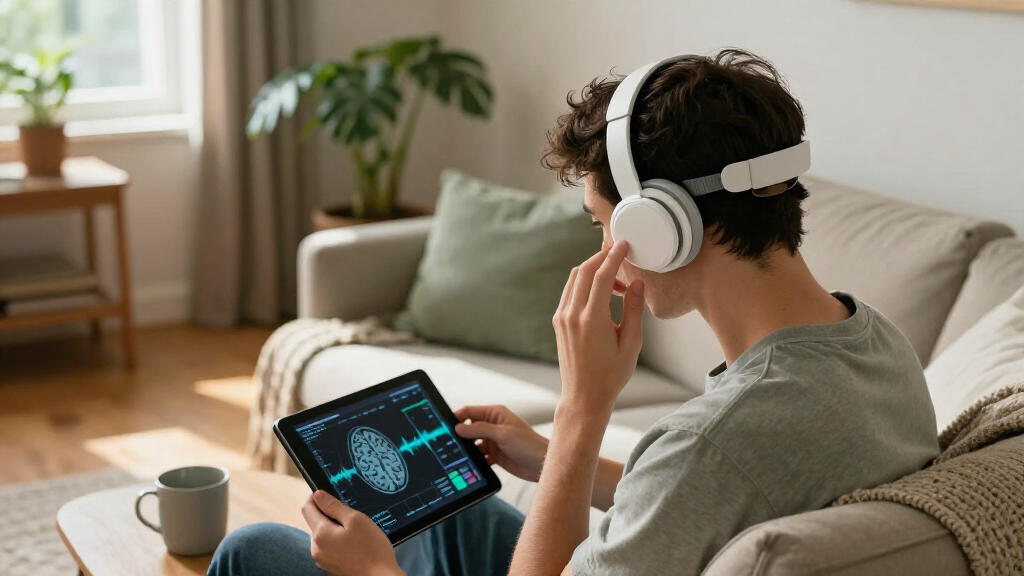
I compared these four headsets as consumer EEG tools, not as substitutes for clinical monitoring. My ranking favors products whose stated sensors and app features map clearly to a buyer’s goal, whether that is meditation feedback, broader session tracking, or sleep support. I also looked at everyday usability: phone compatibility, wearable design, supplied accessories, battery information, and whether core app access depends on a paid subscription.
The Muse 2 ranks first because its EEG meditation focus and session feedback make its purpose especially clear. Flowtime comes next for buyers who value multiple body metrics and a lightweight build, though it is not water resistant and has a stated use time of about eight hours. SereniBrain earns a place for its free app and included sensor pads, but important operating details such as battery life are absent. The Muse S Athena offers the broadest stated sleep and recovery scope, yet some app features are optional paid additions, and its newer sensor mix does not make it a clinical device.
I have not treated product descriptions or research associations as proof of diagnostic accuracy. The supplied details do not provide comparable independent accuracy tests, so I do not rank one model as medically more precise than another. My recommendations focus on fit for purpose, app terms, sensor coverage, and stated limitations. Individual comfort and signal quality can vary with fit and skin contact, so buyers should check current compatibility and return terms before choosing.
| consumer EEG headset | Brand | Model | Connectivity | App |
|---|---|---|---|---|
| Muse 2 Brain Sensing Headband | Muse | MS-03-OP-ML | Wireless Bluetooth | Muse app |
| EEG Neurofeedback Headband for | SereniBrain | TH21A | Bluetooth | Companion app with no subscription fee stated |
| Flowtime Biosensing Meditation | Entertech | ET-BIO-001 | Bluetooth | — |
| Muse S Athena 3rd Gen Brain Se | — | — | Bluetooth | Muse app |
Factors to Consider When Choosing Best Consumer EEG Headsets
I would start with the activity you want the headset to support, then compare app access and day-to-day fit. Consumer EEG products can make meditation or sleep routines more engaging, but their feature lists are not a substitute for a clinical assessment.
Choose the main job before comparing sensors
For meditation feedback, Muse 2 has the clearest single-purpose pitch: EEG sensing, app-based sessions, and a calm score. SereniBrain also supports meditation and neurofeedback, while Flowtime adds heart rate and HRV for buyers who want a wider session record. If sleep is the priority, Muse S Athena is the only option in this set explicitly framed around sleep assistance and recovery.
More sensors do not automatically mean a better fit. A person who only wants a meditation routine may get more value from a clear session workflow than from extra measures they rarely inspect. Someone who enjoys reviewing data may prefer Flowtime’s broader listed metrics. I’d match the product’s stated use to a routine I expect to keep, rather than choosing by sensor count alone.
Check what the app includes without a subscription
App access changes the ownership experience as much as the headband itself. SereniBrain is described with a free companion app, while Muse 2 and Muse S Athena have optional subscription features, including AI coaching or expanded content. Buyers should check current app terms and which exercises remain available without a paid plan; product descriptions can change, and optional features may not be required for basic use.
Flowtime lists guided lessons and an unguided mode, but the supplied product information does not spell out the same subscription details. I would review the current app listing before purchase and confirm that the phone operating system and app version are supported. A headset that pairs with your phone but offers little of the content you intend to use may not be the right choice.
Treat comfort and sensor contact as part of the signal
These are wearable sensors, so fit and skin contact affect whether a headset can be used comfortably and consistently. Muse S Athena specifically notes that its sensors need skin contact, and SereniBrain includes hydrogel pads intended for signal collection. If a headset feels difficult to position, its readings and feedback may become less useful in a real routine.
Look for adjustable sizing, supplied pads, and clear setup instructions. The listed specs do not provide comparable head circumference ranges or independent comfort testing, so I would not assume every model fits every person equally well. Check current return and warranty terms, especially if you are sensitive to pressure or plan to use a headband for long sessions.
Compare battery and phone requirements
Each product depends on a companion device, but compatibility is not equally clear. Muse 2 lists iOS; SereniBrain specifies iOS 14+ and Android 10+; Flowtime supports iOS and Android smartphones; and the supplied Athena details do not state phone compatibility. Confirm the current app requirements before purchase, especially if you use an older phone or tablet.
Flowtime is the only product here with a stated active-use estimate: about eight hours per charge, with up to 50 days on standby. SereniBrain’s battery runtime is not provided, and the listed Muse details do not give a runtime either. If you plan to use a headset nightly or travel with it, do not infer endurance from Bluetooth connectivity or the presence of a rechargeable battery. Look for current manufacturer information and charging details.
Know what consumer EEG can and cannot tell you
These headsets are intended for consumer wellness activities such as meditation, relaxation, focus practice, or sleep support. SereniBrain explicitly cautions that signal accuracy may not match clinical-grade equipment, and the supplied information does not provide independent head-to-head validation for any model. I would not use these devices to diagnose a condition, replace professional care, or make medical decisions.
Consider their feedback as a guide for personal routines, not a definitive reading of mental health or sleep quality. If you have a medical concern, ask a qualified professional about appropriate assessment tools. For everyday practice, the most useful headset is often the one that fits comfortably, pairs reliably, and gives you feedback you can understand and act on.
Frequently Asked Questions
Can a consumer EEG headset diagnose a medical condition?
No. These products are described for consumer uses such as meditation, sleep assistance, focus, and relaxation, and they should not be treated as clinical diagnostic equipment. The supplied information does not establish medical accuracy or replace a professional evaluation. If symptoms or health concerns are affecting you, speak with a qualified healthcare professional rather than relying on a consumer headset’s readings.
Which headset is best for meditation?
I’d start with the Muse 2 if you want a focused meditation experience with EEG feedback and a session calm score. Flowtime is a better match if you also want heart rate and HRV in the session record, while SereniBrain offers guided meditation and neurofeedback through an app described as free. The best fit depends on whether you prefer a focused feedback loop, broader metrics, or avoiding an optional subscription.
Which option is most focused on sleep?
Muse S Athena is the clearest sleep-oriented pick in this comparison because its stated uses include sleep tracking, deep sleep support, and sleep assistance, along with focus and recovery. The provided details do not include battery runtime or phone compatibility, so I would verify those before relying on it for regular overnight use. Flowtime and SereniBrain mention sleep-related practice, but their descriptions are more centered on meditation and brainwave training.
Do any of these headsets work without a smartphone?
The supplied descriptions present these products as app-connected devices, and each depends on a companion app or compatible phone for its main features. Muse 2 pairs with the Muse app, Flowtime requires a compatible smartphone, and SereniBrain specifies compatible phones or tablets. Athena also uses the Muse app, though its supplied specs do not state exact phone compatibility. Check current requirements for your device before ordering.
Should I choose more sensors or a simpler EEG headset?
Choose based on which information you expect to use. Flowtime lists brainwaves plus heart rate and HRV, which suits people who want broader meditation-session data. Muse 2 keeps the emphasis on EEG feedback for meditation, while Athena pairs EEG and fNIRS with a sleep and recovery focus. More sensor types do not prove greater accuracy or usefulness for every person, so I would prioritize a comfortable fit and relevant app features over a longer sensor list.
Conclusion
For an iOS user focused on meditation, I’d choose Muse 2 for its clear EEG feedback loop and session tracking, while checking which app features require a subscription. If avoiding an app fee matters most, SereniBrain is the more direct choice, provided its unspecified battery life is acceptable. Buyers who want brainwave readings alongside heart rate and HRV should look at Flowtime, especially if a lightweight design and stated runtime are useful.
For sleep and recovery support, Muse S Athena is the best match in this lineup, but I would confirm phone compatibility, fit, and the Premium feature boundary first. None of these devices is a clinical EEG system, and none should be chosen on an assumption of medical accuracy. The best consumer headset is the one whose app, wearing style, and feedback suit the routine you will actually use.