Using DIY beauty gadgets can save you money upfront and give you control over your skincare routine, but they might not match salon results and require regular use. Salon automation treatments usually cost more initially but offer professional, consistent results quickly. Whether gadgets save or cost more depends on how often you use them and your goals. Want to see which option is best for your budget and needs? There’s more to explore below.
Key Takeaways
- DIY skincare gadgets generally have lower upfront costs than salon treatments but may be less effective.
- Salon automation involves high initial investments that lead to higher treatment prices for consumers.
- Regular use of DIY devices can save money over time compared to repeated salon visits.
- Professional treatments offer more consistent, high-quality results but at a higher cost.
- Cost savings depend on individual needs, commitment, and the desired level of treatment effectiveness.
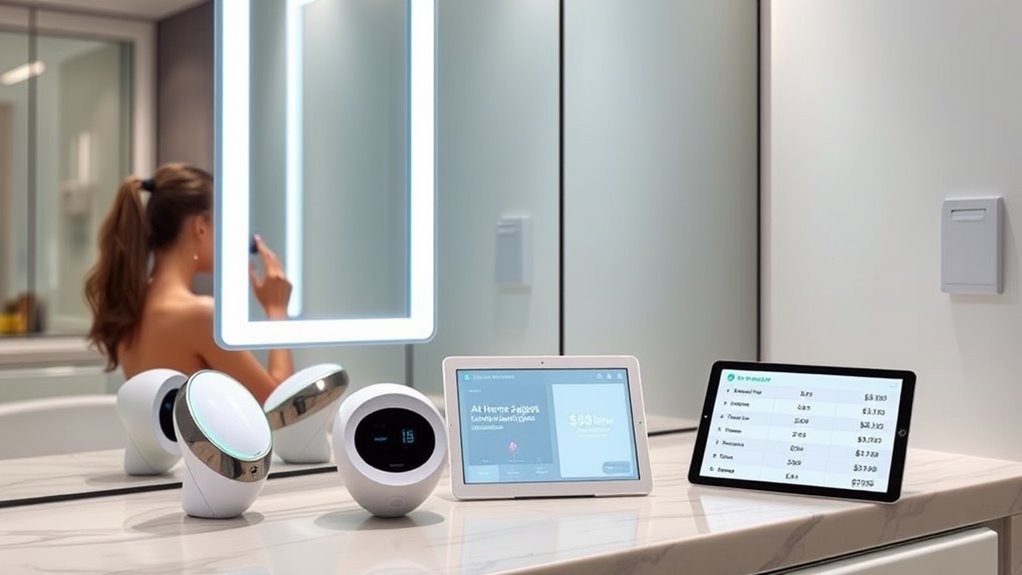
Have you ever wondered how much beauty technology really costs? It’s a question that comes up more often as new gadgets and innovations flood the market. On one hand, DIY skincare devices promise to save you money and time by letting you perform treatments in the comfort of your home. These gadgets range from LED light masks to microcurrent devices, and their upfront costs can vary widely. While some may seem pricey initially, they often pay for themselves over time if you’re committed to regular use. Instead of paying for repeated salon visits, you invest in a device once and use it whenever you want. But it’s essential to consider whether these devices actually deliver salon-quality results or if they fall short, making the initial investment less worthwhile.
On the other hand, salon automation is transforming the way beauty treatments are delivered, with some clinics utilizing robotic systems and automated machines to enhance efficiency. These advanced systems can handle tasks like skin analysis, laser treatments, and even hair removal, often with minimal human oversight. While the technology can boost a salon’s productivity, it also comes with high setup costs—buying, maintaining, and updating equipment isn’t cheap. For you, as a consumer, this can translate into higher prices for treatments that are now more precise and consistent thanks to automation. However, the key question remains: do these high-tech treatments actually save you money in the long run? The answer depends on how often you seek these services and whether the results justify their costs.
When you compare DIY skincare to salon automation, it’s clear that each approach has its financial advantages and drawbacks. DIY kits are generally more affordable upfront and give you control over your routine, but they require dedication and may not always match the effectiveness of professional treatments. Conversely, salon automation offers faster, often more effective results, but the increased costs are passed on to you through higher treatment fees. If you’re someone who prefers to handle things yourself and enjoys experimenting, investing in DIY skincare gadgets might make more sense financially. But if you value convenience and guaranteed results, paying for high-tech salon treatments could be a better long-term investment—though it’s usually more expensive.
Ultimately, the cost of beauty tech depends on your priorities and how much you’re willing to spend for convenience, results, and self-care. Both DIY skincare and salon automation aim to make beauty routines more efficient, but they come with different price tags and value propositions. Weighing these options carefully will help you decide whether gadgets truly save money or if traditional treatments are worth the extra expense for the results you desire. Additionally, understanding the contrast ratio of devices and treatments can help you evaluate their effectiveness and image quality over time.

INIA GLOW 4D Wireless Red Light Therapy Mask for Face, Dual NIR, 320 LEDs
- Full Face Coverage: 320 LEDs with flexible silicone design
- Dual NIR Technology: Improves elasticity and reduces wrinkles
- Multiple Light Modes: Red, Blue, Amber, and Combo modes
As an affiliate, we earn on qualifying purchases.
As an affiliate, we earn on qualifying purchases.
Frequently Asked Questions
How Long Do Beauty Gadgets Typically Last Before Needing Replacement?
Beauty gadgets typically last between 2 to 5 years before needing replacement, depending on device durability and usage. You should monitor their performance regularly; if you notice reduced effectiveness or signs of wear, it’s time for a replacement. To maximize your investment, follow the manufacturer’s care instructions, avoid overusing, and choose high-quality devices. This way, you can extend the replacement frequency and get the most out of your gadgets.
Are There Any Safety Concerns With Using Beauty Tech Devices at Home?
Yes, there are safety concerns when using beauty tech devices at home. You might experience skin sensitivity or irritation if you don’t follow the instructions properly. Also, watch out for device malfunctions, which could cause burns or damage. Always read safety warnings, start with lower settings, and avoid using the device on broken or irritated skin to minimize risks. Regularly check your device for any malfunctions before use.
Can Gadgets Effectively Replace Professional Salon Treatments Long-Term?
You might think gadgets can replace professional treatments, but they’re more like DIY remedies—good for maintenance but not a complete substitute. I once tried a home laser device, but my dermatologist’s laser was more effective long-term. While brands foster loyalty, professional treatments offer tailored results and expertise that gadgets can’t match. So, for lasting beauty, mixing both is your best bet—gadgets for upkeep, salons for the big results.
What Is the Average Maintenance Cost for Popular Beauty Gadgets?
The average maintenance cost for popular beauty gadgets ranges from $20 to $50 annually, depending on the device’s durability and parts replacement needs. When you compare the cost, gadgets often save money over salon treatments in the long run. Look for durable gadgets with high-quality build, as they reduce frequent repairs or replacements, making your investment more cost-effective and ensuring consistent performance over time.
Do Insurance Plans Cover the Purchase or Repair of Beauty Tech Devices?
Insurance coverage generally doesn’t include the purchase or repair of beauty tech devices, as they’re considered non-essential personal items. However, some devices come with manufacturer warranties that cover repairs or replacements if they malfunction. To protect your investment, check if your device has a warranty and consider an insurance plan that specifically covers electronics or gadgets, ensuring you’re covered against accidental damage or defects.

Microcurrent Facial Device,Latest Red Light Technology,Enhances The Ability to Lift The Face and Tighten The Skin,Facial Wrinkle Equipment,Smart Photon Micro-Current Device, Model:EP-300.
- Microcurrent and Red Light Therapy: Stimulates facial muscles and treats wrinkles
- V-Shaped Face Contouring: Lifts muscles and shapes chin and cheeks
- Enhances Skin Absorption: Improves absorption of skincare products
As an affiliate, we earn on qualifying purchases.
As an affiliate, we earn on qualifying purchases.
Conclusion
As you weigh the glow of at-home gadgets against the pampering allure of salon treatments, imagine your bathroom countertop cluttered with devices or your favorite salon chair waiting patiently. Each option promises beauty but demands your time and money. Whether you prefer the sleek hum of tech or the warm, fragrant air of a salon, remember, the true cost isn’t just dollars—it’s how you feel in your skin every day. Choose what makes you feel radiant inside and out.

INNZA IPL Hair Removal with Ice Cooling Care Function for Women,Long-Lasting Results,999,999 Flashes Painless Hair Removal, Hair Removal Device for Armpits Legs Arms Bikini Line
- Effective IPL Hair Removal: Reduces hair growth with deep light penetration
- At-Home Use: 999,999 flashes for years of treatment
- Long-Lasting Results: Up to 95% hair reduction in 3 weeks
As an affiliate, we earn on qualifying purchases.
As an affiliate, we earn on qualifying purchases.
professional salon automation skincare treatments
As an affiliate, we earn on qualifying purchases.
As an affiliate, we earn on qualifying purchases.