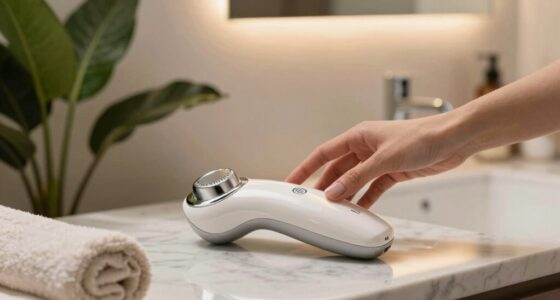
At-home gadgets can’t fully replace professional spa facials, as they lack the advanced technology and stronger formulations used by pros. Spa treatments deliver faster, more noticeable results for issues like deep scars or pigmentation, thanks to specialized equipment like professional LED systems and chemical peels. While at-home devices can help maintain your skin between visits, exploring the differences might help you decide which approach suits your needs best. Keep going to discover how both options can complement each other effectively.
Key Takeaways
- Professional spa facials use advanced technology and stronger formulations for deeper, faster results.
- At-home gadgets are limited in power and scope, mainly supporting skin maintenance rather than comprehensive treatment.
- DIY treatments carry risks like irritation or burns without professional oversight and safety measures.
- Spa treatments target complex skin issues such as deep scars and pigmentation more effectively than at-home devices.
- Combining professional treatments with at-home care optimizes skin health but gadgets cannot fully replace expert procedures.
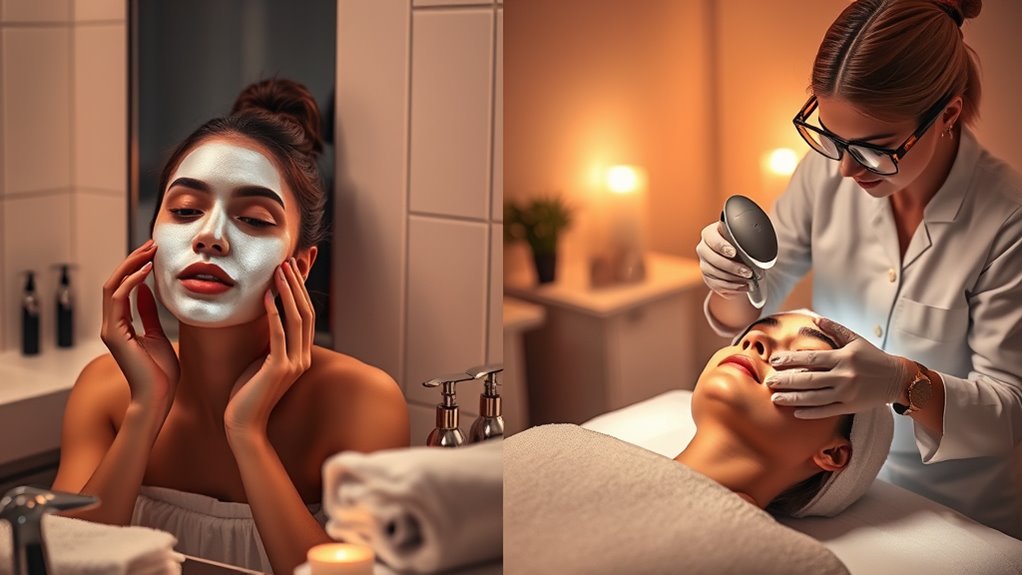
Have you ever wondered whether a facial at home can match the benefits of a professional spa treatment? It’s a common question, especially with so many gadgets and products promising salon-quality results. While DIY facials can be convenient and cost-effective, they often lack the advanced technology used by professionals. For example, LED therapy and chemical peels are two treatments that typically require specialized equipment and expertise to perform safely and effectively.
LED therapy is gaining popularity for at-home use, thanks to devices designed for consumers. These small, handheld gadgets emit specific wavelengths of light to target skin concerns like acne, inflammation, and signs of aging. While they can deliver noticeable improvements, they usually don’t have the power or coverage of professional LED systems found in spas. In a professional setting, the LED device covers larger areas and delivers consistent, high-intensity light, which can accelerate healing and collagen production more effectively. So, if you’re considering LED therapy at home, know that it can be beneficial, but it’s unlikely to match the depth of results from a spa treatment.
At-home LED devices can improve skin but lack the power of professional spa systems.
Chemical peels are another example where professional expertise makes a significant difference. These peels involve applying acids to exfoliate damaged skin and reveal a fresher layer underneath. Dermatologists and estheticians use specific strengths and formulations that are tailored to your skin type and concerns. Attempting a chemical peel at home, even with over-the-counter products, carries risks such as burns, irritation, or uneven peeling. Professional chemical peels often use stronger solutions and are performed in controlled environments, which maximizes safety and effectiveness. They can target deeper layers of skin for more dramatic results, such as reducing scars, pigmentation, and fine lines.
While at-home devices and products are improving and can help maintain skin between professional treatments, they generally don’t replace the exhaustive benefits of a qualified skincare specialist’s work. Professional treatments combine advanced technology, personalized assessment, and precise application, making them more effective in addressing complex skin issues. So, if you’re after real, noticeable results—especially for concerns like aging, deep scars, or stubborn pigmentation—visiting a spa or dermatologist remains your best bet. That said, incorporating some at-home treatments, like LED therapy devices or gentle chemical exfoliants, can complement professional care and help you maintain healthier skin in between sessions.

Red Light Therapy for Body Face, Infrared Light Therapy Panel Lamp with Stand, 660nm and 850nm Near Infrared LED Red Lights Therapy Device at Home, Gift for Mom Wife Girlfriend Sister Women
- Adjustable Stand for Versatile Use: Allows therapy in all directions and heights
- Reflecting Cups for Focused Light: Enhances therapy effectiveness with focused red light
- 150 LEDs with Dual Wavelengths: Includes 660nm red and 850nm infrared lights
As an affiliate, we earn on qualifying purchases.
As an affiliate, we earn on qualifying purchases.
Frequently Asked Questions
Are At-Home Facial Gadgets as Effective as Professional Treatments?
At-home facial gadgets can be effective for DIY skincare, but they often aren’t as powerful or reliable as professional treatments. You might see some improvements, but gadget reliability varies, and they can’t fully replace the expertise of a skincare pro. Regular use helps, but for deep cleansing or advanced issues, consulting a professional guarantees better results. Stick with gadgets for maintenance, but consider spa visits for serious skin concerns.
How Safe Are DIY Facial Devices for Sensitive Skin?
Did you know that 60% of people with sensitive skin experience adverse reactions to DIY facial devices? DIY safety is essential, especially for sensitive skin, because improper use can cause irritation or damage. You should always read instructions carefully, use gentle settings, and test on a small patch first. If you’re cautious, at-home gadgets can be safe, but consulting a dermatologist before trying new devices is the best way to protect your skin.
Can Gadgets Target Deep Skin Issues Better Than Spa Treatments?
Gadgets can target deep skin issues better than spa treatments if they’re properly calibrated and designed for skin penetration. You control the device’s intensity and settings, allowing for precise treatment of specific concerns. However, your skin’s unique needs and sensitivity require careful use. While gadgets can be effective, consulting a professional guarantees correct calibration and safe, effective results, especially for deep or complex skin problems.
What Are the Long-Term Benefits of Professional Facials Versus At-Home Use?
Studies show professional facials can improve skin clarity by up to 30% over time. You’ll benefit from enhanced skincare routines and ingredient potency, as pros tailor treatments to your skin’s needs. Long-term, spa facials help maintain healthier, more radiant skin, while at-home use offers convenience. Regular professional treatments boost collagen production and clear pores more effectively, making them a smart investment in your skin’s future health.
Do Gadgets Require Professional Training to Operate Correctly?
Gadgets usually don’t require professional training to operate correctly, but proper device calibration is vital for safe and effective use. If you don’t follow the manufacturer’s instructions, you risk ineffective results or skin irritation. While some advanced devices might benefit from professional guidance, most consumer gadgets are designed for easy, at-home use. Just make certain you read the manual carefully and use the device as directed for the best outcomes.

SHANI DARDEN SKIN CARE Triple Acid Peel, 2-Step Exfoliating Face Peel Treatment (2 Peels) with Mandelic, Lactic/Glycolic Acids, and Kaolin Clay Neutralizing Mask (0.5 fl oz) & Brush
- Travel Size Kit: Mini 2-step resurfacing peel
- Effective Exfoliation: Lactic, Mandelic, Glycolic acids
- Deep Cleansing: Kaolin and Bentonite clay
As an affiliate, we earn on qualifying purchases.
As an affiliate, we earn on qualifying purchases.
Conclusion
Ultimately, whether you choose an at-home facial or a spa treatment depends on your goals and preferences. While gadgets promise convenience and savings, they can’t fully replicate the expertise and luxury of a professional. Think of at-home devices as a helpful assistant, not a replacement—like a shadow to the sun. Remember, sometimes the brightest glow comes from trusting the pros—they’re the true artists behind radiant skin.

HUGJOG Blackhead Remover Tools, Face Scrubber Skin Spatula for Facial Cleansing, 4 Modes Pore Cleaner with 304 Stainless Steel Blade, Type-C Rechargeable, Silicone Face Brush, 4 Needles, PP Box
- All-in-One Blackhead Extractor Kit: Includes spatula, brush, tools, storage box
- Four Skincare Modes: Clean, Lift, Care, Boost functions
- Supports Facial Cleansing and Massage: Gentle lifting and product application
As an affiliate, we earn on qualifying purchases.
As an affiliate, we earn on qualifying purchases.

SKINACT Madison Electric Spa Facial Treatment Chair/Table (Taupe)
- Remote Control: Side and back remote for adjustments
- Multiple Motors: Three electric motors for customization
- Dual Headrests: Includes one with breather hole
As an affiliate, we earn on qualifying purchases.
As an affiliate, we earn on qualifying purchases.