TL;DR

Get wellness gear delivered free — and shop member deals
- Fast, free delivery on millions of items
- Access to Prime Big Deal Days deals on October 6–7
- Prime Video, Amazon Music and more included
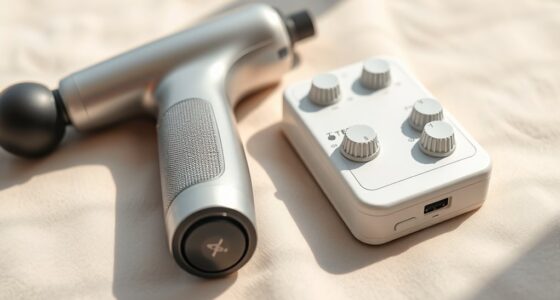
At-home massage devices are products designed to apply pressure, vibration, heat, or motion to muscles, ranging from $15 foam rollers to massage chairs. They can offer temporary relief from tightness and support relaxation, but no device can diagnose pain or replace a trained therapist. Pick based on body area and comfort, start at low intensity, and see a clinician for persistent or worsening symptoms.
Your shoulders knot up every afternoon at your desk, and a professional massage costs $90 plus tip plus two weeks of waiting. So you’ve started eyeing that massage gun in your feed, wondering if it’s genuinely useful or just another gadget destined for the junk drawer.
You’re not alone — home massage devices have exploded from basic vibrating cushions into cordless percussion tools, heated cushions, compression foot spas, and app-connected everything. They range from a $12 massage ball to massage chairs costing more than a used car.
Here’s the honest breakdown: what these devices can actually do, which type fits your aches, and the safety rules nobody puts on the box.
Match the device type to your ache: percussion guns for large muscles, shiatsu cushions for neck and shoulders, foot massagers for standing-all-day feet, foam…
Expect temporary relief and relaxation — not diagnosis, injury treatment, or guaranteed faster recovery; research on consumer devices remains limited.
Start at low intensity for 5–10 minutes, avoid bones, joints, the spine, and the front and sides of the neck, and stop at any sharp pain, numbness, or tingling.
Check with a healthcare professional before use if you’re pregnant or have a medical condition, recent surgery, a clotting disorder, fragile bones, or an impla…
A generous return policy beats a long feature list — comfort is the one spec you can’t judge until the device is on your shoulders.
The 7 Types of Massage Devices (And Who Each One Suits)
At-home massage devices fall into seven main categories, each built around a different kind of pressure or motion. This matters more than most buyers realize: the category determines how pressure reaches your body, how much effort you put in, and how precisely you can target a spot — which is why a $20 foam roller used well often beats a $400 gadget used badly. The tradeoff in every category is the same: more automation means less control, and more control means more effort.
Here’s the full lineup, and the reasoning behind each:
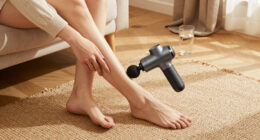
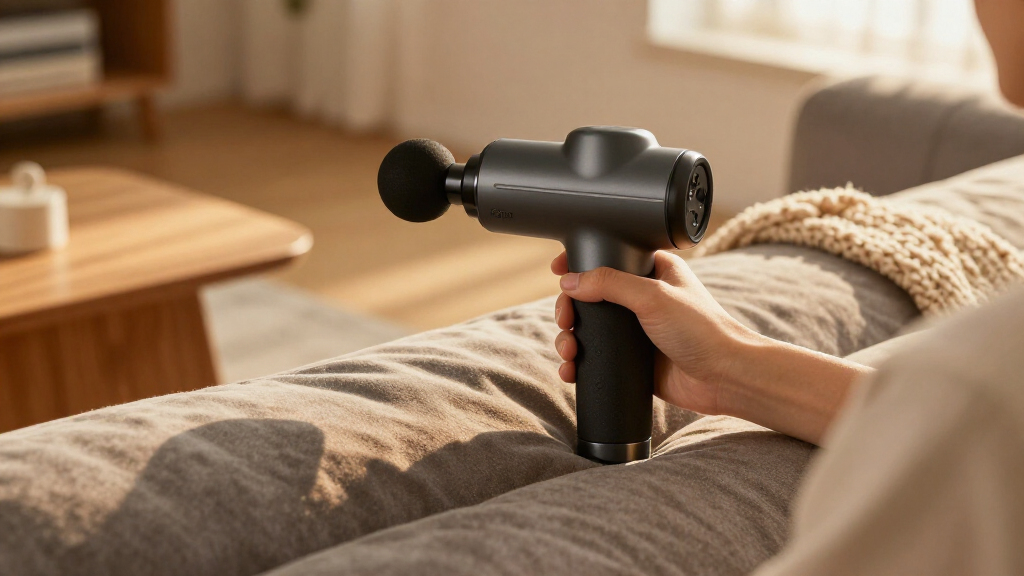
- Percussion massagers (massage guns): A rapidly moving head taps muscles with firm, rhythmic strokes. They shine on large muscle groups like quads and glutes, where a moving head can cover ground quickly — but that same power makes them a poor fit near bones, joints, or sensitive areas, and they require you to actively hold and guide the device.
- Vibrating massagers: Fast, gentle oscillation through wands, cushions, or handheld units. The lighter touch is the whole point: vibration is easier to tolerate on tender or sensitive areas, making it the safer starting point for beginners — the tradeoff is that it may feel too superficial for deep, stubborn tightness.
- Shiatsu-style massagers: Rotating nodes mimic kneading fingers, usually in neck or back cushions. They’re hands-free, which is why desk workers love them — you can use one while watching TV. The catch is fixed positioning: the nodes knead where the cushion sits, not necessarily where your knot is.
- Heated massagers: Combine kneading or vibration with warmth — some offer heat alone. Heat can make a stiff area feel looser and more comfortable, which is why heated models feel so pleasant on a stiff lower back in winter. The implication: heat adds a burn risk with prolonged use, especially for anyone with reduced skin sensation.
- Foot massagers: Rollers, compression chambers, vibration, or heat. Compression models can feel genuinely relieving for people standing all day, but they work the whole foot rather than one precise spot — a limitation worth knowing if your pain is localized.
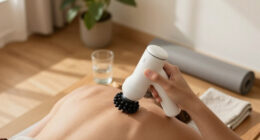
- Foam rollers and massage balls: No batteries, no charging, and total pressure control — your body weight is the mechanism, so you feel exactly how much force you’re applying and can back off instantly. The cost is effort and positioning skill: rolling well takes practice and some floor work.
- Massage chairs and cushions: The big spend — rolling, compression, and heat across multiple areas at once. They’re the most convenient and the least portable, and their price means the stakes of a bad fit are highest here. That’s precisely why a generous return policy matters most at this end of the market.
Real-world example: a runner with tight calves will love a percussion gun or foam roller, because calf tightness is broad and tolerates firm pressure. Someone with desk-neck tension usually gets more from a shiatsu neck cushion, because the neck is a sensitive area where hands-free gentle kneading beats a powerful gun. The tool-ache match, not the price tag, drives whether the device earns its drawer space.
What These Devices Can Actually Do for You
Home massage devices can offer temporary relief from muscle tightness, soreness, and stiffness, plus a genuine sense of relaxation — that’s the honest ceiling of the claims. Massage may temporarily ease discomfort and improve how a tight area feels, and for many people, that’s enough to justify the purchase.
Picture this: after eight hours at a laptop, your upper back feels like cement. Ten minutes with a heated shiatsu cushion loosens it enough that you stop noticing it. That’s a real win — a small, repeatable, everyday win.
Now the limits. A device cannot diagnose the cause of pain, and claims that a massage gun reliably speeds recovery, prevents injury, or boosts athletic performance are not established for every device or use. Independent head-to-head research comparing popular consumer models remains limited, and a bigger motor or a smartphone app doesn’t equal clinical benefit.
Marketing claims are not proof. Treat every promise on the box as a suggestion, not a guarantee — and treat persistent pain as a signal to see a professional.
Massage Gun vs. Vibrating Massager vs. Shiatsu: Which Fits You?
The three most popular powered types differ in how they feel and what they’re best for. Percussion devices deliver repeated, more pronounced strokes through a moving head — a rhythmic thump-thump-thump. Vibrating massagers produce smaller, faster oscillations — a buzz rather than a drumbeat. Shiatsu devices knead with rotating nodes, imitating thumbs pressing in circles.
| Feature | Percussion (Gun) | Vibrating Massager | Shiatsu Cushion |
|---|---|---|---|
| Feel | Firm, rhythmic tapping | Light, buzzy | Kneading, thumb-like |
| Best for | Large muscles (legs, glutes, back) | Broad, gentle relaxation | Neck, shoulders, lower back |
| Effort required | You hold and move it | Minimal | None — sit back |
| Typical price | $50–$400 | $25–$150 | $40–$200 |
| Beginner-friendly? | Moderate | Yes | Yes |
Neither percussion nor vibration is automatically better — it depends on your body and the area you’re targeting. If you hate deep pressure, skip the gun entirely and go shiatsu or vibration.
How to Use Any Massage Device Safely: 6 Rules
Safe use comes down to low intensity, short sessions, and knowing your no-go zones. Deep or forceful pressure can cause bruising, irritation, or injury — especially over vulnerable areas or with prolonged use. Here’s the sequence that keeps you out of trouble:
- Read the manual first. Instructions and warnings vary by manufacturer more than you’d expect.
- Start at the lowest setting for 5–10 minutes, even if you’re sore. You can always add intensity; you can’t un-bruise yourself.
- Skip the danger zones: bones, joints, the spine itself, the front and sides of the neck, your head, and any bruised, swollen, or injured skin.
- Stop immediately if you feel sharp pain, numbness, unusual tingling, or worsening symptoms.
- Check skin regularly with heat, since burns are possible with prolonged contact — especially if you have reduced skin sensation.
- Never use a device over numb areas unless a clinician has specifically said it’s okay.
If you’re pregnant, or you have a medical condition, recent surgery, a clotting disorder, fragile bones, poor circulation, or an implanted device — ask a healthcare professional before using any massage device.
Before You Buy: The Checklist That Saves Regret
The best device is the one you’ll actually use comfortably — not the one with the most settings. This is the single most important insight about buying, because it explains why so many expensive devices end up unused: people buy for peak capability instead of everyday comfort, and the gadget that’s slightly too intense or too heavy gets abandoned within a month. A device with 30 speeds isn’t better than one with three; comfortable, controlled use matters more than maximum intensity. Run through this before checkout, and understand why each question matters:
- Body area: Neck? Feet? Whole back? Narrow the category first — because the wrong category can’t be fixed by a better model. No massage gun becomes a good neck tool, no matter the price.
- Pressure preference: Gentle buzz or deep knead — be honest with yourself. Most people overestimate how much pressure they’ll enjoy, and a device that’s too intense gets used less, not tougher.
- Practical stuff: Weight, noise level, battery life, portability, ease of cleaning. These sound boring, but they decide daily use: a heavy gun you can’t reach your back with, or a loud one you won’t use while others are home, becomes furniture.
- Warranty and returns: A generous return policy is worth more than a flashy feature list, since comfort is impossible to judge from a product photo. The implication is clear: buy from sellers that let you test the device on your own body for a few weeks, because the spec sheet can’t tell you how it will feel.
- Clear instructions and safety warnings in the box — a sign of a responsible manufacturer. Vague or missing warnings suggest the maker cut corners elsewhere too.
On price: expensive models may offer better build quality, quieter motors, and longer warranties — real benefits you’ll notice weekly. But price does not guarantee better results, because results depend on fit and consistent use, not cost. A $60 device that fits your needs beats a $350 status symbol you’re slightly afraid of, and the money saved covers several sessions with an actual therapist.
When to Skip the Device and See a Professional
Some pain needs a human with training, not a motor. A massage device is a self-care tool — it cannot assess a condition or provide individualized treatment. Persistent, severe, unexplained, or worsening pain deserves medical advice, full stop.
Scenario: you’ve been rolling your calf every evening for three weeks and the tightness isn’t just staying — it’s spreading to your ankle. That’s your cue. Similarly, any pain after a fall, with numbness, with swelling, or following recent surgery needs evaluation before any device touches it.
Think of home devices and professionals as teammates, not rivals. The device handles your everyday stiffness between appointments; the therapist or clinician handles the questions the device can’t answer.
Frequently Asked Questions
Do at-home massage devices actually work?
They may provide temporary comfort, reduced feelings of tightness, and relaxation for some users. Results depend on the person, the device, and how it’s used — they are not a guaranteed treatment, and marketing claims aren’t proof of effectiveness.
How often should I use a massage device?
There’s no universal schedule. Follow the product’s instructions, start with short sessions at low intensity, and stop if your symptoms worsen. For most devices, 5–15 minutes per area per session is a sensible starting point.
Can I use a massage device on my neck or spine?
Use particular caution. Avoid direct force on the spine and the front or sides of the neck, where major blood vessels and nerves sit. If you have neck symptoms or you’re unsure about a specific device, get guidance from a clinician first.
Are expensive massage guns worth the money?
Sometimes. Higher prices may reflect quieter motors, better batteries, stronger warranties, and build quality — but price doesn’t guarantee better results. Compare practical features and check the return policy before committing.
Can a massage device replace a massage therapist or physical therapist?
No. A device can be a useful self-care tool between appointments, but it cannot assess your condition or provide individualized treatment. See a clinician or therapist when symptoms persist, worsen, or need evaluation.
Conclusion
Buy the simplest device that fits your body area and pressure preference, use it gently, and let a professional handle anything that persists, worsens, or worries you. That’s the whole strategy.
Your shoulders don’t need the most expensive gadget on the market — they need ten consistent minutes of the right pressure, most evenings, with the wisdom to know when the problem has outgrown a motor.
Fall Picks
fall essentials
As an affiliate, we earn on qualifying purchases.