
You should use your massage gun on sore muscles for 1 to 2 minutes per area, up to a few times a day depending on your muscle sensitivity and activity level. For tight or inflamed muscles, shorter sessions of about a minute are best. Watch for signs of overuse like numbness, tingling, or skin irritation, which mean you need to stop. To optimize recovery and avoid injury, understanding how to personalize your routine is key—you’ll find helpful tips ahead.
Key Takeaways
- Use the massage gun for 1-2 minutes per muscle group post-exercise, adjusting based on soreness and response.
- Increase session frequency (up to daily) for chronic soreness or tightness, but monitor for signs of overuse.
- Limit each targeted area to avoid tissue fatigue, nerve compression, or skin irritation, stopping if discomfort occurs.
- Incorporate recovery strategies like stretching and hydration alongside massage to prevent overuse and enhance benefits.
- Consult a professional if soreness persists or if you experience numbness, tingling, or swelling after sessions.

TOLOCO Massage Gun, Deep Tissue Back Massage for Athletes for Pain Relief, Percussion Massager with 10 Massages Heads & Silent Brushless Motor, Fathers Day Dad Gifts, Carbon
Quick Pain Relief: The TOLOCO deep tissue massage gun has a high penetration force of 12mm, up to…
As an affiliate, we earn on qualifying purchases.
As an affiliate, we earn on qualifying purchases.
Understanding the Benefits of Massage Gun Usage

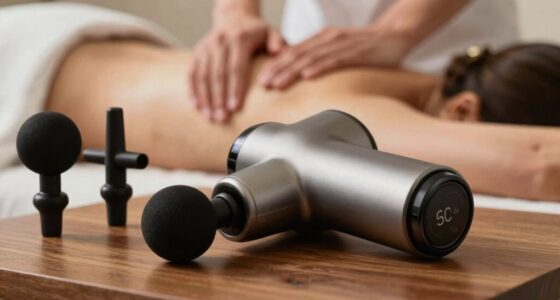
Using a massage gun can effectively reduce muscle soreness and tension, especially after intense workouts or long periods of inactivity. It promotes muscle recovery by breaking up knots and easing tight muscles, helping you bounce back faster. The device stimulates blood circulation, delivering oxygen and nutrients to tired muscles while flushing out waste products. This enhanced blood flow accelerates healing and reduces inflammation. Regular use can improve flexibility and overall muscle health, making your workouts more effective and less painful. By targeting specific muscle groups, a massage gun offers immediate relief and long-term benefits. Incorporating proper usage frequency ensures you maximize the benefits without overdoing it. Additionally, understanding muscle recovery principles can help you optimize your massage gun routine for better results. As part of a comprehensive recovery plan, a massage gun can also support your sleep quality, enabling more restful nights and quicker muscle repair. Proper technique during use is essential to avoid overstimulation or injury. Overall, it’s a valuable tool for maintaining muscle function, reducing soreness, and supporting your recovery process.

Snailax Cordless Handheld Back Massager with Heat, Deep Tissue Percussion Massager, 3 Sets of Dual Pivoting Heads,Rechargeable Hand Held Massager for Neck,Back Shoulder,Calf,Legs
Dual Percussion Heads: Snailax hand held percussion massager features dual heads operate at up to 3200 pulses per…
As an affiliate, we earn on qualifying purchases.
As an affiliate, we earn on qualifying purchases.
Factors Influencing Proper Frequency of Use

The appropriate frequency of massage gun use depends on several key factors, including your muscle sensitivity, workout intensity, and overall recovery needs. Your muscle sensitivity influences how often you should target sore areas—if your muscles are particularly tender, less frequent sessions may be be better to avoid overstimulation. Workout intensity also plays a role; more intense training usually requires increased massage frequency to support muscle recovery effectively. Additionally, your body’s response to previous sessions helps determine ideal use; if soreness persists or worsens, reducing massage frequency might be necessary. muscle recovery is a complex process that benefits from proper management and timing. Incorporating recovery strategies such as stretching, hydration, and rest can complement massage therapy for optimal results. Paying attention to muscle response after each session is essential to avoid overuse and ensure that your recovery process remains efficient. Monitoring your body’s response and adjusting accordingly is crucial for effective recovery evidence-based practices. Moreover, understanding your own tolerance levels can help prevent potential injuries or setbacks. Ultimately, listening to your body is essential. Finding the right massage frequency ensures you promote muscle recovery without causing further strain, helping you recover faster and maintain peak performance.

OLsky Massage Gun Deep Tissue, Handheld Electric Muscle Massager, High Intensity Percussion Massage Device for Pain Relief with 9 Attachments & 30 Speed(Grey)
Relax, Unwind & Recover: Whether you are a cardio junkie, strength training aficionado or a 9-5 executive who…
As an affiliate, we earn on qualifying purchases.
As an affiliate, we earn on qualifying purchases.
Recommended Guidelines for Different Muscle Conditions

Different muscle conditions require tailored massage gun guidelines to optimize recovery and prevent injury. For muscle recovery after intense workouts, use gentle, targeted massage techniques for about 1-2 minutes per area, repeating every few hours as needed. Incorporating proper technique ensures you get the most benefit from each session. For chronic soreness or tightness, increase session duration to 3-4 minutes, focusing on specific spots with moderate pressure. When dealing with strained or inflamed muscles, keep sessions brief—around 1 minute—to avoid aggravating the condition. Remember, listening to your body helps determine the right approach. Properly adjusting your massage gun use guarantees effective muscle recovery without risking further injury. Utilizing body awareness can help you identify which areas need attention and prevent overuse. Incorporating different massage techniques like circular motions or static pressure can further enhance results.
OLsky Massage Gun Deep Tissue, Handheld Electric Muscle Massager, High Intensity Percussion Massage Device for Pain Relief with 9 Attachments & 30 Speed(Grey)
Relax, Unwind & Recover: Whether you are a cardio junkie, strength training aficionado or a 9-5 executive who…
As an affiliate, we earn on qualifying purchases.
As an affiliate, we earn on qualifying purchases.
Signs You Might Be Overusing Your Massage Gun

If you notice persistent muscle pain after using your massage gun, it might be a sign you’re overdoing it. Skin redness or swelling could also indicate irritation from too much treatment. Additionally, numbness or tingling sensations are warning signs to stop and reassess your usage. Being mindful of proper usage guidelines can help prevent overuse and ensure safe, effective muscle relief. Overusing a massage gun may also lead to tissue damage, so understanding appropriate treatment duration is crucial. Paying attention to muscle response during and after use can further help you avoid potential harm. Recognizing signs of overuse early can prevent long-term discomfort or injury.
Moreover, consulting usage recommendations can optimize your recovery process and prevent adverse effects.
Persistent Muscle Pain
Persistent muscle pain after using a massage gun can indicate you’re overdoing it. If you notice lingering soreness, it’s a sign your massage frequency may be too high, hindering muscle recovery rather than aiding it. Overuse can cause inflammation or bruising, making muscles more sensitive and delaying healing. To prevent this, pay attention to your body’s signals and adjust accordingly. Incorporating sound vibrations techniques can also support muscle relaxation and recovery. Additionally, understanding proper luggage & bags choices can help you carry your recovery tools comfortably during travel. Proper use of home safety measures ensures you avoid injury while using massage devices. Watching for these signs can help you avoid unnecessary strain: – Increased soreness lasting beyond 24 hours – Bruising or skin discoloration – Reduced muscle strength or mobility. Using a massage gun too frequently may also lead to support breakfast habits that promote overall well-being, such as proper nutrition and rest. Limiting massage sessions and allowing muscles to recover ensures you get the benefits without overtaxing your tissues. Proper use helps promote recovery, rather than prolonging discomfort or risking injury. Paying attention to muscle recovery signals and adjusting your routine accordingly can help prevent overuse and optimize results.
Skin Redness or Swelling
When you use a massage gun too aggressively or for too long, your skin may start to show signs of overuse, such as redness or swelling. These are clear indicators of skin irritation, which can result from excessive pressure or prolonged sessions. You might also notice allergic reactions, like itchiness or rash, especially if your skin is sensitive or you have allergies to certain materials. If you see redness or swelling, it’s a sign to stop immediately and give your skin a break. Overusing your massage gun can cause inflammation and worsen discomfort. Proper moderation helps prevent skin issues and ensures safe, effective relief. Additionally, understanding skin irritation can help you recognize early signs of overuse and avoid further damage. Always listen to your body, and avoid applying too much pressure or using the device on the same area repeatedly.
Numbness or Tingling
Numbness or tingling sensations during or after using your massage gun can indicate that you’re overdoing it. These symptoms often signal nerve compression or sensory overload, which can lead to discomfort or even injury. If you experience persistent numbness or tingling, it’s a sign to stop and reassess your technique. Overuse can cause excessive pressure on nerves, leading to nerve compression. To avoid this, watch for these signs:
- Tingling that persists beyond the session
- Loss of sensation in the affected area
- Increased discomfort or pain after use
Reducing the intensity, shortening your sessions, and avoiding prolonged contact in one spot can help prevent nerve-related issues. Always listen to your body and stop if these symptoms appear. Being aware of muscle recovery and how your body responds can also guide proper massage gun use. Additionally, understanding safety precautions related to massage devices can help prevent overuse and potential injuries.
Personalizing Your Massage Routine for Optimal Results

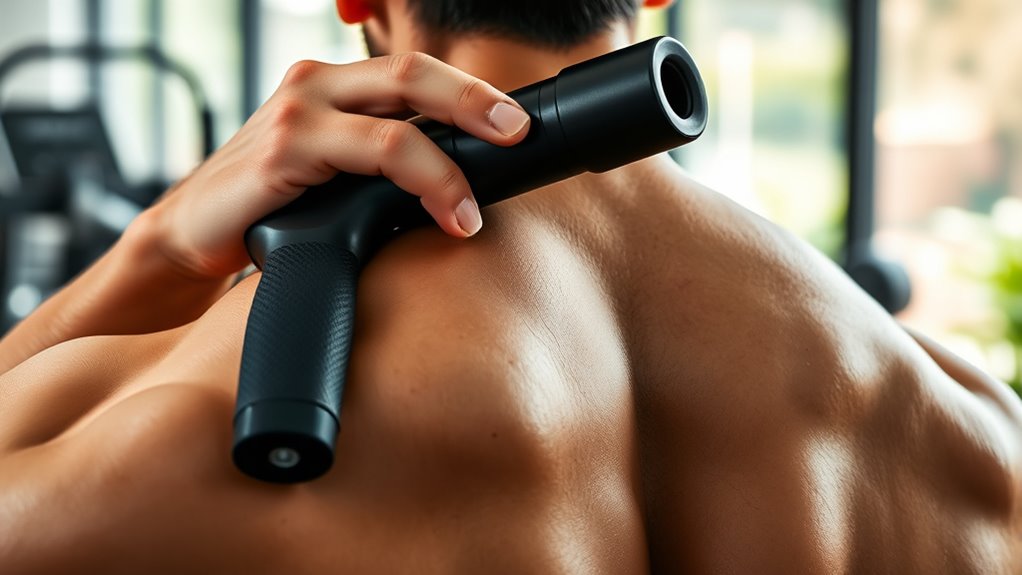
To get the most out of your massage gun, it’s important to tailor your routine to your specific needs and muscle groups. Focus on using different massage techniques—like circular or longitudinal strokes—and adjust your massage duration based on muscle sensitivity. Shorter sessions (30-60 seconds) work well for smaller areas, while larger muscles might need 1-2 minutes. Personalizing your routine ensures effective relief without overdoing it. Use the table below to identify your muscle group, preferred massage technique, and ideal duration:
| Muscle Group | Massage Technique | Massage Duration |
|---|---|---|
| Calves | Circular | 30-60 seconds |
| Quads | Longitudinal | 1 minute |
| Hamstrings | Circular | 1 minute |
| Back | Longitudinal or circular | 2 minutes |
| shoulders | Circular | 30-60 seconds |
Adjust based on your comfort and response.
When to Consult a Professional for Muscle Relief

While massage guns can effectively relieve muscle soreness, there are times when seeking professional help is essential. If your pain persists despite adjusting your massage frequency or worsens, it’s time to consult a professional. You should seek expert advice if you experience:
- Severe or ongoing pain that doesn’t improve
- Signs of nerve damage, numbness, or tingling
- Swelling, bruising, or unexplained discomfort
A healthcare professional can assess underlying issues and recommend appropriate treatment. Relying solely on a massage gun without guidance may lead to further injury. Remember, professional consultation guarantees you’re using the right techniques safely and effectively, especially if your muscle soreness is persistent or worsening. When in doubt, consult a specialist to prevent complications.
Frequently Asked Questions
Can Using a Massage Gun Cause Muscle Damage?
Using a massage gun can cause muscle strain or tissue injury if you press too hard, use it for too long, or target the same spot repeatedly. You need to listen to your body — if you feel pain or discomfort, stop immediately. Avoid excessive use, especially on sore or injured muscles, to prevent potential tissue injury. Proper technique and moderation are key to safe, effective relief.
How Long Should I Wait Between Massage Gun Sessions?
After using a massage gun, you should wait at least 24 hours before the next session. For example, if you used it on sore quads today, give your muscles time to recover before the next session to avoid overstimulation. Typically, a good recovery time allows your muscles to heal, so maintain a moderate session frequency—about every 24 to 48 hours—depending on your soreness level and activity intensity.
Is It Safe to Use a Massage Gun Daily?
Using a massage gun daily can be safe if you listen to your body. However, it might cause muscle fatigue or skin irritation if overused. Pay attention to how your muscles feel—if you experience soreness or discomfort, reduce the frequency. Typically, moderate daily use is fine, but always follow manufacturer guidelines and avoid excessive pressure. If irritation or fatigue persists, take a break and consult a healthcare professional.
Can Massage Guns Help With Chronic Muscle Pain?
Think of your muscles as a garden needing consistent care. Massage guns act like gentle rain, aiding in muscle recovery and providing pain relief for chronic pain. While they can help, don’t depend solely on them—combine with stretches and professional advice. Using a massage gun regularly can ease tension and improve circulation, but listen to your body and consult a healthcare provider to make certain of safe, effective muscle recovery.
Are There Any Medical Conditions That Restrict Massage Gun Use?
You should be aware of medical restrictions and contraindications for massage guns before use. People with blood clotting disorders, infections, or skin conditions should avoid them. If you have pacemakers, fractures, or recent surgeries, consult your healthcare provider first. In general, those with underlying health issues may face risks, so always check with a medical professional to guarantee safe use and avoid exacerbating any conditions.
Conclusion
So, now that you know how often to use your massage gun, go ahead—treat those sore muscles like royalty. Just remember, overdoing it might turn your relaxing session into a painful obsession. Don’t become the person who’s more familiar with their massage gun than with their own friends. Use it wisely, listen to your body, and you’ll reap the benefits without turning yourself into a human doughnut. Happy massaging—just don’t go overboard!