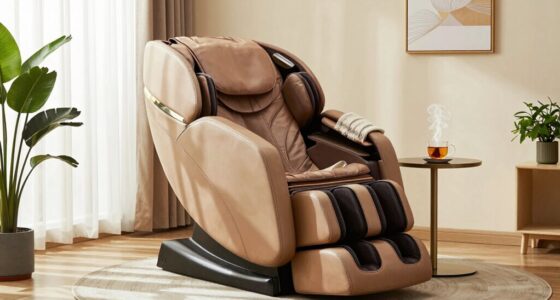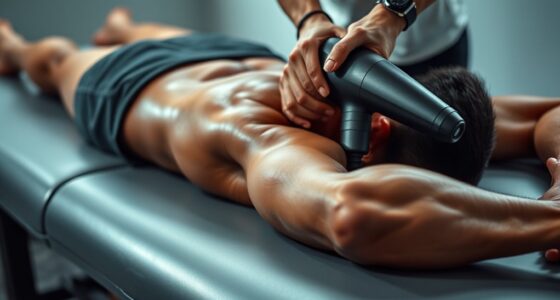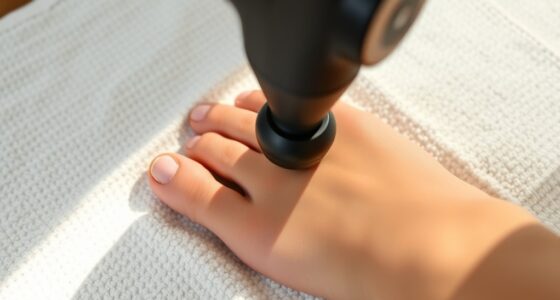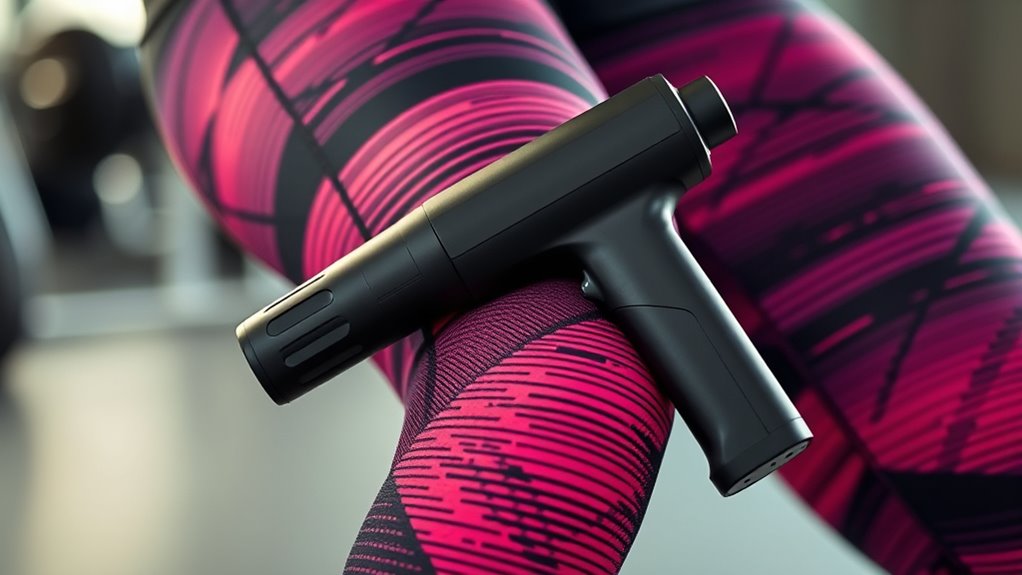
A massage gun can help with runner’s knee pain caused by IT band syndrome by targeting tight spots and trigger points along the band. It delivers deep, focused pulses that loosen muscles and reduce tension, potentially easing pain and speeding recovery. Using a massage gun is often more comfortable and precise than foam rolling, making it easier to address stubborn knots. To discover effective techniques and precautions, keep exploring how to optimize your treatment.
Open a free Amazon Business account
Business pricing, bulk buying and tax-exempt orders.
As an affiliate, we earn on qualifying purchases.
Key Takeaways
- A massage gun targets tight areas along the iliotibial band, helping reduce tension associated with runner’s knee pain.
- It relaxes trigger points and adhesions, improving tissue flexibility and decreasing strain on the knee.
- Compared to foam rolling, a massage gun offers precise, less painful relief for stubborn knots contributing to IT band issues.
- Regular use can enhance recovery, decrease tightness, and support better movement patterns for runners.
- Proper technique and gradual intensity increase are essential to safely maximize benefits and avoid irritation.

If you’re dealing with IT Band Syndrome, a massage gun can be an effective tool to help relieve pain and improve mobility. The iliotibial band, a thick strip of tissue running along the outside of your thigh, often becomes tight or inflamed in runners, leading to that familiar knee pain. Using a massage gun targets specific areas of tension, especially around trigger points—knots or tight spots that develop along the band—and can help release them. Unlike static stretching or foam rolling, a massage gun provides rapid, targeted pulses that penetrate deep into the tissue, offering immediate relief and promoting blood flow. When used correctly, it can loosen up the tightness in your IT band and surrounding muscles, reducing strain on your knee.
Trigger points are small, hyperirritable areas within your muscle or fascia that cause pain and tightness. These spots often develop from overuse, repetitive motion, or muscle imbalances common in runners. When you apply a massage gun to these trigger points, it can help break up the adhesions and relax the muscle fibers, easing the tension that contributes to IT band discomfort. Foam rolling is another popular technique to address this, but it requires effort and can sometimes be uncomfortable, especially if your tissues are particularly tight or tender. A massage gun can complement foam rolling by offering a less painful, more precise way to target those stubborn trigger points. Instead of rolling back and forth over a large area, you focus the device on specific spots, making the process quicker and more efficient.
Using a massage gun on your IT band and surrounding muscles helps improve flexibility and reduces tightness that might cause or worsen knee pain. It’s important to remember, though, that overuse or improper technique can lead to bruising or irritation. Start with a low intensity and gradually increase as tolerated. Spend a minute or two on each trigger point or tight area, avoiding direct pressure on bony prominences or sensitive spots. Incorporate foam rolling as part of your regular recovery routine, then use the massage gun to target lingering knots or areas of resistance. This combination can accelerate your recovery process and restore proper movement patterns, helping you get back to training with less discomfort.
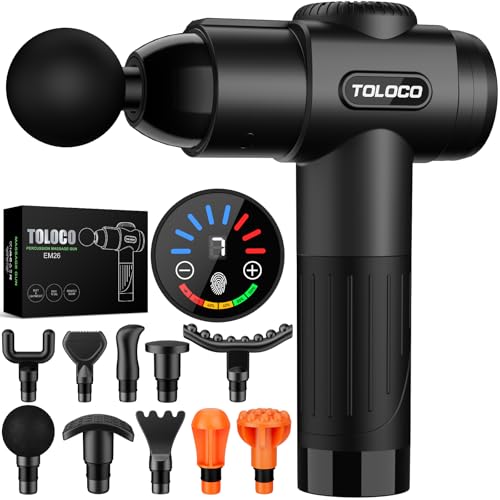
TOLOCO Massage Gun, Deep Tissue Back Massage for Athletes for Pain Relief, Percussion Massager with 10 Massages Heads & Silent Brushless Motor, Relaxation Gifts for Men Women, Black
- Deep Tissue Penetration: 12mm depth, up to 3200 rpm
- Long Battery Life: Up to 6 hours on a single charge
- 10 Replaceable Massage Heads: For full-body muscle relaxation
As an affiliate, we earn on qualifying purchases.
As an affiliate, we earn on qualifying purchases.
Frequently Asked Questions
How Often Should I Use a Massage Gun for IT Band Pain?
You should use a massage gun for IT band pain about 3-4 times a week, following the recommended frequency guidelines. Keep your sessions to around 1-2 minutes per area to avoid overstimulation. Always listen to your body—if you feel any discomfort, reduce the usage duration or frequency. Consistent, moderate use can help reduce tightness and alleviate runner’s knee pain effectively.
Are There Any Risks Using a Massage Gun on My Knee?
Think of using a massage gun on your knee like walking a tightrope—you must stay balanced. Yes, there are risks if you ignore safety precautions or push beyond device limitations, such as tissue damage or increased inflammation. Always follow manufacturer guidelines, avoid sensitive areas, and don’t overuse it. If you experience pain or discomfort, stop immediately and consult a healthcare professional to prevent injury and guarantee safe relief.
Can a Massage Gun Replace Professional Physical Therapy?
A massage gun can’t supplant professional therapy because it lacks personalized assessment and targeted treatment plans. While it can serve as a helpful massage alternative for muscle relief and soreness, you should still seek professional therapy for proper diagnosis and tailored exercises. Relying solely on a massage gun might overlook underlying issues, so combining it with expert guidance ensures safer, more effective recovery and pain management.
What Pressure Settings Are Best for IT Band Relief?
Oh, the thrill of mastering device intensity! For IT band relief, start with gentle pressure application—around the lowest to mid-range settings—and gradually increase if needed. The goal isn’t to turn your leg into a piñata, but to stimulate blood flow without causing discomfort. Find a balance that soothes rather than irritates. Remember, too much pressure can backfire, so listen to your body and adjust accordingly.
Is a Massage Gun Effective for Chronic Runner’s Knee?
Yes, a massage gun can be effective for chronic runner’s knee when combined with self-massage techniques and alternative therapies. It helps reduce muscle tightness and improve blood flow, which may alleviate pain. Use it gently on the affected area, following proper pressure settings. Remember, consistency matters, and supplementing with stretching and strengthening exercises can enhance recovery. Always consult a healthcare professional to guarantee the best approach for your condition.

Snailax Cordless Knee Massager with Heat, Red Light & Vibration Knee Wrap
- Cordless and Portable Design: Enjoy massage anywhere at home, office, or travel
- LED Touch Screen Control: Easy to operate with clear display
- Customizable Vibration Modes: 3 adjustable vibration settings for relief
As an affiliate, we earn on qualifying purchases.
As an affiliate, we earn on qualifying purchases.
Conclusion
Using a massage gun for IT band syndrome is like giving your muscles a soothing breeze on a hot day—you’ll feel relief and renewed mobility. While it may not be a miracle cure, regularly targeting your IT band can ease pain, reduce tightness, and help you get back to running stronger. Just remember, consistency is key, and combining it with proper stretching and rest will give you the best results. Keep moving forward!
TOLOCO Massage Gun, Deep Tissue Back Massage for Athletes for Pain Relief, Percussion Massager with 10 Massages Heads & Silent Brushless Motor, Relaxation Gifts for Men Women, Black
- Deep Tissue Penetration: 12mm depth, up to 3200 rpm
- Long Battery Life: Up to 6 hours on a single charge
- 10 Replaceable Massage Heads: For full-body muscle relaxation
As an affiliate, we earn on qualifying purchases.
As an affiliate, we earn on qualifying purchases.
TOLOCO Massage Gun, Deep Tissue Back Massage for Athletes for Pain Relief, Percussion Massager with 10 Massages Heads & Silent Brushless Motor, Relaxation Gifts for Men Women, Black
- Deep Tissue Penetration: 12mm depth, up to 3200 rpm
- Long Battery Life: Up to 6 hours on a single charge
- 10 Replaceable Massage Heads: For full-body muscle relaxation
As an affiliate, we earn on qualifying purchases.
As an affiliate, we earn on qualifying purchases.
College move-in / dorm season Picks
dorm essentials
As an affiliate, we earn on qualifying purchases.