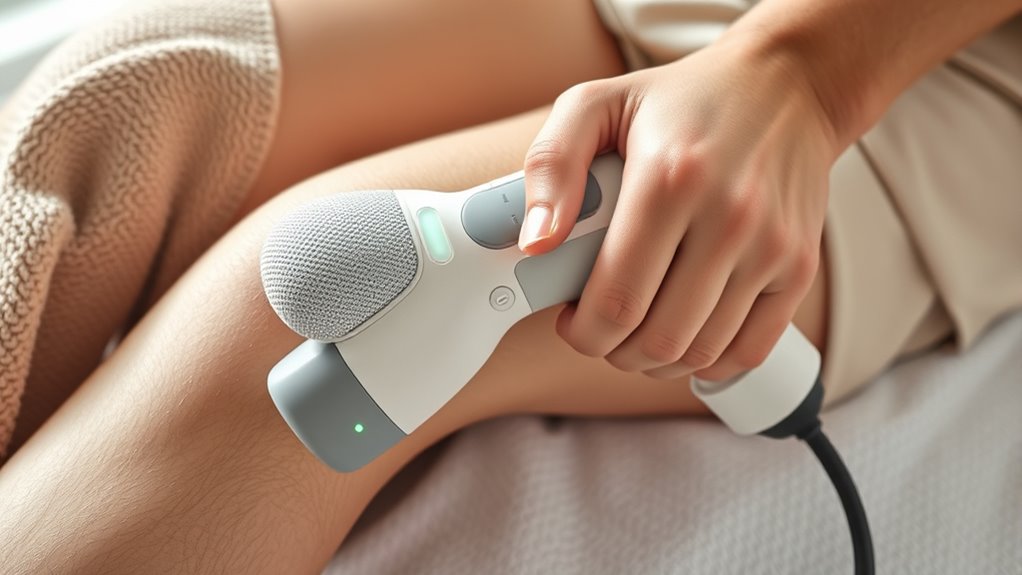
Using a massage gun for knee pain can be safe if you use it carefully and follow proper techniques. It’s effective for soothing muscles, increasing blood flow, and promoting healing, but you should avoid pressing directly on the kneecap or bony areas. Start with low intensity and gradually increase as comfortable. Be cautious if your knee is swollen or inflamed. To guarantee safe, effective use, learn the best practices before getting started.
Key Takeaways
- When used correctly, massage guns are generally safe for knee muscles but should avoid direct contact with the knee cap or bony areas.
- Proper technique involves starting with low intensity and gradually increasing to prevent joint or tissue injury.
- Massage guns help improve circulation and reduce muscle tension around the knee, supporting joint health and mobility.
- They are a safe, non-invasive option that can complement other treatments, but should not be used on swollen, inflamed, or injured knees.
- Always consult a healthcare professional if unsure about use or if experiencing persistent or severe knee pain.
If you’re struggling with knee pain, a massage gun can be a game-changer. It offers a form of alternative therapy that many find effective for pain management. Instead of relying solely on medications or invasive procedures, using a massage gun provides a non-invasive way to soothe sore muscles, increase blood flow, and reduce tension around your knee joint. This device delivers rapid, percussive strokes that penetrate deep into tissue, helping to loosen tight muscles and alleviate discomfort. When used correctly, it’s an accessible tool that can complement your existing pain management strategies.
One of the primary benefits of massage guns is their versatility. They can target various areas around the knee, including the quadriceps, hamstrings, and calf muscles, which all influence knee stability and comfort. By loosening tight muscles that pull on the joint, you may experience less pain and improved mobility. Plus, the quick, rhythmic pulses can help break up adhesions and scar tissue, promoting healing. This makes massage guns an attractive option for those exploring alternative therapies to manage chronic or acute knee pain.
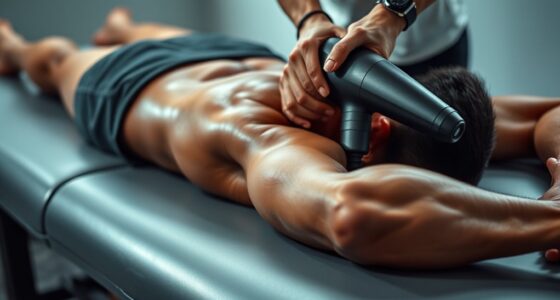
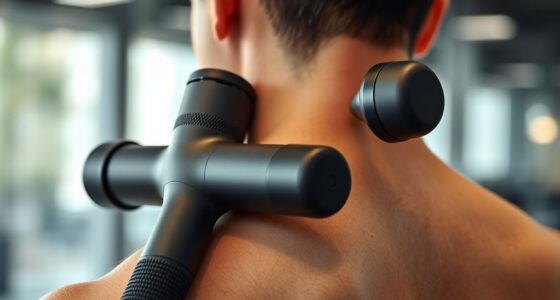
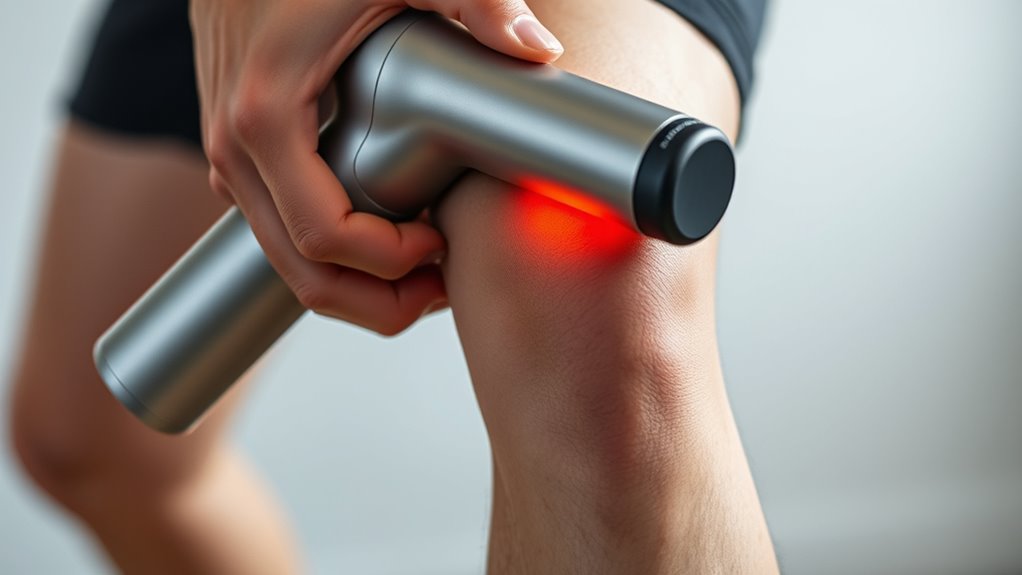
Massage guns target knee muscles and tissues to reduce pain, improve mobility, and promote healing.
However, it’s natural to wonder about safety, especially when it comes to joints. While massage guns are generally safe when used properly, you should be cautious about applying too much pressure or using them directly on the knee cap or bony areas. The knee joint is delicate, and aggressive use or incorrect technique can potentially cause more harm than good. Always start with the lowest intensity setting and gradually increase as you get comfortable. Avoid using the device on swollen, inflamed, or injured knees, and consult a healthcare professional if you’re unsure. Proper technique and moderation are key to making sure this pain management tool remains a safe and effective part of your routine.
Using a massage gun as part of your pain management approach can also help reduce reliance on pain medications, which often come with side effects. It’s a convenient way to address muscle tightness and improve circulation without risking drug interactions or dependency. Additionally, understanding piercing care and hygiene is important if you have piercings in or around your knees or legs, as proper hygiene can prevent infections that might complicate knee pain. Nonetheless, it’s important to remember that a massage gun isn’t a cure-all. It works best when combined with other treatments like stretching, strengthening exercises, physical therapy, and, when necessary, medical interventions. Always listen to your body—if you experience increased pain or discomfort, stop using the device and seek professional advice.
In essence, a massage gun can be a safe and effective tool for knee pain relief if used thoughtfully. It’s an alternative therapy that empowers you to take control of your pain management at home, helping you move more comfortably and with less discomfort. Just make sure to use it correctly and consult your healthcare provider if you have any concerns about your specific condition.
Frequently Asked Questions
Can Massage Guns Replace Physical Therapy for Knee Pain?
A massage gun isn’t a full replacement for physical therapy, but it can be a helpful alternative therapy for knee pain relief. While it offers benefits like muscle relaxation and improved blood flow, its long-term effectiveness is limited without professional guidance. You should consider combining massage gun sessions with physical therapy and other treatments to guarantee thorough care, especially for chronic or severe knee issues. Always consult a healthcare provider first.
Are Massage Guns Suitable for All Types of Knee Injuries?
Like a skilled painter choosing the right brush, you should know that massage guns aren’t suitable for all knee injuries. If you have ligament tears or fractures, using one could worsen your condition. For muscle soreness or improving joint flexibility, they can be beneficial if used carefully. Always consult your healthcare provider first, and avoid using a massage gun on complex injuries, as they require professional treatment.
How Often Should I Use a Massage Gun on My Knee?
You should use a massage gun on your knee 2-3 times daily, following the frequency guidelines for safe use. Keep each session to about 1-2 minutes per area to avoid overdoing it. Pay attention to your body’s response and stop if you experience pain or discomfort. Always listen to your body, and consult a healthcare professional if you’re unsure about the appropriate usage duration or frequency.
Can Using a Massage Gun Worsen Existing Knee Conditions?
Did you know that improper use of a massage gun can increase joint stress? Using it on an already inflamed or damaged knee might worsen your condition, raising inflammation risk and causing more pain. If you have existing knee issues, it’s best to consult a healthcare professional before using a massage gun. Proper technique and moderation are key to avoid aggravating your knee and ensuring safe relief.
Are There Specific Massage Gun Settings Recommended for Knee Pain?
For knee pain, you should start with knee-specific settings on your massage gun, focusing on low to moderate massage intensity. Use gentle pressure and avoid high speeds that could cause discomfort or worsen pain. Adjust the massage intensity gradually, listening to your body’s response. It’s best to target surrounding muscles rather than directly on the knee joint, and consult a healthcare professional for personalized advice.
Conclusion
While a massage gun can gently support your knee’s comfort, it’s wise to remember that even the softest touch should be used with care. Overzealous use might inadvertently nudge your joints in the wrong direction. Listen to your body, and don’t rush the process. When in doubt, consulting a healthcare professional can help you find the right balance. After all, a gentle approach often whispers the most reassuring message to your joints.