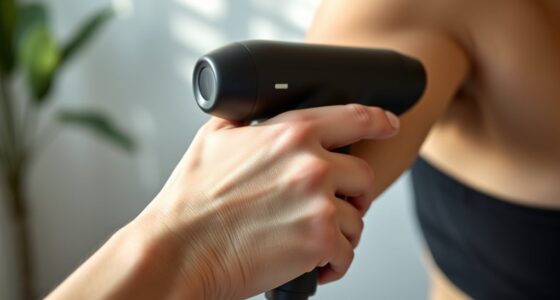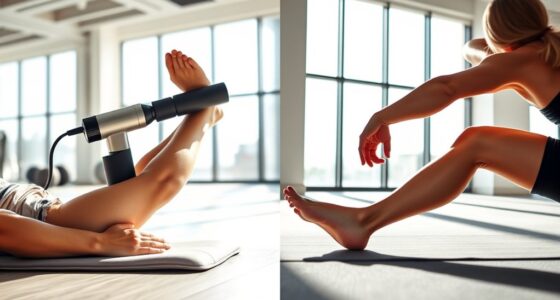
Massage guns are safe for most people when used correctly. However, you should avoid them if you have blood clotting issues, skin infections, open wounds, or rashes. Pregnant women, individuals with implanted devices, osteoporosis, nerve damage, or recent injuries should exercise caution or consult a healthcare professional before use. If you want to understand the full list of precautions and situations where massage guns might not be suitable, stay tuned for more details.
Key Takeaways
- People with blood clotting disorders, open wounds, or skin infections should avoid massage guns to prevent bleeding or worsening conditions.
- Pregnant women, especially around the abdomen and lower back, should consult a healthcare provider before use.
- Individuals with implanted devices like pacemakers must avoid areas near the device to prevent interference.
- Those with osteoporosis, nerve damage, or recent injuries should exercise caution or seek medical advice before using.
- Avoid using massage guns over varicose veins, active skin rashes, or acute injury sites to prevent aggravating these conditions.
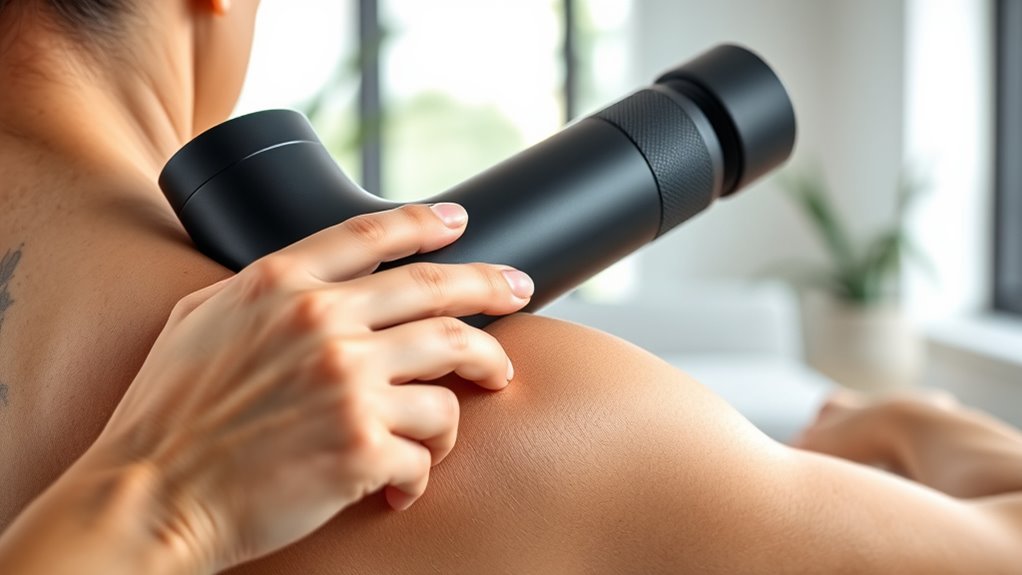
Massage guns can be effective tools for muscle relief, but using them safely is essential to prevent injury. If you’re aiming to improve muscle recovery or target specific trigger points, understanding who should avoid or use caution with these devices is vital. While many people benefit from massage guns, certain groups need to be extra careful to avoid worsening their condition or causing harm.
Individuals with certain medical conditions, such as blood clotting disorders, should steer clear or consult a healthcare professional before using a massage gun. The intense vibrations and pressure could dislodge a clot or cause bleeding complications. Similarly, people with skin infections, open wounds, or rashes should avoid applying the device directly to affected areas, as the vibrations may exacerbate inflammation or delay healing.
Those with blood clotting issues or skin infections should avoid or consult before using massage guns.
Those with chronic health conditions, such as osteoporosis, should also exercise caution. Fragile bones are susceptible to fractures if excessive pressure is applied. It’s best to seek medical advice before using a massage gun, especially if you’re unsure how your condition might react. Pregnant women need to be cautious as well, particularly around the abdomen and lower back, since the vibrations might affect the fetus or cause discomfort.
People with implanted medical devices, such as pacemakers or defibrillators, should avoid using massage guns near the chest or areas where the device is implanted. The vibrations could interfere with the device’s functioning, posing serious health risks. Additionally, anyone with nerve damage or decreased sensation should avoid using a massage gun on areas where they can’t feel the device properly, as they might apply too much pressure unknowingly, risking nerve injury.
If you have recent injuries, strains, or sprains, it’s wise to wait until the swelling subsides and consult a healthcare provider. Applying a massage gun to an acute injury might increase inflammation or cause further damage. It’s also important to avoid using the device over areas with varicose veins or skin conditions, as vibrations could worsen these issues.
Furthermore, understanding the limits of muscle recovery tools can help prevent misuse and potential harm.
Frequently Asked Questions
Can Massage Guns Cause Nerve Damage?
Massage guns can cause nerve irritation or even nerve injury if used improperly or with excessive pressure. You should be cautious around sensitive areas and avoid prolonged use on nerves. If you experience tingling, numbness, or pain, stop immediately. To minimize risks, follow the manufacturer’s instructions and consult a healthcare professional if you have existing nerve issues or concerns. Proper use helps prevent nerve damage and guarantees a safe, effective massage.
Are Massage Guns Safe for Children?
Massage guns aren’t recommended for children because pediatric massage requires gentle techniques tailored to their delicate bodies. Using a massage gun on a child can risk injury or discomfort, as their muscles and tissues are more sensitive. For child safety, always opt for soft, manual massage methods and consult a pediatrician or a professional massage therapist experienced in pediatric massage before considering any device-based treatments.
Can Pregnant Women Use Massage Guns?
Pregnant women should avoid using massage guns without consulting their healthcare provider, as pregnancy safety is vital. While massage guns can relieve muscle tension, improper use or applying too much pressure could pose risks. Always follow massage gun precautions, such as avoiding the abdomen, lower back, and pelvic areas. Your doctor’s guidance guarantees safe use during pregnancy, helping you enjoy relief without compromising your health or your baby’s well-being.
Do Massage Guns Interfere With Medical Devices?
Massage guns can sometimes cause electromagnetic interference, potentially affecting the functioning of certain medical devices. If you wear a pacemaker or other electronic implants, it’s wise to check device compatibility before using one. The vibrations and electromagnetic fields might disrupt sensitive equipment. Always consult your healthcare provider if you’re unsure, and avoid using massage guns near medical devices to prevent any unintended interference or risks.
Are There Long-Term Health Risks From Regular Use?
Regular use of massage guns generally doesn’t cause long-term health risks or negative long-term effects if you follow usage guidelines. However, chronic use or overuse might lead to muscle soreness or tissue damage. To avoid issues, limit sessions, avoid applying excessive pressure, and listen to your body. If you notice persistent pain or discomfort, consult a healthcare professional. Moderation is key to safe, effective massage gun use.
Conclusion
While massage guns can be great for muscle relief, they’re not for everyone. For example, if you have a blood clot or are pregnant, using one could be risky. Always consult your doctor before trying it, especially if you have underlying health conditions. Imagine someone with a recent injury using a massage gun; it could worsen their condition. Prioritize safety and listen to your body to enjoy the benefits without harm.