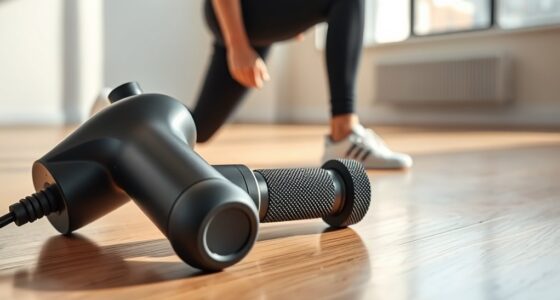
If you want quick, targeted relief for sore muscles, a massage gun might be your best choice, as it penetrates deeply to loosen knots and boost circulation. For broader muscle relaxation and improving flexibility, foam rollers are more effective, helping release trigger points and prevent injury over time. Each tool has its advantages, and choosing depends on your specific recovery needs. Keep exploring to find out which option suits you best.
Key Takeaways
- Massage guns offer targeted, deep tissue relief suitable for specific trigger points, while foam rollers provide broader muscle coverage for general flexibility.
- Foam rollers are cost-effective, easy to use, and ideal for improving overall muscle elasticity and preventing soreness.
- Massage guns quickly increase blood flow and relax tight muscles, making them effective for rapid recovery of sore spots.
- Foam rollers are better for long-term flexibility and muscle health through consistent self-myofascial release.
- Proper use and individual needs determine which tool is more effective; massage guns excel for precise relief, foam rollers for larger areas.
How Do Massage Guns and Foam Rollers Work?
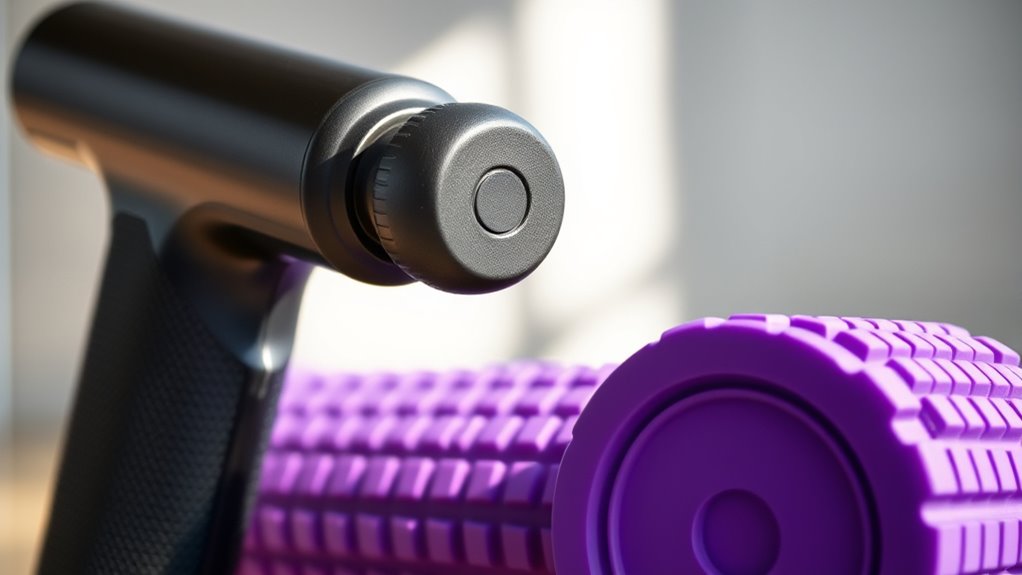
Both massage guns and foam rollers are designed to relieve muscle tension and promote recovery, but they do so through different mechanisms. Massage guns use percussive therapy, delivering rapid, targeted impulses that penetrate deep into muscles. This helps increase blood flow, reduce stiffness, and trigger muscle relaxation. Foam rollers, on the other hand, rely on self-myofascial release by applying sustained pressure across larger areas. When you roll over tight spots, it helps break up adhesions and loosen fascia, leading to pain management and improved flexibility. While massage guns focus on quick, precise relief, foam rollers provide broader, sustained pressure. Both methods effectively promote muscle relaxation, but their approaches complement each other depending on your needs. Regular use of either can also aid in reducing enlarged pores, which can indirectly benefit muscle recovery by supporting overall skin health. Incorporating proper technique and understanding their working mechanisms is essential to maximize their effectiveness and prevent injury. Additionally, understanding the benefits of each tool can help tailor your recovery routine for optimal results. Using a massage gun or foam roller can also help improve circulation, which is vital for overall muscle health and faster recovery.
Benefits of Using a Massage Gun for Muscle Recovery

Using a massage gun can boost your blood flow quickly, helping your muscles recover faster. It also eases muscle tension and stiffness, leaving you feeling more relaxed. Plus, regular use can improve your flexibility over time, making movement easier. Incorporating natural pools and landscaping into your recovery routine can help maintain consistent results and prevent future soreness. Additionally, the targeted massage provided by a gun allows for precise muscle relief, enhancing the overall effectiveness of your recovery efforts. Understanding self-care techniques can further optimize your muscle recovery and overall well-being. Incorporating modern health devices into your routine can also support faster recovery and better muscle health.
Accelerates Blood Circulation
A massage gun effectively boosts blood flow to your muscles, speeding up recovery and reducing soreness. When you target trigger points with its percussive therapy, you promote better circulation in those tight, knotted areas. This increased blood flow delivers more oxygen and nutrients to your muscles, helping them heal faster. Additionally, using a massage gun can assist with posture correction by loosening tight muscles that pull your body out of alignment. Improved circulation also aids in flushing out metabolic waste products that accumulate after exercise, further enhancing recovery. With regular use, you’ll notice your muscles feel more energized and less fatigued. Overall, a massage gun is a powerful tool to accelerate blood circulation, supporting quicker recovery and ideal muscle health.
Reduces Muscle Tension
By reducing muscle tension, a massage gun helps you move more freely and comfortably after workouts or long periods of inactivity. It targets trigger points and muscle knots directly, easing tightness and discomfort. The percussion therapy penetrates deep into your muscles, breaking up adhesions and releasing built-up tension. This process not only alleviates soreness but also prevents muscles from tightening excessively, which can hinder movement. By relaxing these tight spots, your muscles regain flexibility and ease of movement. Using a massage gun regularly can help prevent the formation of new trigger points and keep muscle knots from worsening. As a result, you’ll experience less stiffness and a quicker recovery, allowing you to stay active without persistent discomfort.
Enhances Flexibility
When you incorporate a massage gun into your recovery routine, it actively promotes greater muscle flexibility. By loosening tight muscles, it prepares your body for dynamic stretching, helping you move more freely. Regular use can improve range of motion and reduce stiffness, making your workouts more effective. To maximize benefits, combine massage gun sessions with proper hydration strategies, ensuring muscles stay pliable and recover faster. Incorporating evidence-based safety tips can also help prevent injury during recovery routines. Additionally, understanding how water-based therapies can complement your recovery can enhance overall results. Exploring recovery techniques can further optimize your progress and keep you active longer, especially when integrated with proper hydration strategies.
Advantages of Foam Rolling for Soreness Relief

Foam rolling offers an effective way to reduce soreness and speed up recovery after intense workouts. By applying pressure to trigger points and muscle knots, you can loosen tight areas that cause discomfort. Foam rolling helps break down adhesions and improves blood flow, which accelerates healing. It’s particularly useful for targeting specific sore spots, allowing you to focus on areas that feel tight or tender. Unlike passive rest, foam rolling actively engages your muscles, helping to release built-up tension. This self-myofascial release technique is simple, affordable, and can be done almost anywhere. Additionally, incorporating myofascial release techniques like foam rolling can help improve flexibility and prevent future injuries. Regular foam rolling not only alleviates soreness but also enhances overall muscle function, making it a valuable tool in your recovery routine. Moreover, consistent use of foam rolling can contribute to long-term muscle health, supporting your fitness goals. Incorporating proper techniques and tools can further maximize the benefits and ensure safety during your foam rolling sessions.
Situations Where a Massage Gun Might Outperform a Foam Roller

A massage gun can often outperform a foam roller in situations where targeted, deep tissue relief is needed quickly and with less effort. If you’re dealing with stubborn trigger points or muscle knots, a massage gun delivers precise, focused pressure directly to those tight areas. Unlike foam rolling, which can be uncomfortable or awkward when targeting specific spots, a massage gun allows you to pinpoint problem areas without needing to exert your body weight. It’s especially effective for relieving deep muscle tension in hard-to-reach locations, such as around the shoulders or calves. Additionally, the rapid pulses of a massage gun can help break up tight muscle fibers more efficiently, making it a better choice when you need fast, effective relief for specific sore spots.
Scenarios Where a Foam Roller Could Be More Effective

While a massage gun excels at targeting specific tight spots, a foam roller can be more effective for broader muscle release and improving flexibility. If you’re recovering from a sports massage or aiming to prevent injuries, using a foam roller helps loosen large muscle groups like quads, hamstrings, and calves. It’s especially useful after intense workouts to release tension and increase blood flow, reducing the risk of future injury. Foam rolling also promotes better range of motion, which can enhance your overall performance. For injury prevention, incorporating foam rolling into your regular routine helps keep muscles supple and balanced. Additionally, muscle recovery techniques such as foam rolling are essential components of an integrated approach to fitness and injury prevention. It’s a cost-effective, versatile tool that supports recovery and long-term muscle health, making it ideal for addressing larger muscle areas and maintaining flexibility. Proper technique is essential to maximize benefits and avoid potential discomfort or injury during foam rolling. Incorporating myofascial release methods like foam rolling can further enhance muscle flexibility and reduce soreness. Developing a consistent routine with proper self-myofascial release techniques can lead to improved muscle recovery outcomes over time.
Potential Risks and Precautions for Each Tool

Both massage guns and foam rollers carry potential risks if not used properly, so it’s important to exercise caution to prevent injury. Safety concerns arise from improper use, such as applying excessive pressure or using the tools on sensitive areas like joints, bones, or inflamed muscles. With massage guns, there’s a risk of bruising or nerve irritation if you set the intensity too high or press too hard. Foam rollers can cause bruises or exacerbate injuries if rolled over acute strains or swollen tissues. To minimize these risks, follow manufacturer instructions carefully, start with low intensity, and avoid sensitive or injured areas. Always listen to your body, and consult a healthcare professional if you’re unsure about technique or if pain persists. Proper technique and understanding of evidence‑informed guidance can help reduce these risks and maximize benefits.
Cost, Accessibility, and Ease of Use Comparison

When comparing massage guns and foam rollers, you’ll notice differences in cost and how easy they are to use. Massage guns usually require a bigger upfront investment but are simple to operate with just a few settings. Foam rollers are more affordable and straightforward, making them accessible for most users. Additionally, foam rollers are often used in conjunction with other recovery tools like sound healing techniques, which enhance relaxation and recovery routines.
Affordability and Investment
Considering the costs and ease of access, massage guns generally require a larger upfront investment than foam rollers, but they can be more versatile and effective for targeted relief. When you compare the cost comparison, foam rollers are considerably cheaper and often more accessible for most budgets. They are lightweight, portable, and require no batteries or charging, making them easy to store and use anywhere. Massage guns, on the other hand, tend to be pricier initially, but they offer multiple speeds and attachments, increasing their overall value. User accessibility varies; foam rollers are simple and straightforward, while massage guns may require some familiarity to operate effectively. Ultimately, your choice depends on your budget and how much you value targeted muscle treatment versus basic affordability.
Ease of Operation
While affordability influences your initial choice, how easy it is to operate these tools also plays a significant role. Massage guns are typically straightforward with simple controls, but their ergonomics matter—if they’re heavy or awkward to hold, use becomes less comfortable. Portability is a big advantage, as many models are compact and lightweight, making them easy to carry anywhere. Foam rollers, on the other hand, require minimal setup and don’t need batteries or power, which simplifies their use. They’re generally intuitive, with no complicated controls. Overall, foam rollers offer a more accessible, low-tech option, while massage guns provide advanced features but may require a bit more effort to operate effectively. Consider your comfort, mobility needs, and how much you value ease of use when choosing.
Making the Right Choice for Your Muscle Recovery Needs

Choosing the right tool for your muscle recovery depends on your specific needs and preferences. If you’re dealing with muscle fatigue or want to prevent injuries, consider how each option fits into your routine. A massage gun provides targeted, deep tissue relief, helping reduce soreness quickly and promoting blood flow. On the other hand, a foam roller offers a broader, more sustained massage that can improve flexibility and prevent injury over time. Think about how much pressure you’re comfortable with and whether you prefer active movement or stillness during recovery. If you need rapid relief from tight muscles, a massage gun might be better. For ongoing injury prevention and overall muscle health, a foam roller can be more effective. Choose based on your recovery goals and comfort level.
Frequently Asked Questions
Can I Use Both Tools Together for Better Recovery?
Yes, you can definitely use both tools together for better recovery. Combining a massage gun and foam roller offers dual tool benefits, allowing you to target different muscle groups and depths effectively. This combined recovery approach helps reduce soreness faster, improve flexibility, and promote blood flow more efficiently. Incorporate them into your routine to maximize muscle relief and enhance overall recovery, making your post-workout process more thorough and effective.
How Long Should I Use Each Tool per Session?
For effective recovery, follow duration guidelines of 1-2 minutes per muscle group when using a foam roller, and 15-30 seconds per spot with a massage gun. Focus on applying the tool evenly without overdoing it, and listen to your body’s signals. Keep your tool application time moderate to avoid irritation. Adjust based on your comfort level, but don’t exceed recommended durations to prevent muscle strain.
Are There Specific Muscle Groups Better Suited for One Tool?
You’ll find that foam rollers work best on larger, flat target muscle groups like your quads, hamstrings, and back, providing deep tissue release. Massage guns are more effective on smaller, knotted, or sore areas such as shoulders, calves, and forearms, as they deliver targeted percussive therapy. Choosing the right tool depends on the muscle group you’re targeting and the type of relief you need, maximizing your recovery.
How Do I Know if I’M Overusing These Recovery Tools?
Spotting signs of overstimulation helps you stay safe. If you notice persistent pain, increased soreness, or swelling, you might be overusing your recovery tools. Stick to proper usage techniques—limit sessions to 1-2 minutes per muscle group and avoid excessive pressure. Listen to your body; if it signals discomfort, back off. Moderation maximizes benefits and minimizes risks, making your recovery routine safer and more effective.
Which Tool Is More Suitable for Chronic Versus Acute Soreness?
For chronic muscle tension, a massage gun is more suitable because it delivers targeted deep tissue therapy, helping release long-term tightness. If you’re dealing with acute soreness, a foam roller works better by easing muscle tension through self-myofascial release, improving flexibility and blood flow. Use a massage gun for persistent issues and a foam roller for quick relief after workouts to keep muscles healthy and comfortable.
Conclusion
Choosing between a massage gun and a foam roller is like picking the right tool for a job—you’ll want what works best for your muscles. If you need targeted relief, a massage gun might be your go-to. For broader soreness, a foam roller can work wonders. Consider your comfort, budget, and recovery needs. Ultimately, finding what feels right is like tuning an instrument—you’ll get better results when it’s just right for you.