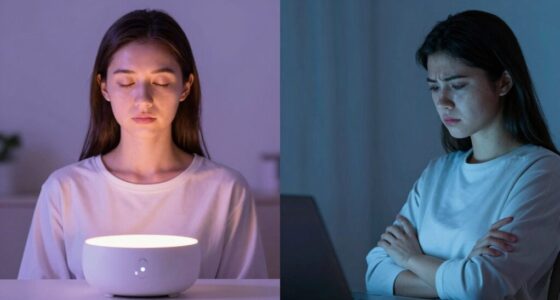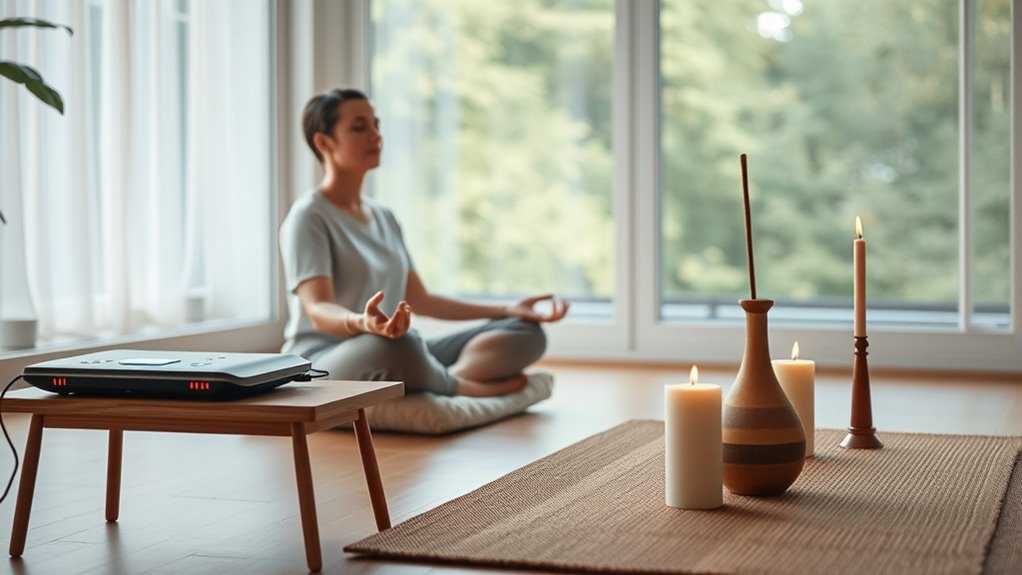

Choosing between biofeedback and traditional meditation depends on your preferences and goals. If you enjoy technology, data, and structured progress, biofeedback offers immediate insights that help manage stress more quickly. On the other hand, if you prefer a simple, equipment-free practice that fosters mindfulness and mental clarity, meditation might suit you best. Both can boost well-being, and by exploring further, you’ll discover how combining them could amplify your relaxation techniques.

Get wellness gear delivered free with Prime
- Fast, free delivery on millions of items
- Prime Video, Amazon Music and more included
- Member-only deals all year
Key Takeaways
- Biofeedback offers real-time physiological data and structured progress tracking, ideal for data-driven individuals seeking quick results.
- Traditional meditation requires no equipment, providing a flexible, accessible practice suitable for anyone, anywhere.
- Biofeedback accelerates stress awareness and management through technology, while meditation enhances mental clarity and emotional regulation over time.
- Those comfortable with technology and measurable goals may prefer biofeedback; individuals seeking simplicity and introspection may favor meditation.
- Combining both methods can maximize stress reduction benefits, tailoring approaches to personal preferences and resource availability.
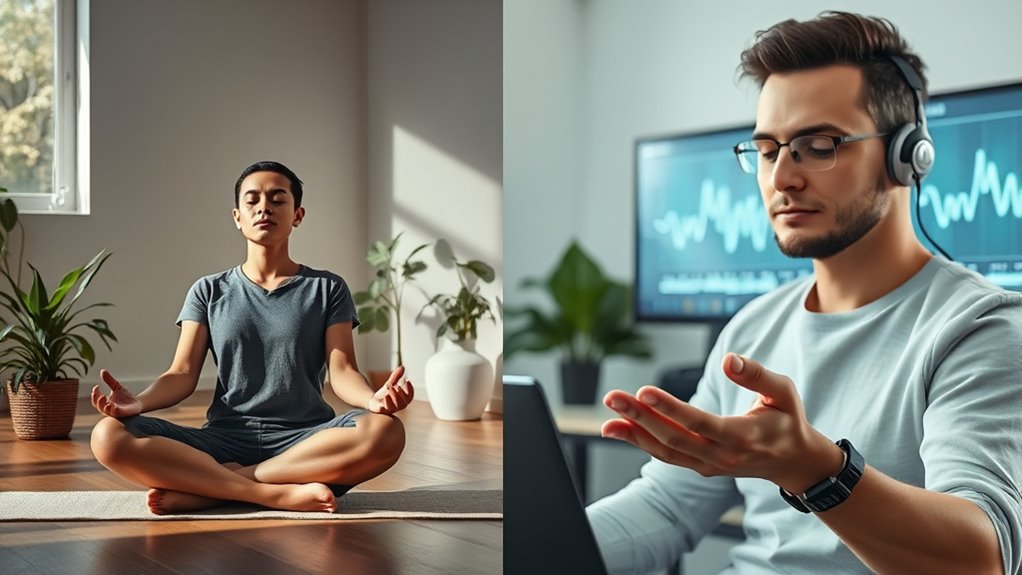
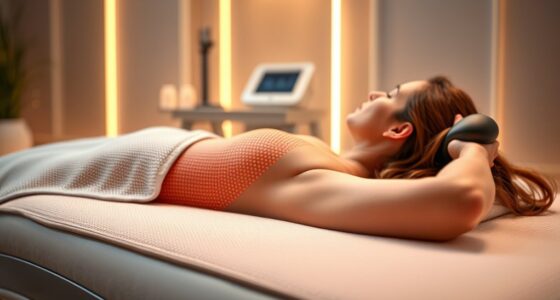
When it comes to managing stress and enhancing mental well-being, both biofeedback and traditional meditation offer effective approaches, but they work in different ways. Biofeedback uses technology to provide real-time data about your physiological functions, such as heart rate, muscle tension, or skin temperature. By monitoring these signals, you gain immediate awareness of your body’s responses, which helps you learn to control them consciously. This direct feedback can accelerate your understanding of stress triggers and promote mindfulness benefits more rapidly. Many biofeedback devices integrate seamlessly with smartphones or computers, making it easier to incorporate into your daily routine. With technology integration, you can access detailed graphs and progress reports, motivating you to stay consistent. This method often appeals to those who enjoy data-driven approaches and want to see measurable improvements in their stress levels and mental health. Additionally, biofeedback can be especially beneficial for individuals who prefer structured, goal-oriented methods, as it provides clear metrics to track progress over time.
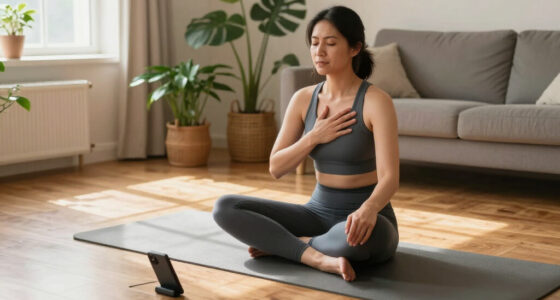
Traditional meditation, on the other hand, emphasizes mindfulness and mental focus without relying on external devices. It involves practices like focused breathing, body scans, or guided imagery, helping you cultivate a present-moment awareness that reduces anxiety and promotes relaxation. The beauty of meditation lies in its simplicity and accessibility—you don’t need any equipment, just a quiet space and some time. Its mindfulness benefits are well-documented, including improved emotional regulation, increased patience, and greater overall mental clarity. Many practitioners find that meditation fosters a sense of inner peace that endures beyond the practice session, gradually transforming how they respond to everyday stressors. Unlike biofeedback, which provides immediate physiological insights, meditation encourages a more intuitive understanding of your mental states. Over time, regular practice can lead to lasting changes in brain structure, strengthening your ability to stay calm under pressure.
Deciding which approach suits you best depends on your personality and preferences. If you’re someone who enjoys using technology to track progress and prefers a more structured, data-backed method, biofeedback might be a better fit. It can offer quick feedback loops and tangible evidence of improvement, making it motivating for those new to stress management. Conversely, if you prefer a low-tech, introspective approach that cultivates mindfulness through mental discipline, traditional meditation could be more suitable. It requires minimal resources and can be practiced anywhere, making it highly flexible. Ultimately, both methods can complement each other; integrating biofeedback’s technological insights with meditation’s mental focus can deepen your understanding of stress and enhance your mental well-being. Employing mindfulness techniques alongside biofeedback can further amplify the benefits of both approaches. Whichever path you choose, consistency is key to *release* their full benefits.
biofeedback stress management device
As an affiliate, we earn on qualifying purchases.
As an affiliate, we earn on qualifying purchases.
Frequently Asked Questions
Can Biofeedback Replace Traditional Meditation Completely?
Biofeedback can’t fully replace traditional meditation, but it can enhance your mindfulness practice through technological integration. While biofeedback offers real-time data to help regulate your body, meditation encourages mental clarity and emotional balance without devices. You might find combining both methods beneficial, using biofeedback for immediate feedback and meditation for sustained inner peace. Ultimately, it depends on your goals, preferences, and how you want to incorporate mindfulness into your life.
What Are the Costs Associated With Biofeedback Devices?
Think of biofeedback devices as investments in your wellness journey; their costs can vary widely. You might find options ranging from affordable handheld gadgets to more expensive professional setups, so cost considerations are key. While some devices are budget-friendly, others may require a significant upfront investment. Assess your needs and budget carefully to find a device that offers device affordability without compromising quality, making biofeedback accessible for your personal health goals.
How Quickly Can I Expect to See Benefits From Each Method?
You can start noticing benefits from both methods within a few weeks with consistent mindfulness practice. Biofeedback often provides quicker feedback, helping you see real-time progress through technology integration, which can boost motivation. Traditional meditation may take longer to see visible results but builds deep mindfulness over time. Staying consistent is key, regardless of your choice, to maximize benefits and deepen your relaxation or self-awareness.
Are There Any Risks or Contraindications for Biofeedback?
Biofeedback is generally safe, but you should watch out for medical risks and contraindication concerns. If you have heart conditions, epilepsy, or skin infections, consult your healthcare provider before starting, as these issues might interfere with the sensors or cause discomfort. While rare, some people might experience anxiety or frustration if they don’t see quick results. Always discuss your medical history to guarantee biofeedback suits your needs safely.
Which Method Is More Effective for Stress Reduction?
Biofeedback often proves more effective for stress reduction because it enhances your mind-body connection by providing real-time feedback, allowing you to learn relaxation techniques more quickly. With biofeedback, you actively monitor your physiological responses, making relaxation more targeted. Traditional meditation also works, but it may take longer to see results. Ultimately, choose the method that resonates with you and feels more engaging, ensuring better long-term stress management.
As an affiliate, we earn on qualifying purchases.
Conclusion
Choosing between biofeedback and traditional meditation depends on your personal preferences and goals. Notably, a 2020 study found that 65% of users reported quicker stress relief with biofeedback, while others preferred meditation’s simplicity. Ultimately, both methods can enhance your well-being. Try experimenting with each to see which suits you best. Remember, consistency matters most—so pick the one you’ll stick with and enjoy the journey to better mental health.
As an affiliate, we earn on qualifying purchases.
As an affiliate, we earn on qualifying purchases.
Fall Picks
fall essentials
As an affiliate, we earn on qualifying purchases.