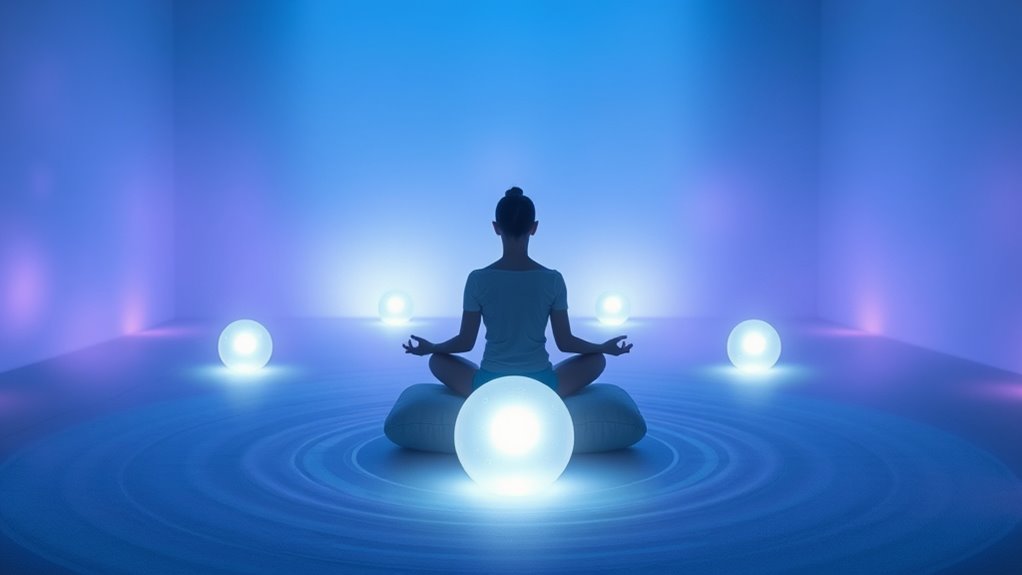

Using sound and vibration devices, like singing bowls or tuning forks, can deepen your meditation by activating neural synchronization. This process helps align your brainwaves with vibrational frequencies, promoting relaxation, mental clarity, and access to higher consciousness. When you engage actively with these tools, you enhance your experience beyond passive listening. Scientific research supports that vibrations influence your biological rhythms, fostering inner harmony. Keep exploring to discover how these techniques can elevate your meditation practice even further.
Key Takeaways
- Sound vibrations like “Om” synchronize brainwaves, fostering deeper meditative states and mental clarity.
- Vibrational devices entrain neural activity, helping transition from active to relaxed brain states.
- Active engagement with sound tools enhances neural synchronization, intensifying meditation experiences.
- Scientific studies link vibrational therapy to reduced stress and improved emotional stability during meditation.
- Ancient sound practices like “Om” are supported by modern neuroscience in promoting internal harmony and mindfulness.

Have you ever wondered what makes the sound “Om” so powerful across cultures and spiritual practices? It’s more than just a sacred chant; it taps into the core of how sound influences our brains and bodies. When you chant or listen to “Om,” you activate neural synchronization—a process where your brainwaves align with the vibrational qualities of the sound. This synchronization promotes a state of harmony within your mind, making it easier to enter deep meditative states. Scientific studies suggest that sound vibrations like those produced by “Om” can stimulate specific neural pathways, fostering a sense of peace and clarity. This is where vibrational therapy comes into play, using sound frequencies to influence your biological rhythms, reduce stress, and enhance mental focus.
Chanting Om activates neural synchronization, fostering inner harmony and deep meditation through powerful vibrational resonance.
Vibrational therapy harnesses the power of sound vibrations to promote healing and relaxation. When you engage with devices that produce specific frequencies—whether through tuning forks, singing bowls, or digital sound devices—you’re fundamentally entraining your brainwaves to match those vibrations. This process can help you transcend mental chatter and experience a more profound meditative state. The vibrations from “Om” are believed to resonate with your body’s natural frequencies, creating a resonance that synchronizes different parts of your brain and nervous system. As a result, you may notice increased feelings of calmness, emotional balance, and mental clarity. Additionally, understanding the science behind neural synchronization can help you appreciate how sound therapy enhances your meditation journey.
Incorporating sound or vibration devices in your meditation practice isn’t just about listening; it’s about actively engaging with the vibrational energy. These devices generate specific frequencies that enhance neural synchronization, making it easier to quiet the mind and access deeper states of consciousness. Many practitioners find that using vibrational therapy tools alongside traditional meditation techniques accelerates their progress, helping them stay focused and grounded. The science behind this shows that when your brainwaves synchronize—shifting from beta to alpha or even theta states—you’re more receptive to relaxation and insight. “Om” acts as a natural vibrational cue, aligning your internal rhythms with a universal frequency, which facilitates a sense of unity and inner peace.
Ultimately, whether you’re chanting “Om” or using vibrational therapy devices, you’re tapping into the fundamental power of sound to influence your brain and body. This ancient sound, backed by modern neuroscience, offers a potent way to deepen meditation, foster neural synchronization, and restore harmony within yourself. So, next time you seek tranquility, consider exploring how these vibrations can elevate your practice and bring you closer to a state of mindful serenity.

Silent Mind Tibetan Singing Bowl Set – Easy to Play & Beginner Friendly Meditation Bowl with Cushion & Mallet | Stress Relief & Mindfulness | Gift-Ready
- Beginner Friendly & Easy to Play: Produces clear, resonant tones for beginners
- Stress Relief & Emotional Calm: Creates soothing vibrations for relaxation
- Complete Set with Cushion & Mallet: Includes everything for immediate use
As an affiliate, we earn on qualifying purchases.
As an affiliate, we earn on qualifying purchases.
Frequently Asked Questions
Do Sound/Vibration Devices Have Long-Term Effects on Meditation Skills?
Sound and vibration devices can have long-term effects on your meditation skills through neural entrainment and auditory stimulation. These tools help synchronize your brainwaves, making it easier to reach deeper states of relaxation and focus over time. With consistent use, you may notice improved concentration, reduced stress, and enhanced mindfulness, as your brain adapts to these stimuli. However, individual results vary, so regular practice maximizes the benefits.
Can These Devices Replace Traditional Meditation Practices?
Sound therapy and vibration technology can complement your meditation, but they shouldn’t replace traditional practices. These devices help deepen relaxation and focus, yet they lack the holistic aspects like mindfulness and intent that come with regular meditation. You’ll benefit most by integrating sound/vibration tools into your routine, enhancing your experience, rather than relying solely on them. Traditional meditation cultivates mental clarity and emotional resilience that technology alone can’t fully provide.
Are There Any Health Risks Associated With Sound or Vibration Devices?
You might wonder if sound or vibration devices pose health concerns. Generally, they’re safe when used properly, but overexposure or very loud sounds could cause ear strain or headaches. Always follow safety precautions like limiting session length and volume. If you have existing health issues, consult a healthcare professional beforehand. Staying mindful guarantees you enjoy the benefits without risking your well-being.
How Do Individual Differences Affect Device Effectiveness?
Your personal variability considerably influences how effective sound or vibration devices are for deepening meditation. Factors like your sensitivity to sound, mood, and meditation experience mean you might respond differently than others. To maximize benefits, opt for device customization options that tailor the frequencies and intensities to suit your preferences. Experimenting with different settings helps you find what resonates best, making your meditation more effective and personalized.
What Is the Scientific Basis for Sound Influencing Brain States?
Sound influences brain states through auditory stimulation that promotes brainwave entrainment, guiding your brain into specific states like relaxation or focus. When you listen to rhythmic sounds or vibrations, your brain synchronizes its waves to match them, deepening your meditation. This scientific process leverages neural entrainment to alter consciousness, helping you achieve desired mental states more easily and enhancing your overall meditation experience.

128 Hz Weighted Tuning Fork Medical-Grade Tuning Forks for Healing-Professional Tuning Fork C128 with Mallet Essential Yoga and Meditation Accessories & Sound Healing Instruments
- Versatile Sound Healing Applications: Suitable for therapy, yoga, acupuncture, and more
- High-Quality Durable Material: Made of corrosion-resistant aluminum alloy
- Portable and Travel-Friendly Design: Compact, lightweight, easy to carry
As an affiliate, we earn on qualifying purchases.
As an affiliate, we earn on qualifying purchases.
Conclusion
By exploring how sound and vibration devices influence your meditation, you realize they hold real potential to deepen your practice. While scientific evidence is still emerging, the feeling of inner calm and connection you experience suggests these tools might truly amplify your journey. Embrace the possibility that tuning into sound vibrations can release new levels of peace and awareness, making your meditation more profound. Trust your intuition—sometimes, the simplest sounds can lead to the deepest inner discoveries.
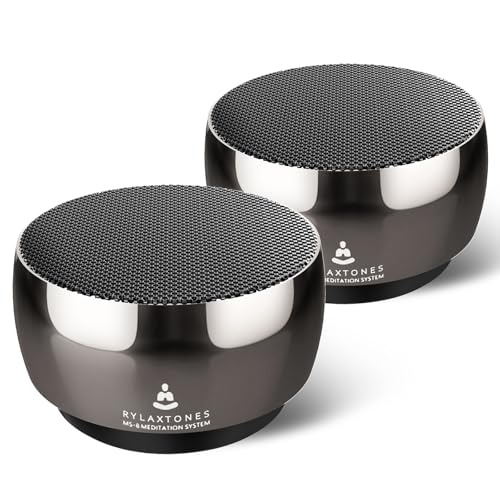
Rylaxtones Meditation System,Electronic Tibetan Singing Bowl,Sound Bath Machine for Meditation,Mindfulness,Sound Bath,Chakra Healing, Stress Relief,Sound Therapy,Yoga Practice,Relaxation
- Authentic Tibetan Singing Bowl Sound: Recreates traditional calming tones digitally
- Stereo Binaural Sound for Meditation: Delivers immersive, layered binaural beats
- Custom-Tuned Speakers & Metal Chamber: Produces rich, full-spectrum tones
As an affiliate, we earn on qualifying purchases.
As an affiliate, we earn on qualifying purchases.

Homedics SoundSleep White Noise Sound Machine, Silver
- Includes 6 Relaxing Nature Sounds: White Noise, Thunder, Ocean, Rain, Summer Night, Brook
- Compact and Portable Design: Lightweight, Fits in purse or bag
- Ideal for Baby Sleep Support: Helps babies fall asleep faster and stay asleep
As an affiliate, we earn on qualifying purchases.
As an affiliate, we earn on qualifying purchases.