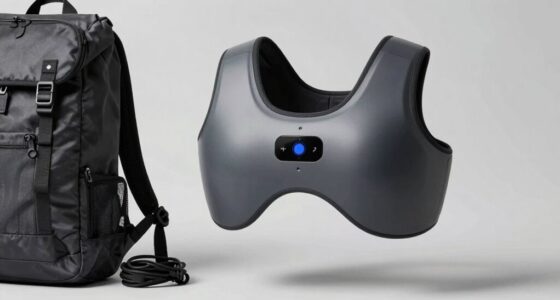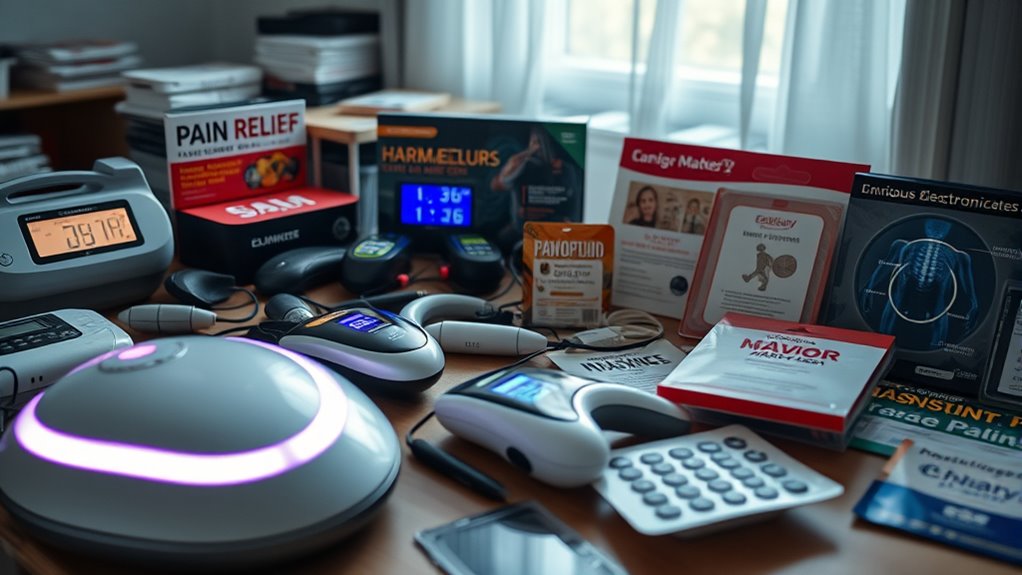

Many pain relief gadgets claim to eliminate pain instantly but often fall short of their promises. Devices like electrical stimulation pads, magnets, or light therapy tools frequently lack scientific validation and may deliver minimal or no relief. Be cautious of gadgets marketed as miraculous cures—they’re often marketing gimmicks designed to profit rather than help. If you want to avoid wasting money on ineffective options, stay with evidence-based treatments and discover which devices actually stand up to scrutiny.

Get wellness gear delivered free with Prime
- Fast, free delivery on millions of items
- Prime Video, Amazon Music and more included
- Member-only deals all year
Key Takeaways
- Many pain relief gadgets claim instant results without scientific validation, often serving as marketing gimmicks.
- Devices marketed as “miraculous cures” generally lack clinical evidence supporting their effectiveness.
- Consumers should scrutinize claims carefully; unvalidated devices rarely provide genuine pain relief.
- Homeopathic and natural product claims often lack scientific backing and can be ineffective or risky.
- Relying on evidence-based treatments recommended by healthcare professionals is safer than unproven gadgets.

Pain relief gadgets promising quick and effortless cures have flooded the market, but many are scams that can waste your money or even harm your health. You might see devices claiming to eliminate pain instantly, but beware—most lack scientific backing and deliver little to no relief. Instead, they often prey on your desire for a simple fix, convincing you to buy products that simply don’t work. As you navigate these options, it’s important to recognize that some alternatives, like homeopathic remedies and over-the-counter supplements, are marketed as natural solutions but also fall into the scam category when they promise miraculous results. These so-called natural products can be appealing, but the truth is that many lack rigorous testing and clinical evidence to support their claims. They might give you false hope, leading you to spend money on remedies that provide no real benefit, or worse, cause unwanted side effects.
When considering homeopathic remedies, remember that their fundamental principle is highly diluted substances meant to stimulate your body’s healing response. However, scientific studies generally show that these remedies are no more effective than placebos. The labels may suggest they can cure chronic pain, but the reality is that any relief you experience is more likely due to your own placebo effect rather than the remedy itself. Over-the-counter supplements, on the other hand, often market themselves as natural pain relievers, but many lack regulation and proof of efficacy. Some may contain ingredients that are unsafe or interact negatively with other medications you’re taking. You might see claims that certain supplements can reduce inflammation or ease joint pain, but without proper clinical trials, these claims are often exaggerated or false. Furthermore, the popularity of high-tech pain gadgets has led to an influx of devices that claim to provide relief without scientific validation, making it even more important to scrutinize their claims.
It’s tempting to try homeopathic remedies or over-the-counter supplements promising quick pain relief, but it’s crucial to approach these with skepticism. Many of these products are not backed by scientific evidence, and some can even be dangerous. Instead of falling for these scams, focus on evidence-based treatments recommended by healthcare professionals. If you’re considering supplements, look for reputable brands with transparent ingredient lists and consult your doctor first. Remember, no pill or device can replace proper medical diagnosis and treatment. Be cautious of gadgets that promise miraculous cures—more often than not, they’re just marketing gimmicks designed to make a quick buck at your expense. Protect yourself by researching thoroughly, sticking with proven therapies, and always consulting healthcare providers for any persistent pain.
evidence-based pain relief devices
As an affiliate, we earn on qualifying purchases.
As an affiliate, we earn on qualifying purchases.
Frequently Asked Questions
How Can I Identify a Legitimate Pain Relief Device?
To identify a legitimate pain relief device, look for evidence of clinical trials demonstrating its safety and effectiveness. Check if it has proper product certifications from reputable organizations, which ensure quality standards. Avoid devices that make exaggerated claims or lack scientific backing. You can also research user reviews and consult healthcare professionals to confirm the device’s credibility. These steps help you choose a trustworthy product that genuinely relieves pain.
Are There Any Proven Effective Non-Electronic Pain Relief Methods?
Yes, there are proven effective non-electronic pain relief methods. You can explore alternative therapies like acupuncture, massage, and physical therapy, which have strong evidence supporting their benefits. Herbal remedies such as turmeric, ginger, and arnica may also help reduce inflammation and pain. Always consult with a healthcare professional before trying new treatments, especially herbal remedies, to guarantee they’re safe and appropriate for your condition.
What Are the Regulatory Standards for Medical Gadgets?
Think of regulatory standards like a safety net catching you. You need to make certain your device meets strict rules for regulatory compliance and device certification before use. Regulatory agencies, such as the FDA, set these standards to guarantee safety and effectiveness. Always check if a medical gadget has proper certification; this way, you can trust it’s been tested and approved, reducing risks and ensuring reliable pain relief.
Can Placebo Effects Influence Pain Relief Gadget Outcomes?
Yes, placebo influence and psychological effects can markedly impact how effective a pain relief gadget seems. When you believe a device will work, your mind can produce real pain relief, even if the device has no active therapeutic ingredients. This psychological effect often skews results, making it seem like the gadget is effective when, in reality, the relief stems from your expectation. Always consider these factors when evaluating such devices.
How Do I Report a Scam or Fraudulent Device?
Think of yourself as a detective uncovering a hidden fraud; to report a scam or fraudulent device, start by documenting your experience with consumer complaints. Then, contact regulatory agencies like the FDA or FTC, providing all evidence. Your report helps protect others from false claims and shady devices. Don’t hesitate—your action can prevent more victims from falling prey to deceptive gadgets.
scientifically validated electrical stimulation pads
As an affiliate, we earn on qualifying purchases.
As an affiliate, we earn on qualifying purchases.
Conclusion
So, next time you’re tempted by a flashy pain relief gadget promising quick fixes, think twice. Not every device lives up to its claims, and some could leave you more frustrated than relieved. Stay cautious, do your research, and don’t let slick marketing fool you. The truth is, the real solution might be closer than you think—but only if you’re willing to look beyond the hype. Will you uncover the scams before it’s too late?
clinical light therapy pain relief
As an affiliate, we earn on qualifying purchases.
As an affiliate, we earn on qualifying purchases.
professional recommended pain management gadgets
As an affiliate, we earn on qualifying purchases.
As an affiliate, we earn on qualifying purchases.
Halloween Picks
halloween
As an affiliate, we earn on qualifying purchases.