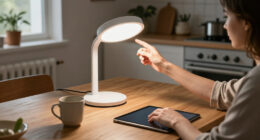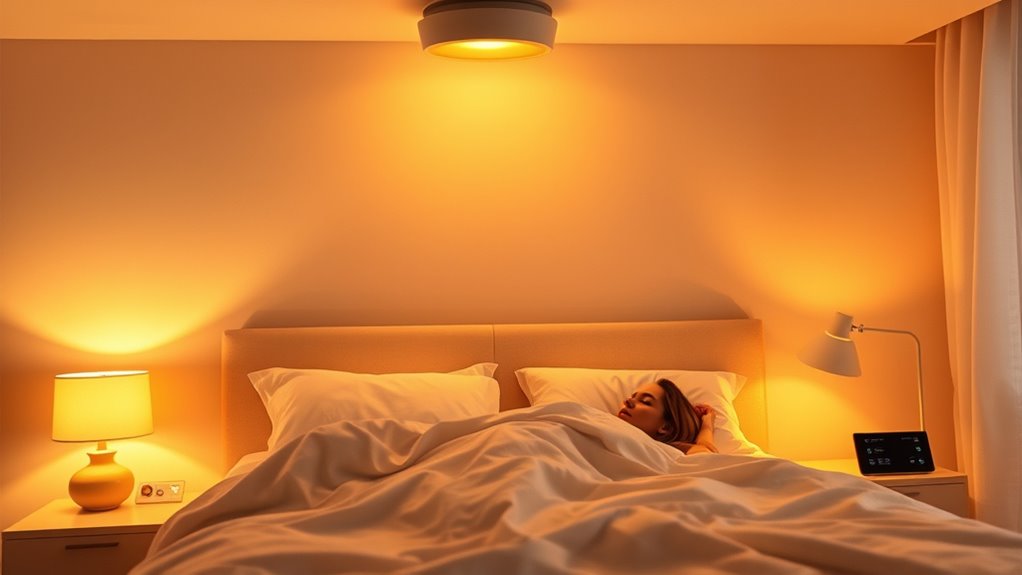

To support healthy sleep cycles with smart lighting, set it to mimic natural light patterns by dimming and warming the colors in the evening to promote relaxation. Use gradual sunrise simulations for mornings and avoid blue light exposure before bed. Schedule lights to follow your circadian rhythm, adjusting brightness and color temperature accordingly. Mastering these settings helps sync your internal clock, and if you explore further, you’ll discover even more ways to enhance your sleep environment.

Get wellness gear delivered free with Prime
- Fast, free delivery on millions of items
- Prime Video, Amazon Music and more included
- Member-only deals all year
Key Takeaways
- Program smart lights to gradually dim and shift to warm tones in the evening to signal wind-down time.
- Use bright, blue-enriched light during the day to promote alertness and proper circadian alignment.
- Schedule consistent routines for waking and sleeping that mimic natural sunrise and sunset patterns.
- Adjust color temperature throughout the day, maintaining cool hues in daytime and warmer hues at night for melatonin support.
- Incorporate automation and scene settings to create a seamless transition between active and restful lighting environments.
As an affiliate, we earn on qualifying purchases.
Understanding the Impact of Light on Sleep Patterns

Light plays a crucial role in regulating your sleep patterns because it influences your body’s internal clock, known as the circadian rhythm. When exposed to natural light during the day, your circadian rhythm stays synchronized, signaling wakefulness. Conversely, exposure to dim or artificial light at night can disrupt this cycle. Light pollution from streetlights and screens can interfere with your ability to fall asleep and reduce sleep quality. It’s essential to manage your exposure to light, especially in the evening, to support healthy sleep patterns. Understanding how light impacts your circadian rhythm helps you make better choices about lighting in your environment, ensuring it promotes relaxation and prepares your body for restful sleep. Proper lighting management can further enhance your sleep quality by minimizing disruptions caused by inappropriate light exposure at night. Additionally, integrating smart lighting that adjusts automatically to the time of day can help maintain your circadian alignment and improve overall sleep health. Moreover, using adjustable lighting systems allows for personalized control over light intensity and color temperature, further supporting your sleep-wake cycle. Being mindful of light exposure timing can also help strengthen your natural sleep signals and improve overall sleep efficiency. Recognizing the importance of light-dark cycles can help you develop habits that reinforce your body’s natural rhythms and promote restorative sleep.
As an affiliate, we earn on qualifying purchases.
Choosing the Right Smart Lighting System for Sleep Support
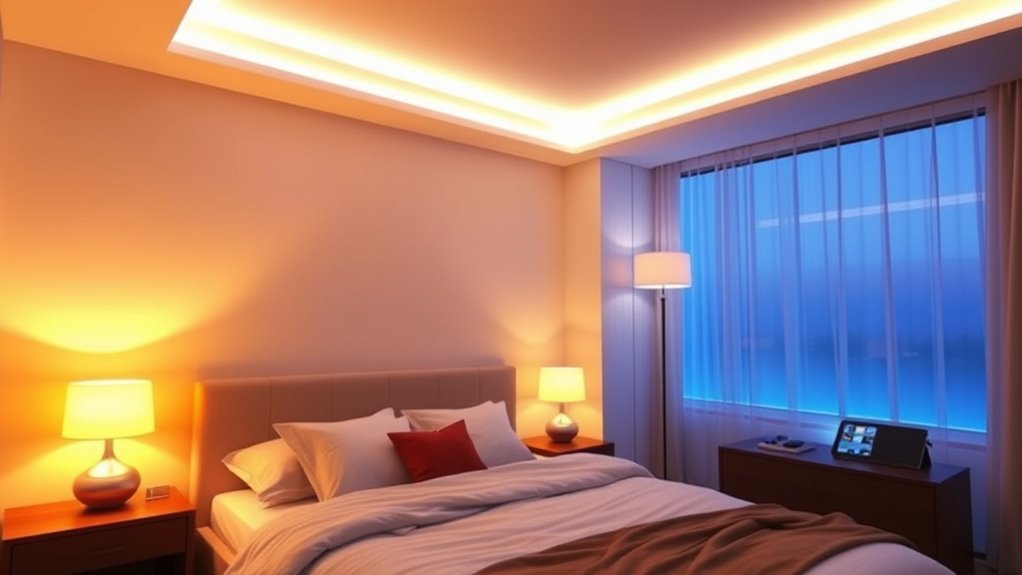
Selecting the right smart lighting system can substantially improve your sleep quality by helping you control light exposure more effectively. When choosing smart lighting, prioritize systems that offer adjustable brightness and color temperature, especially options that mimic natural light patterns. Look for features like scheduling and automation, which support good sleep hygiene by gradually dimming lights in the evening and brightening in the morning. Compatibility with your existing devices and ease of use are also important. A well-designed smart lighting system allows you to create a calming environment before bed and maintain healthy sleep cycles. Incorporating circadian rhythm awareness into your lighting choices can further optimize your sleep patterns. Additionally, considering how light spectrum control can influence your melatonin production will help you select a system that supports your overall sleep health. Understanding lighting influence on sleep can guide you in making more effective choices. Being aware of light exposure timing can help you better align your environment with your natural biological rhythms. Utilizing smart automation features can enhance your sleep environment by adjusting lighting seamlessly based on your schedule or natural light levels. By investing in the right technology, you set the foundation for better sleep habits and overall well-being.
sunrise alarm clock with smart light
As an affiliate, we earn on qualifying purchases.
As an affiliate, we earn on qualifying purchases.
Setting Up Your Smart Lights for Evening Wind-Down

To create a relaxing evening environment, start by gradually dimming your lights as the night approaches. Use warm light settings to promote calmness and signal your body that it’s time to wind down. Schedule your lighting shifts so they happen automatically, making it easier to stick to a calming routine. Incorporating appropriate lighting can also help reinforce healthy sleep patterns and improve overall sleep quality. Additionally, adjusting your circadian rhythm with smart lighting can further support your sleep health. Designing your lighting environment to align with natural light cycles can optimize your body’s internal clock and enhance sleep quality. Incorporating solar system insights into your lighting schedule can help synchronize your environment with natural daylight patterns.
Dimming Lights Gradually
As evening approaches, gradually dimming your smart lights creates a calming environment that signals your body it’s time to wind down. This gentle reduction in brightness aligns with your circadian rhythms, helping your body prepare for sleep. Since light sensitivity varies throughout the day, a slow decrease in illumination prevents sudden changes that could disrupt your natural sleep signals. Use your smart lighting system to set a schedule that gradually decreases light levels over 30 to 60 minutes. This mimics natural sunset patterns, reinforcing your body’s internal clock. By intentionally dimming lights, you support healthy sleep cycles and reduce alertness, making it easier to transition into restful sleep. Incorporating automatic dimming features can ensure a consistent and seamless wind-down routine. Establishing a consistent evening lighting routine also helps condition your body to recognize it’s time to relax, further supporting your sleep quality. Consistent evening dimming becomes a simple yet effective tool for improving overall sleep quality. Additionally, understanding how light sensitivity varies among individuals can help tailor your lighting setup for maximum sleep benefits. Recognizing your personal light sensitivity helps optimize your environment for better sleep outcomes.
Use Warm Light Settings
Using warm light settings is essential for creating a relaxing environment that prepares your body for sleep. Adjust the color temperature of your smart lights to a warmer tone, around 2700K to 3000K, which mimics sunset and promotes relaxation. Keep the light intensity low, avoiding bright or harsh lighting that can interfere with melatonin production. Warm lighting helps signal to your brain that it’s time to wind down, easing you into a restful state. Use your smart lighting app to set these preferences automatically during your evening hours, ensuring a seamless shift from daytime brightness. Consistently using warm light settings can make your environment more conducive to falling asleep naturally. Remember, the goal is to create a cozy, calming atmosphere that supports your sleep cycle. Creating calm environments with suitable lighting can also reduce stress and improve overall sleep quality. Incorporating smart lighting controls can help automate this process, making it easier to maintain healthy sleep habits. To enhance relaxation further, consider integrating aromatherapy with essential oils into your bedtime routine, which can promote a sense of calm and aid in sleep. Additionally, being mindful of light exposure before bed helps prevent disruption of your circadian rhythm.
Schedule Evening Transitions
Setting up your smart lights to automatically shift in the evening guarantees a smooth wind-down routine. You can create an ambient glow that gradually softens, signaling your body it’s time to relax. Use light layering to blend dim, warm tones with gentle accents, avoiding harsh brightness. Program your lights to dim gradually, mimicking natural sunset colors, which helps lower cortisol levels and prepares you for sleep. Incorporate subtle changes in color temperature and brightness, so the progression feels seamless and calming. This setup encourages your mind to unwind and reduces exposure to blue light, promoting melatonin production. Consistent evening transitions establish a predictable routine, making it easier to signal to your body that bedtime is approaching, supporting healthier sleep cycles.
adjustable color temperature smart lights
As an affiliate, we earn on qualifying purchases.
As an affiliate, we earn on qualifying purchases.
Programming Wake-Up Routines With Gradual Brightening
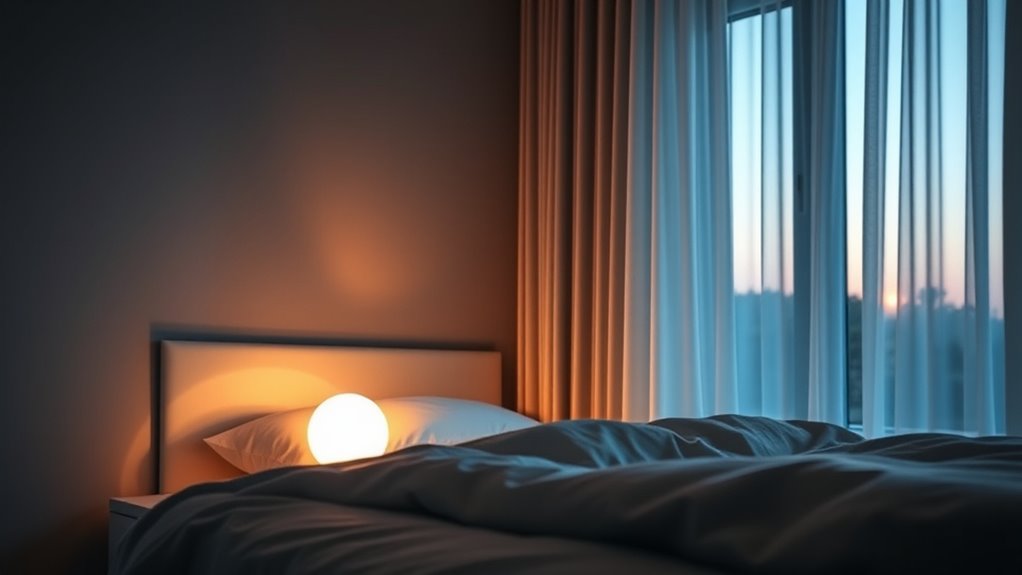
You can create wake-up routines that mimic natural light by setting smooth brightness gradients. Timing is key—schedule the lights to gradually brighten over a specific period to wake you gently. Personalizing light levels guarantees your routine feels comfortable, helping you start the day refreshed.
Setting Brightness Gradients
To create an effective wake-up routine, gradually brightening your smart lighting is essential. Setting a smooth brightness gradient flow mimics natural sunrise, helping your body transition from sleep to wakefulness. Adjust the light intensity gradually over 20-30 minutes, increasing from dim to full brightness. This not only supports healthy sleep cycles but also enhances color therapy, as warmer tones can promote relaxation while cooler tones stimulate alertness. By fine-tuning the brightness gradient, you create a gentle awakening that feels natural and calming. Experiment with different light intensities to find what best suits your preferences, ensuring a seamless start to your day. Properly set gradients help reinforce your body’s circadian rhythm, making mornings more pleasant and less abrupt.
Timing Wake-Up Lights
Timing your wake-up lights effectively guarantees a smooth shift from sleep to wakefulness. By scheduling gradual brightening to coincide with your natural wake time, you create a gentle transition that supports your bedtime routines and enhances your sleep environment. This approach reduces morning grogginess and helps you wake up feeling more refreshed. Adjust the light to start dim and gradually increase over 20-30 minutes, aligning with your alarm if needed. Consistency is key; setting the same wake-up routine daily reinforces healthy sleep patterns. Proper timing guarantees you’re not jolted awake abruptly, maintaining the integrity of your sleep cycle and fostering a more restful, balanced sleep environment. This simple adjustment can markedly improve how you wake up each day.
Personalizing Light Levels
Personalizing light levels allows you to tailor your wake-up routine to your preferences and sleep environment. By adjusting light intensity, you can create a gradual increase that mimics natural sunrise, making waking up smoother and less jarring. With color customization, you can set the light to shift from warm tones to brighter, cooler shades, enhancing alertness. Many smart lighting systems enable you to program these changes in advance, ensuring your bedroom’s lighting aligns with your desired wake-up experience. Fine-tuning light levels helps you wake up feeling more refreshed and supports your sleep cycle by avoiding abrupt changes. Incorporating sleep environment optimization can further enhance your overall sleep quality and well-being. Adjusting light levels to match your connected equipment can create a cohesive environment that promotes better sleep hygiene. Experiment with different brightness and color settings to find what works best, making your mornings more comfortable and conducive to a healthy sleep routine.
Utilizing Color Temperature Adjustments to Promote Melatonin Production
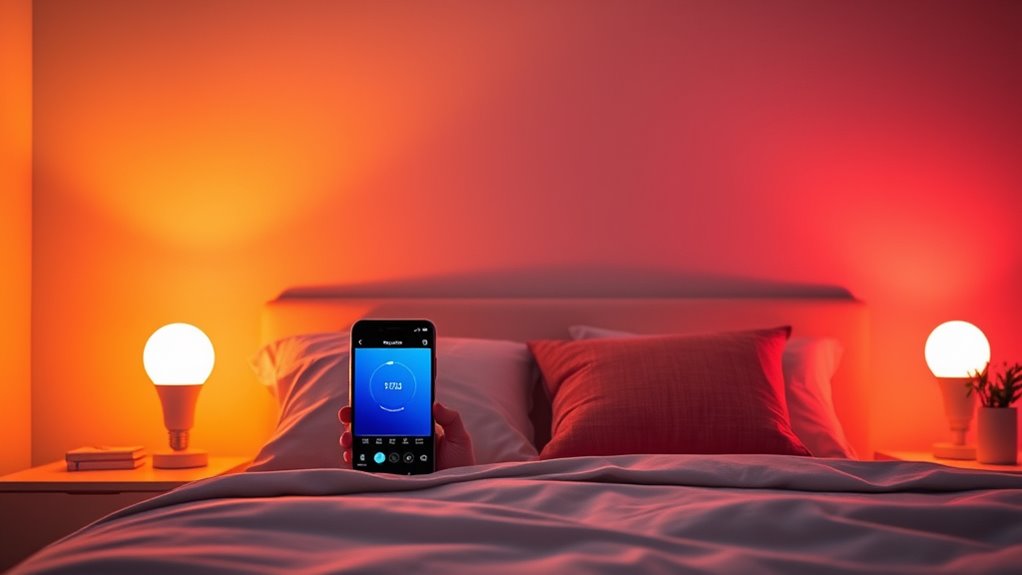
Adjusting the color temperature of your smart lighting can substantially influence your body’s melatonin production, which is essential for healthy sleep. Cooler light (blue-rich) suppresses melatonin, disrupting your circadian rhythms, while warmer light (red or amber) promotes melatonin production, helping you wind down. Use warmer tones in the evening to support your natural sleep cycle. Consider this table:
| Color Temperature | Effect on Melatonin | Ideal Time |
|---|---|---|
| 2700K (warm) | Promotes melatonin | Evening, pre-sleep |
| 6500K (cool) | Suppresses melatonin | Daytime |
| 3000K-3500K | Moderate effect | Late afternoon |
| 5000K-6500K | High melatonin suppression | Daylight hours |
Adjust your lighting accordingly to align with your circadian rhythms and optimize melatonin levels for better sleep.
Creating Customized Lighting Schedules for Consistent Sleep-Wake Cycles

Creating a tailored lighting schedule helps you maintain a stable sleep-wake cycle, making it easier to fall asleep and wake up feeling refreshed. To support your circadian rhythms, consider these key steps:
- Set consistent wake-up and bedtime routines, aligning with natural light patterns.
- Use color therapy to mimic sunrise and sunset, reinforcing your body’s internal clock.
- Adjust lighting gradually to shift between day and night, avoiding abrupt changes.
- Schedule bright, blue-enriched light during the day for alertness, and warmer hues in the evening for relaxation.
Integrating Smart Lighting With Other Sleep-Enhancing Devices
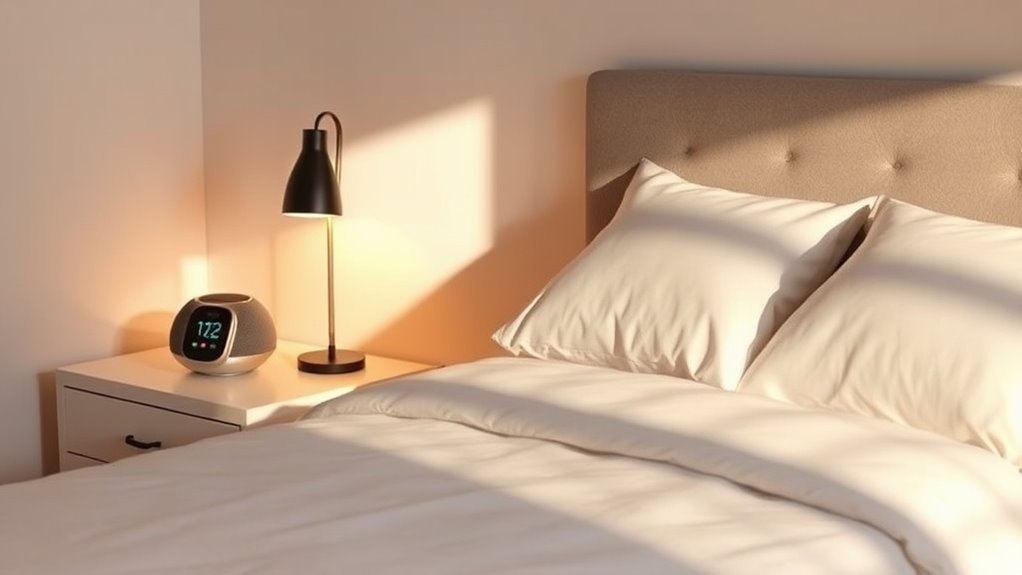
Integrating smart lighting with other sleep-enhancing devices can considerably improve your overall sleep quality by creating a cohesive environment that supports your body’s natural circadian rhythms. When devices like sleep trackers, white noise machines, and thermostats work together, they address your light sensitivity and help regulate your internal clock. Imagine a setup where your smart lights dim gradually as your sleep tracker detects bedtime, while your white noise machine masks disturbances, and your thermostat maintains a comfortable temperature.
| Sleep Device | Function |
|---|---|
| Smart Lighting | Adjusts brightness to support circadian rhythms |
| Sleep Tracker | Monitors sleep patterns, triggers lighting changes |
| White Noise Machine | Enhances relaxation, masks external sounds |
| Thermostat | Maintains prime sleep temperature |
Tips for Maintaining Healthy Sleep Habits With Your Smart Lighting Setup
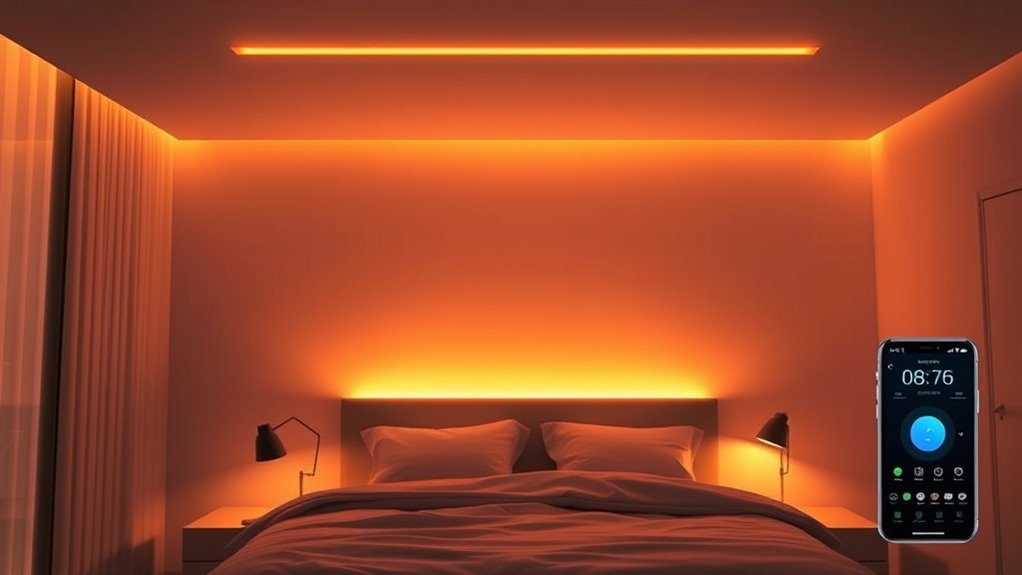
To maintain healthy sleep habits with your smart lighting setup, it’s essential to establish consistent routines that align with your natural circadian rhythms. Good lighting design supports your sleep hygiene by signaling your body when to wind down and wake up. Here are tips to help:
- Use warm, dim lighting in the evening to promote relaxation.
- Gradually brighten your lights in the morning to mimic sunrise.
- Avoid blue light exposure before bed, or use blue light filters.
- Keep a regular sleep schedule, syncing your lighting adjustments accordingly.
Consistency in lighting cues reinforces your sleep-wake cycle, making it easier to fall asleep and wake refreshed. Proper lighting design, combined with good sleep hygiene, ensures your smart lighting setup supports healthier sleep habits.
Frequently Asked Questions
Can Smart Lighting Help With Jet Lag or Shift Work Sleep Issues?
Smart lighting can definitely help with jet lag and shift work sleep issues by promoting circadian alignment. You can use light therapy features to simulate natural light patterns, gradually adjusting your exposure to boost alertness during shifts or reset your internal clock after travel. By strategically controlling light intensity and timing, you support your body’s natural rhythms, making it easier to adapt to new schedules and reduce sleep disruptions.
How Does Smart Lighting Affect Sleep Quality in Children and Teenagers?
Smart lighting can markedly improve sleep quality in children and teenagers by promoting circadian alignment and melatonin regulation. When you use warm, dim lighting in the evening, it signals their bodies to produce melatonin, helping them fall asleep faster. During the day, bright, blue-enriched light keeps them alert. This balance supports healthy sleep patterns, making it easier for young people to rest well and stay energized throughout the day.
Are There Any Safety Concerns When Using Smart Lights at Night?
They say “better safe than sorry,” and that’s true with smart lights at night. While smart lighting helps reduce light pollution and supports healthy sleep, you should still be cautious. Make sure your smart lights are properly installed to prevent electrical safety issues, and avoid overly bright or blue-rich lights that can disrupt sleep or cause light pollution. Regularly check for any malfunctions to keep your environment safe and sleep-friendly.
How Long Does It Take to See Benefits From Smart Lighting Adjustments?
You may start noticing sleep improvement within a few days to a week after making smart lighting adjustments. The adjustment timeline varies depending on your current habits and consistency in using the lighting features. For best results, stick to a regular schedule and gradually shift lighting to mimic natural light patterns. With consistent use, you’ll likely see positive changes in your sleep quality within this timeframe.
Can Smart Lighting Replace Traditional Sleep Aids or Therapies?
Think of smart lighting as a gentle lighthouse guiding your circadian rhythm, but it can’t fully replace traditional sleep aids or therapies. While light therapy from smart lighting helps regulate your internal clock, it doesn’t address underlying issues like anxiety or insomnia. You still need holistic approaches, including medical advice, to achieve truly restorative sleep. Smart lighting complements these methods, making your sleep environment more supportive and natural.
Conclusion
By harnessing the gentle power of smart lighting, you’re crafting a nightly symphony that guides your body into restful harmony. Think of your lights as a lighthouse, steering you safely through the foggy waters of sleep and wakefulness. With mindful adjustments, you transform your space into a sanctuary where healthy sleep blooms effortlessly, illuminating your path to refreshed mornings and peaceful nights. Embrace this digital lantern and let your sleep cycle flourish like a well-tended garden.
Halloween Picks
halloween
As an affiliate, we earn on qualifying purchases.