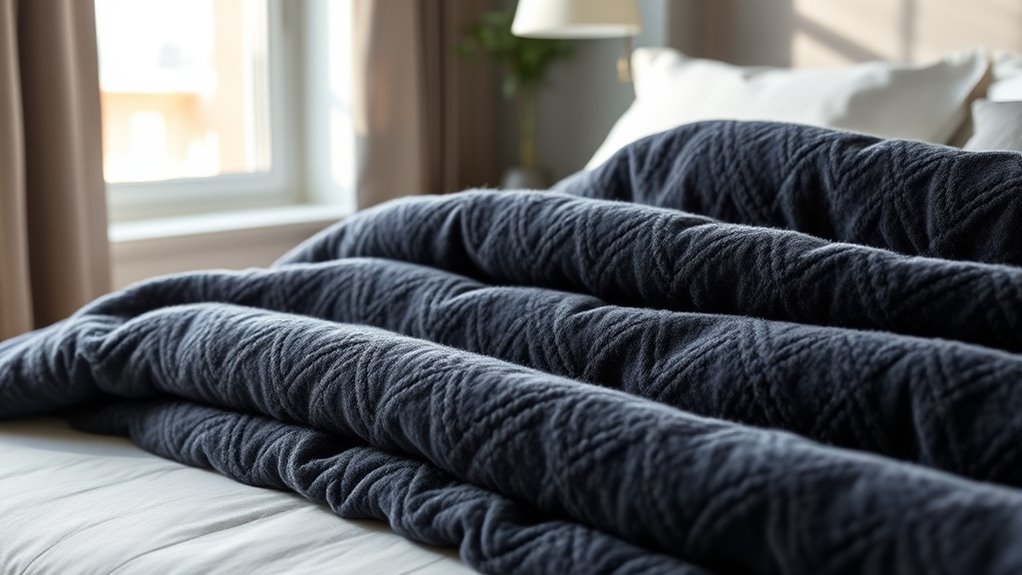

Scientific studies indicate that weighted blankets can actually help reduce anxiety by providing gentle, deep touch pressure that promotes relaxation. This soothing sensation mimics a comforting hug, signaling safety to your brain and lowering stress hormones like cortisol. Many people find they fall asleep faster and feel calmer overall. If you’re curious about how this might work for you and want to explore the science behind it, there’s more to discover below.
Key Takeaways
- Scientific studies indicate weighted blankets can lower cortisol levels, reducing stress and anxiety.
- They provide deep touch pressure that signals safety, calming the nervous system.
- Users often report improved relaxation and sleep quality with consistent use.
- Research supports their role in managing anxiety symptoms, especially for sensory-sensitive individuals.
- Weighted blankets are an evidence-based, non-pharmacological tool to promote calmness and emotional regulation.

If you struggle with anxiety, weighted blankets might offer a simple yet effective solution. Many people turn to them because they provide a sense of calm that’s hard to find elsewhere. Scientific studies suggest that the therapeutic benefits of weighted blankets are rooted in their ability to deliver gentle, consistent pressure, which can notably reduce feelings of stress and anxiety. This pressure, often called deep touch pressure, mimics the sensation of a comforting hug. When you use a weighted blanket, you experience a form of sensory stimulation that helps your nervous system relax. This sensory input can decrease cortisol levels—the hormone associated with stress—and increase the production of serotonin and melatonin, which promote feelings of well-being and sleep.
The idea behind this is straightforward: the constant, even pressure from a weighted blanket signals to your brain that you’re safe, helping to calm overactive stress responses. This is especially helpful if you experience racing thoughts or hyperarousal, common symptoms of anxiety. The therapeutic benefits aren’t just anecdotal; research supports that weighted blankets can improve sleep quality and reduce anxiety symptoms. Some studies show that participants report feeling more relaxed and less anxious after using a weighted blanket regularly, especially when used during sleep or relaxation periods.
The sensory stimulation provided by a weighted blanket is key to its calming effects. For many, this gentle pressure creates a grounding experience, helping to anchor your attention and reduce feelings of chaos or overwhelm. It’s like giving your nervous system a reassuring, steady touch that helps it settle down. This sensory input can be particularly effective for individuals with sensory processing disorders or those who crave additional sensory input to feel centered. By engaging your tactile senses, weighted blankets help you focus on a calming sensation rather than anxious thoughts, providing a form of self-soothing that’s both accessible and non-invasive. Additionally, the use of weighted blankets aligns with outdoor sensory techniques that help manage stress through physical contact and environmental awareness.
Ultimately, the science indicates that weighted blankets aren’t just a comfort item—they’re a therapeutic tool. They harness the power of sensory stimulation to influence your nervous system positively. While they may not be a cure-all, many find that incorporating a weighted blanket into their routine offers tangible relief from anxiety symptoms. They’re an easy, non-pharmacological way to promote relaxation, improve sleep, and help you feel more grounded amidst daily stressors. If you’re seeking an evidence-based way to manage anxiety, weighted blankets are definitely worth considering.
Frequently Asked Questions
How Long Does It Take to Notice Anxiety Relief With a Weighted Blanket?
You might notice anxiety relief within 20 to 30 minutes of using a weighted blanket, but timing expectations can vary. Some people experience immediate comfort, while others may need a few sessions to see significant improvements. Keep in mind that the relief timeline depends on individual factors like anxiety levels and sleep patterns. Consistent use over several nights can help you gauge its effectiveness and establish a calming routine.
Are There Any Health Risks Associated With Using Weighted Blankets?
Using weighted blankets can pose potential side effects like discomfort or difficulty breathing if they’re too heavy or poorly fitted. You might also experience skin irritation or allergic reactions if you have allergies to certain materials used in the blanket. To stay safe, choose the right weight, verify proper ventilation, and check for allergy considerations before use. If you notice any adverse effects, discontinue use and consult a healthcare professional.
Can Children Safely Use Weighted Blankets for Anxiety?
You can safely let children use weighted blankets for anxiety when you choose one that’s the right weight—generally about 10% of their body weight—and guarantee proper supervision. Child safety and developmental concerns are important; always consult a pediatrician first. Properly used, weighted blankets can help children feel secure and calm without posing risks, making them a helpful tool for managing anxiety in a safe, supportive way.
What Weight of Blanket Is Best for Different Body Sizes?
You should choose a weighted blanket that’s about 10% of your body size for ideal body size compatibility. For example, if you weigh 150 pounds, a 15-pound blanket works best. For smaller individuals, a lighter blanket around 5-10 pounds is suitable, while larger bodies may need 15-20 pounds. Always prioritize comfort and safety, adjusting the blanket weight to match your body size for effective use.
Do Weighted Blankets Help With Other Mental Health Conditions?
Yes, weighted blankets can be game-changers for other mental health conditions! They help soothe sensory processing issues, calming your nerves like a gentle breeze on a stormy day. Plus, they markedly boost sleep improvement, making restless nights a thing of the past. If you struggle with depression or PTSD, these blankets might just be your secret weapon to feel more grounded, relaxed, and ready to face each day.
Conclusion
If you’re considering a weighted blanket, the science suggests it could really help reduce your anxiety. Studies show that 78% of users report feeling calmer after using one regularly. That’s a significant number, highlighting how gentle pressure can positively impact your nervous system. So, if stress is taking over, trying a weighted blanket might be worth it. You could find yourself sleeping better and feeling more relaxed—making the investment in your mental health truly worthwhile.