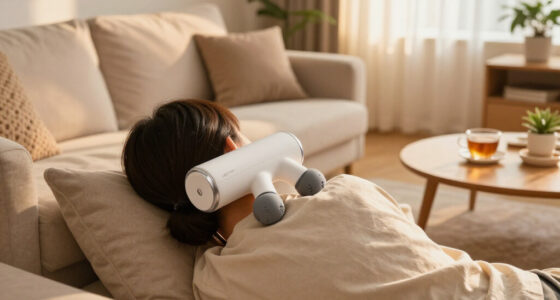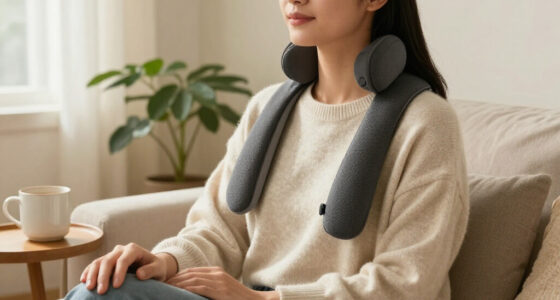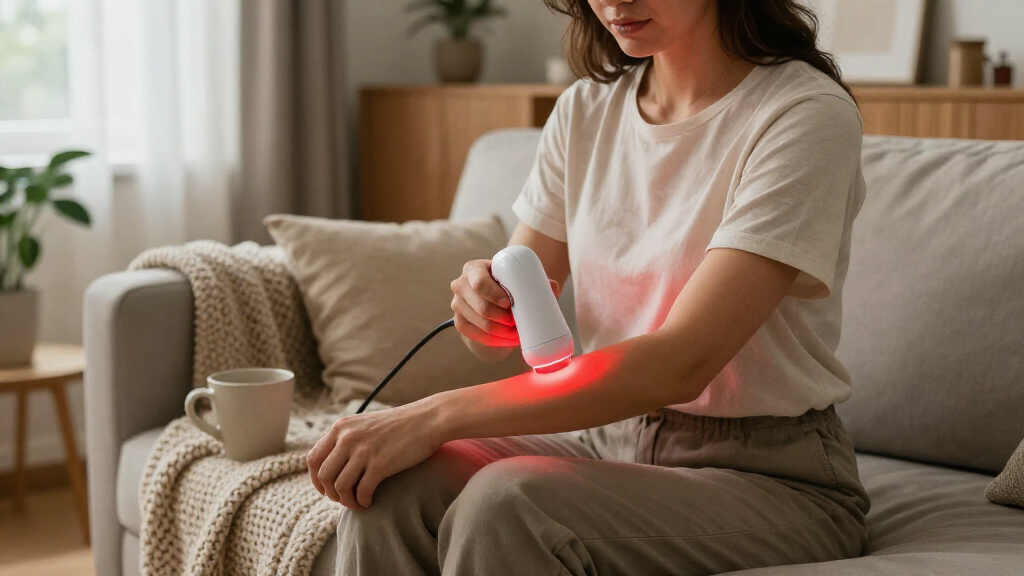

For a versatile starting point, I’d put the Handheld Red and Near-Infrared Light Therapy Device with Adjustable Stand in the best-overall spot: the stand can make hands-free positioning easier than a wand alone. The LifePro BioLux stands out for portable red and near-infrared use, while the BO-60 offers three listed wavelengths and rechargeable operation for buyers prioritizing cordless use. Across handheld red light therapy devices, the main tradeoffs are targeted coverage versus convenient positioning, simple controls versus extra modes, and portability versus treatment-area size. Wavelength claims and included accessories vary, so I’d compare the manufacturer’s specifications rather than assume that more wavelengths guarantee better results. Read on for the full breakdown and guidance on choosing a device that fits your intended use.

Get wellness gear delivered free with Prime
- Fast, free delivery on millions of items
- Prime Video, Amazon Music and more included
- Member-only deals all year
Key Takeaways
- Stand-equipped designs have a practical advantage for repeatable positioning: the adjustable-stand model and two other stand-equipped options can reduce the need to hold a device over one spot.
- Wavelength count is not a quality ranking by itself: the Lifiora and Qirelle list 660 nm, 810 nm, and 1064 nm, while the BO-60 lists 660 nm, 850 nm, and 1060 nm; buyers still need to check output and usage directions.
- Portable and rechargeable designs answer different needs: the LifePro BioLux is a straightforward portable red and near-infrared option, while the rechargeable BO-60 is more appealing when avoiding a cord matters.
- Special-purpose devices involve a narrower use case: the LumaDoc adds blue light, and the facial-and-neck massager is shaped for facial routines; neither is automatically a better choice for broader body areas.
- People-and-pet labeling does not settle suitability: two models explicitly name both humans and dogs, but buyers should verify species-specific instructions and safety guidance before use.
| Handheld Red and Near-Infrared Light Therapy Device with Adjustable Stand |  | Best for Hands-Free Sessions | Red wavelength: 650 nm | Near-infrared wavelength: 808 nm | Red-light LEDs: 16 | VIEW LATEST PRICE | See Our Full Breakdown |
| LifePro BioLux Portable Red and Near-Infrared Light Therapy Device |  | Best for Multi-Wavelength Portability | Brand: LifePro | Model: BioLux | Device type: Portable light therapy device | VIEW LATEST PRICE | See Our Full Breakdown |
| Handheld Infrared Red Light Therapy Wand |  | Best for Simple, Manual Targeting | Product type: Handheld red light and infrared therapy wand | Model: L6 | Color: Grey | VIEW LATEST PRICE | See Our Full Breakdown |
| Lifiora Red Light Therapy Wand with 660nm, 810nm, and 1064nm Wavelengths |  | Best for Mode Variety | Visible red-light range: 450–660 nm | Infrared wavelengths: 810 nm and 1064 nm | Modes: PS, WH, JA, BR, CP | VIEW LATEST PRICE | See Our Full Breakdown |
| Handheld Red and Near-Infrared Light Therapy Device for People and Pets |  | Best for Pet Households | Red wavelength: 650 nm | Red LEDs: 14 | Near-infrared wavelength: 808 nm | VIEW LATEST PRICE | See Our Full Breakdown |
| LifePro LumiCure Handheld Red Light Therapy Torch |  | Best for Simple, Portable Use | Light wavelengths: 3 | Light types: Red and near-infrared | Design: Handheld and portable | VIEW LATEST PRICE | See Our Full Breakdown |
| Portable Red and Infrared Light Therapy Wand for Humans and Dogs |  | Best for Adjustable Sessions | LED count: 21 | Visible wavelengths: 450–660 nm | Infrared wavelengths: 810–1064 nm | VIEW LATEST PRICE | See Our Full Breakdown |
| LumaDoc Handheld Red, Blue, and Near-Infrared Light Therapy Wand |  | Best for Multiple Listed Wavelengths | Product type: Handheld LED light therapy device | Wavelengths: 460 nm blue; 630 nm and 660 nm red; 850 nm and 940 nm near-infrared | Number of light sources: 5 | VIEW LATEST PRICE | See Our Full Breakdown |
| Qirelle Handheld Red Light Therapy Wand, 660nm, 810nm and 1064nm |  | Best for Multiple Timer Choices | LED count: 21 dual-chip LEDs | Wavelengths: 450–660 nm, 810 nm, and 1064 nm | Therapy modes: 5: PS, WH, JA, BR, CP | VIEW LATEST PRICE | See Our Full Breakdown |
| Morfone Handheld Red Light Therapy Device |  | Best for Clear, Specific Wavelengths | Infrared wavelength: 808 nm | Infrared diodes: 5 | Red LED wavelength: 650 nm | VIEW LATEST PRICE | See Our Full Breakdown |
| Red Light Therapy Wand with Stand, 660nm and 808nm |  | Best for Flexible Sessions | Wavelengths: 660 nm red and 808 nm near-infrared | Modes: Continuous and pulsed | Brightness: Adjustable | VIEW LATEST PRICE | See Our Full Breakdown |
| Handheld Red and Near-Infrared Light Therapy Wand with Stand, 660/808 nm |  | Best for Beginners | Wavelengths: 660 nm red and 808 nm near-infrared | Light modes: Continuous and pulsed | Intensity levels: 4 | VIEW LATEST PRICE | See Our Full Breakdown |
| Handheld Red Light Therapy Facial and Neck Massager |  | Best for Face and Neck Care | Device type: Handheld facial and neck massager | Light therapy: Red light | Maximum temperature: 113°F | VIEW LATEST PRICE | See Our Full Breakdown |
| BO-60 Portable Red Light Therapy Device, 660/850/1060 nm, Rechargeable |  | Best for Cordless Runtime | Model: BO-60 | Wavelengths: 660 nm, 850 nm, and 1060 nm | LEDs: 12 triple-chip LEDs | VIEW LATEST PRICE | See Our Full Breakdown |
| Shine Relief Handheld Red and Infrared LED Light Therapy Device |  | Best for Quick, Targeted Sessions | Light wavelengths: 660 nm red and 850 nm infrared | Timer settings: 1 minute and 3 minutes | Power: Cordless; must be unplugged from the charger to operate | VIEW LATEST PRICE | See Our Full Breakdown |
| handheld red light therapy device | Included accessories |
|---|---|
| Handheld Red and Near-Infrared | Adjustable stand, safety goggles, charging cable, clip, and manual |
| LifePro BioLux Portable Red an | — |
| Handheld Infrared Red Light Th | — |
| Lifiora Red Light Therapy Wand | Protective goggles, cleaning cloth, USB-C cable, charging adapter, and manual |
| Handheld Red and Near-Infrared | Adjustable stand, safety goggles, charging cable, clip, and user manual |
| LifePro LumiCure Handheld Red | Wrist strap and zippered carrying case |
| Portable Red and Infrared Ligh | Protective goggles, cleaning cloth, USB-C charging cable, adapter, and user manual |
| LumaDoc Handheld Red | — |
| Qirelle Handheld Red Light The | Protective goggles, cleaning cloth, USB-C cable, charging adapter, and manual |
| Morfone Handheld Red Light The | Protective goggles and quick-start guide |
| Red Light Therapy Wand with St | Adjustable hands-free stand, protective goggles, user manual, and USB-C cable |
| Handheld Red and Near-Infrared | Stand, protective goggles, user manual, and USB-C cable |
| Handheld Red Light Therapy Fac | — |
| BO-60 Portable Red Light Thera | — |
| Shine Relief Handheld Red and | — |
More Details on Our Top Picks
Handheld Red and Near-Infrared Light Therapy Device with Adjustable Stand
This model is the strongest fit here for buyers who want a handheld device that can also stay in place: its adjustable stand supports hands-free positioning, unlike the manually glided Handheld Infrared Red Light Therapy Wand. It pairs 650 nm red with 808 nm near-infrared light, and four power levels plus a 5–60-minute timer give more session-length flexibility than the 5–30-minute range on the similar Handheld Red and Near-Infrared Light Therapy Device for People and Pets. The kit also includes goggles and a clip, making it ready for home use. The tradeoff is that the 808 nm light is invisible, and the listing provides no battery runtime or charging-time details, so planning cordless sessions is harder.
Pros:- Combines 650 nm red and 808 nm near-infrared LEDs
- Adjustable stand allows hands-free positioning
- Four power levels and a 5–60-minute timer offer session flexibility
- Includes safety goggles, a clip, and a charging cable
Cons:- Battery runtime and charging time are not specified
- The 808 nm near-infrared output is invisible to the eye
Best for: People who want adjustable, hands-free positioning for targeted home sessions and value a timer that can run for up to 60 minutes.
Not ideal for: Buyers who need confirmed battery runtime or charging details, or who want to see the near-infrared output while positioning the device.
- Red wavelength:650 nm
- Near-infrared wavelength:808 nm
- Red-light LEDs:16
- Near-infrared LEDs:3
- Power levels:4
- Timer:5–60 minutes
- Power source:Rechargeable battery
- Included accessories:Adjustable stand, safety goggles, charging cable, clip, and manual
Our verdict“Choose this model if hands-free positioning and a long, adjustable timer matter more than having clearly stated battery details.”
LifePro BioLux Portable Red and Near-Infrared Light Therapy Device
The LifePro BioLux is the most natural pick for buyers who prioritize a named brand and portable use over detailed controls. Its three-wavelength setup includes 650 nm and 670 nm red light plus two near-infrared wavelengths, giving it a broader described spectrum than the two-wavelength Handheld Red and Near-Infrared Light Therapy Device with Adjustable Stand. It is also intended for both people and pets. Compared with that stand-equipped model, however, the BioLux listing does not specify power levels, a timer, or an included positioning stand, so it offers less information for buyers planning a repeatable routine. Its stated 3–4-hour charging time is helpful for planning, but the absence of runtime details still leaves cordless session capacity unclear.
Pros:- Three wavelengths include 650 nm and 670 nm red light and two near-infrared wavelengths
- Portable design is intended for home or on-the-go use
- Designed for use with people and pets
- Charging time is specified as approximately 3–4 hours
Cons:- No power-level or timer specifications are provided
- Charging takes approximately 3–4 hours
- Battery runtime and included positioning accessories are not specified
Best for: People and pet owners seeking a portable, three-wavelength device from a named brand and willing to follow the manual for setup.
Not ideal for: Buyers who want a specified timer, power-level controls, a stand for hands-free positioning, or clear battery-runtime information.
- Brand:LifePro
- Model:BioLux
- Device type:Portable light therapy device
- Wavelength count:Three
- Red wavelengths:650 nm and 670 nm
- Near-infrared wavelengths:Two; individual values not specified
- Charging time:Approximately 3–4 hours
- Intended users:People and pets
Our verdict“Pick the BioLux if portability and its three-wavelength setup matter more to you than a stand, session controls, or detailed battery information.”
Handheld Infrared Red Light Therapy Wand
For buyers who want a straightforward wand rather than a device with presets and accessories, the L6 keeps operation simple: a one-button control and lightweight grip are suited to moving the light across selected areas such as shoulders, arms, or joints. That makes it a more direct manual-use option than the Lifiora Red Light Therapy Wand, which adds five modes, pulse illumination, and timer choices. The L6’s stated 808 nm and 810 nm wavelengths are unusual in the lineup, but the product details do not explain output strength or how those wavelengths are allocated between red and infrared light. It also has no stand, so treatment requires continuous hand movement. With no battery or power information listed, buyers cannot judge cordless convenience or session planning from the provided specs.
Pros:- Lightweight handheld form is suited to moving across selected areas
- One-button control keeps operation simple
- Designed for targeting multiple body areas
- Lists 808 nm and 810 nm light wavelengths
Cons:- Requires continuous manual gliding over the treatment area
- Battery and power details are not provided
- The listing does not clarify the output strength or wavelength allocation
Best for: Buyers who prefer a lightweight, one-button wand for manually targeting a few selected body areas at home.
Not ideal for: Anyone seeking hands-free use, preset modes, a defined timer, or clear battery and power specifications.
- Product type:Handheld red light and infrared therapy wand
- Model:L6
- Color:Grey
- Listed wavelengths:808 nm and 810 nm
- Controls:One button
- Design:Lightweight handheld wand
- Use:At-home sessions for selected body areas
Our verdict“Choose the L6 if you want a basic manually operated wand and can accept limited technical and power information.”
Lifiora Red Light Therapy Wand with 660nm, 810nm, and 1064nm Wavelengths
Lifiora suits buyers who want more ways to tailor a handheld session without moving to a larger device. Its described visible red and infrared wavelength range, five modes, pulse illumination, and four timer choices create more control than the one-button Handheld Infrared Red Light Therapy Wand. The 15–30-minute timer range is also more defined than the first product’s longer 5–60-minute setting, which may appeal to people who prefer shorter preset session windows. A kit with protective goggles and USB-C charging accessories rounds out the package. The tradeoff is that this is still a manual handheld wand, so covering an area requires holding and positioning it yourself. Battery life and charging time are not specified, making the practical advantage of its charging kit difficult to assess.
Pros:- Five modes and pulse illumination provide operating variety
- Four timer choices span 15–30 minutes
- Lists visible red light and 810 nm and 1064 nm infrared wavelengths
- Includes protective goggles and USB-C charging accessories
Cons:- Requires manual positioning throughout use
- Battery life and charging time are not specified
- Mode abbreviations are listed without descriptions of their differences
Best for: People and pet owners who want several operating modes, pulse illumination, and set timer choices for targeted sessions.
Not ideal for: Buyers who want hands-free treatment or need documented battery runtime and charging time before choosing a cordless device.
- Visible red-light range:450–660 nm
- Infrared wavelengths:810 nm and 1064 nm
- Modes:PS, WH, JA, BR, CP
- Illumination:Pulse illumination
- Timer options:15, 20, 25, and 30 minutes
- Design:Handheld
- Intended users:People and pets
- Included accessories:Protective goggles, cleaning cloth, USB-C cable, charging adapter, and manual
Our verdict“Choose Lifiora if varied modes and defined timer options matter more than hands-free use or documented battery performance.”
Handheld Red and Near-Infrared Light Therapy Device for People and Pets
This model is a practical match for households that want one compact device described for people, dogs, and cats. Its 650 nm red and 808 nm near-infrared LEDs mirror the wavelength pairing of the Handheld Red and Near-Infrared Light Therapy Device with Adjustable Stand, and both include a stand for hands-free positioning. The difference is in session range and LED mix: this version has 14 red and 4 near-infrared LEDs with a 5–30-minute timer, while the comparable stand-equipped model lists 16 red and 3 near-infrared LEDs and allows up to 60 minutes. The shorter timer may suit buyers who want a bounded session window, but runtime and battery capacity are missing. Its 808 nm output is invisible, so positioning relies on the device’s placement rather than a visible near-infrared glow.
Pros:- Specifies use with people, dogs, and cats
- Pairs 650 nm red LEDs with 808 nm near-infrared LEDs
- Adjustable stand supports hands-free positioning
- Four power settings and a 5–30-minute digital timer
Cons:- Battery capacity and runtime are not specified
- The 808 nm near-infrared output is invisible to the eye
- Maximum timer setting is shorter than the 60-minute range on the similar stand-equipped model
Best for: Pet owners who want a compact stand-equipped device specified for use with people, dogs, and cats, with sessions capped at 30 minutes.
Not ideal for: Buyers who need a timer longer than 30 minutes or want battery capacity and runtime stated before purchase.
- Red wavelength:650 nm
- Red LEDs:14
- Near-infrared wavelength:808 nm
- Near-infrared LEDs:4
- Power settings:4
- Timer:5–30 minutes
- Intended users:People, dogs, and cats
- Included accessories:Adjustable stand, safety goggles, charging cable, clip, and user manual
Our verdict“Choose this version for a pet household that values a stand and a shorter session range, but skip it if you need extended timers or battery details.”
LifePro LumiCure Handheld Red Light Therapy Torch
The LifePro LumiCure is a straightforward pick for buyers who value portability over detailed controls. Its three red and near-infrared wavelengths, button-operated use, wrist strap, and zippered case make it easy to carry and handle for targeted sessions. Compared with the Morfone Handheld Red Light Therapy Device, the LumiCure offers less session information: Morfone lists specific wavelengths, brightness levels, and a timer, while LifePro does not provide wavelength values or power and session settings. That makes LumiCure harder to compare on technical detail, but its simpler setup may suit someone who wants fewer controls to manage. I’d choose it for convenient, basic use—not for buyers who want to fine-tune intensity or verify exact wavelengths before choosing.
Pros:- Combines three red and near-infrared wavelengths.
- Lightweight, portable handheld design.
- Includes a wrist strap and zippered carrying case.
- Button-operated use keeps controls simple.
Cons:- Exact wavelength values are not provided.
- Power output and session settings are not specified.
Best for: Buyers who want a lightweight, easy-to-operate handheld device with a carrying case for targeted use at home or while traveling.
Not ideal for: Spec-focused shoppers who want stated wavelength values, power information, or adjustable session settings.
- Light wavelengths:3
- Light types:Red and near-infrared
- Design:Handheld and portable
- Controls:Button-operated
- Included accessories:Wrist strap and zippered carrying case
- Wavelength values:Not specified
Our verdict“Choose the LumiCure if easy carrying and simple operation matter more to you than detailed technical specifications or adjustable controls.”
Portable Red and Infrared Light Therapy Wand for Humans and Dogs
This cordless wand stands out for buyers who want more say over how a session runs. Its five modes, three intensity levels, and four timer options provide more adjustment than the LifePro LumiCure, which keeps operation simple but does not list session controls. At 0.31 lb and with USB-C recharging, this model is suited to moving between targeted areas or packing for travel. The listed visible and infrared wavelength ranges add useful technical detail, though the broad visible range includes wavelengths beyond red, and the description does not explain what each mode changes. Protective goggles and charging accessories are included, but you’ll need to keep the device charged; infrared light may also be invisible during operation. I’d pick it over the LumiCure for control, not for the simplest setup.
Pros:- Five modes, three intensity levels, and four timer choices.
- Cordless design weighs 0.31 lb and recharges via USB-C.
- Lists visible and infrared wavelength ranges.
- Includes protective goggles and charging accessories.
Cons:- Requires charging before use.
- Infrared light may not be visible during operation.
- The description does not explain the differences between the five modes.
Best for: People seeking a rechargeable wand for targeted sessions who want selectable modes, intensity, and timer lengths, including households considering use for pets.
Not ideal for: Buyers who prefer a plug-in device, need clear explanations of each mode, or want visible confirmation that infrared light is operating.
- LED count:21
- Visible wavelengths:450–660 nm
- Infrared wavelengths:810–1064 nm
- Operating modes:5
- Intensity levels:3
- Timer settings:15, 20, 25, and 30 minutes
- Weight:0.31 lb
- Charging:Rechargeable via USB-C
- Included accessories:Protective goggles, cleaning cloth, USB-C charging cable, adapter, and user manual
Our verdict“Choose this wand over the simpler LumiCure if adjustable intensity and timed sessions matter more than charging-free convenience.”
LumaDoc Handheld Red, Blue, and Near-Infrared Light Therapy Wand
The LumaDoc offers the broadest stated wavelength selection in this group, with two red, two near-infrared, and one blue wavelength. That makes it a more clearly specified choice than the LifePro LumiCure, whose three wavelengths are not individually identified, and more varied by light color than the red-and-infrared Morfone. Four settings—including three treatment modes and pulse mode—give buyers options for targeted areas, while the compact cylindrical form is easy to pack. The tradeoff is coverage: its handheld size is aimed at smaller areas, not broad treatment, and the recommended three-minute session, up to three times daily, may mean repeated use. The listing also gives conflicting battery details, naming both a rechargeable lithium-ion battery and two included AA batteries. I’d favor it for wavelength variety, while checking the power details before purchase.
Pros:- Lists five specific wavelengths across blue, red, and near-infrared light.
- Offers three treatment modes plus pulse mode.
- Compact cylindrical design is portable for home or travel.
- Includes protective glasses, charging accessories, and a lifetime warranty.
Cons:- Small handheld form is better suited to targeted areas than broad coverage.
- The recommended three-minute sessions, up to three times daily, may require repeated use.
- Battery information is inconsistent, listing rechargeable lithium-ion and two AA batteries.
Best for: Buyers who want a compact wand with individually stated red, near-infrared, and blue wavelengths for targeted areas.
Not ideal for: People seeking broad-area coverage or a clearly described power setup and longer, less frequent sessions.
- Product type:Handheld LED light therapy device
- Wavelengths:460 nm blue; 630 nm and 660 nm red; 850 nm and 940 nm near-infrared
- Number of light sources:5
- Treatment modes:Combination Therapy, Deeper Targeting, Surface Treatment, and Pulse Mode
- Recommended session:3 minutes, up to 3 times daily
- Power information:Rechargeable lithium-ion battery listed; two AA batteries also listed as included
- Dimensions:1 × 1 × 4.7 in
- Included components:Wand, power adapter, protective glasses, USB-C charging cable, user manual, and quick start guide
- Warranty:Lifetime warranty
Our verdict“Choose the LumaDoc if stated wavelength variety is your priority and you’re comfortable with targeted coverage and clarifying its battery setup.”
Qirelle Handheld Red Light Therapy Wand, 660nm, 810nm and 1064nm
The Qirelle pairs 21 dual-chip LEDs with five modes and four timer choices, giving it a configurable session setup similar to the Portable Red and Infrared Light Therapy Wand for Humans and Dogs. Its listed 810 nm and 1064 nm infrared wavelengths distinguish it from the Morfone, which specifies 808 nm infrared and 650 nm red but has fewer listed timer intervals. Qirelle’s 450–660 nm visible-light range is less precise than Morfone’s stated 650 nm red wavelength, so buyers cannot tell which individual visible wavelengths are used. USB-C charging and the included goggles and cleaning cloth help make home use convenient, but no battery capacity or runtime is given. I’d put this ahead of simpler options for buyers who value timer flexibility, while those who need precise battery expectations or fully itemized visible wavelengths may prefer a more detailed listing.
Pros:- 21 dual-chip LEDs and five therapy modes.
- Four timer choices support different session lengths.
- Lists 810 nm and 1064 nm infrared wavelengths.
- USB-C charging and included goggles, cleaning cloth, and adapter.
Cons:- The 450–660 nm visible range does not identify individual wavelengths.
- Battery capacity and runtime are not provided.
- Mode abbreviations are listed without explanations.
Best for: Buyers who want a handheld wand with several session lengths, multiple modes, and listed near-infrared wavelengths for targeted use.
Not ideal for: Shoppers who need a stated battery runtime or exact individual visible wavelengths rather than a broad range.
- LED count:21 dual-chip LEDs
- Wavelengths:450–660 nm, 810 nm, and 1064 nm
- Therapy modes:5: PS, WH, JA, BR, CP
- Timer options:15, 20, 25, and 30 minutes
- Charging:USB-C
- Intended users:Humans and pets
- Included accessories:Protective goggles, cleaning cloth, USB-C cable, charging adapter, and manual
- Battery capacity and runtime:Not specified
Our verdict“Choose Qirelle if varied timers and infrared wavelength detail matter more than an exact visible-light breakdown or stated battery runtime.”
Morfone Handheld Red Light Therapy Device
Morfone is the most direct choice here for shoppers who want a clearly stated red and infrared pairing without sorting through a broad wavelength range. It specifies 650 nm red LEDs and 808 nm infrared diodes, while Qirelle’s visible-light listing spans 450–660 nm without naming the individual wavelengths. Four brightness levels and a 5–20-minute timer allow more straightforward adjustments than the LifePro LumiCure, which does not list session controls. The 3600 mAh battery is rated for more than 120 minutes at mid-intensity, helping buyers plan use between charges. Its small treatment panel limits the area covered per session, and the listing mentions hands-free use without identifying a stand or other hands-free accessory. I’d choose Morfone for spec clarity and battery detail, but not for broad coverage or supported hands-free positioning.
Pros:- Specifies 650 nm red LEDs and 808 nm infrared diodes.
- Four brightness levels and an adjustable 5–20-minute timer.
- 3600 mAh battery is rated for more than 120 minutes at mid-intensity.
- Lightweight 0.58 lb design includes an anti-slip grip.
Cons:- Small treatment panel limits coverage per session.
- No hands-free accessory is specified despite mention of hands-free use.
- The listed wavelengths are limited to one red and one infrared value.
Best for: Buyers who want specific red and infrared wavelengths, adjustable brightness, and a stated battery runtime for targeted sessions.
Not ideal for: People seeking a large treatment area or a device with a clearly included stand or hands-free accessory.
- Infrared wavelength:808 nm
- Infrared diodes:5
- Red LED wavelength:650 nm
- Red LEDs:12
- Brightness levels:4
- Timer:5–20 minutes in 5-minute intervals
- Weight:0.58 lb
- Battery:3600 mAh; 120+ minutes at mid-intensity
- Included accessories:Protective goggles and quick-start guide
Our verdict“Choose Morfone for specific wavelength and battery information in a targeted-use device, but skip it if you need broad coverage or a supported hands-free setup.”
Red Light Therapy Wand with Stand, 660nm and 808nm
Adjustable brightness, six timer choices, and two operating modes give this wand more session control than the Shine Relief device, whose timers are limited to one and three minutes. Its 660 nm red and 808 nm near-infrared wavelengths pair with a rechargeable battery, so it can be used without staying beside an outlet. The included stand is useful when holding a device steady would become tiring, though it may not suit every treatment position. Compared with the BO-60, this wand offers fewer listed wavelengths and no stated battery runtime or irradiance figures, making its technical output harder to compare. It is also described for supervised pet use, but that is not a substitute for veterinary advice, and the eyes, nose, and mouth should be avoided.
Pros:- 660 nm red and 808 nm near-infrared wavelengths
- Six timer settings from 5 to 30 minutes
- Adjustable brightness and continuous or pulsed modes
- Includes an adjustable stand, protective goggles, and USB-C charging
Cons:- Battery runtime and charging time are not specified
- Supervised pet use requires keeping light away from the eyes, nose, and mouth
- The device is not a substitute for veterinary care
Best for: People who want hands-free positioning, adjustable brightness, and longer selectable sessions, with the option of supervised use around pets.
Not ideal for: Buyers who need published battery-runtime or irradiance figures, or who want a device specifically designed for veterinary treatment.
- Wavelengths:660 nm red and 808 nm near-infrared
- Modes:Continuous and pulsed
- Brightness:Adjustable
- Timer settings:5, 10, 15, 20, 25, or 30 minutes
- Power:Rechargeable battery
- Charging:USB-C
- Included accessories:Adjustable hands-free stand, protective goggles, user manual, and USB-C cable
- Support:24-month customer support
Our verdict“Choose this wand if session flexibility and a hands-free stand matter more than detailed battery or output specifications.”
Handheld Red and Near-Infrared Light Therapy Wand with Stand, 660/808 nm
Four red-light intensity levels and a 5–30-minute timer make this a straightforward starting point for people who want some control without a long list of settings. It also offers 660 nm red and 808 nm near-infrared light, with continuous and pulsed modes. Compared with the first wand in this batch, it specifies four intensity levels but does not claim the other model’s six distinct timer increments or adjustable brightness. The included stand can support hands-free positioning, although the device remains handheld when used away from it. Its rechargeable design is convenient, but no battery runtime or charging-time information is provided, so buyers planning frequent cordless sessions have less to go on. Goggles are included; the product is also described for people and pets.
Pros:- 660 nm red and 808 nm near-infrared wavelengths
- Four red-light intensity levels
- Continuous and pulsed modes with a 5–30-minute timer
- Includes a stand, protective goggles, and USB-C cable
Cons:- Battery runtime and charging time are not specified
- Handheld use still requires holding and repositioning the device without the stand
Best for: First-time buyers who want a rechargeable dual-wavelength wand with a few clear intensity choices and a stand for stationary sessions.
Not ideal for: People who need known cordless runtime, want fine-grained timer increments, or need a device with detailed output measurements.
- Wavelengths:660 nm red and 808 nm near-infrared
- Light modes:Continuous and pulsed
- Intensity levels:4
- Timer:Adjustable from 5 to 30 minutes
- Power:Rechargeable
- Charging connector:USB Type-C
- Included accessories:Stand, protective goggles, user manual, and USB-C cable
- Support period:24 months
- Intended users:People and pets
Our verdict“This is a sensible starter wand for buyers who value simple intensity controls and included accessories over detailed battery specifications.”
Handheld Red Light Therapy Facial and Neck Massager
A curved 160-degree head and compact body set this device apart from the more general handheld wands in the roundup. Its shape is intended to follow facial and neck contours, while the corrugated handle offers a more secure grip during short skincare routines. The device combines red light with heat up to 113°F and can be used with cream or serum, making it a different kind of pick from the BO-60, which lists three wavelengths and a longer cordless runtime but lacks this facial-massager focus. The tradeoff is a narrow use case: its five-minute automatic shutoff limits session length, and the listed data does not give a wavelength or battery runtime. Buyers should also remember to remove the protective cap before use.
Pros:- 160-degree curved head designed to follow face and neck contours
- Compact form can fit in a handbag
- Corrugated handle is designed for a non-slip grip
- Heating function can be used with cream or serum
Cons:- Automatic shutoff limits sessions to five minutes
- The product data does not specify the red-light wavelength or battery runtime
- Protective cap must be removed before use
Best for: Skincare users seeking a compact handheld tool shaped for brief face and neck routines with cream or serum.
Not ideal for: Buyers seeking a general-purpose body wand, multiple stated wavelengths, or sessions longer than five minutes without restarting.
- Device type:Handheld facial and neck massager
- Light therapy:Red light
- Maximum temperature:113°F
- Design:Dolphin-shaped with a 160-degree curved head
- Handle:Corrugated, non-slip
- Automatic shutoff:5 minutes
- Charging indicator:Flashes red while charging; steady red when fully charged
Our verdict“Pick this device for short, face-and-neck-focused skincare routines, not as a substitute for a versatile body-treatment wand.”
BO-60 Portable Red Light Therapy Device, 660/850/1060 nm, Rechargeable
Three listed wavelengths and up to three hours of cordless use make the BO-60 the clearest fit here for buyers who want to move between locations without charging after every session. Its 12 triple-chip LEDs combine 660 nm, 850 nm, and 1060 nm, and the stated irradiance is over 75 mW/cm². The travel case adds practical protection that the stand-focused 660/808 nm wands do not list. That added portability comes with a coverage tradeoff: this is still a handheld device, so larger areas call for repeated repositioning. Its 41–45°C temperature range may also matter to buyers who prefer a cooler-feeling device. Compared with the Shine Relief model, it offers more wavelength options and much longer listed cordless use, while Shine Relief has a wider treatment head.
Pros:- Three wavelengths: 660 nm, 850 nm, and 1060 nm
- Up to 3 hours of cordless use from a 3000 mAh battery
- 12 triple-chip LEDs with stated irradiance over 75 mW/cm²
- Includes a timer and travel case
Cons:- Handheld use requires repositioning to cover larger areas
- Cordless runtime is limited to up to 3 hours per charge
- Operating temperature is listed as 41–45°C
Best for: People who want a portable handheld device with a stated multi-hour battery life, a travel case, and three listed wavelengths.
Not ideal for: Buyers who need broad-area coverage with minimal repositioning, or who prefer a device without a stated operating-temperature range.
- Model:BO-60
- Wavelengths:660 nm, 850 nm, and 1060 nm
- LEDs:12 triple-chip LEDs
- Irradiance:Over 75 mW/cm²
- Beam angle:60 degrees
- Battery capacity:3000 mAh
- Battery life:Up to 3 hours
- Temperature:41–45°C
- Included accessory:Travel case
Our verdict“Choose the BO-60 if stated battery runtime and three wavelengths matter more than wider-area coverage from a single position.”
Shine Relief Handheld Red and Infrared LED Light Therapy Device
A wider treatment head and built-in gasket give the Shine Relief a distinct advantage for quick, close-contact use: the head is designed to cover more area at once and maintain consistent light contact. Its 660 nm red and 850 nm infrared light are paired with simple one-button timers of one or three minutes. That simplicity contrasts with the adjustable 5–30-minute sessions on the 660/808 nm wands, which suit buyers who want longer or more variable routines. The ergonomic cordless design is easy to handle, but the short timer choices may be limiting for those who want longer sessions. One operational quirk matters: it must be unplugged from its charger before it will power on. Protective glasses are included, and the product lists a one-year warranty and a 60-day guarantee.
Pros:- 660 nm red and 850 nm infrared wavelengths
- Wider treatment head covers more area per session
- Cordless, lightweight, ergonomic handheld design
- Includes protective glasses and a built-in gasket
Cons:- Timer choices are limited to one and three minutes
- Cannot power on while connected to the charger
- No battery runtime is specified
Best for: People who want a lightweight cordless device for brief, targeted sessions and value a wider head with close-contact positioning.
Not ideal for: Buyers who prefer longer adjustable sessions, need to operate while charging, or want a hands-free stand.
- Light wavelengths:660 nm red and 850 nm infrared
- Timer settings:1 minute and 3 minutes
- Power:Cordless; must be unplugged from the charger to operate
- Design:Handheld, lightweight, ergonomic
- Treatment head:Wider head
- Additional feature:Built-in gasket
- Included accessory:Protective glasses
- Warranty:1 year
- Guarantee:60 days
Our verdict“Choose Shine Relief for quick, close-contact targeting, but pick one of the stand-equipped wands if longer sessions or hands-free use matter more.”

How We Picked
I compared the 15 devices around the decisions that matter for handheld use: listed wavelengths, whether the design supports steady positioning, corded or rechargeable operation where specified, intended treatment areas, and whether the product claims a specialized role. I gave more weight to practical control and clear-use flexibility than to wavelength count alone; extra wavelengths are only useful if the manufacturer explains how the device is meant to be used.
The ranking favors devices with features that can reduce friction in a regular routine, such as an adjustable stand, a clear portable format, or a defined use case. Models with narrower roles—such as facial care, added blue light, or pet use—rank as targeted choices rather than universal winners. Because the supplied product details do not establish measured irradiance, treatment coverage, clinical outcomes, or durability, I do not treat those as proven advantages; buyers should check the maker’s specifications and instructions before purchase.
Factors to Consider When Choosing Handheld Red Light Therapy Devices
Before choosing among handheld red light therapy devices, I’d start with how and where you plan to use one. A compact wand can suit a small target area, but comfortable positioning, clear instructions, and realistic expectations often matter more than a long feature list.
Match the Device to the Area You Plan to Treat
Handheld devices focus light on a relatively limited area, so think about the size and location of your intended target before comparing feature lists. A small wand may be easy to direct around the face or a joint, but covering a larger area can take more repositioning. Ask the manufacturer for the treatment-area dimensions or coverage guidance if the listing does not provide them. Do not assume that a higher wavelength count means broader coverage. If you expect to treat several areas in one session, handling comfort and session time may matter more than extra modes. For broad areas, a handheld format may be less convenient than a larger panel, even if it is easier to store.
Read Wavelength Claims Alongside Output Information
Wavelengths describe the color of emitted light, not how much light reaches the treatment area. Listings that name several wavelengths can sound more capable, but without output measurements and instructions, that information alone does not let you compare performance. Look for irradiance figures, the distance at which they were measured, and the maker’s recommended exposure time. Measurements taken at different distances are not directly comparable. If a listing omits these details, contact the manufacturer rather than filling in the gaps with assumptions. I would treat wavelength count as a specification to verify, not a shortcut for choosing a winner.
Choose Between Holding the Wand and Using a Stand
A handheld wand gives you control over placement, but holding it still can become tiring during repeated sessions. A stand can support hands-free use, although it only helps if its height, angle, and base work with your setup. Check whether the stand is included and whether it can hold the device securely at the distance specified by the manufacturer. A stand does not automatically make the device more powerful or more effective. For areas that are awkward to reach, a movable handheld head may be easier to aim than a fixed position. Prioritize the arrangement you can use consistently and safely.
Check Power, Charging, and Session Practicalities
Corded and rechargeable models suit different routines. A corded device avoids battery runtime limits, while a rechargeable one can be easier to move between rooms or use away from an outlet. Check battery capacity or runtime, charge time, and whether the device can operate while charging; a rechargeable label alone does not answer those questions. Also look for a timer, clear controls, and straightforward instructions, since these can reduce guesswork during regular use. Avoid choosing a device solely because it is portable if the battery details are missing. For desk or bedside use, a cord and stand may be less disruptive than frequent charging.
Treat Specialized Features as Use-Case Choices
Blue-light modes, facial attachments, and people-and-pet claims can make a device sound more versatile, but each adds a reason to verify the instructions. Confirm which mode is intended for your concern and whether the maker provides distinct guidance for different areas or users. A facial massager may be convenient for a face-and-neck routine but less suited to larger body areas. A product labeled for people and dogs still needs clear veterinary guidance before use on an animal. Extra modes can add controls and complexity without helping a buyer who wants simple red and near-infrared operation. Pay for specialization only when it matches a real part of your routine.
Set Expectations and Check Safety Guidance
Red light devices are not a substitute for medical care, and product claims should not be read as proof that a device will treat a condition. Review the instructions for recommended distance, session duration, frequency, and eye protection before using any model. Ask a qualified clinician before use if you have a medical condition, take medication that affects light sensitivity, or are considering use on a child or pet. Check the warranty, return terms, and availability of customer support, since these affect how easy it is to resolve fit or operating questions. Be cautious of listings that promise results without explaining how to use the device or what evidence supports the claim. A clear, limited claim is more useful than a sweeping promise.
Frequently Asked Questions
Is a device with three listed wavelengths automatically a better buy?
No. A list of three wavelengths tells you which light bands the manufacturer says the device emits, but it does not show output, coverage, or how the modes should be used. In this roundup, the Lifiora and Qirelle list 660 nm, 810 nm, and 1064 nm, while the BO-60 lists 660 nm, 850 nm, and 1060 nm. Those differences may matter to a buyer following a specific product protocol, but they do not establish which device performs better. Compare measured output at a stated distance, directions, and intended use before paying extra for additional wavelengths.
Should I choose a handheld device with a stand or a wand I hold?
Choose a stand when keeping the device still hands-free is a priority and the stand can position it securely for your target area. A handheld wand can be easier to aim around curved or hard-to-reach areas, and it may be simpler to store. Stands also vary: an included stand is only helpful if it adjusts to a usable height and angle. Check the recommended treatment distance before deciding, since the stand needs to support that setup. If you expect to use the device while doing other tasks, prioritize a stable stand; if you need to move it frequently, favor maneuverability.
Can I use a device labeled for people and pets on my dog?
A label that names both people and pets is not enough to confirm that a particular use is appropriate for your dog. Check the manufacturer’s animal-specific instructions for placement, distance, session length, and eye protection, and ask your veterinarian before starting. Human-use directions should not be assumed to apply to animals. Be especially careful around the eyes and any area with an undiagnosed injury or condition. If the maker does not provide clear pet guidance, I would not rely on the shared-use claim alone.
What specifications should I request if a listing does not show light output?
Ask for irradiance at a stated distance, the recommended treatment distance, the size of the illuminated area, and session guidance for each mode. Those details help you compare devices more meaningfully than wavelength names alone. Also ask whether the output figure applies to the whole treatment area or only a central point, and whether the device can maintain that output during a full session. If the seller cannot provide clear answers, you have less information to judge the product’s suitability. Avoid interpreting missing output data as either proof of poor performance or proof of strong performance.
Is a facial red light wand suitable for treating larger body areas?
It may be possible to reposition a small device across a larger area, but doing so can take longer and may be less comfortable than using a product designed for broader coverage. A facial-and-neck massager is shaped around a specific routine, so its form and contact features may not suit other body areas. Check the manufacturer’s approved uses and coverage guidance rather than assuming that every handheld device has the same range. If your main goal involves several large areas, compare the time and positioning required with a larger-format device. A specialized facial device makes more sense when its intended routine matches your actual use.
Conclusion
For the best overall, I’d start with the Handheld Red and Near-Infrared Light Therapy Device with Adjustable Stand because its stand can make steady positioning more practical. The LifePro BioLux is my best value-style pick for buyers who want a portable red and near-infrared format without prioritizing extra modes; check its specifications and included accessories before deciding. For a premium-feature choice, the BO-60 is the most distinctive option here if rechargeable use and three listed wavelengths match your needs, though those features do not by themselves prove better results. Beginners may prefer a straightforward device such as the LifePro LumiCure Torch, after confirming its instructions and output details. For specific needs, look at the LumaDoc for its red, blue, and near-infrared modes, the facial-and-neck massager for a face-focused routine, or a people-and-pet-labeled model only with suitable animal guidance. Choose based on intended area, positioning, and verifiable specifications—not the longest feature list.