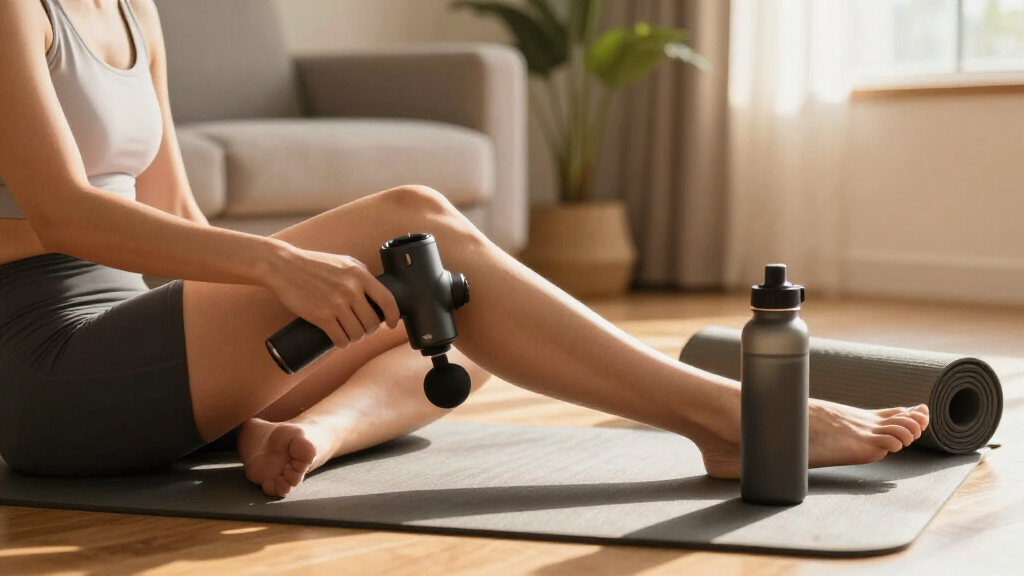
If you’re shopping for massage guns for muscle recovery, the biggest tradeoff you’ll face is between professional-grade power (Theragun, Hypervolt) and budget versatility (TOLOCO, LifePro, Elefor), which pile on attachments and speed levels at a fraction of the cost. For most buyers recovering from workouts, the Therabody Theragun Relief stands out as the best overall pick because it distills recovery-focused percussion into a simple three-speed tool that’s quiet, ergonomic, and effective. If heat and cold therapy appeal to you, the RENPHO Active Thermacool 2 adds temperature control that genuinely changes the recovery experience, while the Hyperice Hypervolt Go 3 is the pick for travelers who refuse to compromise on motor quality. Keep reading for the full breakdown of all 15 models.

Get wellness gear delivered free — and shop member deals
- Fast, free delivery on millions of items
- Access to Prime Big Deal Days deals on October 6–7
- Prime Video, Amazon Music and more included
Key Takeaways
- Attachment count proved meaningless for recovery: models like the TOLOCO and Cotsoco ship with 9-10 heads, but the Theragun Relief outperformed them with three speeds and a handful of well-designed attachments. Buy motor quality and amplitude, not head counts.
- Temperature therapy is the biggest genuine differentiator in 2026. Only the RENPHO Active Thermacool 2 and the AERLANG heat-and-cold model offer both heat and cold, which matters for the inflammation-reduction phase of recovery that percussion alone can’t address.
- Budget models have closed the power gap but not the noise or durability gap. The Opove M3 Pro 2 and Mebak 3 match premium stall force on paper, yet the Hypervolt Go 3 and Theragun still feel noticeably smoother under load with less hand vibration.
- Compact minis split into two distinct tiers: the Hypervolt Go 2 and Go 3 are true recovery tools in small bodies, while ultra-cheap minis like the arboleaf are better treated as travel backups than primary recovery devices.
- Twenty-plus speed levels (Elefor, Cotsoco, Gvber) is a marketing number, not a feature. Most users settle into two or three speeds; a well-tuned five-speed range like the Mebak 3’s delivers a better recovery experience than 20 indistinguishable increments.


| massage guns for muscle recovery | Massage heads |
|---|---|
| arboleaf Mini Portable Deep Ti | 4 interchangeable silicone heads |
| LifePro Sonic Percussion Massa | 8 interchangeable heads |
| Therabody Theragun Relief Mass | — |
| AERLANG Heated Deep Tissue Mas | 6 |
| Elefor Deep Tissue Massage Gun | 8 |
| Cotsoco Deep Tissue Massage Gu | 9 |
| Opove M3 Pro 2 Deep Tissue Mas | — |
| Gvber Deep Tissue Massage Gun | 6 interchangeable heads |
| TOLOCO Deep Tissue Massage Gun | 10 |
| Hyperice Hypervolt Go 3 Portab | — |
| Mebak 3 Deep Tissue Massage Gu | 7 |
| Hyperice Hypervolt Go 2 Handhe | — |
| AERLANG Massage Gun with Heat | 7 interchangeable |
| TOLOCO Massage Gun | 10 interchangeable |
| RENPHO Active Thermacool 2 Mas | — |
More Details on Our Top Picks
arboleaf Mini Portable Deep Tissue Massage Gun
At 1.04 lb, this is the easiest option here to pack for a trip or carry to the gym, while its 1,000–3,200 RPM range gives it room for both gentler and firmer sessions. Four silicone heads cover basic targeting, and the pressure-responsive mode adjusts speed as you press, which can make small-area work feel more intuitive. Compared with the LifePro Sonic, it has fewer heads and no stated multi-hour runtime, but the arboleaf is the clearer choice when low weight matters more than a broad attachment kit. Its 10-minute auto-shutoff limits uninterrupted sessions, and battery life varies by speed. I’d choose it for portable recovery, not for long, intensive treatment sessions.
Pros:- Light 1.04 lb body is easy to pack and handle
- Four silicone heads support targeted massage
- Pressure-responsive automatic speed adjusts to applied pressure
- USB-C charging and a 3-year warranty
Cons:- The 10-minute auto-shutoff interrupts longer sessions
- Battery runtime varies by speed
- Four heads offer less variety than the LifePro Sonic’s eight
Best for: Travelers and gym-goers who want a lightweight massage gun for brief, targeted recovery sessions.
Not ideal for: People who want long uninterrupted sessions or a stated multi-hour battery runtime.
- Weight:1.04 lb
- Massage force:35 lb
- Speed range:1,000–3,200 RPM
- Speed settings:4 manual speeds and 1 pressure-responsive automatic speed
- Massage heads:4 interchangeable silicone heads
- Noise level:35–55 dB
- Charging:USB-C
- Auto-shutoff:10 minutes
- Warranty:3 years
Our verdict“Choose the arboleaf if portability and short targeted sessions matter more than extended runtime or a large attachment selection.”
LifePro Sonic Percussion Massage Gun with 8 Heads and Multiple Speeds
The up to 6-hour stated runtime makes the LifePro Sonic the strongest fit here for frequent recovery sessions between charges. Its eight interchangeable heads also offer more ways to target different muscle areas than the arboleaf Mini’s four, while the travel case keeps the kit together in a gym bag. The tradeoff is that the available details are less precise: the title and description disagree on the number of speeds, and neither the exact weight nor charging time is specified. That makes it harder to compare intensity control and portability with the Elefor, which at least lists 20 levels and an LCD touch screen. I’d favor LifePro for runtime and attachment choice, while buyers who need clearly documented controls should look elsewhere.
Pros:- Up to 6 hours of stated runtime per charge
- Eight interchangeable heads support full-body targeting
- Travel case makes the kit easier to carry
- Described for both pre-workout activation and post-workout recovery
Cons:- Speed count is inconsistent across the supplied product details
- Exact weight and charging time are not specified
- More attachments than the arboleaf Mini may be unnecessary for simple targeted use
Best for: Athletes and frequent exercisers who want a broad attachment selection and fewer charging interruptions.
Not ideal for: Buyers who need a confirmed speed count, exact device weight, or charging time before choosing.
- Brand:LifePro
- Model:Sonic
- Massage heads:8 interchangeable heads
- Speed settings:Multiple speeds; exact count is inconsistent in the product details
- Battery runtime:Up to 6 hours per charge
- Portability:Lightweight with travel case
Our verdict“Pick the LifePro Sonic if long stated runtime and attachment variety are your priorities and the unspecified details do not rule it out.”
Therabody Theragun Relief Massage Gun, 3-Speed, Black
The Theragun Relief is the gentlest option in this group, with three simple speeds and attachments for sensitive areas, general tension, and trigger points. Its triangle grip is designed to help reach across the body, a practical advantage for people who want to treat their own shoulders or back. Compared with the Elefor, which offers 20 speed levels for finer intensity adjustment, the Relief favors straightforward, lower-intensity use over a wide range of force options. The supplied description also calls its motor whisper-quiet, but gives no measured noise level or battery runtime. I’d put this ahead of more force-focused models for daily comfort and easy self-use, while anyone seeking strong deep-tissue pressure may find its gentle approach limiting.
Pros:- Gentle percussion suits users sensitive to intense massage
- One-button control keeps operation simple
- Triangle grip is designed to help reach hard-to-access areas
- Three attachments cover sensitive muscles, general tension, and trigger points
Cons:- May feel too gentle for users seeking strong deep-tissue work
- Three speeds offer less intensity choice than the Elefor’s 20 levels
- Battery runtime and measured noise level are not specified
Best for: People new to percussion massage or those who prefer gentler daily relief and need an easier grip for self-treatment.
Not ideal for: Athletes and users seeking intense deep-tissue pressure or many speed choices.
- Brand:Therabody
- Model:Theragun Relief
- Speeds:3
- Attachments:Dampener, Standard Ball, Thumb
- Grip:Patented triangle grip
- Motor noise:Described as whisper-quiet; no measured level provided
- Certification:FDA-registered medical device
- Color:Black
Our verdict“Choose the Theragun Relief for simple, gentle recovery and easier self-reach, rather than high-intensity muscle work.”
AERLANG Heated Deep Tissue Massage Gun
The AERLANG stands apart through its heated head with three settings up to 131°F, adding warmth to percussion for buyers who prefer a more soothing recovery routine. Its six heads and 20 speeds give it more intensity and targeting choices than the arboleaf Mini, whose compact design is better suited to simpler sessions. The LCD makes speed selection visible, and a carrying case supports home or travel use. The main compromise is preparation: the heating head charges separately, and the initial charging guidance lists about six hours for the gun body and two hours for the head. The Elefor offers eight heads and 20 levels without the separate heated attachment, so it may suit buyers who value a simpler setup. Choose AERLANG when heat is a feature you’ll use.
Pros:- Heated head offers three settings up to 131°F
- Twenty speeds provide a broad range of intensity choices
- Six interchangeable heads support different target areas
- LCD display and carrying case support home and travel use
Cons:- Heating head requires separate charging
- Initial charging takes about six hours for the gun body and two hours for the head
- Fewer heads than the Elefor’s eight
Best for: Home users who want adjustable percussion with a heated attachment for a warmer-feeling recovery session.
Not ideal for: People who want a quick, low-maintenance setup or do not plan to use a heated head.
- Brand:AERLANG
- Massage heads:6
- Adjustable speeds:20
- Heated head settings:3
- Maximum heated head temperature:131°F
- Motor speed:1,400–3,200 rpm
- Display:LCD
- Included accessory:Carrying case
- Initial charging time:About 6 hours for the gun body; 2 hours for the heating head
Our verdict“Pick the AERLANG if a heated attachment is central to your recovery routine and you are comfortable charging it separately.”
Elefor Deep Tissue Massage Gun with 8 Heads & 20 Speeds (Matte Black)
The Elefor is the choice for buyers who want many intensity steps and a broad set of attachments: 20 speed levels span 1,200–3,200 strikes per minute, and its eight heads cover more target options than the AERLANG’s six. An LCD touch screen provides direct access to those levels, while the carrying case helps keep the kit portable. Unlike AERLANG, this model has no heated head, so its appeal is focused on adjustable percussion rather than warmth. The supplied details also omit battery runtime and warranty information, making long-term ownership harder to judge than with the arboleaf Mini, which lists a three-year warranty. I’d choose Elefor for intensity control and attachments, provided its missing battery and warranty details are acceptable.
Pros:- Twenty speed levels allow fine intensity adjustments
- Eight interchangeable heads offer broad targeting options
- LCD touch screen makes controls easy to read
- Portable carrying case is included
Cons:- Battery life is not specified
- Warranty details are not provided
- No heated attachment, unlike the AERLANG
Best for: Users who want fine-grained speed adjustment and multiple attachment shapes for different muscle groups.
Not ideal for: Buyers who need confirmed battery runtime, warranty coverage, or a heated recovery option.
- Massage heads:8
- Speed levels:20
- Percussion rate:1,200–3,200 strikes per minute
- Controls:LCD touch screen
- Color:Matte Black
- Case:Portable carrying case included
Our verdict“Choose the Elefor for a wide range of speed choices and attachments if battery and warranty details are not deciding factors.”
Cotsoco Deep Tissue Massage Gun with 9 Heads and 20 Speed Levels
The Cotsoco pairs a broad selection of nine heads with 20 speed levels, giving recovery routines room to adjust between larger muscle groups and more focused spots. Its stated maximum of 3,200 RPM is higher than the Opove M3 Pro 2 at 2,500 RPM, though RPM alone does not show how much pressure the gun can sustain; Cotsoco lists no stall-force figure. Portability, a carrying case, and USB-C charging suit people who want to move it between home and the gym. The description also emphasizes quiet operation, which may help in shared spaces, but gives no measured noise level. Battery runtime is unspecified, and limited durability information makes it harder to judge for frequent, demanding use.
Pros:- Nine massage heads offer a wide choice for targeting different areas.
- Twenty speed levels allow small adjustments to percussion intensity.
- Carrying case and portable design suit travel between home and gym.
- USB-C charging uses a widely available cable type.
Cons:- Battery life is not specified, making session planning difficult.
- No stall-force or amplitude figures are provided to clarify deep-pressure performance.
- Durability information is limited.
Best for: People who want several attachment shapes and fine speed adjustments in a portable gun for varied home or gym recovery.
Not ideal for: Frequent users who need documented battery runtime or stall force to judge how the gun will hold up under sustained pressure.
- Brand:Cotsoco
- Massage heads:9
- Speed levels:20
- Maximum speed:3,200 RPM
- Charging:Type-C
- Included accessories:Carrying case, user manual, charging cable
Our verdict“Choose the Cotsoco if attachment variety and quiet portability matter more to you than documented force and battery performance.”
Opove M3 Pro 2 Deep Tissue Massage Gun, Black
For recovery users who press firmly into large muscle groups, the Opove M3 Pro 2 gives more useful performance clues than many rivals: it lists a 12 mm amplitude and up to 70 lbs of stall force. Those figures make it a clearer choice for sustained pressure than the Cotsoco, whose description provides speed and head counts but no force rating. Five speed settings keep adjustment simple, while the stated four to eight hours of battery life supports repeated sessions without relying on an unspecified runtime. A noise-reducing shell and carrying case add practical touches. The tradeoff is less fine-grained control than models with many speed levels, and the product data omits both a measured noise level and charging time.
Pros:- 12 mm amplitude gives a stated measure of percussion depth.
- Maximum stall force of 70 lbs provides a useful pressure-performance reference.
- Listed battery life of four to eight hours suits repeated sessions.
- Noise-reducing shell and carrying case support regular use and storage.
Cons:- Five speed settings offer fewer adjustment steps than the Cotsoco’s 20.
- No specific noise measurement is provided.
- Charging time and battery capacity are not listed.
Best for: Active users who apply firm pressure to larger muscle groups and want listed amplitude, stall force, and battery runtime.
Not ideal for: Buyers who prefer many small intensity adjustments or need a stated noise level and charging time before choosing.
- Amplitude:12 mm
- Maximum stall force:70 lbs
- Battery life:4–8 hours
- Speed settings:5
- Maximum speed:2,500 RPM
- Included accessory:Carrying case
- Color:Black
Our verdict“Pick the Opove if firm percussion and documented force matter more than having a wide range of speed settings.”
Gvber Deep Tissue Massage Gun, 30 Speeds, 6 Heads, Grey
The Gvber’s defining recovery benefit is its 30 speed settings: that gives cautious users more steps to find a comfortable intensity than the TOLOCO, which has seven. An LED display also shows speed and battery level, so you can check charge before starting a session rather than guessing. Six interchangeable heads provide a useful range, though fewer than the TOLOCO’s ten or Cotsoco’s nine. The rechargeable, lightweight design is described as quiet and portable, and a 10-minute auto shut-off adds a limit to continuous operation. There are practical catches: the charging plug is not included, the gun cannot run while charging, and excessive pressure can trigger battery protection and stop the device. That makes it a better fit for controlled sessions than forceful, uninterrupted work.
Pros:- Thirty speed settings allow fine adjustment of percussion intensity.
- LED display shows speed and battery level.
- Six interchangeable heads support targeted use across muscle groups.
- Lightweight design and USB charging cable support portability.
Cons:- Charging plug is not included.
- The device cannot be used while charging.
- Excessive pressure can trigger battery protection and shut it off.
Best for: Newer massage-gun users who want many intensity steps, a battery indicator, and a lightweight device for measured recovery sessions.
Not ideal for: People who expect to use the gun while it charges or regularly apply heavy pressure that may trigger its battery protection.
- Brand:Gvber
- Type:Deep tissue percussion massage gun
- Speed settings:30
- Massage heads:6 interchangeable heads
- Display:LED speed and battery level display
- Battery:Rechargeable
- Charging:USB charging cable included; charging plug not included
- Auto shut-off:10 minutes
- Color:Grey
Our verdict“Choose the Gvber for precise intensity adjustment and clear battery feedback, provided you use moderate pressure and have a compatible charging plug.”
TOLOCO Deep Tissue Massage Gun with 10 Heads, Black
With 10 interchangeable heads, the TOLOCO gives recovery users the broadest attachment choice among these five picks, edging past the Cotsoco’s nine and Gvber’s six. Its seven speed levels cover a stated range of 2,200–3,300 RPM, a simpler control scheme than Gvber’s 30 steps but likely easier to scan when changing intensity between areas. The LED display reports speed, battery level, and pressure, while the non-slip handle helps maintain grip during a session. A stated noise level under 40 decibels is more concrete than the general quiet-operation claims for Cotsoco and Gvber. The main gaps are practical: runtime and battery capacity are not listed, and the product information mentions retail packaging rather than a dedicated carrying case.
Pros:- Ten interchangeable heads offer the widest attachment selection in this group.
- Seven speed levels cover a stated range of 2,200–3,300 RPM.
- LED display reports speed, battery level, and pressure.
- Stated noise level under 40 decibels and a non-slip handle suit shared spaces and sweaty hands.
Cons:- Battery capacity and runtime are not specified.
- No dedicated carrying case is mentioned.
- Seven speed levels give less granular adjustment than Gvber’s 30.
Best for: People who want a wide selection of head shapes and a pressure display for varied recovery routines at home or the gym.
Not ideal for: Travelers who need a dedicated carrying case or users who need known battery runtime before planning regular sessions.
- Brand:TOLOCO
- Color:Black
- Speed levels:7
- Speed range:2,200–3,300 RPM
- Massage heads:10
- Noise level:Less than 40 decibels
- Display:LED for speed, battery, and pressure
- Charging:USB
- Handle:Non-slip design
Our verdict“Choose the TOLOCO if head selection and a pressure display matter more than fine speed adjustments or travel storage.”
Hyperice Hypervolt Go 3 Portable Percussion Massage Gun
At 1.6 lb, the Hypervolt Go 3 is the clear choice here when portability is the priority. Its two attachments, Flat and Wedge, cover basic warmup and recovery needs without the storage bulk of the TOLOCO’s 10 heads or Cotsoco’s nine. That smaller kit also means fewer ways to tailor percussion to different muscle groups. Five speeds offer straightforward adjustment, and the stated battery life of up to four hours is more informative than the unspecified runtimes for those larger-head-count options. USB-C charging and a carry case support use on the move, while QuietGlide is the listed noise technology; no measured decibel figure is supplied. This model suits lighter travel routines better than buyers seeking extensive attachment choice or stated high-force performance.
Pros:- At 1.6 lb, it is the lightest clearly specified option in this group.
- Up to four hours of battery life is stated.
- USB-C charging and included carry case support travel use.
- Five speeds and two attachments keep setup simple.
Cons:- Only two attachments are included, fewer than every other product in this batch.
- No amplitude or stall-force rating is provided.
- QuietGlide is named, but no measured noise level is listed.
Best for: Traveling athletes and gym-goers who want a lightweight recovery tool with simple controls and a carry case.
Not ideal for: Buyers who want many attachment shapes or need a stated amplitude and stall-force rating for deep-pressure work.
- Percussion speeds:5
- Attachments:2: Flat and Wedge
- Weight:1.6 lb
- Battery life:Up to 4 hours
- Charging:USB-C
- Included accessory:Carry case
- Noise technology:QuietGlide
Our verdict“Pick the Hypervolt Go 3 if a light, travel-ready recovery gun matters more than attachment variety or documented force.”
Mebak 3 Deep Tissue Massage Gun
The Mebak 3 stands out for bringing serious deep-tissue specs — a 12 mm amplitude and 53 lbs of stall force — to a mid-range price bracket. That stall force figure actually beats the RENPHO Active Thermacool 2, which means this model holds up better when you’re pressing hard into dense muscle like glutes or hamstrings after heavy lifting. Five speed levels and seven heads give enough range for most recovery routines without the decision fatigue of the TOLOCO’s ten heads. At 39–50 dB, it’s quiet enough for apartment use.
The tradeoffs are real, though: no power adapter in the box, and unlike the AERLANG heat-and-cold model, there’s no thermal therapy — this is purely percussion, so if contrast therapy matters to your recovery, look elsewhere.
Pros:- 12 mm amplitude with 53 lbs of stall force handles deep, high-pressure work
- Seven heads and five speeds cover most muscle groups and recovery needs
- Quiet 39–50 dB operation suits shared spaces
- Lightweight at 1.68 lb with a carrying case for gym or travel
Cons:- Power adapter is not included, so you’ll need your own
- No heat or cold therapy — percussion only
Best for: Lifters and runners who want deep 12 mm penetration and high stall force without paying premium-brand prices
Not ideal for: Buyers who want thermal therapy or a complete out-of-box experience — there’s no heat, no cold, and no charging brick included
- Amplitude:12 mm
- Stall force:53 lb
- Speed levels:5
- Speed range:950–3000 RPM
- Massage heads:7
- Noise level:39–50 dB
- Weight:1.68 lb (3.08 lb with case)
- Power adapter:Not included
Our verdict“If raw deep-tissue power per dollar is the priority, this pick makes the most sense over flashier feature-loaded rivals.”
Hyperice Hypervolt Go 2 Handheld Percussion Massage Gun
Where the Mebak 3 chases raw power, the Hypervolt Go 2 is built around one idea: portability without embarrassment. At 1.5 lbs with a brushless 40 W motor and QuietGlide technology, it slips into a gym bag or carry-on more easily than the bulkier TOLOCO, and its TSA carry-on approval makes it the obvious choice for frequent flyers who can’t skip recovery days on the road. Three speeds keep things simple — a genuine benefit for anyone overwhelmed by the AERLANG’s 20-level touchscreen.
Compared with similar options, the compromises are clear: no amplitude or stall force figures to verify deep-tissue capability, and just three speed settings means less fine-tuning. Charging is also fussy — you need your own 5 V USB-A brick, and USB-C to USB-C cables won’t work.
Pros:- Truly portable at 1.5 lbs with TSA carry-on approval
- QuietGlide technology keeps operation discreet in offices or hotels
- Up to 3 hours of cordless battery life
- Premium build quality typical of the Hyperice lineup
Cons:- Charging brick not included and USB-C to USB-C cables are incompatible
- Only three speed settings limits intensity control
Best for: Traveling athletes and commuters who need a quiet, TSA-friendly recovery tool that fits in a carry-on
Not ideal for: Anyone wanting deep, high-force tissue work — the compact motor and limited speed range can’t match full-size guns like the Mebak 3
- Motor:Brushless high-torque 40 W
- Speed settings:3
- Weight:1.5 lbs
- Battery life:Up to 3 hours
- Charging cable:USB-A to USB-C included
- Charging brick:5 V USB-A required; not included
- Travel approval:TSA-approved carry-on
Our verdict“This model is better suited to travelers who value portability and polish over maximum percussion power.”
AERLANG Massage Gun with Heat and Cold, Deep Tissue
The AERLANG makes the list because it’s one of the few options here that treats temperature as a first-class recovery tool, not an afterthought. With three heat settings up to 131°F and cold settings down to 44°F, it covers both sides of the contrast-therapy equation — heat to loosen stiff tissue before a session, cold to calm inflammation after. The RENPHO Active Thermacool 2 offers similar dual-temperature functionality, but the AERLANG goes further with 20 speed levels, seven heads, and an on-screen pressure display that shows exactly how hard you’re pressing, which matters for consistent self-treatment.
The downsides: plan for a ~6-hour initial charge before first use, and the LCD touchscreen, while sleek, is likely less durable than physical buttons if the gun gets tossed in a gym bag daily.
Pros:- True dual heat-and-cold therapy in a single device (up to 131°F, down to 44°F)
- 20 speed levels plus 7 heads cover nearly every muscle group
- On-screen pressure display keeps intensity consistent
- USB-C charging and included carrying case
Cons:- Requires a roughly 6-hour initial charge before first use
- LCD touchscreen may be less durable than physical buttons
Best for: Recovery-focused athletes who alternate heat and cold therapy and want fine-grained control over speed and pressure
Not ideal for: Impulse users or anyone needing immediate relief — the long initial charge and touchscreen fragility make it less grab-and-go than the Hypervolt Go 2
- Speed levels:20
- Massage heads:7 interchangeable
- Heat settings:113°F / 122°F / 131°F
- Cold settings:44°F / 50°F / 55°F
- Display:LCD touchscreen with pressure display
- Charging:USB-C
- Initial charge time:~6 hours recommended
Our verdict“For buyers who see temperature therapy as central to recovery, this pick delivers the most complete contrast-therapy package of the group.”
TOLOCO Massage Gun, Deep Tissue Percussion Massager with 10 Heads, Silent Brushless Motor, Black
The TOLOCO earns its slot as the budget workhorse: you get 12 mm penetration, speeds up to 3200 RPM, ten interchangeable heads, and up to 6 hours of battery — endurance that clearly outlasts the Hypervolt Go 2’s three hours. Compared with the Mebak 3, the spec sheets look similar, but the TOLOCO leans harder into head-count versatility and a smart LED touchscreen for adjusting speed and checking battery, which beginners tend to appreciate more than raw stall-force numbers.
It’s not all upside. The charging plug isn’t included (only a USB cable), and real-world battery life drops well below the 6-hour claim when running at higher speeds — so heavy daily users may be recharging more often than expected. There’s also no thermal therapy, unlike the AERLANG or RENPHO.
Pros:- 12 mm penetration and up to 3200 RPM deliver genuine deep-tissue relief
- 10 interchangeable heads target every major muscle group
- Quiet 40–50 dB brushless motor works in shared spaces
- Up to 6 hours of battery with USB charging
Cons:- Charging plug not included — cable only
- Battery life varies notably with speed setting
- No heat or cold therapy options
Best for: First-time buyers who want maximum accessories and runtime at an entry-level price
Not ideal for: Athletes who run high speeds constantly — battery life shrinks considerably at top intensity
- Massage heads:10 interchangeable
- Max speed:3200 rpm
- Amplitude:12 mm
- Battery life:Up to 6 hours
- Charging:USB cable; plug not included
- Noise level:40–50 dB
- Display:Smart LED touch screen with battery indicator
Our verdict“For newcomers who want a well-accessorized, long-running starter gun, this option stands out as the easiest entry point.”
RENPHO Active Thermacool 2 Massage Gun with Heat and Cold Control
The RENPHO Active Thermacool 2 is the most balanced premium pick here because it combines proven percussion fundamentals — 3200 RPM, 10 mm amplitude, 45 lbs of stall force — with genuine dual-temperature therapy: 4 heat levels up to 113°F and 4 cold levels down to 46°F. Where the AERLANG offers more speed levels, the RENPHO counters with a more refined experience — a VA display that adjusts intensity or temperature within one second, a quiet 40 dB brushless motor, and a 2500 mAh battery with 25% more runtime than its predecessor. The 10-minute auto-off is a smart safety touch for post-workout recovery sessions.
The main drawbacks are around completeness: no carrying case or replacement attachments are listed, and the full charge time isn’t specified — a gap compared with the TOLOCO’s bundled ten heads and case.
Pros:- Dual heat and cold therapy (up to 113°F, down to 46°F) for warm-up and recovery
- 3200 RPM with 45 lbs stall force handles dense muscle groups
- Quiet 40 dB brushless motor
- One-second intensity and temperature adjustments via VA display, plus 25% longer battery runtime
Cons:- No carrying case or replacement attachments included
- Full charge time not specified
- Amplitude of 10 mm trails the 12 mm of the Mebak 3 and TOLOCO
Best for: Serious athletes who want a polished warm-up-and-recovery device with both thermal therapy and strong percussion in one unit
Not ideal for: Accessory-driven buyers — no case or spare heads are included, so it’s a bare-bones package relative to its price
- Heat levels:4, up to 113°F (45°C)
- Cold levels:4, down to 46°F (8°C)
- Max speed:3200 RPM
- Amplitude:10 mm
- Max stall force:45 lb
- Noise level:40 dB
- Battery:2500 mAh with 25% longer runtime than previous model
- Auto-off:10 minutes
Our verdict“This pick makes the most sense for dedicated athletes who want thermal therapy and strong percussion refined into a single fast-adjusting device.”

How We Picked
I evaluated each massage gun through the single lens that matters for this roundup: post-workout muscle recovery, not general relaxation or physical therapy. That meant prioritizing amplitude and stall force (whether the gun can push through tight quads and calves without stalling), noise levels (a gun you can’t use while watching TV won’t get used at all), ergonomics and weight (reaching your own back and hamstrings is the real-world test), and battery life sufficient for a week of recovery sessions. For models with heat or cold functions, I judged whether the temperature feature was a genuine recovery tool or a gimmick.
Ranking placed a premium on quality of engineering over spec-sheet numbers. A gun with 20 speeds and 10 heads ranks below a gun with a smoother motor and better handle design, because those are the differences you feel in daily use. Brand support, warranty terms, and replacement-part availability also factored in, since a recovery device that dies after four months is a bad buy at any price. Where two models were close on performance, the tiebreaker was versatility across recovery scenarios: warm-up, post-workout flush, and deep-tissue work on chronic tightness.
Factors to Consider When Choosing Massage Guns For Muscle Recovery
Before picking a specific model, it helps to understand what actually drives recovery results and where buyers most often go wrong. These are the factors that separated the top performers from the crowd in this comparison.Amplitude and Stall Force Matter More Than Speed Count
Amplitude — how deep each percussion stroke travels — determines whether a gun can actually reach tight muscle tissue or just vibrates the surface. For recovery work on large muscle groups like quads, glutes, and hamstrings, you want 10mm or more of amplitude and enough stall force (roughly 30-40 lbs) that pressing into a knot doesn’t kill the motor. This is why premium models consistently outperform budget guns even when the cheap options list higher speed counts: speed settings are nearly free to add, while a powerful motor with real stall force costs money. The most common buying mistake is comparing models by the number of attachments and speeds rather than by motor substance. If a manufacturer doesn’t publish amplitude and stall force, treat that as a signal in itself.
Noise Level Determines Whether You’ll Actually Use It
Recovery percussion works best in longer sessions — several minutes per muscle group — and most people do this while watching TV, talking, or in shared living spaces. A gun that sounds like a power drill gets abandoned within weeks, no matter how effective it is. Brushless motors (found in the Hypervolt line, Theragun, Mebak 3, and Opove M3 Pro 2) run quieter and smoother than older brushed designs, and that difference compounds over months of use. When comparing models, look for decibel figures in the 45-60dB range for comfortable daily use. Anything louder turns a recovery habit into a chore, and consistency is the entire point of percussive therapy.
Heat and Cold: Genuine Recovery Tool or Upsell?
Cold therapy reduces acute inflammation and heat increases blood flow for chronic tightness — both have real roles in recovery, and percussion alone does neither. In 2026, a small group of guns (the RENPHO Active Thermacool 2 and the AERLANG heat-and-cold model) integrate both temperatures into the attachment head, which is genuinely useful if you alternate ice-and-heat protocols after hard training. The mistake to avoid is buying a heat-only gun and expecting it to replace cold treatment for acute soreness — heat can worsen fresh inflammation. If temperature therapy matters to you, choose a model with both functions and fast temperature switching; if not, skip the feature entirely and put your budget toward motor quality.
Weight, Grip, and Reachability
The most overlooked factor is whether you can comfortably hold the gun at the angles required to treat your own back, shoulders, and hamstrings. Guns in the 2-2.5 lb range cause hand fatigue during longer sessions, and a straight handle forces awkward wrist positions when working behind you. Angled or triangular handles (a Theragun signature) and lighter builds make self-treatment dramatically easier. Full-size guns offer more power but tax smaller hands; minis solve the weight problem but sacrifice amplitude. If you train alone and treat yourself regularly, ergonomics should weigh heavily in your decision — a slightly less powerful gun you can maneuver beats a beast you can’t hold for three minutes.
Battery Life and Charging Realities
Manufacturer battery claims are measured on the lowest speed setting, so a ‘6-hour battery’ may deliver closer to 2 hours at the higher intensities you’ll actually use for recovery. Look for at least 2400mAh capacity in a full-size gun and USB-C charging, which is becoming standard and lets you top up from the same charger as your phone. Proprietary chargers are a quiet cost of budget models — lose one and the gun may be unusable. Also consider that lithium batteries degrade; a swappable-battery design or a strong warranty (Opove and Therabody are both generous here) protects your investment over a multi-year training career.
Attachment Quality Over Attachment Quantity
Every budget gun in this comparison ships with 6-10 heads, and most users will use two or three: a large flat head for big muscle groups, a bullet head for pinpoint knots, and a soft head for sensitive areas. What matters is the material and shape of those heads — firm closed-cell foam that doesn’t absorb sweat, and shapes that actually match muscle anatomy. Premium brands ship fewer but better-designed attachments, which is a better deal than a zippered case full of near-identical plastic cones. One worthwhile specialization: a wedge or ridge attachment for spine-adjacent muscles and IT bands, which flat heads handle poorly.
Frequently Asked Questions
Can a cheap massage gun actually help with muscle recovery, or do I need a premium brand?
A budget gun in the $40-80 range — the Opove M3 Pro 2, Mebak 3, or LifePro Sonic — delivers most of the recovery benefit of premium models if it has a brushless motor and adequate amplitude. Percussive therapy itself is not brand-sensitive; your muscles respond to the mechanical stimulus, not the logo. Where premium brands justify their cost is in durability, noise refinement, smoother power delivery under load, and warranty support over years of use. If you’re new to recovery tools and unsure you’ll stick with the habit, starting budget is rational. If you train seriously and will use the gun daily, the premium tier’s longevity and ergonomics usually pay for the difference.
Is heat or cold better on a massage gun for post-workout recovery?
They serve opposite purposes, and using the wrong one can slow recovery. Cold is for acute situations — fresh soreness, swelling, or the first 24-48 hours after a hard session — because it reduces inflammation and dulls pain signaling. Heat is for chronic tightness, stiff muscles, and pre-workout warm-ups because it increases blood flow and tissue pliability. This is why the RENPHO Active Thermacool 2 and AERLANG heat-and-cold model stand apart from heat-only competitors: they cover both phases of the recovery cycle. If you must choose one, match it to your primary complaint — chronic tightness points to heat, post-race inflammation points to cold.
How do I know if I need a full-size massage gun or a mini?
Full-size guns deliver deeper amplitude and higher stall force, which matters for large muscle groups and genuinely tight tissue — if recovery from lifting, running, or cycling is the goal, full-size is the default answer. Minis like the Hypervolt Go 3 and arboleaf Mini make sense when portability is the constraint: gym bags, travel, office desk drawers, or treating smaller areas like necks, forearms, and calves. A useful framing: a mini is a supplement to a full-size gun or a tool for light maintenance, not a replacement for deep recovery work. If you can only own one gun and you train your legs, buy full-size. The Hypervolt Go line is the exception among minis — powerful enough to serve as a sole device for people with modest recovery needs.
How long and how often should I use a massage gun for recovery?
The evidence-supported protocol is short and frequent rather than long and punishing: 30 seconds to 2 minutes per muscle group, moving the head slowly along the muscle rather than parking it in one spot. Total session time of 10-15 minutes covers a full-body recovery pass, and daily use is safe on healthy muscle tissue. The mistake to avoid is grinding aggressively on knots or sore spots for extended periods, which can bruise tissue and worsen soreness — percussion works through rhythmical stimulation, not forceful pressure. For post-workout recovery, use the gun within a few hours of training at moderate intensity; for warm-ups, shorter bursts at higher speed before activity. If an area is acutely injured, swollen, or bruised, skip the gun and use cold instead.
Are 20-speed massage guns better than 3-speed models like the Theragun Relief?
No — and this comparison made that clear. Speed range beyond five or six levels is a marketing artifact; the difference between level 14 and level 17 on a 20-speed gun is imperceptible, and nobody recovers faster because of it. What matters is where the range sits: a low setting gentle enough for sensitive areas like necks, and a high setting with real percussion depth for glutes and quads. Three to five well-spaced speeds (Theragun Relief, Hypervolt Go 3) cover the entire useful spectrum. Paying more for 20 or 30 speeds is paying for a bigger number on the box. Judge guns instead by amplitude, stall force, and motor smoothness.
Conclusion
The right choice depends on how you train and how you recover. For best overall, the Therabody Theragun Relief nails the recovery fundamentals — quiet, ergonomic, and powerful enough for daily post-workout use without unnecessary complexity. The best value pick is the Opove M3 Pro 2, which brings brushless-motor refinement and strong stall force to a budget that premium brands won’t touch, with the Mebak 3 a close second if you want a more streamlined speed range. For best premium, the Hyperice Hypervolt Go 3 pairs flagship motor quality with a travel-ready body — or step up to the RENPHO Active Thermacool 2 if heat-and-cold therapy fits your recovery protocol.
Best for beginners is the LifePro Sonic: its range of attachments and speeds lets you experiment cheaply before committing, though you may outgrow it. Best for specific needs goes to the AERLANG Heated model for heat-focused recovery on a budget, the arboleaf Mini as a glovebox or travel backup, and the TOLOCO for anyone who wants maximum attachment variety in a single purchase. Whatever you choose, prioritize motor quality and consistency of use over spec-sheet numbers — a mid-range gun used three times a week beats a flagship sitting in a drawer.
Fall Picks
fall essentials
As an affiliate, we earn on qualifying purchases.