This checklist is for anyone comparing at-home red light therapy products and trying to choose a format that fits their routine. The picks cover panels, masks, a wrap, a bulb, goggles and a stand, so you can focus on the type of setup you want. Start with your intended use and the space you have available.

Get wellness gear delivered free with Prime
- Fast, free delivery on millions of items
- Prime Video, Amazon Music and more included
- Member-only deals all year
Each section looks at one product slot and names the selected pick. The guidance focuses on practical checks such as placement, fit, compatibility and what is clear from the product name. Product formats differ, so compare like with like before deciding.
Use the look-for list as a set of questions to answer on the product page. Check dimensions, included components and any usage guidance before buying, especially when a product needs a stand or protective eyewear. Confirm the details for the exact listing you plan to order.
Red Light Therapy Panel
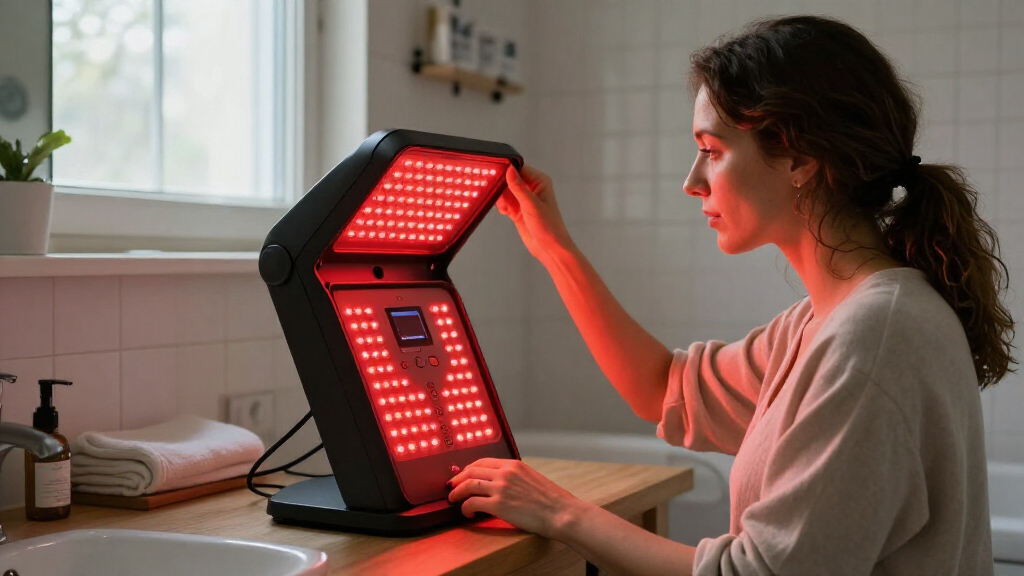
A panel is the format to consider when you want a larger device as the center of an at-home setup. The selected pick is the EXESAS Full-Body Red and Near-Infrared Light Therapy Panel with Stand. Its name identifies both red and near-infrared light and a stand, but it does not establish the panel’s dimensions, included accessories beyond the stand, or how much area it covers. Check the listing carefully before assuming it suits a full-body routine.
A common buying mistake is treating the word “full-body” as a guarantee that the panel will cover every intended area in one position. Compare the listed dimensions with the space where you plan to use it, and check how the stand positions the panel. Confirm whether the stand is included in the exact configuration and whether it can be adjusted to the height and angle you need. Fit the setup to your space, including storage and access to a power outlet.
Also review the product’s instructions for distance, session setup and eye-safety guidance, rather than guessing from the product category. If you plan to pair the panel with separate goggles, check that the guidance is compatible with your intended use. Use documented specifications to compare panels, since the name alone cannot answer practical setup questions.
What to look for:
- Listed panel dimensions and intended coverage
- Stand inclusion, adjustment range and footprint
- Power and placement requirements
- Manufacturer guidance for distance and sessions
- Eye-safety instructions and compatible protection
EXESAS Full-Body Red and Near-Infrared Light Therapy Panel with Stand and Remote

This full-body LED panel offers six red and near-infrared wavelengths, with separate or combined light modes. It includes a remote, protective glasses, a stand, an LCD control panel, a timer, and cooling fans.
Pros:
- Six red and near-infrared wavelengths
- Includes stand, remote, and protective glasses
- Built-in timer, LCD controls, and cooling fans
Cons:
- Large 73-inch height may require substantial space
- The product description makes wellness benefit claims without supporting details
Best for: Shoppers planning a panel-centered setup with a stand
Not ideal for: Those who need verified coverage or compact storage
Bottom line: Check the panel dimensions, stand details and usage instructions against your room and routine.
Red Light Therapy Mask
A face mask offers a wearable format for shoppers who prefer a facial device over positioning a larger panel. The selected pick is the iRestore Red Light Therapy LED Face Mask, 360 LEDs. The product name specifies an LED face mask and a count of 360 LEDs; it does not tell you how the mask fits, what areas it covers, or which accessories come in the box. Verify the fit and included items on the listing before choosing it.
One common mistake is assuming a mask will sit comfortably on every face or accommodate every routine. Check the product dimensions, fastening method, weight and any fit guidance the manufacturer provides. Look for clear instructions on cleaning and storage, and confirm whether the product is intended to be used seated or while moving around. Comfort affects repeat use, so consider whether the mask’s shape and attachment suit the way you expect to wear it.
Read the usage and eye-safety instructions before use, and do not infer wavelengths or treatment guidance from the LED count. If you wear glasses or have a specific fit concern, seek product documentation that addresses it. Match the mask to your face using the seller’s stated specifications, and compare those details with other masks rather than relying on the product name alone.
What to look for:
- Mask dimensions and fit or fastening guidance
- Weight and recommended wearing position
- Manufacturer usage and eye-safety instructions
- Cleaning and storage directions
- Included controller, cable or other accessories
iRestore Red Light Therapy LED Face Mask, 360 LEDs

This LED face mask uses 360 LEDs and three wavelengths—red (635 nm), infrared (830 nm), and blue (415 nm)—for targeted skincare treatments. It features a lightweight, dual-strap design and is intended for 10-minute sessions, 3–5 times per week.
Pros:
- Offers three wavelengths for different skincare goals
- Quick 10-minute sessions
- Dual straps and a lightweight design support comfortable use
Cons:
- Requires regular use several times per week
- The description does not provide clinical results or independent evidence
Best for: Shoppers who prefer a dedicated facial mask format
Not ideal for: Those who need fit details not stated on the listing
Bottom line: Confirm the mask’s fit, instructions and included accessories before making it part of your routine.
Red Light Therapy Belt
A belt or wrap can be a practical format when you want a product designed to sit around the body. The selected pick is the Capillus Body Cordless Red Light Therapy Wrap. “Cordless” appears in the product name, but the listing should clarify what that means for charging, runtime and operation. Check the actual power details rather than assuming how the wrap works.
A frequent buying mistake is choosing a wrap without checking its dimensions or how it fastens. Look for the stated length, adjustable range and closure type, then compare those measurements with the area where you intend to place it. Confirm which body areas the manufacturer identifies and whether the wrap can be positioned securely there. Fit and placement matter for a wearable device, particularly if you expect to use it while seated or moving.
Review the instructions for use, cleaning, charging and storage, and check what comes in the package. The product name does not establish its light wavelengths or session guidance, so use the listing or manufacturer documentation for those specifics. If the wrap’s intended placement is not clear, avoid guessing and check the official guidance. Use stated specifications to decide whether its size and operation suit your routine.
What to look for:
- Wrap dimensions, adjustability and fastening method
- Charging method and cordless operating details
- Manufacturer-identified placement areas
- Usage, cleaning and storage instructions
- Included charger or other accessories
Capillus Body Cordless Red Light Therapy Wrap

This flexible, cordless wrap uses 360 LEDs with 630 nm red light and 850 nm near-infrared light. It has an adjustable strap for use on areas including the waist, back, shoulders, hips, and legs, plus a rechargeable battery and 15-minute sessions with automatic shutoff.
Pros:
- Cordless design supports use at home, work, or while traveling
- Adjustable wrap fits multiple body areas
- Automatic shutoff after 15-minute sessions
- Combines red and near-infrared light
Cons:
- Session length is fixed at 15 minutes
- No battery runtime or charging time is provided
Best for: Shoppers looking for a body wrap with cordless in its name
Not ideal for: Those who need runtime or fit details before comparing
Bottom line: Check the wrap’s dimensions, charging information and placement instructions for the exact listing.
Red Light Therapy Bulb
A bulb can suit shoppers assembling a targeted setup around an existing fixture or a separate holder. The selected pick is Red Light Therapy for Face and Body with Stand – 660nm Red & 850nm Inf. Its name includes a stand and the wavelength figures 660nm and 850nm, but the product listing should clarify the exact bulb type and what the stand supports. Confirm the components before assuming it fits your current setup.
A common mistake is focusing on wavelength text while overlooking compatibility and positioning. Check the bulb’s base or connection type, power requirements and whether the supplied stand is designed for the included bulb. Compare the stand’s height and adjustment options with your intended placement, and review the manufacturer’s instructions on distance and use. Compatibility comes first if you plan to use an existing fixture or mount.
The phrase “face and body” does not by itself establish coverage or how the bulb should be moved between areas. Look for the product’s stated coverage, operating directions and safety guidance. Also verify whether the name is truncated on the listing and consult the complete product details for wavelength and accessory information. Rely on the full specification to determine whether the bulb and stand work for your space and routine.
What to look for:
- Bulb base or connection type and power requirements
- Stand inclusion, height and adjustment details
- Complete wavelength and product specifications
- Manufacturer guidance for distance and positioning
- Coverage information and eye-safety instructions
Red Light Therapy for Face and Body with Stand – 660nm Red & 850nm Infrared Ligh

The Viconor red light therapy lamp features 120 LEDs with 660 nm red and 850 nm infrared lights, providing comprehensive skin and body therapy. Its curved design focuses the light for targeted treatment, making it suitable for facial and full-body use at home.
Pros:
- Effective combination of red and infrared light for skin and body therapy
- Portable and easy to use at home with adjustable stand
- Focuses light for targeted facial and full-body treatment
- Non-invasive and safe for daily use
Cons:
- Requires daily commitment of 15-30 minutes for best results
- Design may be less suitable for larger body areas
- Some users may find the treatment time lengthy
Best for: Shoppers comparing a bulb format with a stand
Not ideal for: Those who cannot confirm fixture or stand compatibility
Bottom line: Verify the full product details, connection type and stand setup before choosing this bulb.
Red Light Therapy Goggles
Goggles are an accessory to evaluate when your device’s instructions call for eye protection. The selected pick is Mito Red Light Therapy Glasses – Eye Protection for Red Light (600nm-9. The product name identifies glasses for red light and begins a wavelength range, but the range shown is incomplete. Check the complete listing for the supported range and use guidance before relying on them.
A common mistake is assuming any tinted glasses are suitable for any red light device. Confirm the manufacturer’s stated wavelength coverage and whether the goggles are intended for the device you plan to use. Check how they fit over or alongside prescription glasses, if relevant, and review the product dimensions and adjustment details. Match protection to the device using documented specifications, not appearance alone.
Review the instructions supplied with both the goggles and the light device, since the product name does not establish when or how the glasses should be worn. Check whether the listing describes included components, care directions and any limitations. If the range remains incomplete or compatibility is unclear, consult the manufacturer documentation before purchasing. Clear compatibility details make it easier to select eye protection that fits your setup.
What to look for:
- Complete supported wavelength range
- Compatibility guidance for your specific device
- Fit details, including over prescription glasses if needed
- Usage and care instructions
- Included components and stated limitations
Mito Red Light Therapy Glasses – Eye Protection for Red Light (600nm-900nm) – Go

These red light therapy glasses are designed to reduce eye strain and shield your eyes from brightness during therapy sessions. They offer customizable attenuation levels and are lightweight, comfortable, and durable for effective protection.
Pros:
- Customizable protection levels for comfort
- Lightweight and comfortable design
- Durable and anti-scratch material
Cons:
- May not fully block all wavelengths for sensitive users
- Designed specifically for red light therapy, limited use outside sessions
Best for: Shoppers checking eye protection for a red light setup
Not ideal for: Those whose device wavelength or compatibility is unknown
Bottom line: Confirm the full wavelength range and device compatibility in the complete product documentation.
Red Light Therapy Stand
A stand can help position a light device, but the right choice depends on the device it needs to support and the space available. The selected pick is the Exesas Elite-Pro Series 9-Wavelengths Red Light Therapy Device for Ful. The provided product name describes a device and begins “Ful,” but does not clearly establish whether a stand is included or specify the model’s dimensions. Check the complete listing to establish exactly what this pick includes.
A common buying mistake is treating a device with a stand-related category label as a universal mount. Confirm whether the listing is for a stand, a light device, or a bundle, then check the supported device model, attachment method and weight guidance. Compare the footprint, height and adjustment range with your intended location. Confirm the mounting match before purchasing, especially if you already own a panel or other light.
The name mentions nine wavelengths, but it does not provide the wavelength values, operating directions or stand specifications. Find the full product details and manufacturer instructions for setup, placement and use. If the product is a device rather than a standalone stand, compare its included support components with what you need. Separate the device details from stand details so the product configuration is clear before you decide.
What to look for:
- Complete product name and whether a stand is included
- Supported device models and attachment method
- Stand footprint, height and adjustment range
- Weight or mounting guidance
- Full wavelength details and manufacturer setup instructions
Exesas Elite-Pro Series 9-Wavelengths Red Light Therapy Device for Full Body wit

The Exesas Elite-Pro Series is a full-body red light therapy device featuring 9 targeted wavelengths and clinical-grade dual-chip LEDs. Designed for skin, pain relief, weight management, and overall wellness, it offers customizable sessions with remote control and preset modes.
Pros:
- Multiple targeted wavelengths for comprehensive therapy
- Professional-grade LEDs with high irradiance
- User-friendly with remote control and preset modes
- Long-lasting with 100,000-hour lifespan
Cons:
- Heavy at 30 lbs, may be less portable
- Large size may require dedicated space
- Premium price point
Best for: Shoppers comparing an Exesas device and support setup
Not ideal for: Those seeking a standalone stand without verified listing details
Bottom line: Confirm whether this listing is a device, a stand or a bundle, and check its fit with your equipment.
Build your checklist around the essentials first: decide which format suits your space and routine, then verify dimensions, compatibility, included components and manufacturer instructions. If you are buying an accessory such as goggles or a stand, confirm that it matches the specific device you plan to use. Prioritize fit and compatibility before adding optional pieces.
Take the product names as starting points and use the complete listings to answer the questions that matter to you. Compare the same details across products, keep the manufacturer’s directions close at hand and choose a setup you can place and store comfortably. A careful checklist makes the choice clearer; take it one slot at a time.