TL;DR

Get wellness gear delivered free with Prime
- Fast, free delivery on millions of items
- Prime Video, Amazon Music and more included
- Member-only deals all year
Certified personal trainer Francesco Zen told Fit&Well that shifting weight toward the outer edges of the feet and pushing the knees outward helped him better engage his glutes during overhead squats. He recommends building mobility and stability with bodyweight, dowel and Frankenstein squat variations before attempting the advanced movement with a barbell.
Certified personal trainer Francesco Zen says a small adjustment to his squat stance helped him engage his glutes more effectively in the overhead squat: shift weight toward the outer edges of the feet and press the knees outward. In a Fit&Well report, Zen described the advanced, full-body movement as one that calls for mobility and stability, and advised learning it with a stick or plastic pipe before trying a barbell.
Zen, founder of ZLIFE, told Fit&Well that the glutes support the overhead squat throughout its range. As a person lowers, his cue is to keep the knees moving outward and place more pressure through the outer part of the feet. Zen said changing the traditional angle of the position can alter how the movement feels. This is his training advice, rather than evidence from a controlled comparison of squat techniques.
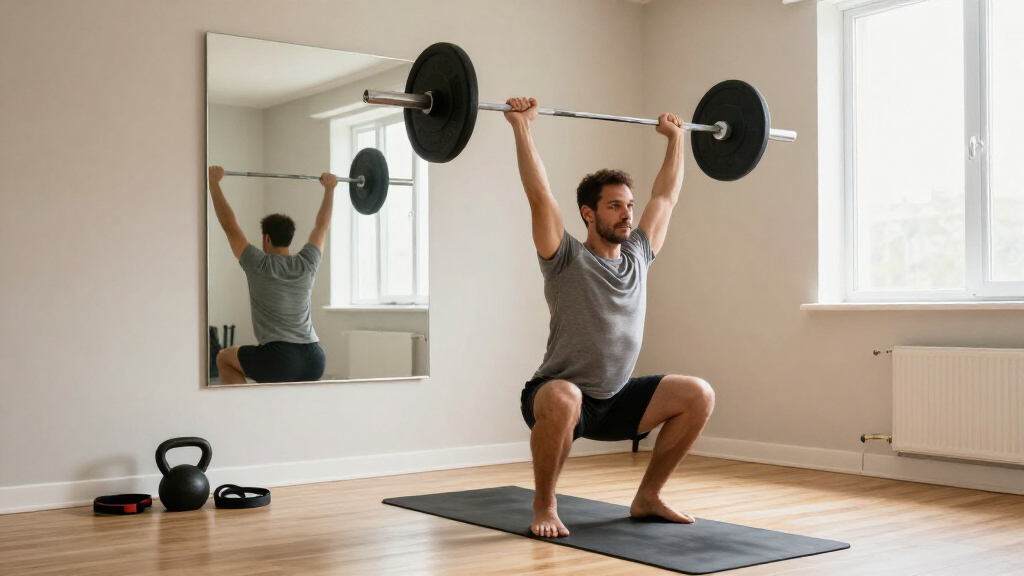
An overhead squat involves holding a light implement or bar overhead while squatting. Fit&Well describes it as an advanced variation requiring mobility in areas including the ankles, hips, spine and shoulders, alongside core activation. The report advises readers to first practice raising their arms during a bodyweight squat, then use a dowel, plastic pipe or broom to rehearse the overhead position before considering a loaded barbell.
Zen also recommends a Frankenstein squat as a preparatory variation. Instead of holding a bar overhead, the person extends the arms forward at shoulder height, with a dowel or bar resting across the front of the shoulders. Zen says this position is easier to stabilize while working on similar core, glute and mobility foundations. The source does not provide a training schedule, repetition target or assessment for deciding when someone is ready to progress.
A Cue for Safer Skill Progression
The report offers a practical technique cue for readers interested in a movement that combines a squat with an overhead hold. Keeping the knees tracking outward and distributing pressure toward the outer feet may help a trainee focus on glute engagement, according to Zen. The broader takeaway is that the movement should be approached as a skill built in stages, rather than as a lift to attempt immediately with substantial weight.
That progression matters because the bar must remain controlled overhead while the body lowers and rises. Fit&Well recommends starting with bodyweight and a light stick or pipe; it also suggests seeking an exercise professional or spotter for the more advanced version. The guidance is general and does not establish that the same cue will work for every body or resolve an individual mobility limitation.
Products Worth Considering

OMRON Complete 2-in-1 Upper Arm Blood Pressure Monitor with EKG

Garmin Forerunner 70 GPS Running Smartwatch, 43 mm, Black

Withings Body Scan Smart Scale with Segmental Body Composition and ECG, Black
As an affiliate, we earn on qualifying purchases.
Building Toward the Overhead Position
The overhead squat is more demanding than a standard squat because the arms stay elevated while the hips and knees bend. The Fit&Well article frames the move as a combination of mobility, core control and stability, rather than a test of leg strength alone. A person may be able to squat comfortably without being able to maintain an aligned, steady overhead position.
The report sets out a progression: practice a bodyweight squat with the arms raised; use a wall-based squat-and-reach or wall-facing squat to work on position; then use a dowel or similar light implement. The Frankenstein squat places the arms forward instead of overhead, reducing the balance challenge, according to Zen. For the overhead squat itself, the article describes a shoulder-width stance with toes turned slightly outward, a braced core, locked elbows and a steady implement directly above the shoulders.
“The glutes support the whole movement, top to bottom.”
— Francesco Zen, speaking to Fit&Well
Limits of the Technique Advice
The source presents Zen’s personal training cue and recommendations, not research showing that the foot-and-knee adjustment improves performance for all trainees. It does not report measurements, a comparison group or a defined period of practice behind his account of improving his form. It is also unclear what specific mobility or strength standards Fit&Well or Zen would use to determine readiness for a loaded overhead squat.
The article does not address individual injuries, pain, or medical conditions. Readers who experience pain or have concerns about their mobility should seek advice from a qualified fitness or health professional before trying the movement. The report also does not specify how much weight, if any, a beginner should eventually use.
Practice Before Adding Load
Fit&Well’s guidance is to progress from bodyweight practice to a dowel or plastic pipe, using the lighter implement to check shoulder and spine alignment. A Frankenstein squat can provide another step before practicing the full overhead position. The report recommends working with an exercise professional or spotter where possible for the advanced movement.
No further statement from Zen, training plan or follow-up test is included in the source material. For readers, the next practical step is to work within a controlled range and add complexity only when they can maintain a steady position; the source offers no fixed timetable or load progression.
Key Questions
What squat cue did Francesco Zen share?
Zen says to shift weight toward the outer part of the feet and push the knees outward while lowering. He told Fit&Well that this helped him engage his glutes during an overhead squat.
What is an overhead squat?
It is a squat performed while holding a stick, pipe or barbell overhead. The Fit&Well report describes it as an advanced movement that calls for mobility and stability as well as squat control.
How does the Frankenstein squat differ?
In a Frankenstein squat, the arms extend forward at shoulder height rather than overhead, with a dowel or bar resting across the front of the shoulders. Zen says the position is easier to stabilize while practicing related movement foundations.
Should beginners use a barbell for overhead squats?
The report advises learning the movement first with bodyweight and then a light stick, plastic pipe or similar implement. It recommends professional guidance or a spotter for the advanced version and does not set a beginner barbell weight.
Source: rss