TL;DR

Get wellness gear delivered free with Prime
- Fast, free delivery on millions of items
- Prime Video, Amazon Music and more included
- Member-only deals all year
Fit&Well reported that Pilates instructor Madison DiSalvo recommended four exercises to train the deep core: dead bugs, bird dogs, bear planks and plank leg lifts. The guidance emphasizes keeping the torso and pelvis steady as the limbs move; it is exercise advice, not evidence that the routine treats or prevents a medical condition.
Pilates instructor Madison DiSalvo has recommended four exercises for training the deep core: dead bugs, bird dogs, bear planks and plank leg lifts. In a report by Fit&Well, DiSalvo said the exercises challenge people to keep their midsection steady while moving their arms or legs, a control-focused approach that may help readers add structured core work to a workout.
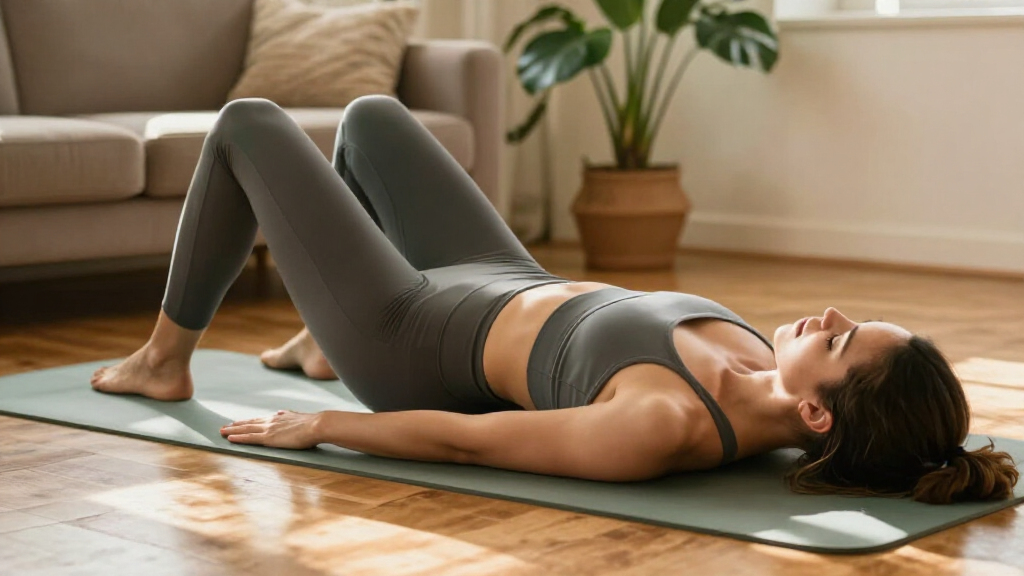
The report identifies the dead bug as a floor-based exercise performed on the back. With arms reaching upward and knees bent above the hips, the person lowers one arm overhead while extending the opposite leg, then returns and switches sides. Fit&Well suggests two to three sets of 10–15 repetitions per side. Its key form cue is to stop the leg before the lower back arches and to keep the torso and pelvis still.
The bird dog begins on hands and knees, with the hands beneath the shoulders and knees beneath the hips. The person reaches one arm forward while extending the opposite leg behind, then returns with control and alternates sides. The report suggests two to three sets of 10–15 repetitions per side. It says the movement tests balance and coordination as well as the ability to resist rotation through the torso.
For the bear plank, the person starts on all fours, tucks the toes and lifts the knees about an inch from the floor. Fit&Well lists three to five holds of 20–30 seconds, with a flat back and relaxed, elongated neck. The final exercise, the plank leg lift, starts in a straight-arm plank; the person lifts one leg without letting the pelvis tip or the lower back arch. The suggested dose is two to three sets of 10–12 lifts per side.
Four Moves Built Around Core Control
The advice offers readers a short, equipment-free routine with different levels of support and balance demands. Dead bugs and bird dogs use the floor for stability, while bear planks and plank leg lifts ask the person to support more of their body weight through the hands and shoulders. The common element is controlling the trunk while the limbs move, rather than simply holding a static position.
That distinction matters for anyone following the routine: form is central to the instructions. The report repeatedly warns against letting the back arch or the pelvis shift. Those cues describe how DiSalvo recommends performing the exercises; they do not establish that the moves are appropriate for every person or that they deliver a specific health outcome. People with pain, injuries, pregnancy-related concerns or other medical conditions may want guidance from a qualified health professional before starting or modifying core exercises.
As an affiliate, we earn on qualifying purchases.
How the Routine Is Structured
Fit&Well frames the four exercises as a way to practice keeping the trunk stable while the arms or legs move. It attributes the recommendations to Madison DiSalvo of STRONG Pilates Commack. DiSalvo describes Pilates as a practice that coordinates controlled movement with breathing and says it builds stability “from the inside out.” That is her characterization of the practice, rather than a measured result reported in the article.
The prescribed formats vary: two exercises use repetitions, while the bear plank uses timed holds; the plank leg lift also uses repetitions on each side. The report does not provide a complete weekly plan, rest periods, progression schedule or a test of the routine’s effects. Its scope is narrower: four exercise options, suggested volumes and technique reminders.
“It builds foundational stability from the inside out.”
— Madison DiSalvo, Pilates instructor at STRONG Pilates Commack, as quoted by Fit&Well
As an affiliate, we earn on qualifying purchases.
Limits of the Exercise Advice
The Fit&Well report does not cite a clinical trial comparing the four exercises or provide evidence that this set is the “best” option for everyone. That ranking appears in the article’s framing; the available source material does not explain how alternatives were evaluated. It also does not specify how often readers should perform the routine, how to progress, or how to adapt the movements for different fitness levels.
The suggested repetitions and holds are general guidance from the report, not individualized programming. It is also unclear whether DiSalvo recommends all four moves in one session or as options to select from. Readers who experience pain, cannot maintain the stated positions, or have relevant health concerns should stop and seek advice from a qualified professional.
balance and stability exercise ball
As an affiliate, we earn on qualifying purchases.
As an affiliate, we earn on qualifying purchases.
How Readers Can Apply the Guidance
The source material reports no follow-up study, official program or later development. Readers can use the article’s instructions as a starting point only if the movements are comfortable and appropriate for them: begin with controlled range of motion, prioritize a steady back and pelvis, and reduce the movement or stop if those positions cannot be maintained. The next useful step for anyone uncertain about technique or exercise suitability is to ask a qualified Pilates instructor or health professional for individual guidance.
floor exercise mat for core workouts
As an affiliate, we earn on qualifying purchases.
As an affiliate, we earn on qualifying purchases.
Key Questions
Which four exercises did the instructor recommend?
Dead bugs, bird dogs, bear planks and plank leg lifts, according to the Fit&Well report quoting Pilates instructor Madison DiSalvo.
How many repetitions or holds does the report suggest?
It suggests two to three sets of 10–15 repetitions per side for dead bugs and bird dogs, three to five bear-plank holds of 20–30 seconds, and two to three sets of 10–12 plank leg lifts per side.
What form cues are shared across the exercises?
The report emphasizes keeping the torso and pelvis steady, avoiding a lower-back arch and moving with control. For the dead bug, stop extending the leg before the back arches; for the plank leg lift, avoid shifting the hips.
Are these exercises suitable for everyone?
The report does not assess individual suitability. Anyone with pain, an injury, pregnancy-related concerns or another relevant health condition should seek guidance from a qualified health professional or instructor before trying or adapting the movements.
Source: rss
Cold & flu season Picks
humidifiers
As an affiliate, we earn on qualifying purchases.