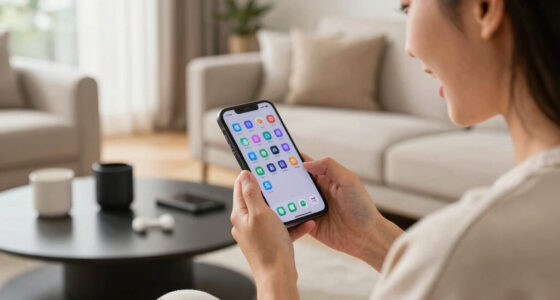
To spot wellness tech scams, look for signs like exaggerated promises of quick fixes or miracle cures, especially if they lack credible backing or professional credentials. Check if the app or device links to reputable organizations or licensed professionals. Be wary of products that claim to replace prescriptions or promote unverified benefits. Trust secure websites with clear privacy policies, and avoid sharing personal or financial info without verification. Keep alert—more tips await to help you stay protected.

Get wellness gear delivered free — and shop member deals
- Fast, free delivery on millions of items
- Access to Prime Big Deal Days deals on October 6–7
- Prime Video, Amazon Music and more included
Key Takeaways
- Verify credentials and developer transparency; legitimate apps often link to reputable health organizations or licensed professionals.
- Look for evidence-based features developed with qualified clinicians, avoiding apps promising instant or miracle results.
- Check for official approvals from authorities like the FDA or regional regulators before trusting health products or medications.
- Be cautious of exaggerated claims, free trials with hidden charges, and lack of clear privacy policies indicating potential scams.
- Use reviews, professional advice, and credible sources to confirm the legitimacy and safety of wellness tech before engagement.
In today’s rapidly growing wellness tech market, scams are becoming more common, targeting consumers enthusiastic to improve their health. With so many apps and devices claiming to boost your well-being, it’s easy to fall for fraudulent offerings that promise quick fixes or miracle results. Being able to spot a scam from a legitimate product is vital, especially when it comes to medication safety and mental health apps. These categories often attract scammers because they deal directly with sensitive aspects of your health, making them prime targets for exploitation.
Beware wellness scams targeting mental health and medication apps promising quick fixes and miracle cures.
When evaluating mental health apps, start by checking their credibility. Trustworthy apps usually have transparent information about their developers, often linked to reputable health organizations or licensed professionals. If an app’s website or description lacks clear credentials, that’s a warning sign. Fake apps often claim to provide therapy or medication management without proper licensing or scientific backing. Remember, mental health is complex, and effective tools should be developed with input from qualified clinicians. If an app promises instant relief or guarantees to cure mental health issues, it’s likely a scam. Real mental health support requires ongoing, evidence-based approaches, not quick fixes.
Medication safety is another critical area where scams thrive. Scam products might claim to replace or enhance prescription medications without proper approval from health authorities. These products can be dangerous, risking adverse reactions or interactions with your current medicines. Always verify if a medication-related app or product is approved by organizations like the FDA or equivalent regulatory bodies in your country. Be wary of apps or online services that push unverified supplements or suggest “miracle cures” for chronic conditions. If it sounds too good to be true, it probably is. Legitimate medication management tools often integrate with healthcare providers and require prescriptions or professional oversight.
Many scams also exploit the excitement around new wellness tech by offering free trials that quickly turn into costly subscriptions, with little transparency about charges or data privacy. Never share your personal or financial information without verifying the legitimacy of the platform. Look for secure websites with clear privacy policies and contact details. A genuine wellness app or device will prioritize your safety and privacy, not just making a sale.
Additionally, be cautious of products claiming to have miracle cures or overly sensational benefits, as these are common tactics used by scammers to lure unsuspecting consumers. Ultimately, staying cautious and doing your homework can save you from falling victim to wellness tech scams. Trust your instincts—if something feels off, it’s worth investigating further. Cross-check app reviews, consult healthcare professionals, and avoid products that promise unrealistic results. Your health is too important to gamble with unverified tools or shady online schemes. By remaining vigilant, you protect yourself from deception and ensure you’re investing in genuine, safe solutions that truly support your well-being.
As an affiliate, we earn on qualifying purchases.
Frequently Asked Questions
How Can I Verify a Wellness Tech Company’s Credibility?
To verify a wellness tech company’s credibility, start by checking their product labeling for transparency and clear, accurate information. Look for expert endorsements from reputable professionals in the health field, which add trustworthiness. Research the company’s reputation online, read reviews, and verify their certifications. Trust companies that openly share testing results and have credible endorsements, ensuring you’re investing in safe, effective wellness technology rather than falling for scams.
Are Free Trials Reliable for Testing Wellness Devices?
Free trials can be helpful, but beware of free trial pitfalls like hidden fees or limited testing periods. They’re not always reliable for testing wellness devices because scammers often use them to gather your personal info or charge hidden costs. Watch for scam warning signs such as vague product details or pressure to make quick decisions. Always read the fine print and research the company’s reputation before committing to a free trial.
What Certifications Should Genuine Wellness Tech Products Have?
Oh, you’d think wellness tech products are certified by magic, right? The truth is, look for certifications like FDA approval, CE marking, or ISO standards to verify product authenticity. These certification standards guarantee safety and reliability, so don’t settle for anything less. When a product proudly displays these marks, it’s more likely to be legit, giving you peace of mind in your wellness journey.
Can User Reviews Be Trusted for Wellness Tech Products?
User reviews can be helpful but aren’t always trustworthy for wellness tech products. Fake reviews and influencer endorsements can skew your perception, making products seem better or worse than they really are. To get a clearer picture, look for detailed, balanced reviews from verified users. Cross-check multiple sources, and be wary of overly positive or overly negative comments that seem suspicious or overly promotional.
What Legal Protections Exist Against Wellness Tech Scams?
Legal safeguards protect you from wellness tech scams by enforcing consumer rights and holding fraudulent companies accountable. You’re protected under laws like the FTC Act, which prohibits false advertising and deceptive practices. If you encounter a scam, you can report it to authorities, seek refunds, or pursue legal action. Staying informed about your consumer rights empowers you to recognize scams and protect yourself from fake wellness tech products.
legitimate medication management devices
As an affiliate, we earn on qualifying purchases.
As an affiliate, we earn on qualifying purchases.
Conclusion
Stay vigilant and trust your instincts when exploring wellness tech options. Sometimes, the brightest stars can hide a flicker beneath their glow. By paying close attention and doing a little homework, you can steer clear of the shadows and find genuine tools that truly support your well-being. Remember, the path to health is often paved with mindful choices, not quick fixes. Keep your eyes open, and your journey will be brighter for it.
certified wellness tracking devices
As an affiliate, we earn on qualifying purchases.
As an affiliate, we earn on qualifying purchases.
reputable health monitoring apps
As an affiliate, we earn on qualifying purchases.
As an affiliate, we earn on qualifying purchases.
Fall Picks
fall essentials
As an affiliate, we earn on qualifying purchases.