TL;DR

Get wellness gear delivered free with Prime
- Fast, free delivery on millions of items
- Prime Video, Amazon Music and more included
- Member-only deals all year
Personal trainer Pippa Sealey says shorter rests and unilateral exercises can make home strength workouts more challenging when heavier dumbbells are unavailable. Her example session pairs exercises in supersets and tri-sets, and is aimed at people already confident with basic movements.
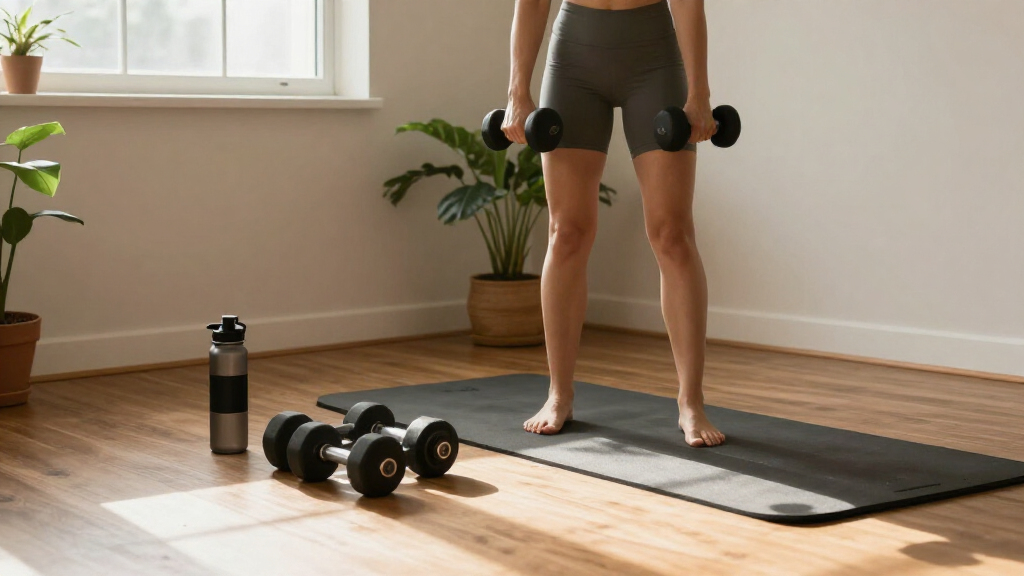
Personal trainer Pippa Sealey has outlined two ways to make home dumbbell sessions more challenging without buying heavier weights: shorter rest periods and unilateral exercises, which work one side of the body at a time. In a Fit&Well report, she shared a workout built around those methods for people who already know fundamental lifts such as squats and deadlifts.
Sealey said she uses shorter rests and one-sided movements when she does not have access to heavier loads at home. One way to shorten breaks is to perform a superset: complete a set of one exercise and move directly to a second exercise before resting. She also suggested agonist supersets, which pair exercises that target the same muscle groups to increase the demand on that area.
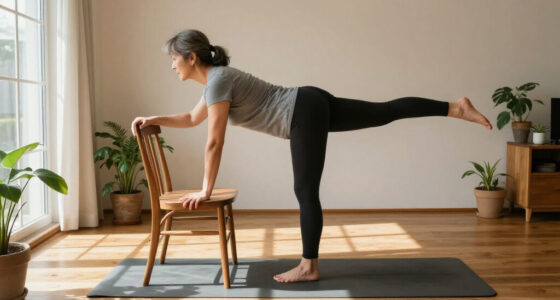
The sample workout combines supersets and tri-sets, or sequences of two or three exercises completed before a rest. The instructions generally call for three rounds of each sequence. Exercises listed include calf raises, a hamstring bridge march, a wall sit, single-leg Romanian deadlifts, split squats, push-ups, single-arm rows, side-plank hip lifts, plank dumbbell pull-throughs and sit-ups.
Some movements use little or no equipment, while others use dumbbells. The plan includes 10 to 12 repetitions for several exercises, six repetitions per side for the bridge march and a 60-second wall sit. Rest periods vary: some exercise pairs have no rest between movements, while the listed wall sit and split squat sequences call for 60 to 90 seconds after the round.
Making Lighter Weights Work Harder
For people who train at home with a limited set of dumbbells, Sealey’s suggestions offer ways to change the structure and demands of a session rather than relying only on heavier equipment. Shorter breaks can make a sequence more demanding, while unilateral exercises require each side to work separately and can add balance and control demands.
These methods are not a guarantee of continued progress for every person. The report presents them as training options, not as a substitute for sound technique or individualized programming. Since the sample workout is described as being for people already comfortable with basic lifts, beginners may need to learn the movements and adapt the plan before attempting it.
adjustable dumbbells set for home strength training
As an affiliate, we earn on qualifying purchases.
As an affiliate, we earn on qualifying purchases.
The Workout’s Intended Audience
The report frames the workout around a familiar limitation of home strength training: someone may start with a pair of dumbbells, then find that repeating the same loads no longer feels challenging. Sealey’s response is to adjust rest periods and exercise selection rather than telling readers to purchase more equipment.
The published routine is not simply a list of dumbbell lifts. It alternates loaded and body-weight movements and uses sequences of exercises before rest. The report says the plan is intended for people already confident with fundamentals such as squats and deadlifts; it does not establish that the workout is suitable for every fitness level or health situation.
non-slip exercise mat for home workouts
As an affiliate, we earn on qualifying purchases.
As an affiliate, we earn on qualifying purchases.
Limits of the Published Guidance
The source does not give a publication date, identify the exact dumbbell weights used, or report results from people who tried the workout. It also does not say how often readers should repeat the routine or how to increase the challenge over time beyond the techniques described. The workout’s suitability will depend on an individual’s experience, ability and circumstances; the article does not provide personalized coaching or medical guidance.
There is also a gap in the supplied exercise outline: it lists a single-arm dumbbell push press in the third group, but the preceding overview names a push-up and a single-arm row for that section. The available material does not clarify whether the push press is part of the final workout sequence.
resistance bands set for strength training
As an affiliate, we earn on qualifying purchases.
As an affiliate, we earn on qualifying purchases.
How Readers Can Apply the Tips
The immediate next step for readers interested in the routine is to review the full exercise instructions and choose movements they can perform with control. They can use the shorter-rest and unilateral approaches selectively, rather than assuming they need to complete every exercise as published. The source gives no announced follow-up or schedule for further guidance.
People who are new to strength training can begin with movements they know and seek qualified instruction before trying unfamiliar lifts. They should stop if a movement causes pain and adapt the session to their own ability; those with health concerns may want professional guidance before starting a new workout.
workout timer interval timer for supersets
As an affiliate, we earn on qualifying purchases.
As an affiliate, we earn on qualifying purchases.
Key Questions
What two methods does Pippa Sealey recommend?
Sealey recommends shorter rest periods and unilateral movements, which train one side of the body at a time, when heavier weights are not available.
What is a superset?
A superset is a sequence in which you complete a set of one exercise and then a set of another exercise before resting. Sealey also suggests agonist supersets, pairing movements that target the same muscle groups.
Who is the sample workout intended for?
The report describes it as a workout for people already confident with fundamental movements such as squats and deadlifts. It does not say the plan is appropriate for every fitness level.
Does the workout require dumbbells for every exercise?
No. The listed routine includes both dumbbell exercises and body-weight movements, including push-ups, wall sits and a hamstring bridge march.
Source: rss
Halloween Picks
halloween
As an affiliate, we earn on qualifying purchases.