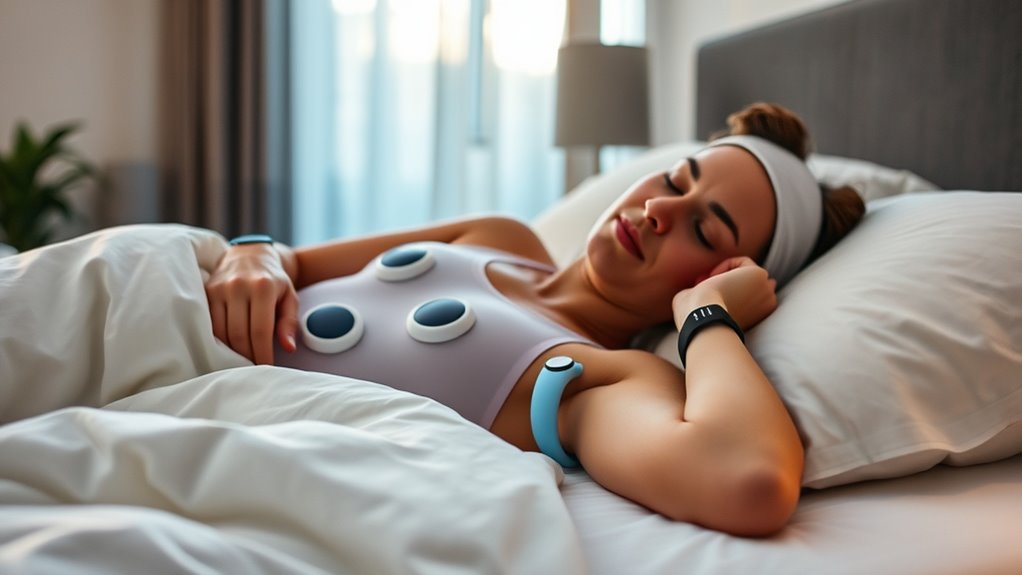

Using wearables to detect sleep apnea can be a helpful way to screen for potential issues, but their reliability isn’t perfect. These devices measure parameters like heart rate, oxygen levels, and movement, giving you early warnings. However, they aren’t as accurate as clinical sleep studies and should be seen as preliminary tools. Factors like device quality, comfort, and consistent use affect their effectiveness. Keep exploring to discover how these tools can fit into your health approach.

Get wellness gear delivered free — and shop member deals
- Fast, free delivery on millions of items
- Access to Prime Big Deal Days deals on October 6–7
- Prime Video, Amazon Music and more included
Key Takeaways
- Wearables can identify potential sleep apnea but are less accurate than clinical sleep studies (PSG).
- Sensor data like heart rate and oxygen saturation are used, but device variability affects reliability.
- Consistent use and comfort improve data quality, making wearables better screening tools than definitive diagnostics.
- Wearables serve as preliminary indicators, prompting professional evaluation rather than replacing medical diagnosis.
- Device accuracy and user compliance are critical factors influencing the reliability of sleep apnea detection via wearables.

Have you ever wondered if your sleep habits could be silently affecting your health? Many people are unaware that sleep apnea, a condition characterized by interrupted breathing during sleep, can have serious long-term consequences. Fortunately, wearables have emerged as accessible tools to help detect this issue early. But how reliable are these devices, and can you truly count on them? When it comes to using wearables for sleep apnea detection, two key factors come into play: data accuracy and user comfort. These elements directly influence whether a wearable can give you a trustworthy reading and whether you’ll actually want to use it nightly.
Data accuracy is crucial because it determines how well a wearable device can identify sleep apnea events. These devices typically rely on sensors that measure parameters like heart rate, oxygen saturation, and movement. While advancements have improved their ability to detect irregular breathing patterns, they still face limitations compared to clinical sleep studies. Consumer-grade wearables might flag potential issues, but they often lack the precision of PSG (polysomnography), the gold standard for diagnosing sleep apnea. Consequently, you shouldn’t rely solely on these devices for a definitive diagnosis. Instead, think of them as preliminary screening tools that can indicate whether you should seek professional evaluation. Their data accuracy varies among brands and models, with some providing more reliable insights than others. It’s important to review product specifications and user feedback to select a device that’s known for consistent performance. Additionally, understanding the technology used in these devices can help you assess their reliability better.
User comfort plays an essential role in the effectiveness of wearables for sleep monitoring. If a device is uncomfortable or intrusive, you’re less likely to wear it consistently, which compromises the data collected. Many wearables are designed to be lightweight and unobtrusive, but comfort levels can differ based on individual preferences and sleep habits. For example, some may find wearing a wristband or headband all night bothersome, leading to poor compliance. A comfortable device encourages regular use, ensuring you gather enough data over time to notice patterns or issues. When choosing a wearable, consider factors like fit, material, and overall design. The more comfortable and unobtrusive it feels, the more likely you are to wear it throughout the night without disturbance.

Anti Snoring Device, Smart Sleep Apnea Relief Tool
- Micro-Stimulation Technology: Gentle pulses to reduce snoring
- Compact & Portable Design: Lightweight, cable-free, ideal for travel
- Smart Auto-Adjustment: Personalized sleep aid based on sleep patterns
As an affiliate, we earn on qualifying purchases.
As an affiliate, we earn on qualifying purchases.
Frequently Asked Questions
Can Wearables Diagnose Sleep Apnea Without a Clinical Sleep Study?
You can’t rely on wearables alone to diagnose sleep apnea, as they mainly track symptoms like snoring and breathing irregularities, which aren’t definitive. While they offer convenience, concerns about consumer privacy and data accuracy remain. Wearables can signal the need for a professional sleep study but shouldn’t replace clinical diagnosis. For an accurate diagnosis, consult a healthcare provider who can conduct extensive testing.
How Do False Positives Affect Wearable Sleep Apnea Detection?
False positives in wearable sleep apnea detection are like false alarms ringing loudly in your quiet night. They can lead you to worry unnecessarily or ignore real issues. Proper device calibration and false positive management are essential to prevent these mistakes. When managed well, they help ensure your wearable provides more accurate readings, so you can trust your device and avoid unnecessary anxiety or missed diagnoses.
Are There Specific Wearable Brands More Accurate for Sleep Apnea Detection?
Some wearable brands stand out in regard to brand accuracy for sleep apnea detection. You should compare devices like Fitbit, Withings, and Garmin, as each offers different features and reliability levels. When you do a device comparison, look at how well they detect apnea events and manage false positives. Keep in mind, no wearable matches professional sleep studies, but choosing a reputable brand can help you get more reliable insights.
How Long Should I Wear a Device to Get Reliable Results?
Ever wondered how much time it takes to get accurate sleep data? You should wear your device for at least one to two weeks to guarantee reliable results. During this period, focus on user compliance and proper device calibration. Consistent use helps the wearable accurately monitor your sleep patterns and potential apnea episodes. Skipping days or inconsistent use can skew your data, so commit to continuous wear for the best insights.
Do Wearables Work Equally Well for All Age Groups?
Wearables don’t work equally well for all age groups due to age-related accuracy differences. They tend to be more reliable in adults than in children or older adults. Device compatibility also varies, so make sure the wearable you choose is designed for your age and health needs. Always consult your healthcare professional for thorough assessment, as wearables are helpful but shouldn’t replace medical diagnosis, especially across different age groups.
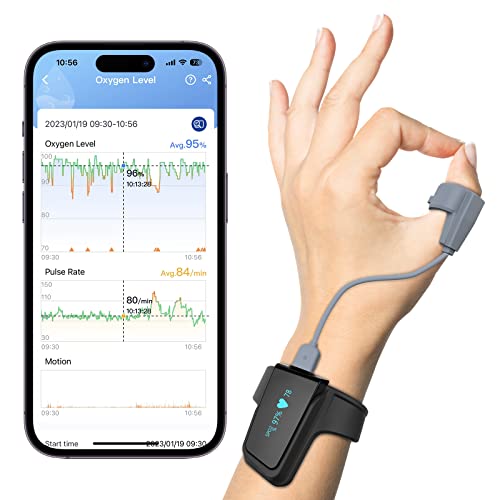
Wellue O2 Pulse Oximeter with Smart Reminder | Blood Oxygen Saturation Monitor for SpO2 and Heart Rate Tracking Continuously, Bluetooth Finger Ring with Free APP &PC Report, Style 1
- Compatible with Android, iOS, and PC: Share data via free apps and software
- Smart Vibration & Audio Alerts: Notify when blood oxygen drops below set level
- Continuous All-day Monitoring: Track blood oxygen, pulse, and motion accurately
As an affiliate, we earn on qualifying purchases.
As an affiliate, we earn on qualifying purchases.
Conclusion
While wearables show promise in detecting sleep apnea, they’re not yet foolproof. Relying solely on them is like putting all your eggs in one basket—it’s better to combine device data with medical advice. Remember, a stitch in time saves nine; early detection can prevent serious health issues later. Stay informed, stay vigilant, and consult your healthcare provider for an accurate diagnosis. Wearables are helpful, but they shouldn’t replace professional medical evaluation.

Fitbit Google Air – Screenless Activity Tracker – Obsidian
- Comfortable, lightweight fit: One size fits 130-210 mm
- Smart health tracking: Advanced sensors for 24/7 accuracy
- Personalized coaching: Includes free 3-month Google Health Premium trial
As an affiliate, we earn on qualifying purchases.
As an affiliate, we earn on qualifying purchases.

SmartGuard Anti Snore Device. New Customizable Snore Reducing Mouthpiece – Reduce Snoring Aid for Men and Women – Most Comfortable and Adjustable Oral Appliance – Holds Jaw Forward to Open Airway
- Comfortable & Adjustable: Custom-moldable for a perfect fit
- Effective Snoring Solution: Keeps airway open by holding jaw forward
- Easy to Use: Molds in 10-20 minutes with instructions
As an affiliate, we earn on qualifying purchases.
As an affiliate, we earn on qualifying purchases.
Fall Picks
fall essentials
As an affiliate, we earn on qualifying purchases.