You should avoid using a massage gun on injured, inflamed, or sensitive skin areas, especially over bones or joints, to prevent further damage or discomfort. It’s also unsafe during pregnancy or nursing, or if you have certain health conditions like heart issues or skin sensitivities. Never use it on severe pain without professional advice, and be cautious of nerve or skin reactions. If you want to guarantee safe use, learn more about proper guidelines.
Key Takeaways
- Avoid using on injured, inflamed, or sensitive skin areas to prevent worsening damage or irritation.
- Do not apply over bones, joints, or in areas with medical implants or conditions that could be aggravated.
- Refrain when pregnant or nursing, especially on the abdomen, lower back, or breasts, without medical advice.
- Do not use during severe pain, on unsupervised, or with underlying health issues that require medical treatment.
- Use caution around nerves and thin skin areas to prevent overstimulation, numbness, or long-term nerve damage.
Avoiding Use on Injured or Inflamed Areas

You should avoid using a massage gun on injured or inflamed areas because it can worsen the damage and delay healing. When tissues are injured or inflamed, they’re already sensitive and vulnerable. Applying a massage gun to these areas can increase blood flow too rapidly, potentially causing more swelling or bleeding. It can also aggravate inflamed tissues, leading to increased pain and prolonging recovery. If you notice redness, swelling, or warmth, it’s a sign to stop. Using a massage gun in these conditions can interfere with your body’s natural healing process. Proper tissue response understanding is crucial to avoid adverse effects. Additionally, applying excessive pressure on compromised tissues may further damage them. When in doubt, consult a healthcare professional to determine whether your injured areas are ready for massage gun therapy.
Not Using Over Bones or Joints

Using a massage gun directly over bones or joints can cause discomfort or injury because these areas lack the muscle tissue that can absorb the device’s vibrations. For bone safety and joint caution, avoid targeting these spots to prevent damage. Here are three key reasons:
Avoid using a massage gun directly on bones or joints to prevent discomfort and injury.
- Risk of Bone Damage: Excessive pressure can cause pain or injury to the bone surface. Additionally, proper technique emphasizes avoiding these delicate areas for safe use. Understanding anatomy of bones can help identify vulnerable spots. Knowing air purifier maintenance can also be useful to ensure your device functions properly during therapy sessions.
- Joint Sensitivity: Joints are vulnerable, and overuse may lead to inflammation or aggravate existing issues.
- Lack of Absorption: Without muscle tissue around bones and joints, vibrations transmit directly, increasing injury risk. Moreover, understanding muscle anatomy can help identify safe zones for treatment.
Always steer clear of these areas to protect your bones and joints. Instead, focus on muscles surrounding these structures for safe, effective relief.
When Pregnant or Nursing

During pregnancy or nursing, it is vital to exercise caution with massage guns, as their vibrations can affect both the mother and baby. The risks include overstimulation, unnecessary discomfort, or unintended harm. Pregnancy safety and nursing precautions should always be prioritized. To visualize potential concerns, consider this table:
| Area to Avoid | Why | Alternative Options |
|---|---|---|
| Abdomen | Risk of uterine stimulation | Gentle stretching or prenatal massage |
| Lower back (lumbar) | Excessive vibration can induce contractions | Light stretching or warm compresses |
| Breasts | Sensitive tissue, risk of overstimulation | Gentle massage with safe oils |
| Inner thighs | Sensitive area, risk of stimulating uterus | Relaxation techniques or walking |
| Neck and head | Blood pressure fluctuations | Soothing facial massage or relaxation |
Always consult your healthcare provider before using a massage gun during pregnancy or nursing, especially considering safety warnings and individual health conditions. Additionally, understanding proper usage guidelines can help prevent potential complications. It is also important to recognize that device safety standards vary among products and should be verified before use. Being aware of potential risks can further assist in making safe choices during this sensitive time. Moreover, avoiding massage guns in certain areas can help prevent injury or adverse effects that may not be immediately apparent.
If You Have Certain Medical Conditions

If you have heart conditions or skin sensitivities, using a massage gun could pose risks. Heart patients might experience increased strain or irregularities, while sensitive skin could react badly. Always check with your healthcare provider before trying massage guns if you have these medical issues. Additionally, effective filtration can help prevent potential skin irritations caused by debris or contaminants.
Medical Risks for Heart Patients
People with certain heart conditions should exercise caution before using a massage gun, as it can pose serious health risks. For heart safety, avoid massage guns if you have:
- A pacemaker or other implanted devices, due to pacemaker precautions that could interfere with device function.
- Uncontrolled arrhythmias or irregular heartbeat, which could worsen with massage therapy.
- Recent heart surgery or severe cardiovascular issues, as physical stimulation might strain your heart unexpectedly.
- Understanding the cardiovascular response to massage therapy can help prevent adverse effects, especially in individuals with existing heart conditions. Additionally, variations in thermal behavior from massage techniques may impact sensitive areas of the body.
- It’s important to recognize the signs of adverse reactions during or after use, such as dizziness or chest pain, which require immediate medical attention. If you ignore these warnings, you risk complications like increased heart rate or abnormal rhythms. Always consult your healthcare provider before using a massage gun, especially if you’re concerned about heart safety or have a pacemaker. Your health and safety come first.
Skin Sensitivity Issues
Certain medical conditions can make your skin more vulnerable to irritation or damage from massage guns. If you have skin allergies or dermatological conditions like eczema, psoriasis, or dermatitis, using a massage gun may worsen your symptoms. The vibrations and pressure can trigger flare-ups or cause irritation, especially on sensitive or compromised skin. Even if you don’t have diagnosed conditions, if your skin is unusually reactive or prone to itching, redness, or swelling, it’s best to avoid massage guns. Always consult your healthcare provider before using one if you have skin sensitivities or underlying skin issues. Ignoring these warnings could lead to discomfort, increased inflammation, or skin damage, making it essential to prioritize your skin’s health and safety. Additionally, individuals with emotional dysregulation may experience increased stress or discomfort when using massage devices in sensitive areas, so caution is advised. Being aware of skin sensitivities and understanding how they can be affected by external stimuli can help prevent adverse reactions. Recognizing skin reactions early can also help you take prompt action to protect your skin’s health. Moreover, understanding the role of sensory processing in skin responses can support better decision-making regarding massage therapy. It’s also important to be aware that sensitive skin may react more intensely to vibrations, increasing the risk of irritation.
Using on Sensitive or Thin Skin
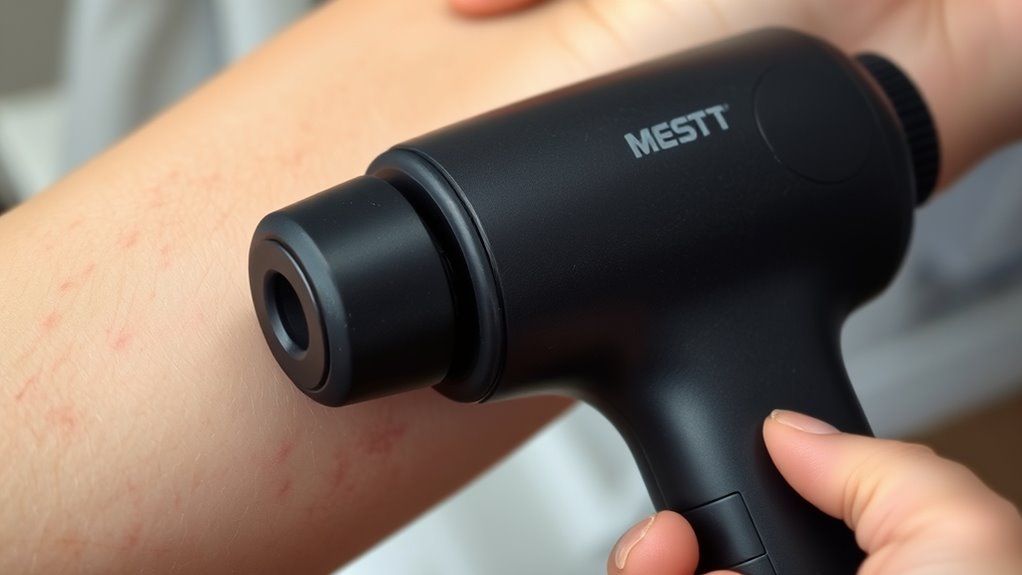
If you have sensitive or thin skin, using a massage gun can cause irritation or even bruising. Your skin may be more reactive to the device’s vibrations, increasing discomfort or damage. Be cautious, and consider avoiding it altogether to protect your skin’s health. Additionally, body piercing healing often requires gentle techniques, so consulting with a professional familiar with your skin type can help prevent adverse effects. Understanding skin sensitivity and how it reacts to vibrational therapy can help you make informed decisions about using massage devices safely.
Skin Irritation Risk
Using a massage gun on sensitive or thin skin can lead to irritation or even damage, as the device’s vibrations and pressure may be too harsh. You risk triggering skin allergies, rash development, or increased redness. To protect your skin, consider these precautions:
- Avoid areas with pre-existing skin conditions or recent injuries.
- Test the device on a small patch first to check for adverse reactions.
- Be cautious if you notice any signs of irritation, such as itching or burning sensations.
If you’re prone to skin allergies, using a massage gun could exacerbate sensitivities. Thin or fragile skin is more vulnerable to irritation, so skip the device if you notice any discomfort. Always prioritize gentle treatment to prevent long-term skin issues.
Increased Bruising Potential
Applying a massage gun to sensitive or thin skin can increase the risk of bruising due to the device’s deep vibrations and pressure. Thin skin offers less protection against the force, making it more prone to skin trauma and visible bruising. You might notice discoloration or tenderness after use, especially if you apply too much pressure or linger in one spot. The bruising risk is higher because delicate skin tissues can’t absorb or dissipate the impact as effectively as thicker skin. To avoid unnecessary injury, skip using a massage gun on areas with thin or fragile skin, such as the inner arms, collarbones, or around the ribs. Always use gentle settings and avoid excessive pressure to minimize the chance of skin trauma.
Sensory Nerve Sensitivity
Since sensitive or thin skin contains fewer nerve endings and less protective tissue, it can overreact to the intense vibrations of a massage gun. This increases the risk of sensory overload and potential nerve damage. If you use a massage gun on delicate areas, watch out for these signs:
- Sudden pain or discomfort during use
- Unusual tingling or numbness afterward
- Persistent redness or irritation that doesn’t fade
These symptoms indicate your skin and nerves might be overstimulated, risking nerve damage. Sensitive or thin skin can’t absorb the vibrations as effectively, leading to heightened responses. To stay safe, avoid using a massage gun on these areas or consult a professional for guidance. Protect your skin’s health and prevent unnecessary nerve issues by being cautious.
For Unsupervised or Unfamiliar Use

If you’re unfamiliar with how a massage gun works, it’s best to avoid experimenting with it on your own. Unsupervised use of unfamiliar devices can lead to misuse or injury, especially if you’re unsure of proper technique. Without guidance, you might apply too much pressure or target the wrong areas, increasing the risk of bruising or tissue damage. If you haven’t been trained or don’t understand the device’s functions, it’s safer to seek advice from a healthcare professional or experienced user first. Using a massage gun without supervision or proper knowledge can result in unintended harm, so avoid trying it out alone until you’re confident in how to use it safely. Always prioritize safety when handling unfamiliar devices.
When Experiencing Severe Pain or Discomfort

Using a massage gun when you’re experiencing severe pain or discomfort can worsen your condition or mask serious underlying issues. If you’re dealing with intense pain, it’s best to avoid using it for pain management, as you might accidentally aggravate the problem. Here are three key reasons to skip the massage gun in these situations:
- Hidden injuries: Severe pain could signal a fracture, tear, or other injury that needs medical attention.
- Chronic conditions: If you have conditions like nerve damage or inflammation, a massage gun could exacerbate symptoms.
- Masking symptoms: Using it might temporarily soothe pain but delay proper diagnosis and treatment.
Always consult a healthcare professional before using a massage gun during severe discomfort or for managing chronic conditions.
Frequently Asked Questions
Can I Use a Massage Gun on My Face?
You shouldn’t use a massage gun on your face, especially on facial skin and sensitive areas. The skin there is delicate and the force can cause irritation or damage. Instead, opt for gentle face massages with your fingertips or specialized tools designed for facial use. Always be cautious around the eyes and avoid applying excessive pressure to prevent harm. Your face needs gentle care, not the deep vibration of a massage gun.
Is It Safe to Use a Massage Gun After Surgery?
Using a massage gun after surgery isn’t safe unless your doctor approves. Post-surgical precautions are essential, and massage gun contraindications often include recent surgeries, open wounds, or swelling. You could risk damaging tissues or causing complications. Always consult your healthcare provider before using a massage gun post-surgery, and follow their guidance to ensure safe recovery. Never ignore contraindications—they’re there to protect your health.
How Long Should I Use a Massage Gun per Session?
You should limit your massage gun sessions to about 15 minutes per area to avoid overuse risks and skin irritation. Using it for longer can cause discomfort, bruising, or inflammation. Pay attention to how your body feels; if you notice increased soreness or irritation, stop and give your muscles time to recover. Always stay within recommended usage times to prevent harm and ensure effective relief.
Can Children Use Massage Guns Safely?
You shouldn’t let children use massage guns, as pediatric restrictions exist for safety reasons. Their skin sensitivity and smaller muscles make them more vulnerable to injury. Coincidentally, many parents find that what works for adults isn’t suitable for kids. If a child’s interested, consult a healthcare professional first, and always prioritize gentle, age-appropriate methods for their comfort and safety.
Are There Any Side Effects of Using a Massage Gun?
Using a massage gun can cause side effects like muscle soreness or skin irritation if you overuse it or apply too much pressure. You might feel temporary discomfort or redness on your skin. To avoid these issues, limit your sessions, stay within the recommended time, and avoid sensitive areas. Listen to your body, and stop if you experience persistent pain or irritation for a safe, effective massage experience.
Conclusion
So, next time you pick up that massage gun, remember—sometimes the best relief comes from knowing when to put it down. Ironically, ignoring these warnings might just cause more harm than good. Your muscles might thank you or protest loudly, and your body will definitely appreciate some respect. So, play it safe: avoid the risks, listen to your body, and save the massage gun for when you really need it. After all, prevention beats pain.