
TL;DR

Get wellness gear delivered free with Prime
- Fast, free delivery on millions of items
- Prime Video, Amazon Music and more included
- Member-only deals all year
A Fit&Well report on a writer’s 30-day weighted-vest trial describes knee swelling and a fitness plateau after the writer increased vest load alongside running distance and speed. A trainer quoted in the report recommends starting light, preserving good form and increasing only one exercise variable at a time. The article does not present clinical evidence that weighted vests preserve muscle or bone density.
A Fit&Well report on a 30-day weighted-vest trial describes the writer developing swollen knees and reaching a fitness plateau after adding a vest while also increasing running distance and speed. The account, which includes guidance from a London fitness instructor, stresses gradual loading and good technique; it does not establish that wearing a vest preserves muscle or bone density.
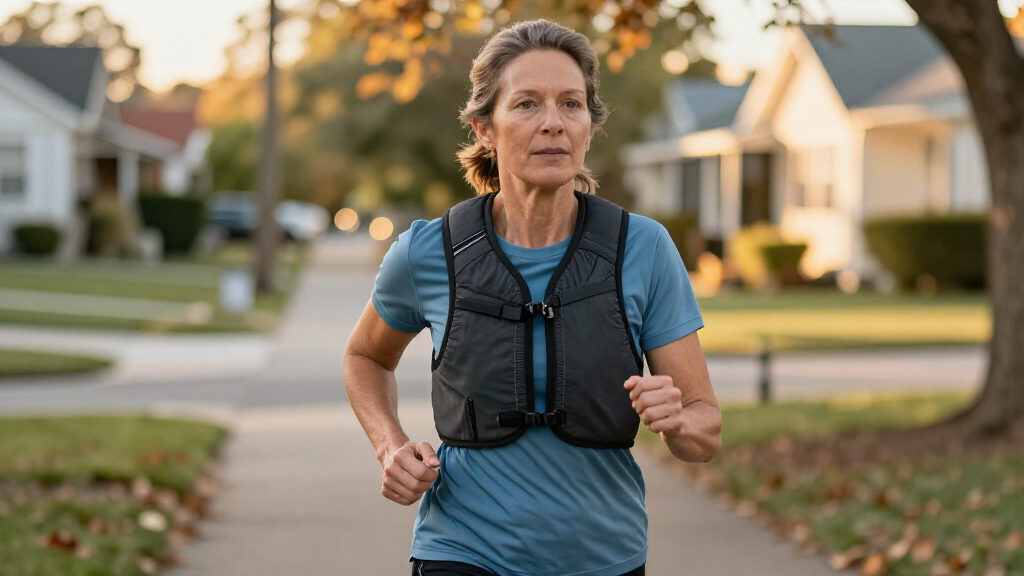
The writer tested 6-pound and 10-pound vests from U.S. brand OMORPHO while training for a marathon. They said they wore the vests across workouts for a month, increasing the challenge in several ways at once: running farther, running faster or exercising more frequently while carrying extra weight. The writer reported knee swelling and a plateau in fitness, and said a 14-mile run ended at 12.5 miles.
Holly Haywood, identified by Fit&Well as a lead instructor at London health-club chain Third Space, advised starting with a light load and adding weight gradually. The report gives 5% of body weight as a suggested starting point for general use, citing Haywood; its example is an 8-pound vest for a person weighing 160 pounds. The writer says runners may want to begin lower, at 1% to 2% of body weight, but that is the writer’s recommendation rather than a clinical guideline.
Haywood advised prioritizing form and cautioned that a vest that is too heavy or worn incorrectly can add strain to the knees, hips and ankles. She recommended consulting trainers or physiotherapists and removing or lightening the vest if joints become uncomfortable. The writer found the vest more suitable for bodyweight exercises such as push-ups, dips and pull-ups, where added resistance can raise intensity without requiring more repetitions.
Safer Ways to Add Exercise Load
Weighted vests add resistance while a person walks, runs or performs exercises, but added load also changes the demands placed on the body. The report’s practical point is that the vest should not be treated as a shortcut to faster progress: load, duration, speed and frequency all affect workout difficulty, and changing several together makes it harder to judge how the body is responding.
The writer’s experience is a single-person account, not evidence that vests commonly cause injury or that the same outcome will happen to other users. Still, the reported knee symptoms underline why discomfort, technique changes and recovery deserve attention when adding resistance. Readers considering a vest can use the report’s advice as general exercise guidance, not as proof of a health benefit or a substitute for individualized professional advice.
As an affiliate, we earn on qualifying purchases.
What the 30-Day Trial Shows
The Fit&Well story was framed around claims that weighted vests can help preserve muscle and bone density, and around their growing visibility among athletes and social-media influencers. The material provided for this article does not identify a study, trial or medical expert establishing that outcome. The reported experiment instead focuses on one writer’s use of two commercial vests while preparing for a marathon.
The writer’s main adjustment was to separate training variables. They said they should have kept running distances and paces consistent while first adding a light vest, then changed only one factor after becoming comfortable. Haywood suggested beginning with a 15- to 20-minute brisk treadmill walk; if that feels manageable, a person could increase the incline rather than raising speed or duration at the same time. The report advises building walking volume gradually, as a runner would build mileage.
“The general recommendation, like with most resistance training, is to start light and gradually build up as strength and comfort with the vest improve.”
— Holly Haywood, lead instructor at Third Space, as quoted by Fit&Well
adjustable weighted vest for exercise
As an affiliate, we earn on qualifying purchases.
As an affiliate, we earn on qualifying purchases.
Evidence Behind Density Claims
The supplied report does not provide clinical evidence showing that weighted-vest exercise preserves muscle mass or bone density, nor does it quantify any effect. It also does not establish an ideal vest weight for different ages, fitness levels or health conditions. The suggested starting percentages and workout examples are reported advice, not a universally validated prescription.
The writer’s knee swelling is self-reported, and the source material does not include a medical assessment, diagnosis or follow-up on recovery. It is also unclear whether the vest, the increased running workload, marathon training or a combination of factors contributed to the symptoms. The report does not compare vest training with other forms of resistance or weight-bearing exercise.
best weighted vest for muscle building
As an affiliate, we earn on qualifying purchases.
As an affiliate, we earn on qualifying purchases.
Progress Slowly and Monitor Symptoms
The report offers no scheduled follow-up study or new clinical findings. For people choosing to try a vest, its advice is to begin with a light load and a manageable activity, maintain consistent technique, and increase only one variable at a time. Stop or reduce the load if joint discomfort or changes in form arise; seek guidance from a qualified trainer or physiotherapist when appropriate.
People with existing health concerns or persistent pain should seek advice from a health professional before changing their exercise routine. Whether weighted vests help preserve muscle or bone density over time remains a question for research beyond the individual trial described here.
weighted vest for bodyweight exercises
As an affiliate, we earn on qualifying purchases.
As an affiliate, we earn on qualifying purchases.
Key Questions
Does this report prove weighted vests preserve muscle and bone density?
No. The report describes one person’s month-long experience and does not present clinical evidence measuring muscle or bone density changes.
What starting weight does the report suggest?
It cites instructor Holly Haywood’s suggestion of starting at no more than 5% of body weight for general use. The writer suggests runners may begin at 1% to 2%, but that is their own recommendation, not a clinical standard.
Which exercises did the writer find more suitable for a vest?
The writer said the vest worked well for bodyweight exercises, including push-ups, dips and pull-ups. They cautioned against using it for long runs after reporting knee swelling during marathon training.
How should someone increase vest-workout difficulty?
Haywood’s advice is to start light, keep good form and build gradually. Change one variable at a time, such as load, duration, speed or incline, rather than increasing several at once.
Source: rss
Fall Picks
fall essentials
As an affiliate, we earn on qualifying purchases.