
TL;DR

Get wellness gear delivered free with Prime
- Fast, free delivery on millions of items
- Prime Video, Amazon Music and more included
- Member-only deals all year
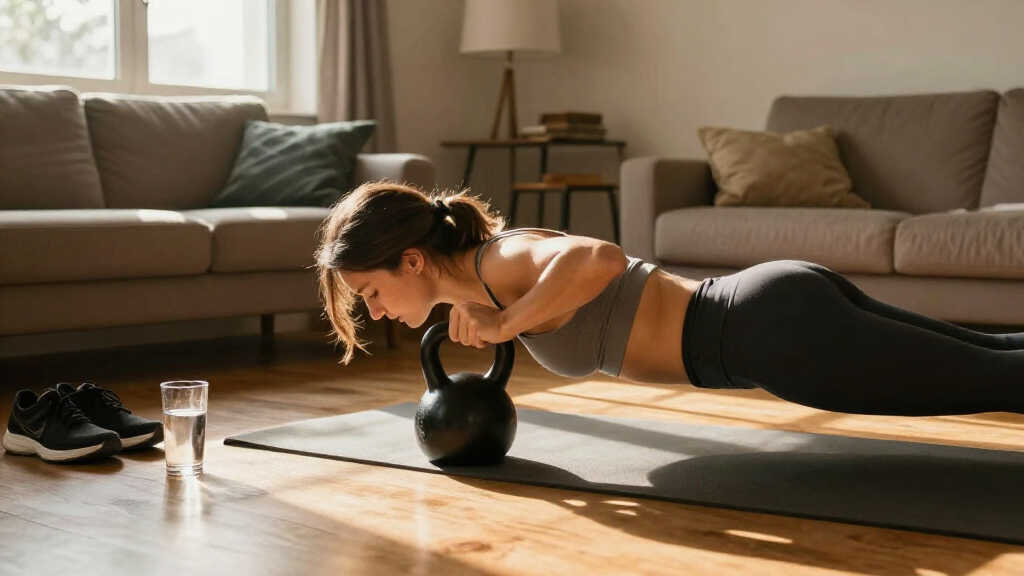
Fit&Well has published a 10-minute, three-exercise kettlebell routine aimed at building deep core strength at home. Certified kettlebell specialist Faith Ellis recommends starting with manageable weights, prioritizing technique and increasing the challenge gradually; the source does not provide independent evidence that the routine produces a specific result in 10 minutes.
Fit&Well has published a three-move kettlebell routine designed for a 10-minute home workout focused on deep core strength. The program, featuring a half-kneeling halo, a single-arm suitcase carry and a kettlebell dead bug, is presented as beginner-friendly and includes starting-weight and progression guidance from certified kettlebell specialist Faith Ellis.
The workout calls for three sets of each exercise. For the half-kneeling halo, the report recommends starting with a 10- to 18-pound (4- to 8-kilogram) kettlebell and completing four circles in each direction on each side. The exerciser kneels with one foot planted, keeps the hips square and circles the weight around the head. The movement is listed as working the obliques, shoulders, upper back and deep core.
The suitcase carry is prescribed for 30 seconds per side, for three sets. The starting range is about 18 to 26 pounds (8 to 12 kilograms): hold the kettlebell at one side and walk at a controlled pace, then switch hands. Fit&Well says the exercise targets the obliques, transverse abdominis and posture stabilizers. The third move, a dead bug with a kettlebell pullover, calls for three sets of six to eight repetitions per side, starting at 10 to 18 pounds (4 to 8 kilograms).
For the dead bug, lie on the back with the kettlebell held above the chest and knees bent over the hips. Keep the lower back pressed into the floor while lowering one leg toward the floor and moving the weight behind the head with arms extended; return to center and alternate legs. Ellis advises beginners to use a light-to-medium weight and focus on form, breathing and a neutral spine before increasing resistance. The report says that when a set feels easy and form remains sound, trainees can add 4 to 8 pounds (2 to 4 kilograms), increase repetitions or slow the movement.
A Compact Option for Home Training
The routine offers readers a structured alternative to a gym session that uses one piece of equipment and combines standing, kneeling and floor-based movements. Its mix of unilateral exercises asks the trunk to remain steady while the limbs or weight move, rather than relying only on repeated spinal flexion. That makes the plan relevant to people seeking a short workout they can do at home, though the article’s framing is guidance, not a guarantee of results.
The time claim needs context: Fit&Well presents the sequence as a 10-minute workout, but its listed sets and repetitions do not explain whether that total includes rest, transitions or a warm-up. Actual duration will vary with pace and recovery. Readers should treat the timing as an estimate rather than a measured outcome.
Products Worth Considering

Bowflex SelectTech 840 Adjustable Kettlebell

BowFlex Results Series SelectTech Adjustable Dumbbells (Pair)

Fitbit Sense Health & Fitness Smartwatch (White/Gold, International Version)
As an affiliate, we earn on qualifying purchases.
How the Three Moves Work
Ellis explains that kettlebell training can require the core to stabilize and transfer force, especially in single-arm or offset movements that challenge resistance to rotation and side-bending. In the workout, the suitcase carry loads one side of the body, while the halo moves the weight around the head in a half-kneeling position. The dead bug adds controlled leg movement while the torso stays braced.
Fit&Well attributes these explanations and the routine recommendations to Ellis, identified in the report as a certified kettlebell specialist and founder of The KettleBelle. The source provides exercise instructions and suggested weights, but does not cite a clinical trial or comparative study measuring this particular routine’s effects.
“Kettlebell exercises require the core to stabilize and transmit force rather than just flex the spine.”
— Faith Ellis, certified kettlebell specialist and founder of The KettleBelle, as quoted by Fit&Well
Timing and Results Still Vary
The report does not specify how the 10-minute duration was calculated, including whether it includes rest between sets or time to change positions. It also does not provide evidence that completing the routine will produce a particular level of core strength, or say how often readers should repeat it. The suggested loads are starting points from the report, not individualized prescriptions; ability and experience vary.
Fit&Well describes the exercises as beginner-friendly, but no screening criteria or modifications for injuries, pain or other physical limitations are provided in the source. Readers with existing health concerns or uncertainty about safe technique may need advice from a qualified fitness or health professional before starting.
Start Light and Track Form
The next step for someone trying the sequence is to choose a weight they can control comfortably, follow the prescribed repetitions and rest as needed to maintain technique. Progression should come only after the movement can be performed consistently with good form, in line with Ellis’s advice. The source offers no announced follow-up testing or outcome data for the workout, so any assessment of its effectiveness remains individual rather than established by this report.
Key Questions
What exercises are in the workout?
Fit&Well lists a half-kneeling kettlebell halo, a single-arm suitcase carry and a kettlebell dead bug with a pullover movement.
How many sets and repetitions does the plan recommend?
The report recommends three sets of each exercise: four halo circles in each direction per side, 30 seconds of carrying on each side, and six to eight dead bug repetitions per side.
What weight should a beginner use?
The suggested starting range is 10 to 18 pounds (4 to 8 kilograms) for the halo and dead bug, and about 18 to 26 pounds (8 to 12 kilograms) for the carry. These are general recommendations in the report, not an individualized assessment. Use a weight you can control with sound form.
Does the workout definitely take 10 minutes?
Fit&Well presents it as a 10-minute routine, but does not say whether that estimate includes rest and transitions. The time needed can vary by pace and recovery.
Source: fitandwell.com