
TL;DR

Get wellness gear delivered free with Prime
- Fast, free delivery on millions of items
- Prime Video, Amazon Music and more included
- Member-only deals all year
Fit&Well published a yoga therapist’s seven-part seated movement flow for older adults and people who prefer chair-based exercise. The therapist says gentle movement can feel energizing, but the report does not provide clinical evidence that this specific routine improves health or mobility.
Fit&Well has shared a seven-part chair-based movement routine recommended by a yoga therapist who works with older adults, including people living with Parkinson’s, movement disorders and chronic health conditions. The therapist describes the gentle sequence as a way to explore accessible movement from a seated position, while emphasizing that participants should work within their own range and capacity.
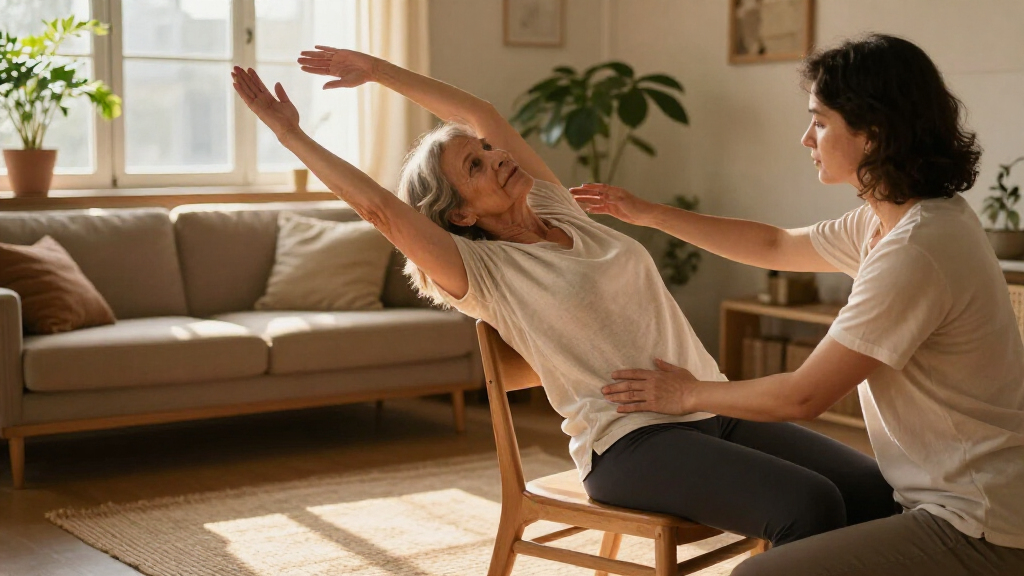
The sequence starts with a minute of sitting with the feet flat, the body upright and hands resting on the lap while allowing the breath to settle. It then moves through arm raises, a seated twist, side bends, cat-cow movements and forward folds. The report gives suggested repetitions for most movements, generally three to five, and specifies three repetitions on each side for the twists and side bends.
The therapist says chair-based yoga can be used by people who lack the mobility for floor-based movement as well as those who simply feel more comfortable exercising in a chair. The stated aims include stretching muscles, mobilizing joints and helping participants feel calmer in their bodies. These are the therapist’s descriptions of the practice, not findings from a clinical trial presented in the report.
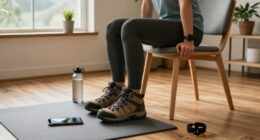
For the flow, the report recommends a sturdy chair and enough clear space to raise the arms. It also offers modifications: someone seeking more stability during a side bend can hold the chair, and someone needing extra support for a forward fold can keep their hands on their knees. Looking up during an arm raise is optional.
Seated Movement Without Floor Exercises
The routine offers an option for readers who want to move but find getting down to or up from the floor difficult, uncomfortable or unsuitable. Its chair-based format and stated modifications make the instructions adaptable in some ways, while the therapist’s focus on individual capacity avoids treating one posture as a target everyone must achieve.
The report also distinguishes gentle movement from inactivity: the therapist says the sequence can feel uplifting as well as restful. That is a personal account of the classes, not a promise of a particular result for every participant. Readers with health conditions or questions about whether a movement is appropriate may need advice from a qualified health professional before trying it.
Products Worth Considering

Coway Mighty AP-1512HH(W) Air Purifier, White

Theragun Prime 6th Generation Deep Tissue Massage Gun – Black

Garmin Forerunner 165 GPS Running Smartwatch, 43 mm, Black
As an affiliate, we earn on qualifying purchases.
How the Seven-Move Flow Works
The therapist says their work focuses mainly on older adults living with Parkinson’s, other movement disorders and chronic health conditions. They describe the postures used with these groups as gentle, while saying gentle movement can still feel energizing to participants.
The flow follows a simple progression: settle into the chair, coordinate arm movements with breathing, rotate the torso, raise one or both arms, bend to each side, move between rounded and lifted-spine positions, and finish with repeated forward folds. The instructions pair movements with inhaling or exhaling, but the report does not present this breathing pattern as a medical treatment or claim that the routine has been tested for specific outcomes.
“I encourage everyone to move within the range and capacity of their body—there’s no particular shape or position to achieve.”
— The yoga therapist, as quoted in Fit&Well
Evidence and Individual Suitability
The source report does not provide clinical research, measured outcomes or comparisons with other exercise routines. It is not clear from the report how the flow has been evaluated, whether it is appropriate for every person with Parkinson’s or another health condition, or how participants should adapt individual movements for specific limitations.
The article also does not state a publication date in the supplied material. Although it offers a few modifications and encourages movement within personal capacity, it does not give individualized medical advice. People who feel pain, dizziness or unusual discomfort while moving should stop; those with health concerns can ask a clinician or qualified movement professional about suitable activity.
Trying the Routine Safely
The Fit&Well report presents the sequence as a routine readers can try with a sturdy chair and adequate surrounding space. It does not announce a study, clinical assessment or follow-up results, and no further development is specified in the source material.
Anyone who chooses to try it can follow the listed movements at a comfortable pace, use the suggested chair support and skip positions that do not feel accessible. People with pre-existing conditions or uncertainty about exercise should seek professional guidance before starting; the article gives no personalized assessment of readers’ health or mobility.
Key Questions
What exercises are included in the chair routine?
The seven parts are a settling pause, an arm arc into prayer, seated twists, single- and double-arm raises, side bends, cat-cow movements and forward folds.
What equipment does the routine require?
The report calls for a sturdy chair and enough clear space to raise the arms comfortably. It does not list any other equipment.
Does the report prove the routine improves health or mobility?
No. It shares a yoga therapist’s recommendations and observations, but provides no clinical trial or measured evidence that this specific routine improves health or mobility.
Can people with Parkinson’s or other health conditions try it?
The therapist says they work with older adults living with Parkinson’s, movement disorders and chronic conditions, but the report does not establish that every movement is suitable for every person. People with pre-existing conditions should ask a qualified health professional about individual suitability.
How can the movements be made more supported?
The report suggests holding the side of the chair during a side bend or placing the hands on the knees during a forward fold. It also encourages participants to move within their own capacity rather than aiming for a particular shape.
Source: fitandwell.com