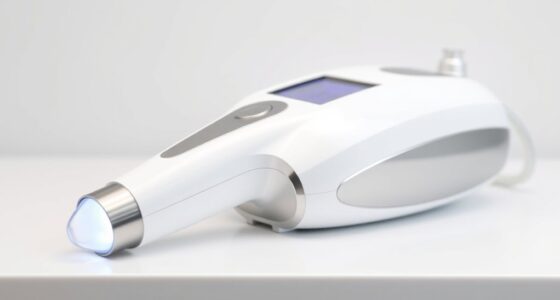
To safely use at-home lasers and light therapy on your skin, always follow the manufacturer’s instructions and verify the device is properly calibrated. Conduct a patch test first, avoid treating broken or irritated skin, and wear the recommended protective eyewear. Keep your device clean, don’t overuse it, and be aware of any medical conditions that may affect safety. Staying informed about these tips helps prevent risks—more essential safety advice waits ahead.
Key Takeaways
- Always follow the manufacturer’s instructions and ensure device calibration for safe, effective use.
- Perform patch tests and monitor skin reactions before full treatment to prevent adverse effects.
- Wear protective eyewear and avoid treating broken or irritated skin.
- Reduce sun exposure and use sunscreen before and after light therapy sessions.
- Consult a healthcare professional for personalized advice and to address any side effects or concerns.
Read and Follow Manufacturer Instructions Carefully

To guarantee safe and effective use of at-home laser and light therapy devices, you must read and follow the manufacturer’s instructions carefully. Proper device calibration is essential to ensure peak performance and safety. Always verify that your device has the appropriate safety certifications, confirming it meets industry standards. Follow the recommended settings and usage guidelines precisely; misusing or misinterpreting instructions can lead to ineffective results or skin injury. Keep the user manual accessible for reference, especially if adjustments are needed. Manufacturers often specify calibration procedures, so adhere strictly to these steps. Remember, using a device that isn’t properly calibrated or lacks proper safety certifications can compromise your safety and the device’s efficacy. Regularly checking for device safety features and updates can help maintain safe operation. Ensuring that you understand Proper device calibration and maintenance procedures can prevent potential hazards. Familiarizing yourself with device safety certifications can provide additional assurance of quality and compliance. Additionally, being aware of water resistance levels and proper cleaning practices can prolong device lifespan and ensure safe usage. Consulting manufacturer support can be helpful if any issues arise during operation. Careful attention to instructions and certifications is your first line of protection.
Perform a Patch Test Before Full Use
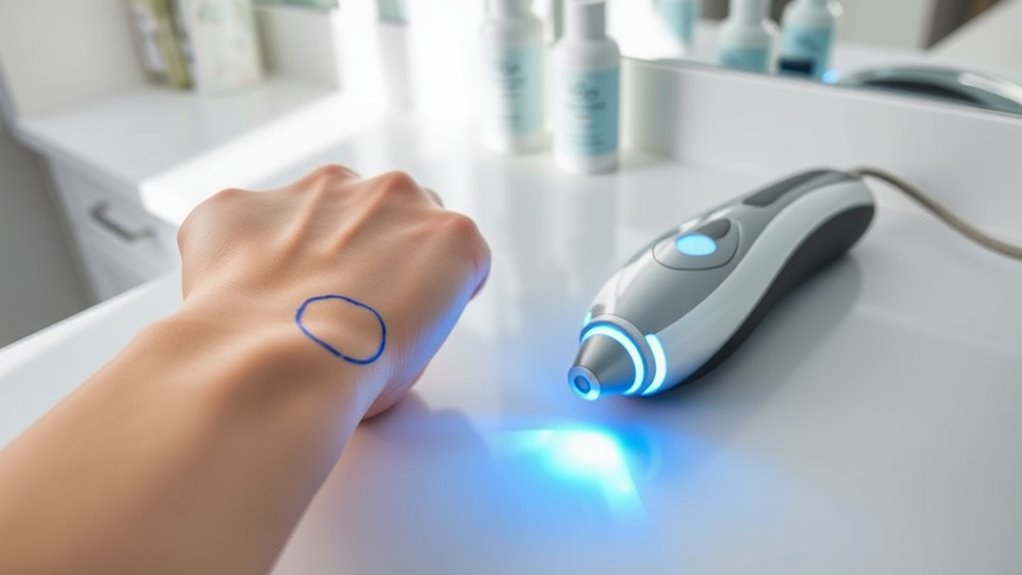
Before using your device on a larger area, test it on a small patch of skin first. Apply the light or laser as instructed and wait to see if any reactions occur. Only proceed if there’s no redness, irritation, or discomfort after the observation period. Incorporating proper safety precautions can further reduce risks when handling at-home laser and light therapy devices. Additionally, understanding the technology specifications of your device can help ensure safe and effective use. Reviewing wiring basics and ventilation considerations can also contribute to a safer setup and operation. Being aware of the European cloud solutions can support the secure storage of your personal data during treatment. Familiarizing yourself with device maintenance practices can additionally help maintain safety and extend the lifespan of your equipment.
Test on Small Area
Performing a patch test is a crucial step to make sure your skin doesn’t react negatively to at-home laser or light therapy. Start by selecting a small, discreet area of skin, like behind your ear or on your forearm. This helps you gauge skin sensitivity without risking widespread irritation. Before testing, verify your device is properly calibrated to deliver the correct intensity. Use the lowest setting initially to minimize potential adverse reactions. Apply the device to the small area and follow the manufacturer’s instructions carefully. Keep an eye on the skin for any redness, swelling, or discomfort over the next 24 hours. If no reaction occurs, it’s a good indication your skin can tolerate the treatment, but always proceed cautiously. Incorporating skin safety measures such as patch testing can enhance your overall at-home treatment experience.
Wait and Observe
After completing your patch test, it’s important to wait and carefully observe how your skin reacts before using the device on larger areas. This pause allows you to assess any adverse reactions, ensuring your device calibration was correct and your skin tolerates the treatment timing. Reliable resource can help you find trusted professionals if you need further advice. To do this effectively: 1. Monitor your skin for 24-48 hours for redness, swelling, or irritation. 2. Adjust device calibration or treatment timing if you notice any discomfort or adverse effects. 3. Avoid rushing into full treatment until you’re confident your skin responds well to the initial test. Patience here helps prevent unwanted side effects and maximizes safety during at-home laser or light therapy use. Additionally, understanding skin reaction signs can help you identify when to seek professional guidance. Recognizing proper device calibration helps ensure safe and effective treatment. Being aware of skin sensitivity levels can further aid in customizing your treatment plan for optimal safety. Paying attention to photo-reactive skin conditions can also prevent complications and ensure a safe treatment experience.
Use the Correct Settings for Your Skin Type

To get the best results safely, you need to identify your skin type first. Make sure to adjust the intensity levels properly based on that, and always follow the manufacturer’s guidelines. Doing so helps prevent irritation and guarantees your treatment is effective. Understanding the science behind light therapy can also help you choose the right device and settings for your skin. Being aware of creative storytelling techniques can additionally help you better communicate your skin care journey and connect with others. Additionally, knowing your skin sensitivity can guide you in selecting appropriate treatment parameters and avoiding adverse reactions. Recognizing air quality factors in your environment can further enhance your safety during at-home light treatments. Being informed about Rhythm Failure and its themes can provide insights into how mood and environment influence your skin’s response to light therapy.
Identify Your Skin Type
Knowing your skin type is essential to choosing the right laser or light therapy settings. Identifying your skin helps prevent adverse reactions by matching treatments to your skin’s sensitivity and ensuring product compatibility. To determine your skin type:
- Check your skin’s response: Does it feel tender, red, or irritated after exposure? This indicates higher sensitivity.
- Observe oil levels: Is your skin oily, dry, or combination? This affects the intensity and type of device you should use.
- Consult a professional or perform a patch test: This helps confirm your skin’s reaction and guides safe treatment choices.
- Understanding your skin’s cultural significance can also inform your approach to skin treatments and ensure better outcomes. Additionally, being aware of your skin type classification can help tailor your at-home treatments more effectively, especially when considering the best device settings for your specific needs.
Adjust Intensity Levels Properly
Once you’ve identified your skin type, it’s important to adjust the laser or light therapy device to the appropriate intensity level. Proper device calibration guarantees you’re setting the right safety thresholds, minimizing the risk of skin damage. Start with the lowest effective setting and gradually increase until you reach a comfortable, effective level for your skin. Always monitor how your skin responds during treatment, and avoid exceeding recommended intensity levels. Using incorrect settings can lead to burns or irritation, so adherence to safety thresholds is vital. Remember, each device is different, so consult your manufacturer’s guidelines for calibration instructions specific to your model. Properly adjusted intensity levels help guarantee safe, effective at-home treatments tailored to your skin’s needs.
Follow Manufacturer Guidelines
Following the manufacturer’s guidelines guarantees you use your device safely and effectively. To assure proper operation, always pay attention to recommended settings tailored to your skin type. Proper device calibration is essential; it guarantees the device delivers the right intensity without risking injury. Before use, complete any user training provided, so you understand how to operate the device correctly. Here are key steps:
- Read and follow the detailed instructions for your specific device.
- Adjust settings based on your skin tone and sensitivity.
- Regularly verify device calibration to maintain safety and effectiveness.
Sticking to these guidelines minimizes risks and maximizes results. Remember, improper settings or neglecting calibration can cause damage or ineffective treatments.
Protect Your Eyes During Treatment

Protecting your eyes during at-home laser and light therapy is essential to prevent potential damage. Eye safety should always be a priority, as exposure to intense light can harm your vision. Always wear the recommended protective eyewear provided with your device, as it shields your eyes from harmful rays. Even if the device is designed for facial use, stray light can pose risks, so don’t skip this step. Make sure the eyewear fits properly and remains in place during the entire treatment. Never look directly into the light source without protection. By following these precautions, you reduce the risk of eye injury and ensure your treatment remains safe and effective. Prioritize eye safety for maximum results and peace of mind.
Avoid Treating Broken or Irritated Skin

Avoid treating broken or irritated skin with at-home laser or light therapy, as these conditions can worsen or cause infections. Your skin’s barrier is compromised in these areas, making treatments risky. Never target broken skin or irritated areas, as they are more sensitive and prone to adverse reactions.
Consider these tips:
- Wait until your skin heals completely before using laser or light therapy.
- Avoid applying treatments over cuts, abrasions, or inflamed patches.
- If your skin becomes irritated during treatment, stop immediately and consult a professional.
Using light therapy on damaged skin can increase the chance of burns or infections. Always prioritize skin healing to ensure safe, effective results.
Limit Sun Exposure Before and After Use

To get the best results from at-home laser or light therapy, it’s important to limit your sun exposure both before and after treatments. Excessive sun exposure increases your risk of UV damage, making your skin more sensitive and prone to adverse reactions during therapy. Protect your skin by wearing broad-spectrum sunscreen daily, even on cloudy days, and avoid direct sunlight during peak hours. Before treatment, steer clear of tanning beds and intense sun, as this can compromise your skin’s response. Afterward, continue practicing sun protection, as your skin remains vulnerable. This approach minimizes the risk of hyperpigmentation and other side effects. Keeping your skin shielded helps ensure *ideal* results and maintains your skin’s health throughout your light therapy journey.
Keep the Device Clean and Well-Maintained

Keeping your at-home laser or light therapy device clean and well-maintained is essential for safe and effective treatments. Proper device sterilization prevents bacteria buildup and minimizes infection risk. Additionally, following storage safety guidelines ensures the device stays in good condition.
To maintain your device:
- Regularly wipe down the treatment surfaces with alcohol wipes to ensure proper sterilization after each use.
- Store the device in a cool, dry place away from direct sunlight to prevent damage and preserve functionality.
- Check the manufacturer’s instructions for maintenance routines and calibration to keep the device functioning at its best.
Do Not Overuse or Exceed Recommended Sessions

Always stick to the manufacturer’s guidelines for sessions to prevent skin damage. Avoid overlapping treatments, which can increase irritation or injury. Keep an eye on your skin’s response and adjust or pause use if you notice any adverse effects.
Follow Manufacturer Guidelines
Following manufacturer guidelines is essential to guarantee safe and effective use of at-home laser and light therapy devices. Overusing sessions can lead to skin irritation or damage. To stay within safe limits, consider these key points:
- Always adhere to recommended session numbers and intervals, avoiding extra treatments that might cause adverse effects.
- Ensure your device is properly calibrated, as incorrect calibration can affect light intensity and treatment safety.
- Check ingredient compatibility if using topical products; some ingredients may increase photosensitivity, amplifying risks.
Avoid Overlapping Treatments
To prevent skin damage or irritation, you should carefully stick to the recommended number of sessions and avoid overlapping treatments. Overusing treatments or applying multiple sessions too close together can lead to treatment overlap, increasing the risk of skin irritation. To visualize, consider this table:
| Proper Treatment Timing | Risks of Overlap |
|---|---|
| Follow schedule precisely | Excessive skin irritation |
| Allow skin to recover | Inflammation or burns |
| Use recommended sessions | Long-term skin damage |
| Consult guidelines | Unnecessary discomfort |
Monitor Skin Response
Monitoring your skin’s response during laser or light therapy is essential to prevent overuse and avoid potential damage. Pay close attention to signs of increased skin sensitivity or unusual reactions. Regular reaction monitoring helps you identify if your skin is becoming irritated or inflamed. To guarantee safe use:
- Observe your skin after each session for redness, swelling, or discomfort.
- Limit sessions based on manufacturer guidelines and avoid surpassing recommended frequency.
- Stop treatment immediately if you notice persistent irritation or adverse reactions.
Be Aware of Contraindications and Medical Conditions

Before using at-home lasers or light therapy devices, it’s essential to understand any underlying health conditions or contraindications that could increase risks. Medical contraindications, such as active infections, recent surgeries, or certain medications, can make treatments unsafe. Additionally, skin condition awareness is vital—if you have eczema, psoriasis, or other skin sensitivities, light therapy might worsen symptoms. Always review your medical history and current health status before starting treatments. Ignoring contraindications can lead to burns, irritation, or other adverse effects. If you’re unsure about your medical conditions or how they might interact with light therapy, consult a healthcare professional beforehand. Being aware of these factors helps protect your skin and guarantees a safer, more effective experience.
Seek Professional Advice if Unsure or Experiencing Issues
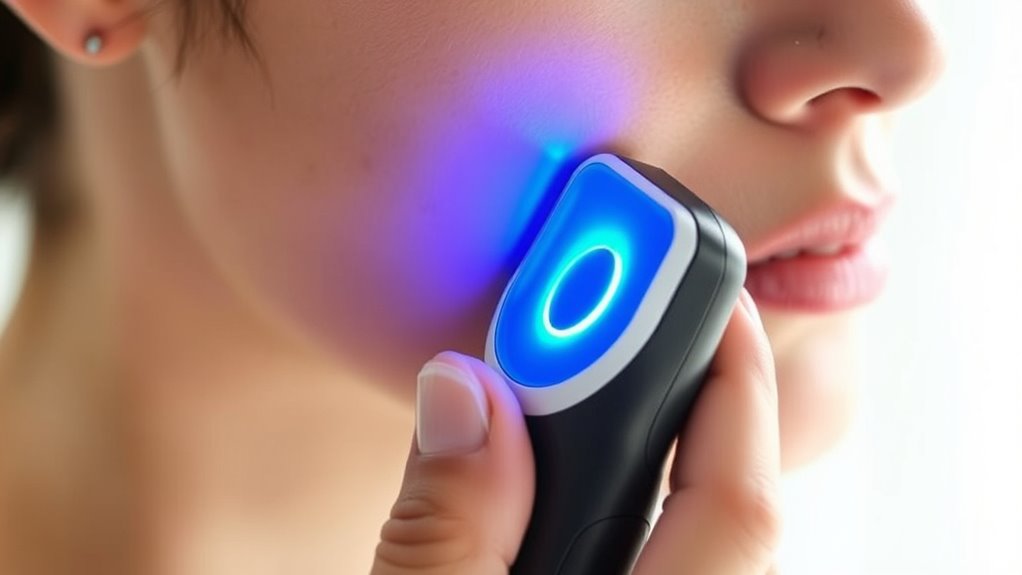
If you’re unsure about your medical history or experience any adverse reactions during treatment, seeking professional advice can make all the difference. A professional consultation ensures your skin is properly assessed and determines if at-home treatments are suitable. Don’t ignore persistent issues or unexpected side effects; these could indicate underlying problems needing medical attention.
To stay safe, consider these steps:
- Schedule a skin assessment with a healthcare provider before starting or if issues arise.
- Consult a professional if you notice unusual redness, swelling, or pain.
- Follow expert guidance on adjusting or stopping treatments if problems continue.
Getting professional advice helps you make informed decisions and protects your skin health during at-home laser and light therapy.
Frequently Asked Questions
Can At-Home Laser Devices Cause Long-Term Skin Damage?
At-home laser devices can cause long-term skin damage if you don’t follow safety precautions. Improper device calibration and skipping a skin patch test increase the risk. Always verify your device is calibrated correctly and perform a patch test before full use. If you notice adverse reactions, stop immediately. Using the device responsibly minimizes the risk of long-term damage, keeping your skin safe while achieving desired results.
What Should I Do if I Experience Unusual Skin Reactions?
If you experience unusual skin reactions, think of your skin as a delicate garden. Skin irritation or allergic reactions are like weeds disrupting your plants’ health. Stop using the device immediately and gently cleanse your skin. Apply soothing treatments, like aloe vera, and avoid further exposure. If symptoms persist or worsen, consult a dermatologist promptly. Your skin’s health depends on quick action to prevent lasting damage.
Are There Specific Skin Types That Should Avoid Laser Treatments?
If you have sensitive skin or a history of skin reactions, you should avoid laser treatments, as they can worsen skin sensitivity. People with darker skin tones or recent tanning risks should also steer clear, since laser treatments may cause pigmentation changes or burns. Always consult with a dermatologist first to determine if your skin type is suitable for at-home laser or light therapy, ensuring safety and effectiveness.
How Often Should I Replace or Check My Device’s Parts?
You should regularly check your device’s parts and follow the recommended device maintenance and replacement schedules. Even if it seems fine, replacing or inspecting parts every 6 to 12 months guarantees ideal safety and performance. Neglecting this can lead to malfunctions or skin irritation. Stay proactive by setting reminders for maintenance, and always follow the manufacturer’s guidelines to keep your device safe and effective.
Can Light Therapy Be Combined With Other Skin Treatments Safely?
Yes, you can combine light therapy with other skin treatments, but you should do so with safety considerations in mind. Always consult your dermatologist or skincare professional before combining treatments, especially for active ingredients or invasive procedures. They can help ensure that combining treatments won’t cause irritation or adverse reactions, and will guide you on proper timing and recovery, maximizing benefits while keeping your skin protected.
Conclusion
Remember, your skin is a delicate garden that needs careful tending. By following these safety tips, you’re guiding your personal lighthouse through a storm, illuminating the path to radiant, healthy skin without risking the shadows of harm. Treat your at-home laser sessions as sacred rituals, where knowledge and caution serve as your most trusted allies. With mindful practice, you’ll nurture a glow that shines as brightly as your confidence, glowing safely and beautifully from within.