
TL;DR

Get wellness gear delivered free — and shop member deals
- Fast, free delivery on millions of items
- Access to Prime Big Deal Days deals on October 6–7
- Prime Video, Amazon Music and more included
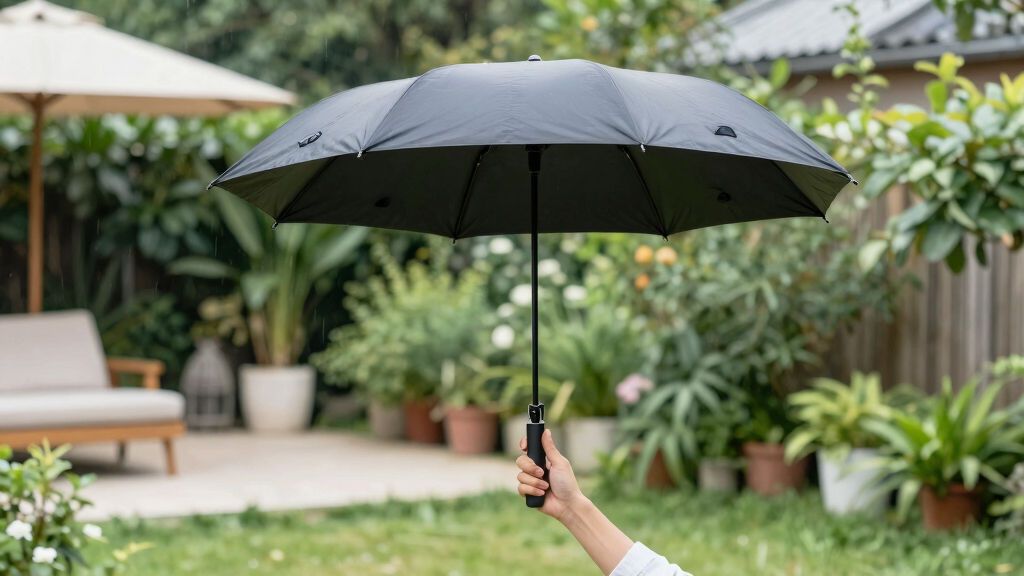
A prototype of an autonomous flying umbrella has been developed that can follow users and shield them from rain and sunlight. The device uses advanced sensors and AI to track movement and adjust positioning in real time. This innovation could transform personal weather protection, though it remains in testing stages.
An autonomous flying umbrella prototype has been demonstrated that can follow users and shield them from rain and sunlight. This development, created by a team of engineers and AI specialists, showcases a new approach to personal weather protection that could eventually replace traditional umbrellas. The project aims to combine robotics, AI, and lightweight drone technology to deliver a hands-free, mobile shield for users in various weather conditions.
The device uses a combination of sensors, GPS, and AI algorithms to detect a user’s position and movements. It then autonomously follows the user, maintaining a safe distance while providing coverage from rain and sun. During a demonstration in late 2023, the prototype successfully tracked a person walking through a park, adjusting its position to stay overhead and shield from the elements. The umbrella is designed to be lightweight and foldable, with a battery life sufficient for several hours of operation.
Developers say the umbrella’s AI can differentiate between different weather conditions, activating the shielding mechanism when rain or strong sunlight is detected. The system also incorporates obstacle avoidance to prevent collisions with objects or people. The project is still in testing phases, with plans to improve stability, battery efficiency, and weather adaptability before commercial release. Experts suggest this could be a step toward more integrated personal weather protection devices, combining mobility and automation.
Potential Impact on Personal Weather Protection
This innovation could significantly change how individuals manage weather exposure, especially in urban environments or outdoor activities. By providing a hands-free, mobile shield, the autonomous umbrella offers convenience and safety, reducing the need to carry traditional umbrellas or wear bulky protective gear. If commercialized, it could influence the market for wearable tech and personal robotics, opening new avenues for weather-adaptive devices. Additionally, it highlights advancements in AI-driven robotics, with potential applications beyond weather protection, such as outdoor work, tourism, or emergency response.
As an affiliate, we earn on qualifying purchases.
The concept of autonomous personal devices has gained traction over recent years, with innovations like robotic assistants and drone delivery systems. The development of a flying umbrella builds on this trend, integrating AI, lightweight drone technology, and sensor systems. Previous efforts in personal weather protection have focused on wearable devices or traditional umbrellas, but the integration of autonomous flight and tracking marks a new frontier. The project is part of broader research into autonomous mobility and AI-driven personal assistants, with the potential to expand into various domains.
“Our autonomous flying umbrella demonstrates how robotics and AI can enhance everyday life by providing convenient, hands-free weather protection.”
— Lead engineer Dr. Lisa Chen
hands-free weather protection device
As an affiliate, we earn on qualifying purchases.
As an affiliate, we earn on qualifying purchases.
Unanswered Questions About Practical Deployment
It is not yet clear how the device will perform in diverse real-world conditions, such as strong winds or heavy rain. Battery life, safety protocols, and obstacle avoidance in crowded environments remain under development. The commercial availability, cost, and user acceptance of such devices are still unknown, as the project is currently in prototype testing stages.
As an affiliate, we earn on qualifying purchases.
Next Steps for Development and Commercialization
Researchers plan to conduct more extensive field testing to evaluate the umbrella’s performance across different weather scenarios and environments. Improvements in battery efficiency, stability, and obstacle navigation are expected before a potential commercial launch. Developers also aim to explore integration with smartphones and wearable devices for enhanced user control. Regulatory considerations and safety standards will be addressed as the project moves closer to market readiness.
As an affiliate, we earn on qualifying purchases.
Key Questions
How does the autonomous flying umbrella follow the user?
The device uses a combination of GPS, sensors, and AI algorithms to track the user’s position and movements, enabling it to follow and maintain a safe distance automatically.
Can the umbrella operate in heavy rain or strong wind?
It is still under testing; developers are working to improve its stability and obstacle avoidance in challenging weather conditions. Its performance in heavy rain and wind remains to be validated in real-world scenarios.
How long can the umbrella operate on a single charge?
Current prototypes can operate for several hours, but battery life is a focus for ongoing improvements before commercial deployment.
Is this device safe to use around other people and objects?
Safety features like obstacle avoidance are being refined, but full safety protocols will be established before mass-market release.
When might this technology be available to consumers?
While prototypes are promising, commercial availability is likely several years away, pending further testing and regulatory approval.
Source: hn
Halloween Picks
halloween
As an affiliate, we earn on qualifying purchases.