
Blue light devices offer a safe, drug-free way to treat acne by targeting bacteria and reducing inflammation. They can be used at home or in a dermatologist’s office, making them more convenient than traditional treatments like medications or topical creams. These devices help improve skin clarity and texture over time, with fewer side effects. To discover how these methods compare and which may suit your skin best, keep exploring your options.
Key Takeaways
- Blue light devices offer a non-invasive, at-home or clinical treatment that uses light to target acne-causing bacteria safely.
- Traditional methods include topical medications, oral drugs, chemical peels, and laser therapies, often involving more invasive procedures.
- Blue light treatment reduces inflammation, redness, and bacteria without the use of drugs, making it a holistic and natural option.
- Conventional treatments may have side effects like dryness or irritation, whereas blue light devices generally have fewer adverse effects.
- Combining blue light therapy with lifestyle adjustments and skincare routines can enhance overall results compared to traditional methods alone.
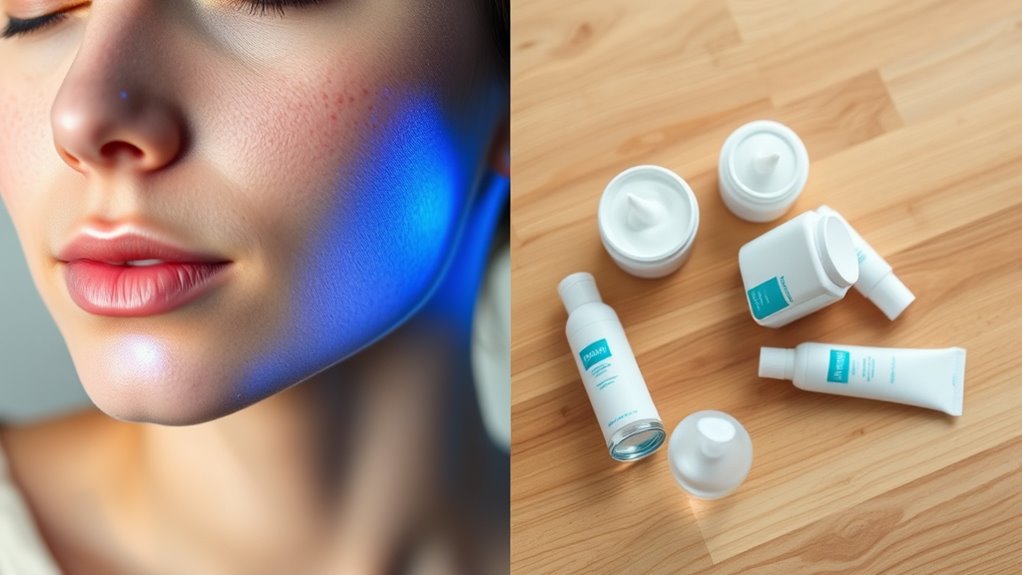
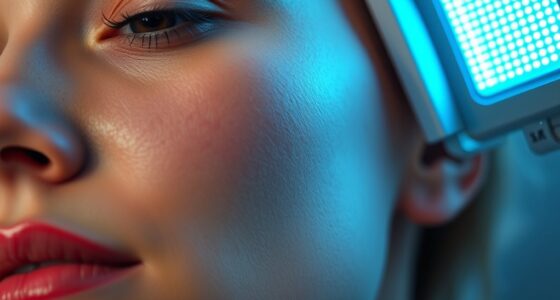
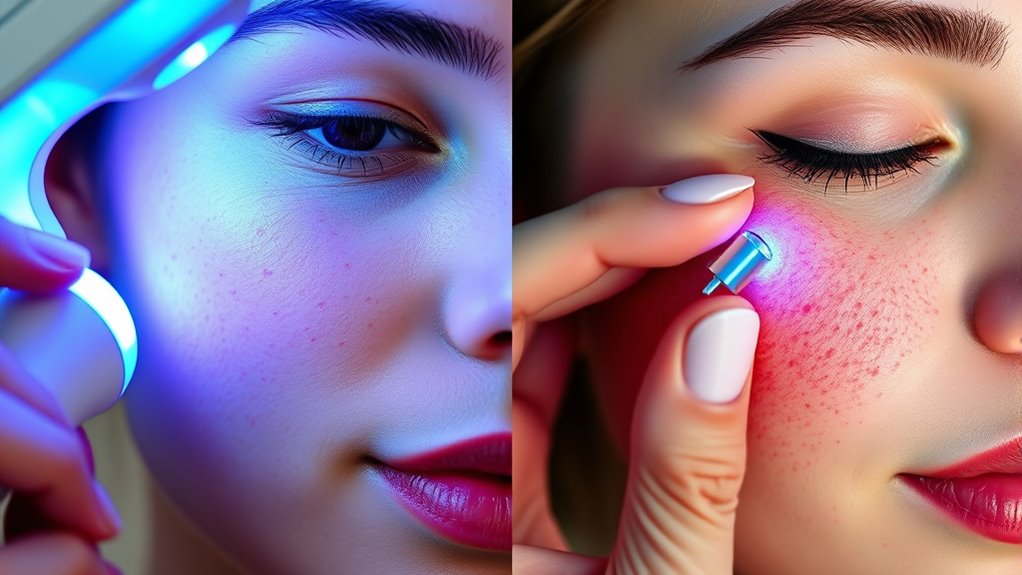
Blue light therapy works by penetrating the skin and activating molecules that produce reactive oxygen species. These reactive molecules then destroy bacteria that thrive in clogged pores, which are often responsible for acne flare-ups. Beyond bacterial reduction, blue light can also help lessen inflammation and redness, making your skin look calmer and less irritated. When used consistently, LED therapy can improve your skin’s overall clarity and texture, giving you a clearer complexion over time. Plus, it’s a treatment you can do at home or in a dermatologist’s office, providing flexibility and convenience. Additionally, natural light-based approaches are gaining attention as complementary options for skin health.
Another benefit of LED therapy is its role in hormonal regulation. Some studies suggest that light therapy can influence hormonal activity associated with acne, especially in cases linked to hormonal imbalances. While it may not directly alter hormone levels, it can help control the skin’s response to hormonal fluctuations, reducing excess oil production and preventing pore blockages. This makes LED devices especially appealing if your breakouts tend to correlate with your menstrual cycle or other hormonal changes. When combined with proper skincare and lifestyle adjustments, LED therapy can be part of a holistic approach to managing hormonal acne.
Frequently Asked Questions
Are Blue Light Devices Suitable for All Skin Types?
Blue light devices aren’t suitable for all skin types, especially if you have sensitive skin or specific conditions. Skin sensitivity varies, so you should consult a dermatologist before use. Many devices offer customization settings, allowing you to adjust intensity for your skin’s needs. If you have darker skin tones or sensitive skin, a professional can recommend safer, tailored options to minimize irritation and maximize effectiveness.
How Long Does It Take to See Results With Blue Light Therapy?
You can usually expect to see visible improvements within 4 to 6 weeks of consistent blue light therapy. Treatment duration varies depending on your skin’s response and severity of acne, but regular sessions help speed up results. Keep in mind, patience is key, and sticking to your prescribed schedule guarantees the best outcome. Most people notice clearer skin and fewer breakouts as they continue their treatments.
Can Blue Light Devices Replace Traditional Acne Treatments Entirely?
Blue light devices can complement your acne routine but shouldn’t replace traditional treatments entirely. While they target bacteria and reduce inflammation, home remedies and diet modifications also play essential roles in managing breakouts. Combining blue light therapy with these approaches can boost results, but for severe or persistent acne, you should consult a dermatologist to develop an all-encompassing treatment plan tailored to your skin’s needs.
Are There Any Side Effects From Using Blue Light Therapy?
You might experience some side effects from blue light therapy, like skin irritation or photosensitivity. These effects are usually mild and temporary, but they can cause discomfort or redness. You should be cautious if you have sensitive skin or are taking medications that increase photosensitivity. Always follow your provider’s instructions to mitigate risks, and report any persistent side effects to ensure safe and effective treatment.
What Is the Cost Comparison Between Blue Light Devices and Traditional Treatments?
You’ll find that blue light devices often have a higher upfront cost, but they can be more affordable long-term compared to traditional treatments like medications and facials. The cost analysis shows that while devices might seem pricey initially, you save on ongoing expenses. Traditional methods usually require regular visits and prescriptions, which add up over time. Ultimately, you should weigh the affordability comparison based on your budget and acne severity.
Conclusion
While blue light devices offer a modern, pain-free option for treating acne, traditional methods like topical creams and medications remain effective. If you’re worried about cost or accessibility, think of blue light as a supplement rather than a replacement—like adding a new tool to your skincare kit. Whether you choose high-tech or classic treatments, consistency is key. Ultimately, combining methods or consulting a dermatologist can give you the clearest path to clearer skin.