LED whitening can be effective as a middle ground between at-home and in-office treatments. It uses a special gel and an LED light to speed up the whitening process, often providing noticeable results. While professional treatments typically deliver quicker and more dramatic whitening, LED options offer convenience and affordability with some good results. To maximize safety and effectiveness, it’s best to discuss your options with a dentist, and you’ll find tips for choosing the right method just ahead.

Get wellness gear delivered free with Prime
- Fast, free delivery on millions of items
- Prime Video, Amazon Music and more included
- Member-only deals all year
Key Takeaways
- LED whitening accelerates in-office treatments by activating whitening gels, offering faster results than at-home remedies.
- In-office LED treatments typically produce more noticeable and immediate whitening compared to at-home options.
- At-home whitening kits with LED devices can be effective but may vary depending on product quality and consistency.
- Professional in-office treatments often involve stronger formulations, providing longer-lasting and more dramatic results.
- Consulting a dentist is recommended to determine the most suitable method and ensure safety, especially when considering LED whitening.
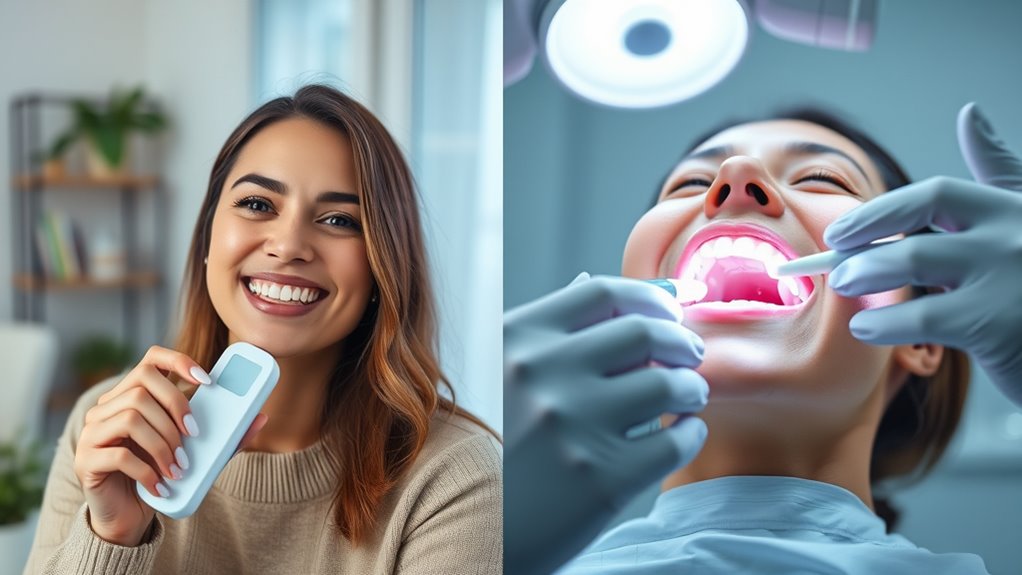
When choosing a teeth whitening method, understanding the differences between at-home and in-office treatments is essential. You might be exploring options like natural remedies or professional procedures, and knowing what each entails helps you make an informed decision. For some, natural remedies such as baking soda or hydrogen peroxide are appealing because they’re inexpensive and don’t require a dental visit. However, it’s important to recognize that these methods often provide only mild whitening effects and can sometimes cause sensitivity if not used carefully. On the other hand, in-office treatments leverage advanced technology and professional-grade products, offering faster and more noticeable results. But these procedures can be costly, and whether your dental insurance covers them depends on your provider and the specifics of your policy. Additionally, LED whitening has gained popularity as a middle ground, especially for those who want quick results without visiting a dentist regularly. This method involves applying a whitening gel to your teeth and then activating it with an LED light. Many wonder, “Is LED whitening effective?” The answer is that it can be, but its effectiveness varies based on factors like the severity of stains and the quality of the product used. LED light helps accelerate the bleaching process, making it a convenient option for many. Still, it’s not a magic solution—your teeth’s natural color, enamel thickness, and lifestyle habits all influence how well it works. If you’re considering LED whitening, it’s wise to consult with your dentist first, especially if you have dental insurance that might cover some treatments or if you have underlying dental issues. Furthermore, understanding the innovative European cloud servers available for data management can inspire new ways to track and analyze dental treatment outcomes, leading to more personalized and effective whitening solutions. When weighing your options, think about the longevity of the results and potential sensitivity. Natural remedies often require consistent use and may not produce dramatic results, but they’re generally gentle. In contrast, in-office treatments and LED whitening can produce faster, more dramatic changes, though some people experience sensitivity afterward. Your dental insurance might not cover over-the-counter or at-home whitening kits, but it could help offset costs for professional procedures. Always check your policy details before committing to any treatment. Ultimately, the best choice depends on your budget, your goals for whitening, and your dental health. If you want quick, noticeable results and have the resources, professional whitening with LED can be effective. But if you prefer a more natural, low-cost approach and aren’t in a rush, exploring natural remedies and consulting your dentist about safe, effective options is a smart move.
As an affiliate, we earn on qualifying purchases.
Frequently Asked Questions
How Long Do Whitening Results Typically Last?
Your whitening results usually last between six months to two years, depending on your dental hygiene habits and lifestyle. To maximize longevity, maintain good dental hygiene by brushing and flossing regularly, and avoid stain-causing foods and drinks. While in-office treatments tend to last longer, at-home options are more budget-friendly. Consider the cost comparison and your routine to decide which approach fits best, ensuring your smile stays bright longer.
Are There Any Side Effects From LED Whitening?
LED whitening is generally safe, but some people experience side effects like tooth sensitivity or gum irritation. These safety concerns are usually mild and temporary, often resolving quickly after treatment. To minimize risks, follow your dentist’s instructions carefully and avoid overuse. If you notice persistent discomfort or unusual reactions, consult your dental professional promptly. Overall, when used correctly, LED whitening offers a safe and effective way to brighten your smile.
Can LED Whitening Damage Sensitive Teeth?
Think of LED whitening like a gentle breeze—generally safe, but it can cause tooth sensitivity if you’re vulnerable. Sensitive teeth might react to LED treatments, especially if you have exposed roots or enamel erosion. To protect your smile, consult your dentist about LED safety and whether this whitening method suits your sensitive teeth. They can recommend adjustments to minimize tooth sensitivity and keep your teeth healthy.
Is LED Whitening Safe for Children or Teenagers?
LED whitening isn’t recommended for children or teenagers because their developing teeth and enamel need extra protection. You should prioritize teen oral health and consult a dentist before considering any adolescent whitening options. While LED treatments are generally safe for adults, young teeth are more sensitive and vulnerable to damage. Focusing on good oral hygiene and professional guidance guarantees safe, healthy smiles for your teens.
How Do I Choose the Best Whitening Method for My Needs?
You should choose a whitening method based on your specific needs and budget. Did you know professional whitening can cost up to three times more than at-home treatments? To make the best decision, consider the cost comparison and consult with a dental professional who can offer guidance tailored to your teeth’s condition. This guarantees you get effective results safely while matching your budget and desired outcome.
As an affiliate, we earn on qualifying purchases.
Conclusion
Ultimately, whether you choose at-home or in-office whitening, the choice is yours to make. Think of it as a battle of convenience versus professional care — both promising brighter smiles. Do you want the control of your own schedule or the expertise of a pro? Remember, your smile is your signature — so pick the method that best fits your life and trust in the process. After all, a brighter smile is just a decision away.
professional teeth whitening gel
As an affiliate, we earn on qualifying purchases.
As an affiliate, we earn on qualifying purchases.
As an affiliate, we earn on qualifying purchases.
Halloween Picks
halloween
As an affiliate, we earn on qualifying purchases.