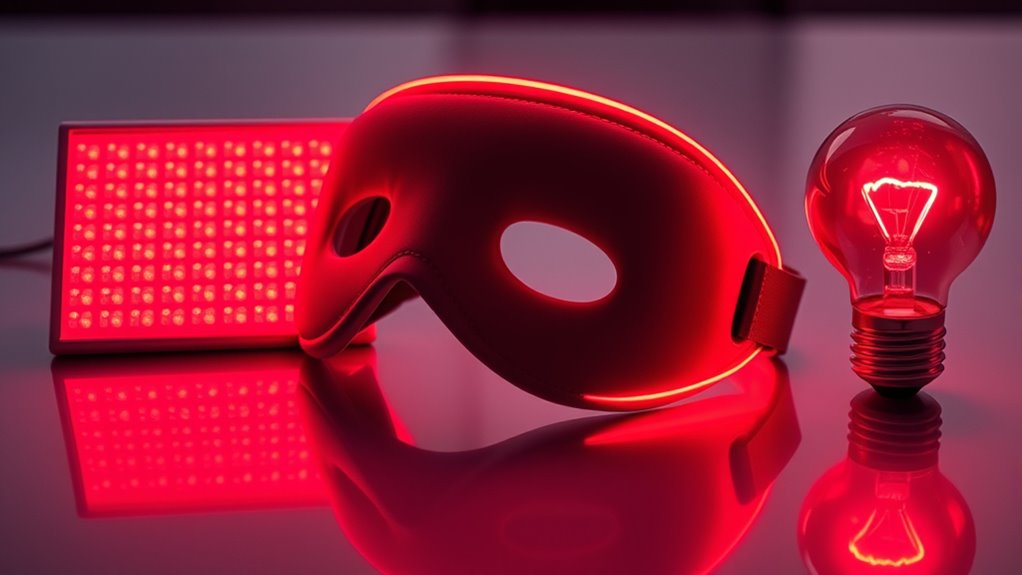
When choosing a red light therapy device, consider your treatment goals, budget, and coverage needs. If you want to treat large areas like your back or chest, panels are ideal due to their broad coverage. For targeted facial skin work, masks offer convenience and precision. If you prefer portability for spot treatments, bulbs work well and are affordable. To make the best choice, explore options that align with your priorities—more details are just a step away.

Get wellness gear delivered free — and shop member deals
- Fast, free delivery on millions of items
- Access to Prime Big Deal Days deals on October 6–7
- Prime Video, Amazon Music and more included
Key Takeaways
- Assess treatment area size: panels suit large areas, masks excel for facial focus, bulbs are ideal for targeted spots.
- Consider device safety features like goggles and shielding to prevent eye or skin irritation during use.
- Match device type to your goals, such as broad coverage with panels or facial rejuvenation with masks.
- Balance upfront costs against long-term benefits; larger panels may be more expensive but cover more area efficiently.
- Ensure comfort and proper fit, especially for masks, and review user feedback on ease of use and effectiveness.
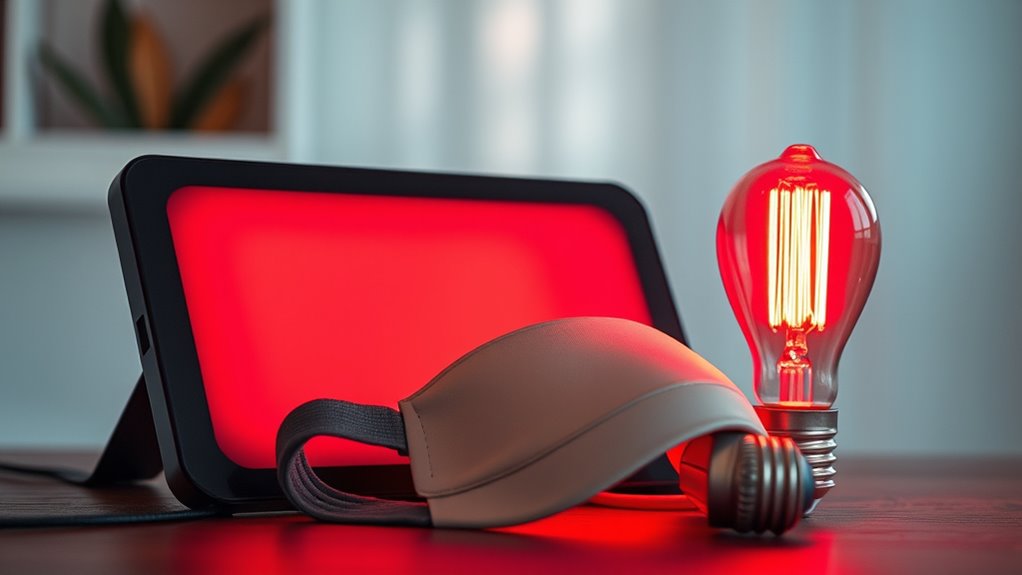
If you’re considering red light therapy to improve your health or skin, choosing the right device can feel overwhelming with so many options available. You’ll want to compare different types—such as panels, masks, and bulbs—and understand their pros and cons to make an informed decision. One of your first steps should be a thorough price comparison. Some devices are more affordable upfront, like handheld bulbs, but may require frequent replacement or limited coverage. On the other hand, larger panels tend to be pricier initially but offer broader treatment areas and more consistent results over time. Balancing cost with your budget and goals helps you find a device that offers value without overspending.
Safety considerations are equally important as you evaluate your options. Red light therapy devices are generally safe when used properly, but some devices may emit higher intensities or have insufficient shielding, increasing the risk of eye damage or skin irritation. Always check if the device has safety features like goggles or protective covers and verify that it complies with safety standards. If you plan to use a mask, ensure it fits comfortably and covers the target areas effectively, without causing discomfort or excessive heat. For panels and bulbs, consider their heat output and the recommended distance from your skin to prevent burns or adverse reactions. Reading user reviews and expert recommendations can also shed light on safety issues that might not be immediately obvious. Understanding device safety standards can help you make a more informed choice.
Prioritize safety features, proper fit, and device standards to prevent eye damage and skin irritation.
When choosing between panels, masks, or bulbs, think about your specific needs. If you want to treat large areas like your back or chest regularly, a panel might be your best option. It’s easy to use and covers wide surfaces quickly. Masks are more targeted and convenient for facial skin or small areas, making them ideal if you’re focused on facial rejuvenation or acne treatment. Bulbs are versatile and portable, suitable for spot treatments or incorporating into existing fixtures, but they typically require more effort to achieve uniform coverage. Consider how often you’ll use the device and for how long; larger devices might have higher upfront costs but save you time and effort over multiple sessions.
Ultimately, your choice should align with your health goals, budget, and safety considerations. Comparing prices carefully guarantees you’re not overpaying for features you don’t need, while paying close attention to safety details helps prevent potential risks. Take your time researching different options, and don’t hesitate to consult with a healthcare professional if you’re unsure about which device suits your specific needs. With a clear understanding of these factors, you’ll be better equipped to select a device that’s effective, safe, and fits your lifestyle.
red light therapy panel for large areas
As an affiliate, we earn on qualifying purchases.
As an affiliate, we earn on qualifying purchases.
Frequently Asked Questions
What Is the Typical Lifespan of a Red Light Therapy Device?
Your red light therapy device usually lasts between 30,000 to 50,000 hours of use, depending on its build quality. To guarantee device durability, avoid overuse and keep it clean. Some models may require bulb replacement after extensive use, but many LED-based devices don’t need this. Regularly check for any signs of wear or malfunction, and follow manufacturer guidelines to maximize the lifespan of your device.
Are Red Light Therapy Devices Safe for All Skin Types?
Red light therapy devices are generally safe for all skin types, but about 10% of users report skin sensitivity or mild irritation. You should consider device compatibility with your skin, especially if you have sensitive skin or conditions like rosacea. Always start with shorter sessions and consult a dermatologist if you have concerns. Proper use minimizes risks, making red light therapy a safe option for most people.
How Often Should I Use My Red Light Therapy Device?
You should use your red light therapy device 3 to 5 times a week, ensuring proper device placement for effective coverage. Keep treatment durations between 10 to 20 minutes per session to avoid overexposure. Consistency is key, so stick to this schedule, adjusting as needed based on your skin’s response. Always follow the manufacturer’s guidelines for ideal results and safety.
Can Red Light Therapy Devices Be Used Alongside Skincare Products?
Absolutely, you can use red light therapy devices with skincare products—think of it as a high-tech dance partner, not a grumpy cat. Just watch out for skincare product interactions and topical treatment compatibility; some ingredients might not play nice under red light. To avoid surprises, apply serums or creams first, then use your device. It’s like a spa day with a tech twist—glow on, but keep your skincare in check!
What Maintenance Is Required to Keep the Device Effective?
To keep your red light therapy device effective, regularly perform device cleaning with a soft, damp cloth to remove dust and sweat. Also, check your battery upkeep if it’s cordless; recharge it as needed to guarantee peak performance. Store the device in a cool, dry place to prevent damage. Proper maintenance extends the device’s lifespan and guarantees consistent, safe results each session.
As an affiliate, we earn on qualifying purchases.
Conclusion
Ultimately, choosing the right red light therapy device depends on your goals and lifestyle. For example, if you prefer quick, targeted sessions, a mask might suit you best. Imagine someone struggling with skin issues, who saw noticeable improvements after consistent mask use. By selecting a device that fits your routine and needs, you’ll maximize benefits and enjoy a healthier glow. So, take your time, consider your options, and find the device that feels right for you.
As an affiliate, we earn on qualifying purchases.
As an affiliate, we earn on qualifying purchases.
Fall Picks
fall essentials
As an affiliate, we earn on qualifying purchases.