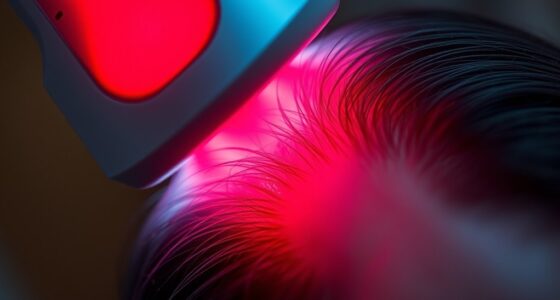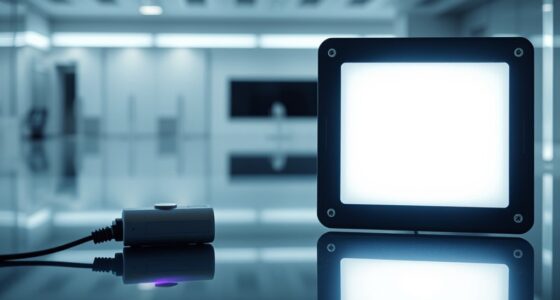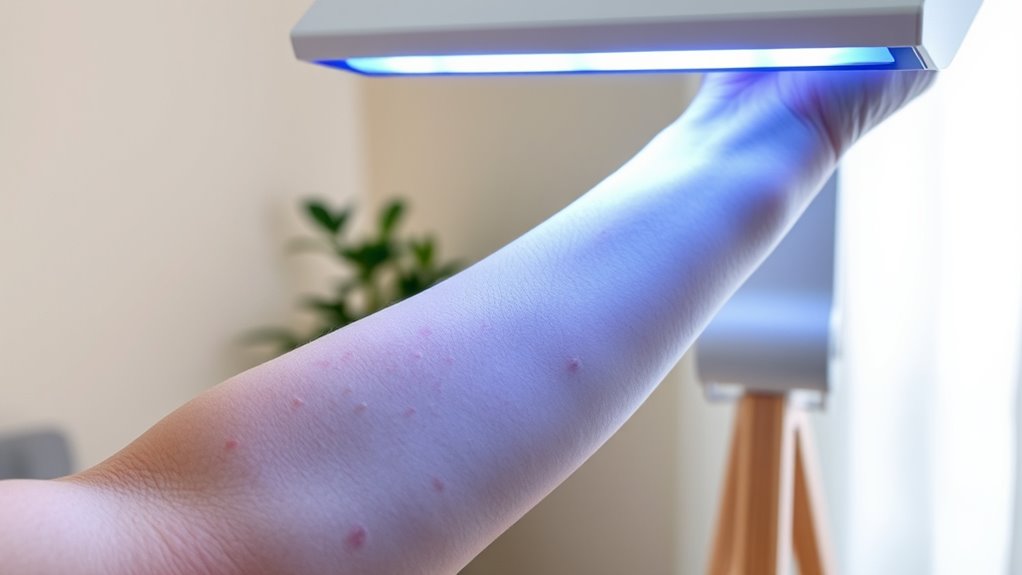

Using UVB lamps at home can be safe if you follow proper guidelines and seek advice from a healthcare professional. Make sure to choose devices with safety features, follow prescribed schedules, and protect your eyes with goggles. Avoid overexposure by adhering strictly to recommended durations, and monitor your skin for reactions. If you’re interested in learning more about safe practices and setup tips, keep exploring these essential safety measures.
Key Takeaways
- Always follow your dermatologist’s instructions for device type, dosage, and treatment schedule.
- Use UVB lamps with safety features like timers, dose controls, and protective shields.
- Protect your eyes with goggles or closed eyelids and avoid direct UV exposure to sensitive areas.
- Regularly inspect and maintain the device, replacing bulbs as recommended for safe, consistent therapy.
- Monitor your skin during treatment for adverse reactions and stop immediately if you experience burns or discomfort.
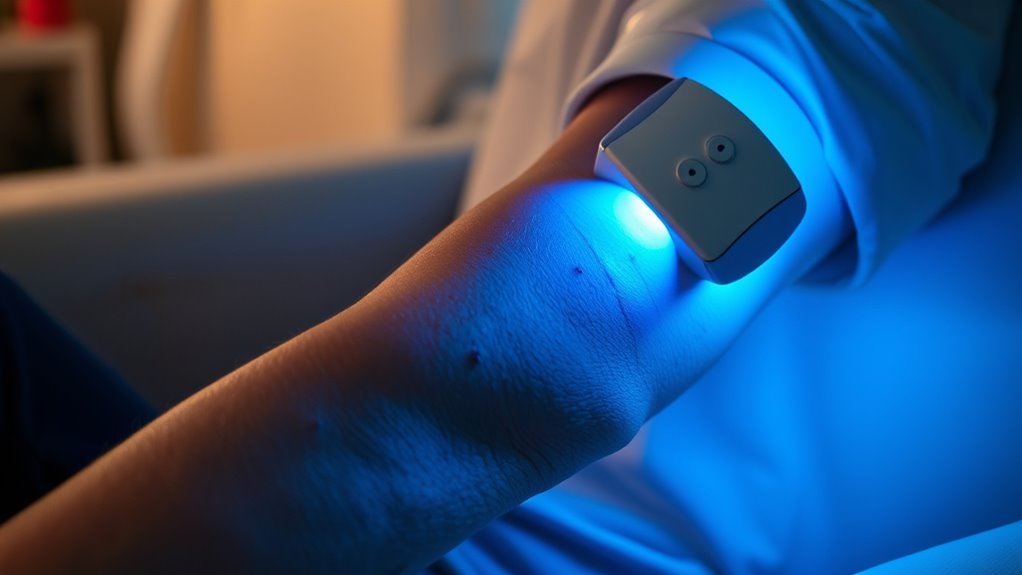
If you have psoriasis, using UVB lamps at home can be an effective way to manage your symptoms. UVB therapy helps slow down the rapid skin cell growth that causes psoriasis plaques, and bringing this treatment into your own space offers convenience and control over your schedule. However, before you start, it’s essential to prioritize home safety to avoid potential risks. Proper use of UVB lamps is vital for achieving the benefits while minimizing side effects like burns, premature skin aging, or increased skin cancer risk.
Using UVB lamps at home can effectively manage psoriasis symptoms safely with proper guidance.
First, educate yourself about UVB therapy and how it works. These lamps emit ultraviolet B light, which your dermatologist has determined is suitable for your condition. Never attempt to use UVB lamps without professional guidance, as improper exposure can lead to serious skin damage. Your healthcare provider will recommend the appropriate dosage and treatment schedule, tailored to your skin type and psoriasis severity. Strict adherence to these instructions is key; overexposure can cause burns, while underexposure might be ineffective.
Home safety begins with selecting a quality UVB lamp designed specifically for psoriasis treatment. Look for devices that have safety features like timers, dose controls, and protective shields. When you set up your device, position it at the recommended distance from your skin, typically a few inches away, and ensure the treatment area is clean and free of lotions or creams that might alter exposure. Use the lamp in a controlled environment, avoiding distractions, so you can maintain proper posture and distance throughout each session.
Consistency is essential, but so is moderation. Follow your prescribed schedule strictly — usually a few times a week — and don’t extend sessions beyond recommended durations. Always monitor your skin during and after treatment for any signs of adverse reactions, such as redness, blistering, or discomfort. If you notice anything unusual, stop using the lamp and contact your healthcare provider immediately.
Additionally, protect your eyes during UVB therapy by wearing goggles or keeping your eyes closed. Avoid direct exposure to your face or other sensitive areas unless explicitly instructed by your doctor. Store your UVB lamp in a safe, dry place out of children’s reach to prevent accidental exposure. Regularly inspect the device for damages or wear, and replace bulbs as recommended to guarantee consistent, safe operation. Incorporating proper lighting setups can further enhance the safety and effectiveness of your treatment environment.
Using UVB lamps at home can be a practical part of your psoriasis management plan, but only if you respect the principles of UVB therapy and home safety. Proper setup, adherence to your doctor’s instructions, and vigilant monitoring will help you reap the benefits safely and effectively.
Frequently Asked Questions
Can UVB Lamps Cure Psoriasis Completely at Home?
No, UVB lamps at home can’t cure psoriasis completely. While home therapy can help manage symptoms, it has treatment limitations and shouldn’t replace professional medical advice. You might see improvements, but psoriasis is a chronic condition, and full remission isn’t guaranteed. Always consult a dermatologist before starting UVB treatments at home to guarantee safe, effective use and avoid potential side effects.
Are There Age Restrictions for Using UVB Lamps?
Yes, there are age restrictions for utilizing UVB lamps. Generally, children and teenagers should avoid UVB treatments unless prescribed and supervised by a healthcare professional, as their skin is more sensitive. Always follow safety guidelines, including consulting your doctor before starting treatment, especially for young users. Proper supervision and adherence to age-specific safety measures help prevent skin damage and ensure safe, effective therapy.
What Should I Do if I Experience Skin Burns?
If you experience skin burns, you should immediately stop using the UVB lamp and protect your skin. Apply cool, damp compresses to reduce pain and inflammation. Keep the burned area clean and avoid further UV exposure. Over-the-counter pain relievers can help manage discomfort. Remember, skin protection is key, so follow burn management protocols carefully, and consider consulting a healthcare professional if burns are severe or worsen.
How Often Should I Use UVB Lamps for Optimal Results?
Think of your skin as a garden needing careful watering. Stick to the recommended frequency guidelines, usually 2-3 times a week, to nurture your skin without overwhelming it. Always follow safety precautions, like using protective gear and monitoring skin response. Regularly assess your progress, and consult your dermatologist if you notice any issues. With patience and care, you’ll see calmer, healthier skin bloom over time.
Can UVB Lamps Be Used Alongside Other Psoriasis Treatments?
Yes, you can use UVB lamps alongside other psoriasis treatments, but it’s important to take into account treatment compatibility. Combining UVB therapy with topical treatments or systemic medications can enhance results through combination therapy. However, always consult your dermatologist first to ensure safety and effectiveness, as some treatments may increase sensitivity or risk of side effects. Your healthcare provider will guide you on the best way to integrate UVB lamps into your overall treatment plan.
Conclusion
If you decide to use UVB lamps at home, always prioritize safety. Remember, over 50% of users report improvements within just a few weeks, but improper use can cause burns or skin damage. Think of it like baking—just the right amount of heat yields the best results. Stay informed, follow instructions carefully, and consult your dermatologist. With cautious use, you can harness the power of UVB light to manage your psoriasis safely and effectively.