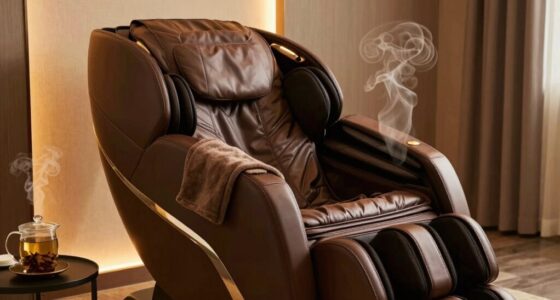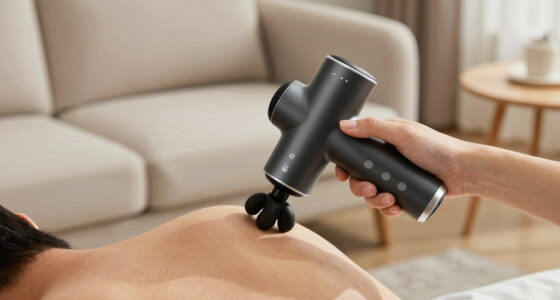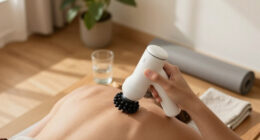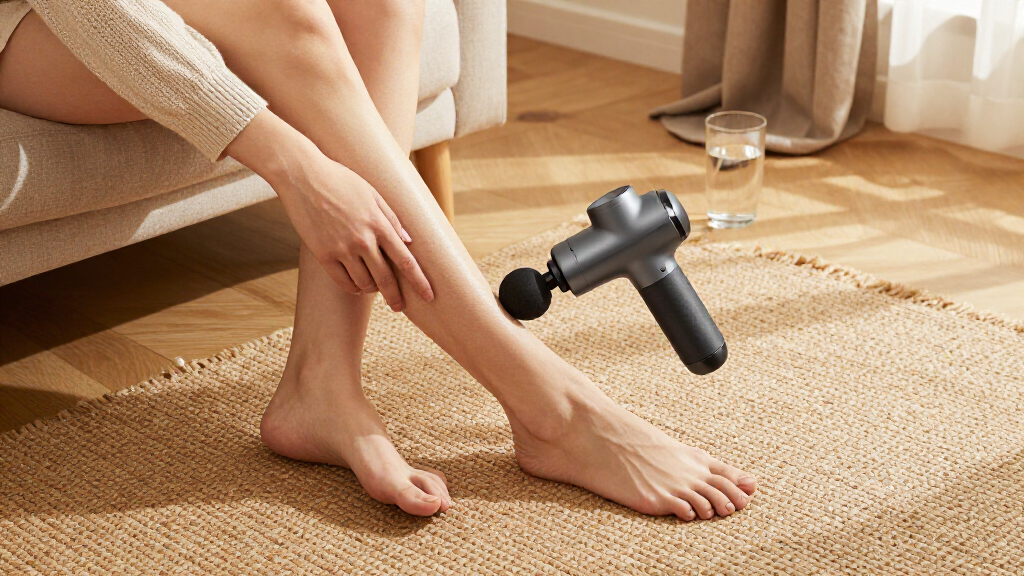
Choosing an at-home massage device usually comes down to a practical tradeoff: do you want to direct the pressure yourself, or settle into a device that does more of the work? Handheld percussion massagers use a moving head to deliver rapid pulses to selected muscles. Shiatsu devices use rotating nodes or rollers to knead an area, often while you sit or lie against them. Handheld models suit people who want adjustable, targeted treatment and are comfortable holding a device. Shiatsu models make more sense for someone who prefers a simpler, hands-free routine focused on areas such as the back, neck, or feet. Neither category is automatically better for every body or every kind of soreness; comfort, access, and intended use decide the fit.

Get wellness gear delivered free — and shop member deals
- Fast, free delivery on millions of items
- Access to Prime Big Deal Days deals on October 6–7
- Prime Video, Amazon Music and more included

TOLOCO Percussion Massage Gun with 10 Massage Heads
- ✔ Amplitude: 12 mm
- ✔ Maximum speed: 3,200 rpm
- ✔ Massage heads: 10 interchangeable

Rechargeable Electric Cupping Massager with Heat, Vibration, and Red Light
- ✔ Suction levels: 12 adjustable
- ✔ Power: Rechargeable battery
- ✔ Design: Cordless, compact, handheld

BOB AND BRAD C2 Pro Massage Gun with Hot and Cold Therapy
- ✔ Stall force: 44 lbs
- ✔ Amplitude: 10 mm
- ✔ Speeds: 5
At a Glance
| Criteria | Handheld percussion massagers | Shiatsu massage devices | Winner |
|---|---|---|---|
| Targeting and coverage | Precise, movable treatment head for individual muscle areas | Covers a set area with rotating kneading nodes | A |
| Hands-free convenience | Requires holding and guiding the device throughout use | Often works while you sit or recline against it | B |
| Intensity and control | Often offers multiple speeds and interchangeable heads | Pressure is shaped by body position and device settings | Depends |
| Ease of reaching body areas | Can reach many areas, though some spots are awkward without help | Convenient for designed areas; positioning can limit access elsewhere | A |
| Portability and storage | Usually portable, but larger models can be bulky | Varies from compact cushions to large chairs or foot units | A |
| Typical cost and value | Broad price range; added power and attachments may raise cost | Small cushions can cost less; full chairs cost substantially more | Depends |
| Best use case | Focused muscle treatment and users who want control | Relaxed, repeatable massage of a specific body region | Depends |
TOLOCO Percussion Massage Gun with 10 Massage Heads
When we line up all three devices, the TOLOCO Percussion Massage Gun earns the top spot because it does the core job — deep muscle work — better than either alternative, and it does it for longer. Its 12 mm amplitude is the deepest stroke in this lineup, edging out the C2 Pro’s 10 mm, which matters if your goal is reaching stubborn knots in the glutes or hamstrings rather than just surface-level relaxation. Combined with speeds up to 3,200 rpm, it delivers the kind of intensity that casual massagers simply can’t replicate.The 10 interchangeable massage heads are the other big differentiator. Where the C2 Pro asks you to adapt to a fixed attachment set focused on recovery, the TOLOCO gives you a head for nearly every body part and tolerance level, from large muscle groups to pinpoint work along the spine’s edges. That makes this pick the most sensible choice for households where multiple people with different sensitivities will share one device.Battery life is where the comparison becomes lopsided. The TOLOCO runs up to six hours per charge, roughly triple the C2 Pro’s runtime, so it’s the one you toss in a gym bag without thinking about the charger. That said, the endurance comes with caveats: runtime varies meaningfully with the speed you select, and the box includes only a USB cable — you’ll need to supply your own wall plug. Compared with the cordless cupping massager, the TOLOCO is also louder work in the literal sense of effort: it’s a device you use on muscles, not one you glide across broad areas. At 40–50 dB it stays quiet enough for evening use, though the cupping device’s gentler operation suits wind-down sessions better.
Pros:
- Deepest amplitude in this lineup at 12 mm for reaching tight, dense muscle
- 10 interchangeable heads cover nearly every body area and sensitivity level
- Up to six hours of battery life, far exceeding the C2 Pro
- Quiet 40–50 dB operation with an LED touch screen showing speed and charge
Cons:
- Charging plug is not included, only a USB cable
- Battery life drops noticeably at higher speeds
- No heat or cold therapy, unlike the C2 Pro
Best for: Anyone who wants serious deep-muscle percussion for recovery or chronic tightness, especially in multi-user households or for frequent travel.
Not ideal for: Buyers looking for a relaxing, spa-style experience — percussion is intense by design, and those wanting heat therapy should look at the C2 Pro instead.
Bottom line: The most complete percussion package here — deepest stroke, most attachments, and longest battery make it the default choice for most buyers.
“The most complete percussion package here — deepest stroke, most attachments, and longest battery make it the default choice for most buyers.”
Rechargeable Electric Cupping Massager with Heat, Vibration, and Red Light
The Electric Cupping Massager plays a completely different sport from the two guns in this lineup. Instead of striking muscle, it uses 12 adjustable suction levels to lift skin and fascia, which makes it far better suited to broad, fleshy areas — the waist, abdomen, shoulders, and back — where a percussion gun can feel too aggressive or awkward to aim. If the TOLOCO is a tool for athletes, this is a tool for people who want circulation-boosting relaxation at the end of a long day.Its heat, vibration, and red light features stack comfortably on top of the suction, letting you build a session that feels closer to a spa treatment than a workout recovery routine. Neither percussion gun offers suction of any kind, so if fascia work or that distinctive pulling-and-releasing sensation is what you’re after, this option stands out as the only choice here — it’s not competing with the guns so much as completing them.The tradeoffs are real, though, and they’re mostly about technique. The manufacturer recommends starting at the lowest suction level and working up gradually, because cupping too aggressively can leave marks or feel uncomfortable on sensitive skin. You’ll also want body oil or lotion on hand so the cup glides smoothly rather than tugging — an accessory neither gun requires. And unlike the TOLOCO’s hour-counting battery, this device’s compact size means shorter, more targeted sessions rather than all-over marathons. For buyers willing to learn the technique, it’s a uniquely versatile addition; for those who want grab-and-go simplicity, the C2 Pro is more straightforward.
Pros:
- 12 suction levels let you dial in exactly the intensity you want
- Heat, vibration, and red light combine for a multi-sensory session
- Cordless, rechargeable, and compact enough for one-handed use
- Reaches areas like the waist and abdomen where guns feel awkward
Cons:
- Requires a gradual learning curve — you must start at the lowest suction level
- Needs body oil or lotion for comfortable gliding, an extra purchase
- Not a substitute for deep-tissue percussion on dense muscle knots
Best for: Buyers seeking gentle, spa-like relief on broad areas like the back, waist, and abdomen, especially those intrigued by cupping and heat therapy.
Not ideal for: Anyone with deep muscle knots or athletic recovery needs — percussion guns like the TOLOCO address those far more effectively.
Bottom line: The only cupping option in this lineup, and the right one for gentle, heat-enhanced relief on areas the guns can’t comfortably treat.
“The only cupping option in this lineup, and the right one for gentle, heat-enhanced relief on areas the guns can’t comfortably treat.”
BOB AND BRAD C2 Pro Massage Gun with Hot and Cold Therapy
What separates the BOB AND BRAD C2 Pro from every other device here is temperature therapy. Heat helps relax stiff muscles before treatment; cold helps calm inflammation after a hard session. No other pick in this lineup offers either, and for runners, lifters, or anyone dealing with post-workout soreness, that combination makes this model better suited to recovery routines than the more powerful but temperature-free TOLOCO.The smart touches extend beyond hot and cold. An LED pressure display shows how hard you’re pressing, which solves a real problem for beginners — most people either press far too lightly to matter or so hard they bruise. The 10-minute auto shut-off adds a safety net the TOLOCO lacks, and at 40 dB it’s the quietest option here, tied with the TOLOCO’s best case. At 1.5 lbs with a carrying case and fast USB-C charging, it’s also the most travel-ready gun of the two.Where it gives ground is endurance and raw depth. The 10 mm amplitude trails the TOLOCO’s 12 mm, so extremely dense muscle may not get the same release, and the two-hour battery is a third of what the TOLOCO offers — fine for daily 10-minute sessions, limiting for long recovery days or sharing among family. Recharging takes 1.5–2 hours, so this is a device that lives on its charger between uses. Compared with the cupping massager, it’s far more intuitive to use, with none of the oil-and-technique overhead, but it can’t replicate that pulling sensation many users find uniquely satisfying on the back and shoulders.
Pros:
- Unique heat and cold therapy in a single massage gun
- LED pressure display prevents under- or over-pressing
- Lightweight 1.5 lb design with carrying case and fast USB-C charging
- Quietest operation at 40 dB, plus a 10-minute auto shut-off
Cons:
- Battery lasts up to only 2 hours, a third of the TOLOCO’s runtime
- 10 mm amplitude is shallower than the TOLOCO’s 12 mm
- Requires 1.5–2 hours to fully recharge
Best for: Athletes and regular exercisers who want heat, cold, and percussion in one portable device for structured post-workout recovery.
Not ideal for: Households sharing one device all day, or buyers who need maximum battery endurance — the two-hour runtime is the shortest here.
Bottom line: The recovery specialist of the group — hot and cold therapy plus pressure feedback justify it for athletes, provided the short battery fits your routine.
“The recovery specialist of the group — hot and cold therapy plus pressure feedback justify it for athletes, provided the short battery fits your routine.”
As an Amazon Associate we earn from qualifying purchases.
Key Differences
The clearest difference is who controls the massage. With a handheld percussion device, you choose the muscle, angle, and duration, moving the head as needed. That flexibility is useful when discomfort is localized or changes from day to day. The tradeoff is physical effort: you must hold the device, manage its weight, and avoid pressing too hard. A shiatsu device sets the motion and working area. It is easier to use during a seated break, but your body has to meet the device where its nodes can reach.
Cost and convenience depend on the particular product. A compact shiatsu cushion can be less expensive than a premium percussion model, while a massage chair can cost far more than either. Paying extra makes sense only when the added size, settings, or routine convenience will get regular use. For most buyers seeking one flexible device, a well-made handheld model is the stronger starting point. Choose shiatsu when the appeal is a repeatable, low-effort massage for a specific area.
Detailed Comparison
Targeting and coverage (Handheld percussion massagers wins — moderate)
Handheld percussion massagers win for adaptable targeting: you can move between muscle groups and change the contact point as your needs shift. Shiatsu devices can feel more encompassing across their fixed area, but they do not freely follow soreness elsewhere. The gap is moderate. Pick percussion for scattered or changing target areas; pick shiatsu when you want the same region treated on a regular schedule.
Hands-free convenience (Shiatsu massage devices wins — major)
Shiatsu wins because the device supplies the motion while you sit or recline. A handheld massager requires you to hold and steer it, which can become tiring during longer sessions or when treating hard-to-reach areas. This is a major difference for users who value a passive routine. If holding a device is comfortable and control matters more, percussion remains a reasonable choice.
Intensity and control (Handheld percussion massagers wins — moderate)
Handheld percussion models usually provide more direct control over placement and may offer multiple speeds or heads. Shiatsu intensity depends partly on the device settings and how your body rests against its nodes; a cushion may let you reposition, but the motion stays fixed. The difference is moderate and product-specific. Choose percussion if you want to adjust pressure and location continually; choose shiatsu if a consistent kneading sensation suits you.
Ease of reaching body areas (Handheld percussion massagers wins — moderate)
Handheld models are more versatile across the body, but reaching the middle of your back or another awkward spot may require assistance or a suitable handle. Shiatsu products are convenient for the regions they are designed to contact, but their shape and placement can rule out other areas. This is a moderate advantage for percussion overall, with the best choice depending on the target area. Check the device’s intended placement rather than assuming one type treats every spot equally well.
Portability and storage (Handheld percussion massagers wins — moderate)
Handheld devices generally win on portability: even a heavier model can be moved between rooms or packed for travel more easily than a chair or large massage unit. Compact shiatsu cushions can also store neatly, while full-size products demand dedicated space. The gap ranges from minor to major depending on the products. If storage or travel matters, compare dimensions and weight before buying; a small cushion can narrow the difference.
Typical cost and value (moderate difference)
There is no category-wide price winner. Basic options in either group can be relatively affordable, and premium handheld models or full massage chairs can raise the cost substantially. A higher price is worthwhile only if it buys features you will use, such as suitable controls, a comfortable fit, or a form that matches your routine. For a budget-conscious buyer, compare specific products and included functions; neither category guarantees better value on its own.
Best use case (major difference)
Handheld percussion devices are the better match for people who want to move between muscles and direct each session. Shiatsu devices suit people who prefer a seated, repeatable massage focused on one designed area. Neither wins for everyone: the deciding factor is whether you value active control or low-effort convenience more. Treat either as a comfort tool, not a substitute for medical advice about persistent or unexplained pain.
Handheld percussion massagers: Pros and Cons
Pros:
- Targets different muscles as needs change
- Offers direct control over placement and movement
- Usually easier to transport and store than large massage equipment
Cons:
- Requires holding and guiding the device
- Some body areas are difficult to reach alone
- Weight, noise, and attachments vary by model
Shiatsu massage devices: Pros and Cons
Pros:
- Can provide a massage while you sit or recline
- Simple, repeatable routine for a designated area
- Compact cushions may be easy to store
Cons:
- Coverage and motion are limited by device shape
- Pressure may depend on body position
- Large units take space and can cost much more
Who Should Choose What
Choose Handheld percussion massagers if:
- You want to target different muscle groups in one session.
- You prefer to adjust the location and intensity as you go.
- Portability and flexible use matter more than hands-free operation.
Choose Shiatsu massage devices if:
- You want a low-effort massage while seated or reclining.
- You mainly want to treat one area, such as your feet, neck, or back.
- A repeatable routine matters more than moving freely between muscles.
Skip both if: Skip both if you need diagnosis or treatment for persistent, worsening, unexplained, or injury-related pain; ask a qualified healthcare professional what is appropriate.
Value for Money
Paying more is worth it only when the device’s form and features address a real need in your routine. For handheld percussion, extra cost may buy controls, attachments, or a design that is easier for you to hold; compare those features with the muscle areas you plan to target. For shiatsu, a compact cushion may be a sensible purchase if you want occasional massage in one place, while a large chair is hard to justify without ample space and frequent use. The better value is the least expensive device that fits comfortably, reaches your intended area, and is easy enough to use regularly.
Final Verdict
For most buyers who want one adaptable device, choose a handheld percussion massager: it can follow changing target areas and usually travels and stores more easily. Choose a shiatsu device if your priority is a relaxing, low-effort routine for a particular body region and its fixed placement works for you. The biggest deciding factor is whether you want to steer each session or let the device guide it. Pay more only for features that improve that routine, and compare specific products before treating either category as the budget choice.
Frequently Asked Questions
Which type is better for back soreness?
It depends on where the soreness is and whether you can comfortably reach it. A handheld model can target different muscles, but the middle back may be hard to reach alone. A shiatsu cushion can be convenient when its shape places the nodes where you want them. Check fit and intended use, and seek professional advice for persistent or unexplained pain.
Are handheld percussion massagers harder to use?
They require more active use because you hold and move the device. That gives you more control, but weight and reach can affect comfort. A shiatsu unit is simpler when it covers the area you want and you can sit or recline in the right position.
Is an expensive massage chair worth buying?
It may be worthwhile if you have space, expect to use it often, and prefer a fixed, hands-free routine. If you want occasional massage or treatment across changing areas, a portable device may provide better value. Judge the cost against your likely use, not the number of features.
Can I use a massage device for every kind of pain?
No. These products are intended for comfort and massage, and they may not suit every condition or body area. Follow the manufacturer’s safety guidance and ask a healthcare professional about pain that is persistent, worsening, unexplained, or related to an injury.
Fall Picks
fall essentials
As an affiliate, we earn on qualifying purchases.