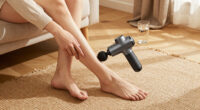
This guide helps beginners use an at-home massage device, such as a handheld massager, massage gun, or vibrating cushion, for a short, gentle session. You will learn how to check the device, choose a safe area, adjust its settings, and recognize when to stop. Set aside about 15-30 minutes, including setup and cleanup.

Get wellness gear delivered free — and shop member deals
- Fast, free delivery on millions of items
- Access to Prime Big Deal Days deals on October 6–7
- Prime Video, Amazon Music and more included

TOLOCO Percussion Massage Gun with 10 Massage Heads, Black
- ✔ Amplitude: 12 mm
- ✔ Maximum speed: 3,200 rpm
- ✔ Massage heads: 10 interchangeable heads

Rechargeable Electric Cupping Massager with Heat, Vibration, and Red Light
- ✔ Suction levels: 12 adjustable
- ✔ Power: Rechargeable battery
- ✔ Design: Cordless, compact, handheld

BOB AND BRAD C2 Pro Massage Gun with Hot and Cold Therapy
- ✔ Stall force: 44 lbs
- ✔ Amplitude: 10 mm
- ✔ Speeds: 5
A massage device may help with temporary muscle tension, but it does not diagnose or treat an injury or medical condition. Follow the instructions supplied with your specific model; device controls, attachments, and time limits vary.
Difficulty: Beginner | Time: 15-30 minutes
What You’ll Need
Tools & Materials:
- An at-home massage device with its user manual
- A stable chair, bed, or other comfortable place to sit or lie down
- A timer or clock
- Water for afterward
Knowledge:
- Basic ability to identify the area you want to massage
- Ability to adjust the device and stop it promptly
Read the manual before first use, including its warnings, approved body areas, cleaning instructions, and charging or power requirements. Ask a health professional before using a device if you are pregnant, have reduced sensation or circulation, take medicine that increases bleeding, have a blood-clotting condition, or have a significant medical condition. Do not use the device on a recent injury, surgery site, or area with unexplained pain without professional guidance.
TOLOCO Percussion Massage Gun with 10 Massage Heads, Black
The TOLOCO takes our top spot because it nails the fundamentals that matter most for everyday at-home use: deep, adjustable percussion and enough battery to last a week of regular sessions. Its 12 mm amplitude is actually deeper than the BOB AND BRAD C2 Pro’s 10 mm, which means each strike travels further into the muscle — a genuine advantage if your goal is working out dense knots in the quads, hamstrings, or calves rather than surface-level relaxation.Versatility is where this model separates itself from the other two. Ten interchangeable heads cover everything from pinpoint trigger-point work to broad, flat coverage of large muscle groups, whereas the C2 Pro’s appeal rests on its temperature therapy rather than attachment variety. The LED touch screen showing speed and remaining battery is more useful than it sounds — compared with devices that leave you guessing, it lets you repeat the exact settings that worked last time, which is the difference between a consistent routine and random pummeling.The tradeoffs are real, if modest. The charging plug is not included, so you will need to supply your own wall adapter, and the stated six-hour battery life drops noticeably at higher speeds. And while 40–50 dB is quiet by massage-gun standards, the C2 Pro runs a touch quieter at around 40 dB with a convenient auto shut-off that the TOLOCO lacks. Still, for most buyers this is the most complete package: it competes on power, wins on attachments, and lasts longer per charge than anything else here.
Pros:
- 10 interchangeable heads cover pinpoint and broad-muscle work
- 12 mm amplitude reaches deeper muscle tissue than the C2 Pro
- Quiet operation at 40–50 dB for a percussion gun
- Up to six hours of battery life at lower speeds
Cons:
- Charging plug is not included in the box
- Battery life shortens considerably at the highest speed setting
- No heat, cold, or auto shut-off features
Best for: Anyone who wants a do-everything percussion gun for regular deep-muscle work across the whole body
Not ideal for: Buyers who specifically want heat or cold therapy for injury recovery — this device is percussion only
Bottom line: The most well-rounded pick here: deepest amplitude, most attachments, and the longest battery make it the default choice for general at-home muscle work.
“The most well-rounded pick here: deepest amplitude, most attachments, and the longest battery make it the default choice for general at-home muscle work.”
Rechargeable Electric Cupping Massager with Heat, Vibration, and Red Light
This device earns its place by doing something the two guns simply cannot: it lifts and decompresses tissue rather than striking it. For people whose tension lives in the back, waist, or shoulders — areas that are awkward to reach with a percussive gun and often respond better to sustained pulling — cupping is a genuinely different tool, not a lesser version of a massage gun. The addition of heat, vibration, and red light rounds it out into a multi-mode relaxation device rather than a one-trick suction cup.Where the TOLOCO offers brute adjustability through ten heads, this massager adjusts through 12 suction levels, and that gradient matters more than it would on a gun. Suction sensation builds quickly, and the recommendation to start at the lowest level and increase gradually is not marketing caution — going in too high is the fastest way to bruise. This makes it a better fit for careful, unhurried users than for athletes who want aggressive treatment in five minutes.Its strongest practical advantages over both guns are portability and convenience of technique: it is cordless, compact, and handheld, small enough for travel, and it works on arms, legs, and abdomen as well as the back. The flip side is that it requires body oil or lotion to glide comfortably, adding a step neither gun demands, and its battery life and power ceiling are not disclosed as precisely as the TOLOCO’s, so heavy users may find themselves planning charges. Compared directly with the C2 Pro, it shares the heat function but trades percussive recovery power for suction-based release — the right choice for chronic tightness, the wrong one for post-workout muscle flushing.
Pros:
- 12 adjustable suction levels allow a very gradual intensity ramp
- Heat, vibration, and red light add versatility beyond suction
- Cordless, compact design travels easily
- Works across back, arms, legs, waist, and abdomen
Cons:
- Requires body oil or lotion for comfortable gliding
- Must start at the lowest suction level and build up, which slows beginners down
- Less suited to precise, deep trigger-point work than a percussion gun
Best for: People with persistent back, shoulder, and waist tension who prefer gentle, sustained release over percussive strikes
Not ideal for: Athletes wanting deep, high-force muscle recovery — suction cannot replace amplitude and stall force
Bottom line: A distinctive alternative rather than a runner-up: the right buy if your tension is broad and chronic rather than acute and muscular.
“A distinctive alternative rather than a runner-up: the right buy if your tension is broad and chronic rather than acute and muscular.”
BOB AND BRAD C2 Pro Massage Gun with Hot and Cold Therapy
The C2 Pro justifies its premium billing with one feature neither competitor offers: built-in heat and cold therapy. For recovery-focused users — runners, lifters, anyone managing soreness or minor inflammation — temperature is not a gimmick. Cold helps calm acute soreness; heat loosens stiff tissue before or after percussion. Combining that with a 10 mm amplitude makes this the closest thing in the lineup to a portable recovery station rather than just a massage gun.Its 44 lbs of stall force is the hidden spec that matters most. Stall force determines how hard you can press before the motor stalls, and it is what separates serious recovery tools from casual massagers. The TOLOCO may reach deeper per strike with its 12 mm amplitude, but the C2 Pro holds its ground under heavy pressure against dense muscle — the better choice for strong users, even if its per-strike depth is slightly shallower. The LED pressure display reinforces this recovery mindset: it shows how much force you are actually applying, which helps you stay consistent rather than drifting into under- or over-treating an area.The compromises are concentrated in one area: battery. At up to two hours per charge against the TOLOCO’s six, and with a 1.5–2 hour recharge time, this is a device you will want to keep topped up via its fast USB-C charging. The 10-minute auto shut-off — a feature the TOLOCO lacks — is a sensible safety measure but also nudges sessions shorter. At roughly 40 dB it is the quietest option here, and the included carrying case makes it the best travel companion of the three. Buy it if temperature therapy and pressure feedback fit your routine; skip it if you simply want maximum attachments and battery for the least fuss, because the TOLOCO covers that ground better.
Pros:
- Unique heat and cold therapy in a handheld device
- 44 lbs stall force handles heavy pressure without stalling
- LED pressure display keeps treatment consistent
- Quietest of the three at about 40 dB, with auto shut-off and carrying case
Cons:
- Two-hour battery life is a third of the TOLOCO’s stated maximum
- Requires 1.5–2 hours to fully recharge
- Only five speeds versus the TOLOCO’s wider range and head selection
Best for: Athletes and recovery-focused users who want heat, cold, and measurable pressure in a single portable device
Not ideal for: Buyers who prioritize long battery life or all-day convenience over therapeutic features
Bottom line: The recovery specialist of the group — choose it when temperature therapy and pressure feedback matter more than raw battery endurance.
“The recovery specialist of the group — choose it when temperature therapy and pressure feedback matter more than raw battery endurance.”
As an Amazon Associate we earn from qualifying purchases.
Before You Start
Do not massage over bones, joints, the front or sides of the neck, the head, open wounds, bruises, swollen areas, varicose veins, or irritated skin. Avoid pressing directly on the spine or other bony areas. Do not use a massage device if you are intoxicated or too drowsy to notice discomfort. Keep the device away from water unless its manual specifically says it is water-safe.
Plan a short session on one muscle area. Start at the lowest setting, use only an attachment approved for that area, and let the manual set the maximum session time. A device should feel comfortable; pain, numbness, tingling, or burning are reasons to stop.
Step-by-Step Instructions
Step 1: Check the device and its instructions
Read the manual and inspect the device, cable, battery, and attachment for damage. Confirm that the device is charged or plugged in as directed, and attach only a head approved by the manufacturer. Keep the controls within reach so you can switch it off quickly.
Tip: Do not use a device with a cracked housing, frayed cable, loose attachment, or unusual smell or sound. Unplug it before changing attachments if the manual directs you to do so.
Check: The device is intact, powered as directed, and fitted with a secure, approved attachment.
Step 2: Choose a suitable muscle area
Select a broad, comfortable muscle area such as the fleshy part of a shoulder or thigh. Avoid the areas listed above, and skip any spot that is painful, swollen, bruised, unusually warm, numb, or injured. Sit or lie in a position that lets you reach the area without twisting or straining.
Tip: If you are unsure whether an area is suitable because of a health condition or a recent injury, ask a health professional before using the device there.
Check: You can reach a healthy muscle area comfortably and keep the device away from bones, joints, and sensitive regions.
Step 3: Test the lowest setting
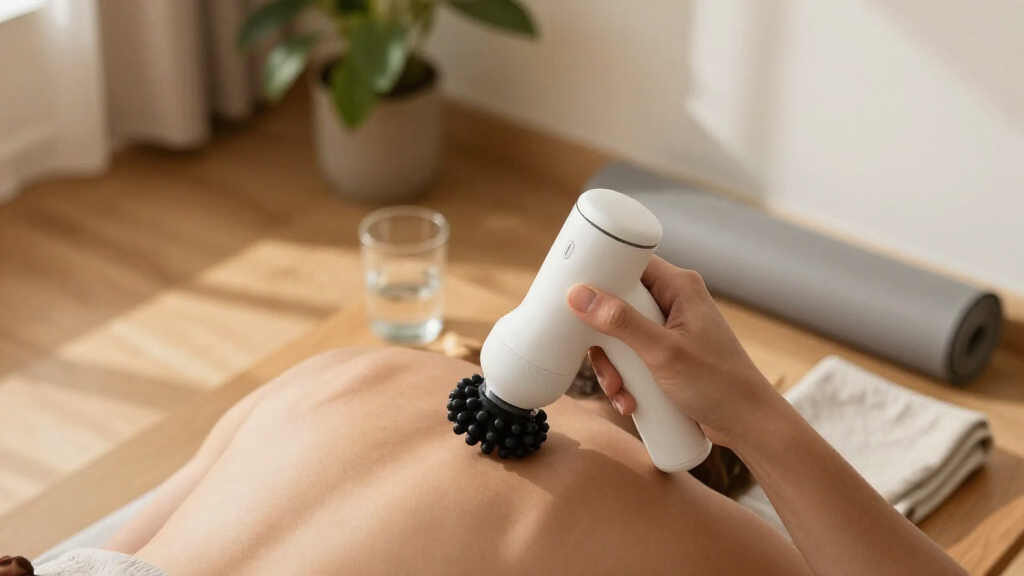
Turn the device on at its lowest speed or intensity. Place the attachment lightly against the muscle; do not jab, dig in, or use your body weight to force pressure. Move it slowly across the area, keeping it in motion rather than holding it on one point.
Tip: Start with light contact. More force or a higher setting does not mean a better result, and strong pressure can irritate tissue.
Check: The sensation is mild and comfortable, with no sharp pain, tingling, numbness, or skin irritation.
Step 4: Massage briefly and keep moving
Move the device over the muscle in a slow, controlled path. Spend only a short time on each small area, and follow the manual for total duration and rest periods. Check how the area feels as you go. Reduce the intensity or stop if the sensation becomes uncomfortable.
Tip: Avoid repeated passes over one spot. Do not use the device to try to force a knot to release or to work through pain.
Check: The device has been used within the manual’s time limit, and the area feels no worse during the session.
Step 5: Turn the device off and check your skin
Switch the device off before setting it down or changing an attachment. Check the treated skin and notice how the muscle feels. Stop using the device for the day if you see marked redness, bruising, swelling, or irritation, or if discomfort persists or increases.
Tip: Mild, temporary warmth can occur, but bruising or worsening pain is not a goal or a sign of a successful massage.
Check: The skin is intact, and you have no new pain, numbness, tingling, or other concerning symptoms.
Step 6: Clean and store the device
Disconnect or power off the device and clean the attachment as directed in the manual. Dry it fully if required, then store the device and attachments in a clean, dry place away from children and pets. Do not immerse electrical parts unless the manufacturer explicitly permits it.
Tip: Use only the cleaners recommended by the manufacturer; harsh products can damage some surfaces.
Check: The device is off, the attachment is clean and dry, and the device is stored according to its instructions.
Common Mistakes to Avoid
- Using a high setting or heavy pressure right away. — Begin at the lowest setting with light contact. Increase only if the sensation remains comfortable and the manual allows it.
- Holding the device on a single point or pressing over a bone or joint. — Keep the device moving over a broad muscle area and avoid bony, sensitive, swollen, or injured areas.
- Continuing through pain, numbness, or tingling. — Switch the device off as soon as these symptoms appear. Do not resume on the same area while symptoms remain.
- Exceeding the recommended duration because the area still feels tense. — Use a timer and follow the manual’s session limits. A longer session can irritate tissue.
Troubleshooting
Problem: The massage feels sharp, painful, or too intense.
Solution: Stop the device. Check that you are on a muscle rather than a bone or sensitive area. If you try again later, use lighter contact and the lowest setting; stop if discomfort returns.
Problem: The skin becomes bruised, swollen, or strongly irritated.
Solution: Stop using the device on that area. Avoid massaging it again until it has recovered. Seek medical advice if the reaction is severe, worsening, or does not improve.
Problem: The device will not start or loses power.
Solution: Switch it off and check the charge, outlet, cable, and attachment according to the manual. Do not use it if the cable or housing is damaged, or if it overheats or behaves unusually.
Problem: Pain or unusual sensations continue after the session.
Solution: Do not massage the area again. Contact a health professional for persistent or worsening pain, numbness, tingling, weakness, or swelling. Seek urgent care for severe symptoms.
What Success Looks Like
A suitable muscle area has received a brief, comfortable massage within the device’s instructions. The skin remains intact, with no bruising or marked irritation, and you have no new or worsening pain, numbness, or tingling. The device is switched off, cleaned, and stored properly. Stop using it and seek medical advice if symptoms worsen or persist.
Next Steps
Give the area time to settle before using the device again, and follow the manual’s recommended frequency. Clean the attachment after each use, charge the device as directed, and check it for wear before the next session. If you regularly need a device for pain, or the pain persists or worsens, discuss the symptoms with a health professional instead of increasing pressure or session length.
Frequently Asked Questions
How long should I use an at-home massage device?
Follow the time limits in your device’s manual. Use brief passes over each area and avoid extending a session to chase relief. Models differ, so there is no single duration that applies to every device.
Can I use a massage gun on my neck?
Avoid the front and sides of the neck and do not apply a massage gun to the spine. Neck areas are sensitive; use a device there only if its manual specifically permits it and a health professional has advised that it is suitable for you.
Should a massage device hurt to work?
No. Use light pressure and stop if you feel pain, burning, numbness, or tingling. Strong pressure can irritate tissue and is not a measure of effectiveness.
Can I use a massage device on an injury?
Do not use it over a recent injury, swelling, bruising, or a surgical site unless a health professional says it is appropriate. Ask for guidance if you are unsure what is causing the pain.
What should I do if I feel sore afterward?
Stop using the device on that area and let it recover. Do not massage through increasing soreness or unusual symptoms. Contact a health professional if pain persists, worsens, or comes with swelling, numbness, tingling, or weakness.
Fall Picks
fall essentials
As an affiliate, we earn on qualifying purchases.