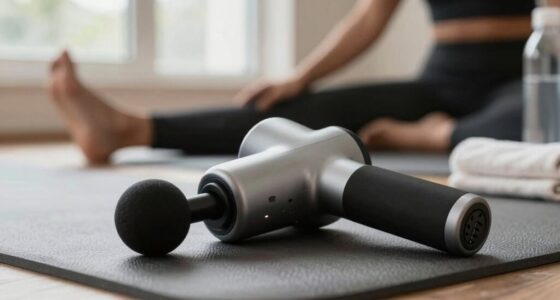
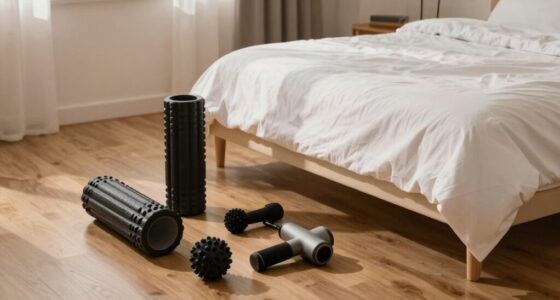
Using a massage gun for plantar fasciitis can effectively ease your foot pain by targeting tight fascia, breaking up knots, and boosting blood flow to promote healing. It helps loosen tense tissues and reduce inflammation, which can alleviate stabbing sensations and morning stiffness. When used properly with gentle pressure and consistent sessions, it offers relief and speeds recovery. Keep exploring to discover how to maximize its benefits for your foot health.
Key Takeaways
- Massage guns target specific areas of discomfort, loosening fascia and reducing inflammation to alleviate plantar fasciitis pain.
- Trigger point therapy with a massage gun can break up knots and relieve pressure on the plantar fascia.
- Fascia release techniques using a massage gun help stretch and loosen tight tissues, decreasing recurring pain.
- Proper use, including gradual intensity increase and appropriate attachments, enhances effectiveness and prevents tissue damage.
- Regular, targeted massage gun sessions can improve blood flow and promote faster healing of foot tissues.

If you’re struggling with plantar fasciitis, a massage gun can be an effective tool to relieve pain and promote healing. One of the key benefits of using a massage gun is its ability to target specific areas of discomfort, especially in the fascia and surrounding tissues. With consistent use, it can help loosen tight fascia, reduce inflammation, and improve blood flow to speed up recovery.
A massage gun effectively targets fascia and tissues, easing pain and promoting healing in plantar fasciitis.
Trigger point therapy is a technique that works well when using a massage gun. By applying focused pressure to tender spots or knots in the fascia and muscles of your foot and calf, you can break up these dense areas of tension. This alleviates pressure on the plantar fascia itself, easing the stabbing pain that often worsens with activity or first thing in the morning. When you use a massage gun for trigger point therapy, you can precisely target the painful spots, applying enough pressure to release these trigger points without overdoing it. Over time, this can lead to a significant reduction in pain and improved foot function.
Fascia release is another critical aspect where a massage gun can make a difference. The plantar fascia, a thick band of connective tissue running along the bottom of your foot, often becomes tight or inflamed under stress. Using your massage gun to perform fascia release involves gentle, sustained pressure along the bottom of your foot, ankle, and calf muscles. This helps stretch and loosen the fascia, decreasing its tension and preventing it from pulling excessively on your heel bone. Regular fascia release with a massage gun can restore flexibility and reduce the likelihood of recurrence.
Many massage guns come with different attachment heads designed for deep tissue work or broader coverage, making it easier to adapt your treatment to your needs. When targeting the plantar fascia or calf muscles, a softer, rounded head can provide gentle pressure for fascia release, while a more pointed attachment can focus on trigger points. You should start with low to moderate intensity and gradually increase as your tissues respond. Be cautious not to press too hard or stay in one spot for too long, as overdoing it can cause bruising or soreness.
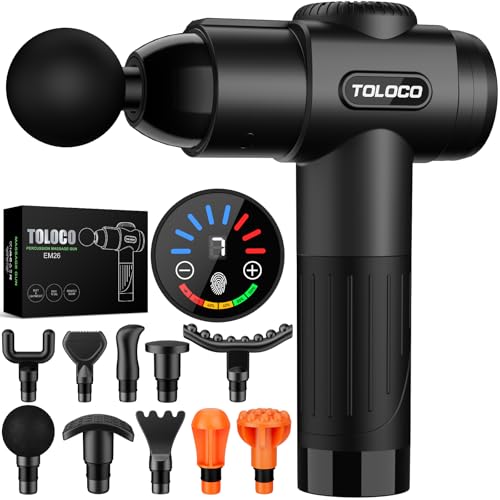
TOLOCO Massage Gun, Deep Tissue Back Massage for Athletes for Pain Relief, Percussion Massager with 10 Massages Heads & Silent Brushless Motor, Relaxation Gifts for Men Women, Black
- Deep Tissue Penetration: 12mm depth, up to 3200 rpm
- Long Battery Life: Up to 6 hours on a single charge
- 10 Replaceable Massage Heads: For full-body muscle relaxation
As an affiliate, we earn on qualifying purchases.
As an affiliate, we earn on qualifying purchases.
Frequently Asked Questions
Can Massage Guns Prevent Plantar Fasciitis?
Massage guns alone can’t prevent plantar fasciitis, but they can be part of prevention strategies. To reduce your risk factors, focus on proper footwear, stretching, and strengthening exercises for your feet and calves. Using a massage gun regularly can help ease tension and improve circulation, which might lower your chances of developing the condition. Combining these approaches gives you the best shot at preventing plantar fasciitis effectively.
How Often Should I Use a Massage Gun?
Have you wondered how often you should use a massage gun? For plantar fasciitis, follow the frequency guidelines of 2-3 times daily, focusing on gentle, short sessions. Remember, moderation is key—avoid overdoing it to prevent irritation. Use proper technique and listen to your body’s signals. Are you ready to incorporate these usage tips to help soothe your foot pain effectively and safely?
Are Massage Guns Suitable for All Foot Types?
Massage guns can be suitable for most foot types, but you should consider your foot arch and heel pain. If you have a high or flat arch, choose a device with adjustable intensity to avoid discomfort. For heel pain, target the arch and heel area carefully. Always consult a healthcare professional if you’re unsure, and start with gentle settings to see how your foot responds.
Can I Use a Massage Gun With Other Treatments?
Think of your foot treatment plan as a symphony—each instrument contributes to healing. Yes, you can use a massage gun alongside other treatments like massage therapy or alternative treatments. Combining methods can create a harmonious effect, easing pain more effectively. Just guarantee you coordinate with your healthcare provider to prevent overdoing it. This way, you’ll craft a balanced approach that amplifies your recovery efforts.
What Safety Precautions Should I Take?
You should always follow safety guidelines and proper usage when using a massage gun for plantar fasciitis. Start with low intensity and avoid sensitive or inflamed areas, especially near your heel. Keep the device moving to prevent skin irritation and don’t use it for too long on one spot. If you experience pain or discomfort, stop immediately and consult a healthcare professional for personalized advice.

lifechill Trigger Point Massage Tools Pain Relief Deep Tissue, FSA Eligible
- All-in-One Self Massage Tool: Combines Trigger Point, Gua Sha, Lymphatic Drainage, Fascia Release
- Dual-Tip Design: Large and small massage tips for different needs
- Versatile Use: Suitable for Gua Sha, scraping, pressing, kneading, rolling
As an affiliate, we earn on qualifying purchases.
As an affiliate, we earn on qualifying purchases.
Conclusion
A massage gun can be your trusty lighthouse in the fog of plantar fasciitis, guiding you toward relief. It targets stubborn foot pain like a skilled artist, melting away tension with each pulse. While it might not banish discomfort forever, using it consistently can turn your foot’s stormy seas into calmer waters. So, give it a try—you might just find your foot’s symphony playing in harmony again. Your journey to relief starts with that gentle hum.
TOLOCO Massage Gun, Deep Tissue Back Massage for Athletes for Pain Relief, Percussion Massager with 10 Massages Heads & Silent Brushless Motor, Relaxation Gifts for Men Women, Black
- Deep Tissue Penetration: 12mm depth, up to 3200 rpm
- Long Battery Life: Up to 6 hours on a single charge
- 10 Replaceable Massage Heads: For full-body muscle relaxation
As an affiliate, we earn on qualifying purchases.
As an affiliate, we earn on qualifying purchases.

TOLOCO Massage Gun, Deep Tissue Back Massage for Athletes for Pain Relief, Percussion Massager with 10 Massages Heads & Silent Brushless Motor, Fathers Day Dad Gifts, Grey
- Deep Tissue Penetration: 12mm, up to 3200 rpm for effective relief
- 10 Replaceable Massage Heads: Versatile for full-body relaxation
- Quiet Operation: 40dB-50dB for peaceful massage
As an affiliate, we earn on qualifying purchases.
As an affiliate, we earn on qualifying purchases.