

Brain-sensing headbands can actually help improve your meditation focus by giving you real-time feedback on your neural activity. They detect electrical signals from your scalp, showing when you’re relaxed or distracted, which helps you sharpen your awareness and stay engaged. Although environmental noise and sensor placement can be challenges, many users find they deepen their practice and build better focus over time. Keep exploring, and you’ll discover more about how these devices can support your mindfulness journey.
Key Takeaways
- Brain-sensing headbands provide real-time feedback on neural activity, helping users recognize and improve focus during meditation sessions.
- Scientific validation confirms these devices reliably monitor brainwaves associated with relaxation and concentration.
- They promote deeper meditation and increased mindfulness by enhancing awareness of mental states and wandering thoughts.
- Environmental interference and sensor placement can affect signal accuracy, influencing the effectiveness of focus improvement.
- Overall, headbands support meditation progress but do not replace traditional focus-building practices; they enhance engagement and awareness.
How Brain-Sensing Headbands Work During Meditation

Brain-sensing headbands work by detecting electrical activity in your brain, which they do through sensors placed on your scalp. During meditation, these sensors pick up your brain’s signals, allowing the device to monitor neural synchronization — the process where different brain regions coordinate activity. When your neural activity becomes more synchronized, you often experience a calmer, more focused state. Many users find that this synchronization helps in reducing stress, as the headband provides real-time feedback on your mental state. This neural feedback encourages you to adjust your meditation techniques, promoting deeper relaxation. Additionally, understanding brainwave patterns can help tailor meditation practices to optimize mental clarity and stress relief. For instance, recognizing specific brainwave frequencies associated with relaxation can guide you to focus on calming your mind more effectively. Furthermore, some devices analyze brain activity trends over time, enabling users to track their progress and refine their meditation strategies. This data analysis can also reveal patterns in mental states, helping you identify moments of heightened focus or distraction. Essentially, the headband acts as a guide, helping you recognize when your mind is calm and supporting your efforts to achieve stress reduction during meditation.
Evidence Supporting the Effectiveness of Brain-Tracking Devices

Numerous studies show that brain-tracking devices provide reliable scientific validation of their effectiveness. These devices help users better understand and improve their meditation practices. As a result, many experience clearer benefits and enhanced outcomes over time. Additionally, these tools often incorporate data visualizations that facilitate a deeper comprehension of brain activity patterns during meditation sessions. Recent research also highlights how neurofeedback from these devices can promote sustained focus and mental clarity. Furthermore, the use of supportive technology has been shown to reinforce meditation habits and foster greater mindfulness. These devices often utilize analytics to track progress and tailor guidance to individual needs, increasing their effectiveness. Integrating natural feedback mechanisms, such as visual or auditory cues, can further enhance the training experience and support consistent practice.
Scientific Validation Evidence
Scientific studies have shown that brain-tracking devices can reliably measure neural activity associated with meditation and relaxation. This validation supports their use in neurofeedback applications, where real-time data helps you improve focus. Through detailed brainwave analysis, researchers confirm that these devices detect changes in neural patterns during meditation sessions. Evidence includes controlled experiments demonstrating significant correlations between device readings and relaxation levels. You can trust that the data provided reflects genuine neural states, not just guesswork. Key points include:
- Accurate measurement of neural activity during meditation
- Validation of brainwave analysis techniques
- Evidence of consistent results across studies
- Support for neurofeedback training effectiveness
- Objective data to track progress over time
- The reliability of these devices has been confirmed through multiple scientific validations. Additionally, ongoing research continues to refine the technology, increasing its accuracy and utility for users. This scientific validation underscores the potential of brain-sensing headbands to enhance your meditation practice. Moreover, advancements in sensor technology are contributing to improved user experience and more precise feedback, making these devices increasingly valuable tools. Furthermore, the integration of biometric data allows for a more comprehensive understanding of individual meditation responses, boosting the effectiveness of these devices. Scientific validation also ensures that the data collected can be trusted for long-term tracking, supporting users in establishing consistent meditation routines.
Improved Meditation Outcomes
Studies indicate that using brain-tracking devices during meditation can lead to measurable improvements in your practice. These devices provide real-time feedback, helping you refine mindfulness techniques and stay focused longer. As you become more aware of your mental state, you can better identify when your mind wanders and gently bring it back. This heightened awareness supports deeper meditation sessions and fosters consistency. Over time, users often experience reduced stress levels, as the technology encourages regular practice and enhances stress reduction strategies. By tracking your progress, you gain insight into your mental patterns, boosting motivation and confidence. Additionally, the evidence-based insights offered by these devices align with the goal of cutting through the noise and cultivating meaningful growth. Moreover, understanding the auditory processing involved in meditation can help tailor your practice to better suit your needs. The data collected can also shed light on your brain activity patterns, enabling more personalized meditation strategies. Incorporating neurofeedback techniques from these devices can further optimize your mental training. In addition, the feedback from these devices often helps develop attention regulation skills critical for sustained mindfulness. Ultimately, brain-sensing headbands can make your meditation more effective, helping you achieve clearer mindfulness and greater emotional stability.
Limitations and Challenges of Using EEG Headbands for Focus
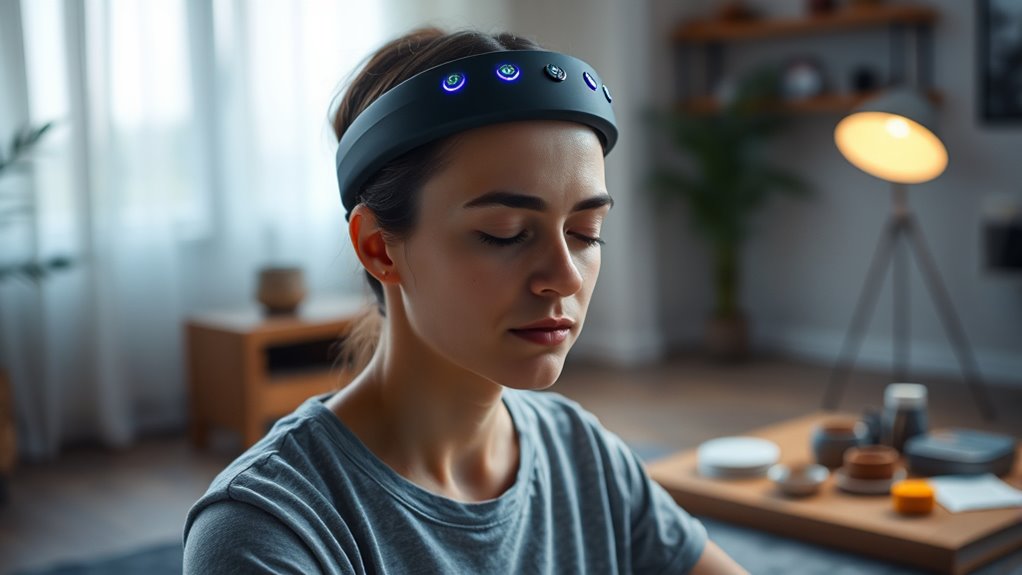
EEG headbands can sometimes pick up interference from nearby electronics or movement, which can distort the readings. You might find that the focus data they provide isn’t always precise or consistent. These issues can make relying solely on these devices for meditation progress challenging. Additionally, body jewelry measurements and materials are important to consider when choosing comfortable and appropriate accessories for your practice, as discomfort can distract from focus. The sensitivity of EEG sensors can also impact how accurately they detect brain activity, affecting the reliability of focus assessments. Furthermore, environmental noise interference and improper sensor placement can further compromise data accuracy, making it essential to understand the device’s limitations.
Signal Interference Issues
Despite their promise for enhancing meditation, brain-sensing headbands often face signal interference that can hinder their effectiveness. Signal disruption may occur due to various factors, affecting your ability to get accurate feedback. Common issues include:
- Electromagnetic interference from nearby electronic devices
- Poor device compatibility with different head shapes or hair types
- Movement artifacts disrupting clean signal collection
- External noise impacting sensor readings
- Inadequate sensor contact with your scalp
These problems can cause inconsistent data, leading to frustration and unreliable feedback. Ensuring proper device compatibility and reducing electromagnetic interference can help, but signal disruption remains a significant challenge. Recognizing these limitations allows you to set realistic expectations when using EEG headbands for meditation.
Limited Focus Accuracy
While brain-sensing headbands aim to monitor your focus levels during meditation, their accuracy can be limited by several factors. Neural accuracy depends on proper sensor placement, individual differences, and external interference. These limitations affect focus precision, making it challenging to gauge your true mental state consistently. To illustrate, consider this table:
| Factor | Impact on Neural Accuracy | Effect on Focus Precision |
|---|---|---|
| Sensor placement | Inconsistent contact | Variable readings |
| Environmental noise | Signal distortion | Misinterpretation |
| User movement | Disrupted signals | Unreliable feedback |
Understanding these challenges helps set realistic expectations about what headbands can achieve, highlighting that they provide approximations rather than precise measurements.
Comparing Traditional Meditation Practices With Tech-Assisted Methods

Traditional meditation practices rely on mental focus, breathing techniques, and often a quiet environment to cultivate mindfulness and relaxation. These methods strengthen your mindfulness benefits and improve emotional regulation over time. Tech-assisted methods, like brain-sensing headbands, offer real-time feedback, helping you stay engaged and aware. They can be especially useful if you struggle to maintain focus or need guided support. Consider these differences:
- Instant feedback versus self-awareness
- Structured routines versus flexible practices
- Enhanced focus support versus natural flow
- Data-driven insights versus intuition
- Accessibility for beginners versus traditional discipline
While both approaches aim for mindfulness and emotional balance, your choice depends on your preferences and goals. Tech tools complement traditional practices, making meditation more engaging and tailored to your needs.
User Experiences and Personal Accounts
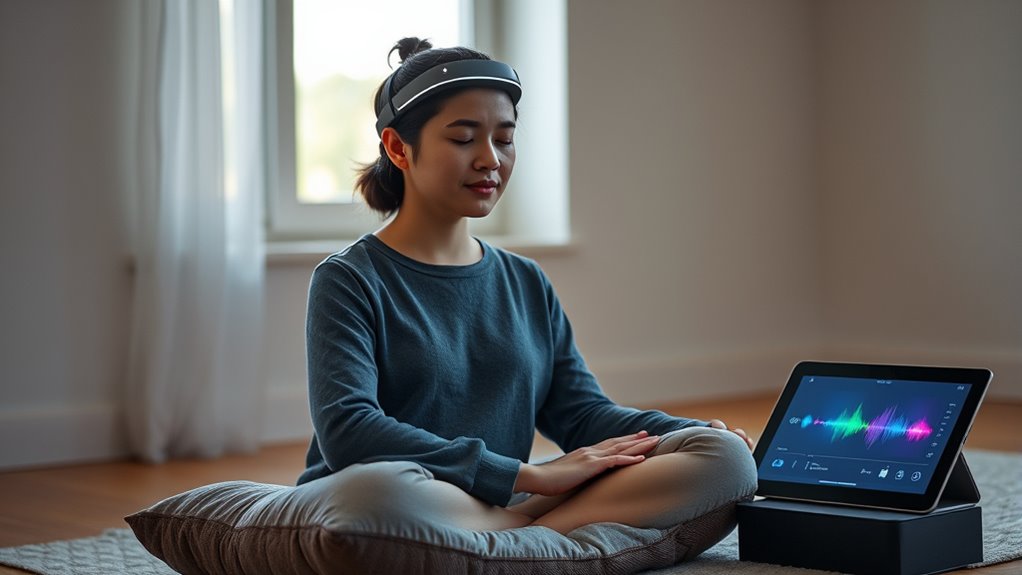
Have you ever wondered how real users experience brain-sensing headbands during meditation? Many report that these devices help them deepen their mindfulness techniques by providing immediate feedback on their focus levels. User testimonials often mention feeling more aware of their mental state and noticing improvements in concentration over time. Some find that the headbands make meditation sessions more engaging, encouraging consistency and dedication. Others share that tracking their progress boosts motivation and creates a sense of accountability. While experiences vary, most users agree that these devices offer valuable insights into their meditation practice, making it easier to identify areas for growth. Overall, personal accounts highlight that brain-sensing headbands can positively influence how you approach and sustain mindfulness techniques.
Potential Benefits Beyond Focus Enhancement

Many users discover that brain-sensing headbands offer benefits that extend beyond simply improving focus. These devices can foster mindfulness enhancement and help with stress reduction. By providing real-time feedback, they encourage you to stay present and aware during meditation. You might notice improvements such as:
- Greater emotional regulation
- Increased self-awareness
- Better stress management
- Enhanced relaxation techniques
- Deeper, more meaningful meditation experiences
These benefits can make your practice more effective and enjoyable. As you become more attuned to your mental state, you’ll find it easier to cultivate calmness and clarity. Brain-sensing headbands, hence, serve as tools not just for focus, but also for overall mental well-being. This broadens the potential positive impact of your meditation routine.
Future Developments and Emerging Trends in Meditation Technology
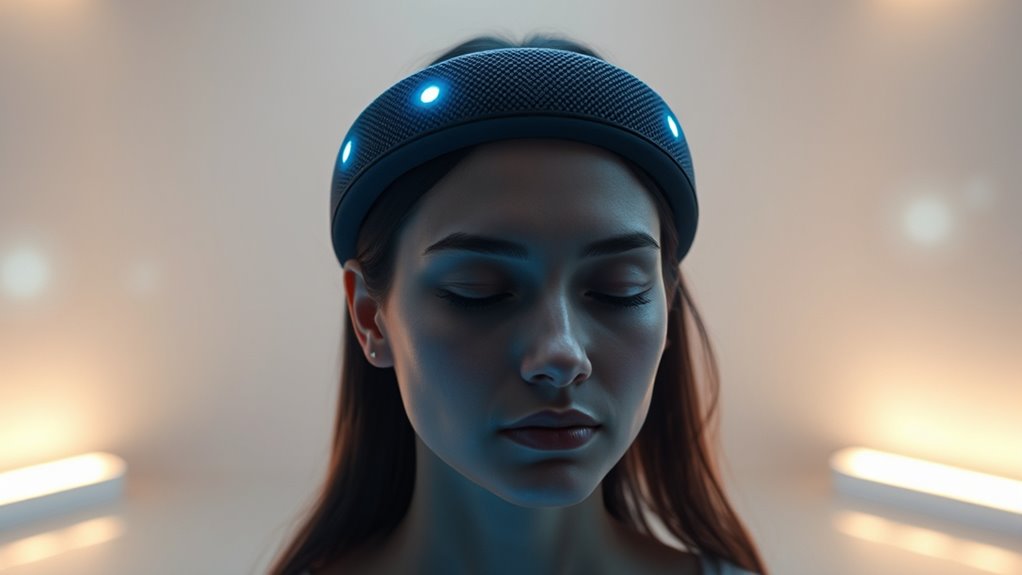
Emerging trends in meditation technology are rapidly transforming how you practice mindfulness, with innovations that make sessions more personalized, immersive, and accessible. Neurofeedback applications are advancing, offering real-time insights into your brain activity to deepen focus and relaxation. Future devices will likely incorporate AI to tailor sessions to your unique needs, enhancing effectiveness. As technology evolves, ethical considerations become vital, especially regarding data privacy and user consent. You’ll see more immersive experiences using virtual reality to simulate calming environments. Wearables will become more discreet and comfortable, encouraging consistent use. Here’s a quick look at upcoming trends:
| Trend | Benefit | Concern |
|---|---|---|
| Neurofeedback apps | Improved self-awareness | Data security |
| AI personalization | Customized meditation plans | Ethical data use |
| Virtual reality integration | Immersive calm experiences | Cost and accessibility |
| Enhanced wearables | Comfort and convenience | Privacy and consent |
| Ethical guidelines | Responsible tech development | Regulation needs |
Frequently Asked Questions
Are Brain-Sensing Headbands Suitable for Beginners or Only Experienced Meditators?
Brain-sensing headbands are beginner-friendly, making them suitable whether you’re new to meditation or experienced. They provide real-time feedback that helps you develop focus and practice advanced techniques over time. As a beginner, you’ll appreciate the guidance, while experienced meditators can deepen their practice. These headbands adapt to your level, supporting your growth and making meditation more engaging and effective regardless of your experience.
Can These Devices Be Used Effectively by People With Neurological Conditions?
If you have neurological conditions, brain-sensing headbands can still be useful. For example, someone with ADHD used a device to track focus and improve mindfulness through neurological adaptations. These devices are designed for accessibility, offering visual or auditory feedback tailored to different needs. While they may not replace professional treatment, they can support your meditation practice, helping you stay engaged and monitor progress effectively.
How Long Does It Typically Take to See Improvements Using Headbands?
You might start noticing improvements in your focus within a few weeks of consistent mindfulness practice with your headband. It’s essential to maintain regular use and guarantee proper device calibration for accurate feedback. Stay patient and committed, as consistency is key. Over time, the headband helps you refine your meditation, making it easier to achieve deeper focus and mindfulness, leading to more noticeable progress.
Do Headbands Work Equally Well for All Types of Meditation Practices?
Headbands work differently depending on your meditation style, especially if you’re sensitive to sensory overload or practicing within diverse cultural contexts. You might find they enhance focus during guided sessions, but less so during silent or movement-based practices. Cultural differences can influence how comfortable you feel wearing tech, impacting effectiveness. Ultimately, try them with your preferred method to see if they support your meditation rather than assuming universal results.
What Is the Cost Comparison Between Tech-Assisted and Traditional Meditation Methods?
Think of traditional meditation as a steady, familiar river, while tech-assisted methods are a dynamic stream with new twists. Your cost comparison shows traditional practices are more affordable, often just involving a quiet space and time. Tech-assisted methods, like brain-sensing headbands, carry higher costs due to gadgets and subscriptions, but may offer targeted focus. An affordability analysis helps you decide if investing in technology aligns with your mindfulness journey.
Conclusion
So, do brain-sensing headbands truly boost your meditation focus? While they show promise, the full potential—and limitations—remain unclear. Will future innovations unseal even deeper mental clarity? Or will these devices fall short of transforming your practice? The answer isn’t set in stone. Stay tuned, because as technology evolves, your meditation journey might just take a surprising turn—one that could change the way you find peace forever.