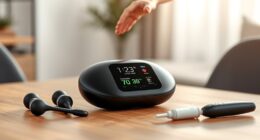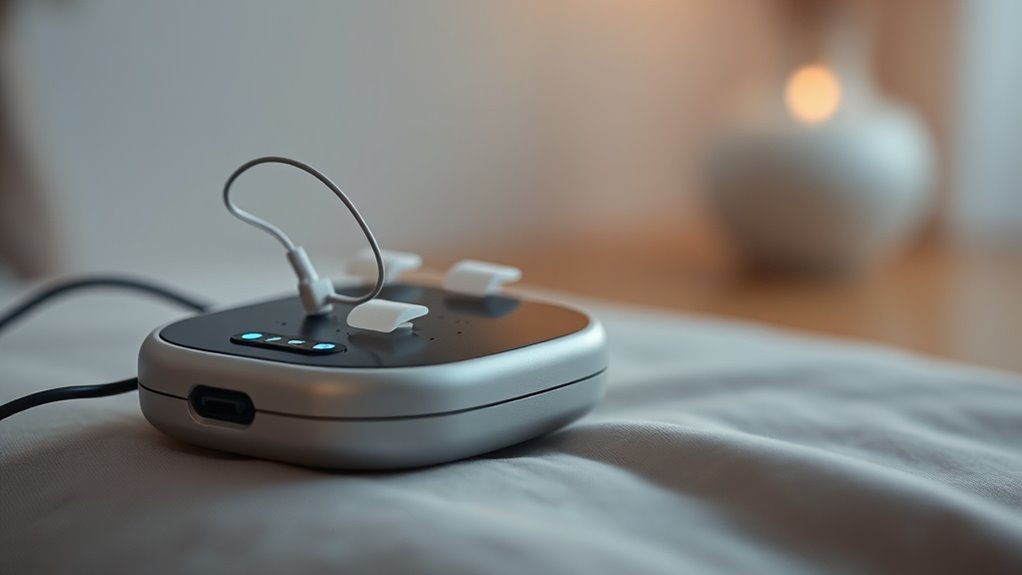

Using tDCS devices for brain zapping can help you feel calmer because they target areas involved in mood regulation, promoting relaxation and reducing anxiety. Many users notice a calming effect and improved mental clarity after sessions. While they’re not a cure on their own, when combined with other techniques, these devices can be a helpful tool. To learn how you might incorporate tDCS safely and effectively into your routine, keep exploring the options available.
Key Takeaways
- tDCS devices target the prefrontal cortex to influence mood and reduce anxiety symptoms.
- Regular use of tDCS has been linked to feelings of relaxation and calmer mental states.
- When combined with mindfulness or behavioral techniques, tDCS may enhance anxiety management.
- Proper guidance and professional oversight are essential for safe, effective use of tDCS devices.
- While promising, more research is needed to confirm long-term anxiety reduction benefits.

If stress and anxiety are taking over your life, brain zapping offers a promising alternative to traditional treatments. Neurostimulation therapy, particularly through devices like transcranial direct current stimulation (tDCS), has gained attention for its potential to reduce anxiety symptoms. Unlike medication or talk therapy, brain zapping targets specific areas of your brain with gentle electrical currents, aiming to modulate neural activity and promote calmer states. This approach appeals to those seeking non-invasive, drug-free options that can be used conveniently at home or in clinical settings.
The idea behind tDCS is straightforward. By applying a low-intensity electrical current to certain regions of your brain, typically the prefrontal cortex, it can influence neural circuits involved in mood regulation and anxiety responses. Many users report feeling a sense of relaxation and mental clarity after sessions, which suggests that neurostimulation therapy might help break the cycle of anxious thoughts and hyperarousal. While research is still evolving, some studies indicate that regular use of tDCS can decrease anxiety levels, making it a promising addition to your anxiety management techniques.
However, it’s important to remember that brain zapping is not a magic cure. It works best when combined with other strategies, such as mindfulness, breathing exercises, or cognitive-behavioral techniques. These methods help you develop a toolkit for managing stress and anxiety on a daily basis, reinforcing the effects of neurostimulation therapy. Using tDCS alongside these techniques can amplify your overall sense of calm and resilience. It’s also essential to consult with a healthcare professional before starting any neurostimulation therapy. Proper guidance guarantees that the device is used safely and effectively, minimizing potential side effects like headaches or skin irritation.
Many people find that incorporating brain zapping into their routine provides a sense of empowerment, giving them a tool they can control. It’s not about replacing traditional treatments but augmenting your existing anxiety management techniques. As you explore this option, keep track of how you feel before and after sessions to assess its impact. While some users experience noticeable improvements quickly, others may need more time or combined approaches to see significant results. Stay patient and open-minded, knowing that neurostimulation therapy is still an emerging field with promising potential, especially in neurostimulation therapy advancements.
Frequently Asked Questions
Are TDCS Devices Safe for Long-Term Use?
You should know that TDCS devices’ safety for long-term use depends on proper device regulation and adherence to user guidelines. While some users report benefits, unregulated devices may pose risks over extended periods. Always follow manufacturer instructions, consult a healthcare professional before regular use, and guarantee the device is approved by relevant authorities. Staying informed and cautious helps minimize potential long-term side effects and maximizes safety.
How Quickly Can I Expect to See Anxiety Relief?
You might start noticing anxiety relief within a few sessions, often after 1-2 weeks of consistent use. However, timing expectations vary depending on individual factors like the severity of anxiety and device settings. While some users experience quick calming effects, others may need longer to see significant changes. Keep in mind, patience is key, and combining TDCs with other calming strategies can enhance your relief timeframe.
Can TDCS Be Combined With Other Treatments?
Think of TDCs as a symphony conductor, guiding your brain’s neuroplasticity enhancement and boosting cognitive function. You can definitely combine TDCs with other treatments like therapy or medication, creating a harmonious approach to anxiety relief. This synergy can amplify the effects, helping your mind adapt more quickly. Just consult with your healthcare provider to guarantee the combination is safe and tailored to your unique needs.
Are There Any Side Effects From Brain Zapping?
You might experience some side effects from brain zapping, but they’re usually mild. Neurological risks include skin irritation or tingling sensations, while cognitive effects might involve temporary memory or concentration issues. It’s important to follow safety guidelines and consult a professional before using TDCS devices. Although rare, more serious risks like seizures can occur, so staying informed and cautious helps guarantee safe use.
Is Professional Supervision Necessary for Using TDCS Devices?
Think of using tDCS devices like sailing a boat—you need a skilled captain to avoid rough waters. Professional supervision is essential because self-administration safety can be compromised without proper guidance. A trained expert ensures correct placement and dosage, reducing risks and optimizing benefits. So, always seek professional guidance before using tDCS devices, because steering this technology without help can lead to unintended effects and safety concerns.
Conclusion
While tDCS devices show promise for reducing anxiety, research is still in early stages. One study found that 60% of users experienced noticeable calming effects after just a few sessions. However, results vary, and more research is needed to confirm long-term benefits. If you’re considering trying brain zapping for calm, talk to a healthcare professional first. Stay informed, and remember that managing anxiety often requires an all-encompassing approach beyond just tDCS.