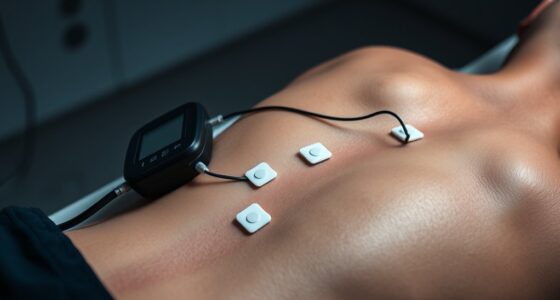
Electrical Muscle Stimulators can effectively speed up workout recovery by increasing blood flow, reducing soreness, and supporting muscle healing through targeted electrical impulses. They trigger muscle contractions similar to exercise, helping prevent atrophy and decrease inflammation. While they’re helpful, they should complement proper rest and other recovery strategies. If you want to understand how to get the best results from EMS and whether it fits your goals, keep exploring the details.
Key Takeaways
- EMS stimulates muscles to promote recovery by increasing blood flow and reducing soreness.
- Scientific studies support EMS effectiveness in decreasing muscle fatigue and speeding repair.
- Proper use, including intensity and duration, enhances EMS benefits for workout recovery.
- EMS is a complementary tool, best combined with rest, stretching, and proper nutrition.
- Overuse or improper application may cause skin irritation or discomfort, so correct technique is essential.
How Do Electrical Muscle Stimulators Function?

Electrical muscle stimulators work by sending small electrical impulses directly to your muscles through electrodes placed on your skin. These impulses trigger muscle activation, causing your muscles to contract just like they do during exercise. This process helps improve blood flow, reduces muscle soreness, and speeds up recovery. Many users find that EMS provides effective pain relief by interrupting pain signals and relaxing tense muscles. When you activate the device, the electrical impulses stimulate the nerves and muscles, encouraging natural movement without physical effort. This targeted stimulation can help you recover faster by decreasing inflammation and preventing muscle atrophy after intense workouts. Additionally, understanding neural activation can help users make informed decisions about incorporating EMS into their fitness routines. The effectiveness of EMS can be enhanced when used in conjunction with proper recovery techniques, ensuring optimal results. For example, combining EMS with stretching and adequate hydration can further promote healing. Incorporating proper electrode placement can also improve the efficiency of stimulation and comfort during use. Overall, EMS offers a non-invasive way to support your recovery and manage discomfort, making it a valuable addition to your post-workout routine.
Scientific Evidence Supporting EMS for Recovery

Research studies have shown that EMS can effectively support muscle recovery after intense workouts. The key lies in its ability to reduce muscle fatigue by enhancing blood flow and promoting nerve stimulation. Imagine:
EMS supports muscle recovery by boosting blood flow and nerve stimulation, reducing fatigue and soreness effectively.
- Nerve signals firing rapidly, preventing lingering fatigue from overwhelming your muscles.
- Muscle fibers receiving targeted electrical impulses, accelerating repair and reducing soreness.
- Improved circulation flushing out metabolic waste, helping you recover faster.
- Incorporating mental wellbeing practices alongside EMS may further enhance recovery results.
- The effectiveness of EMS is also influenced by technology advancements, which improve device precision and user experience.
Scientific evidence indicates that EMS promotes muscle relaxation and reduces soreness by mimicking natural nerve stimulation. These effects help your muscles recover more efficiently, especially after strenuous activity. While the research supports these benefits, results can vary based on frequency, intensity, and duration of use. Still, many find EMS a valuable tool for optimizing workout recovery.
Benefits and Limitations of Using EMS Devices

While EMS devices offer notable benefits for workout recovery, they also come with limitations that you should consider. They can help reduce muscle fatigue by promoting faster recovery and improving blood flow. Additionally, EMS can assist in injury prevention by strengthening muscles and maintaining flexibility. However, these devices aren’t a cure-all; they may not effectively target deep muscle layers or replace proper rest and training. Relying solely on EMS might lead to incomplete recovery or neglect of other essential recovery methods. Overuse can cause discomfort or skin irritation. It’s important to remember that EMS should complement your overall recovery plan, not replace it. Incorporating proper tool usage techniques can further optimize your recovery process by enhancing communication and sensory awareness. Understanding these benefits and limitations ensures you use EMS devices effectively and safely for ideal workout recovery. To truly maximize recovery, integrating evidence‑based approaches alongside EMS can provide a more comprehensive and effective strategy. Additionally, being aware of muscle recovery processes can help you tailor your use of EMS to better support your fitness goals. Proper understanding of muscle physiology can also improve the effectiveness of your recovery routines.
Choosing the Right EMS Equipment for Your Goals

Choosing the right EMS equipment depends on your specific recovery goals and fitness level. If you’re aiming to reduce muscle fatigue or enhance circulation, select devices designed for targeted muscle groups. Consider these factors:
- Intensity levels — ensure adjustable settings to match your comfort and muscle fatigue levels.
- Durability and maintenance — opt for equipment that’s easy to clean and maintain for long-term use.
- Size and portability — choose a device that fits your routine, whether at home or on the go.
Matching the right EMS device helps you maximize recovery without risking overuse or equipment issues. Proper equipment maintenance keeps your device functioning at its best, ensuring consistent results. Being aware of evidence-backed guidance can help you make safer and more effective choices. Additionally, understanding the importance of natural pool design can contribute to creating a relaxing environment that complements your recovery routine.
Practical Tips for Incorporating EMS Into Your Routine

Incorporating EMS into your routine can boost recovery and enhance your overall fitness, but it’s important to do so thoughtfully. Use EMS sessions strategically to target muscle activation without overloading your muscles, which can lead to fatigue. To optimize benefits, start with shorter sessions and gradually increase intensity. Pay attention to your body’s response to prevent overuse. Incorporate EMS after workouts to aid recovery or between training sessions for muscle activation. Here’s a quick guide:
| Tip | Explanation |
|---|---|
| Timing | Use EMS post-workout for recovery or during rest days |
| Intensity | Start low, increase gradually based on comfort |
| Duration | Keep sessions between 15-30 minutes |
| Focus | Prioritize muscle activation and fatigue management |
This approach keeps your muscles engaged without risking undue fatigue. Additionally, understanding the science behind muscle stimulation can help you make informed decisions about your recovery strategy. Recognizing proper recovery techniques supports the effectiveness of EMS as part of a balanced fitness routine. Incorporating muscle stimulation principles into your plan can further enhance recovery outcomes. Being aware of individual response variability ensures you tailor EMS use to your unique needs, optimizing results. Incorporating glycolic acid into your skincare routine can further promote skin renewal and overall health.
Frequently Asked Questions
Are Electrical Muscle Stimulators Safe for All Ages?
Electrical muscle stimulators are generally safe for most ages when you follow proper safety protocols. However, age considerations are important; children, seniors, or those with certain health conditions should consult a healthcare professional before use. Always read the device instructions carefully, avoid overuse, and listen to your body. By adhering to these safety protocols, you can reduce risks and safely incorporate EMS into your recovery routine.
How Often Should I Use EMS for Optimal Recovery?
You should use your EMS device 3 to 4 times a week for ideal recovery. Studies show that overusing EMS can lead to increased muscle fatigue instead of relief. Make sure to follow the manufacturer’s instructions, and regularly maintain your device to guarantee effective performance. Listening to your body helps prevent strain, so adjust the frequency if you notice persistent soreness or discomfort after sessions.
Can EMS Replace Traditional Recovery Methods?
EMS can’t fully replace traditional recovery methods, but it can complement them. By promoting muscle activation and increasing blood flow, EMS helps reduce soreness and speeds up recovery. It also boosts energy expenditure in targeted muscles, aiding in muscle repair. However, you should still incorporate rest, proper nutrition, and stretching, as these are essential for ideal recovery. Using EMS alongside these methods offers a balanced approach to recovery.
Are There Any Long-Term Health Risks With EMS Use?
Using EMS regularly can pose some long-term health risks, like increasing muscle fatigue or causing skin irritation if not used properly. You might experience skin redness or discomfort from prolonged contact, and overusing EMS could lead to muscle strain or fatigue. To avoid these issues, follow the manufacturer’s guidelines, limit session durations, and consult a healthcare professional if you notice persistent skin irritation or unusual muscle fatigue.
How Do EMS Devices Compare to Professional Physical Therapy Treatments?
EMS devices provide targeted muscle activation, but they typically don’t substitute professional physical therapy. While they can supplement recovery and aid injury prevention, physical therapists offer personalized assessments and hands-on treatments that address complex issues. If you’re considering EMS, use it alongside therapy, not as a substitute. Always consult a healthcare professional to ensure safe and effective integration into your injury prevention and recovery routine.
Conclusion
So, after all this, it turns out EMS might just be the miracle recovery tool—unless you enjoy the thrill of wondering if it really works. Sure, it promises faster recovery and less soreness, but don’t forget, sometimes a good old rest and proper nutrition do the trick better. Next time you’re tempted to plug in, remember: the best recovery might just be good old-fashioned patience—and maybe no electric shocks at all.