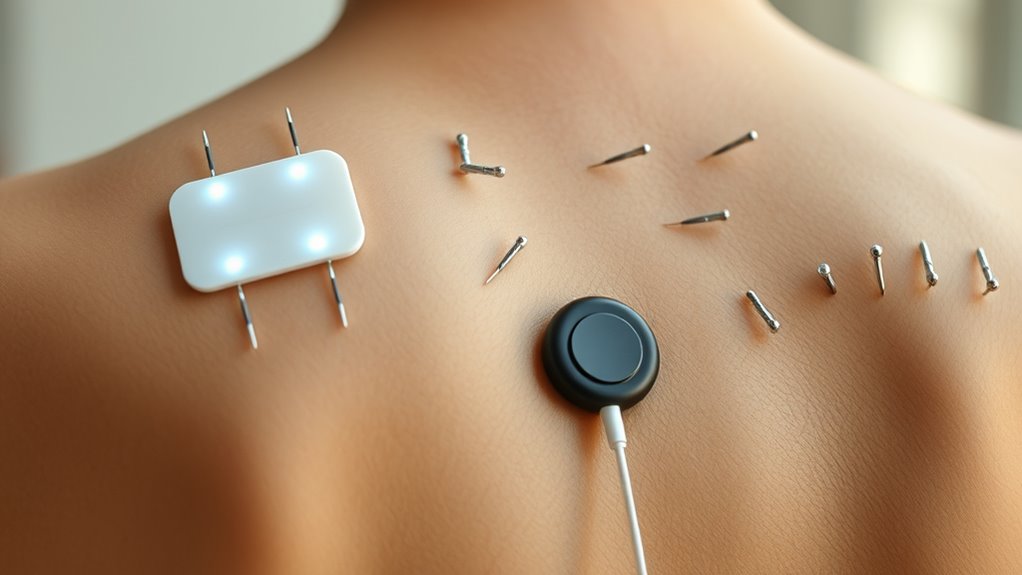

TENS uses electrical pulses to quickly block pain signals by stimulating sensory nerves, making it a fast and convenient option for relief, especially during or after activity. Acupuncture, on the other hand, involves inserting needles into specific points to gradually influence your nervous system and promote healing over multiple sessions. While TENS offers immediate comfort, acupuncture provides a holistic approach that may improve your overall well-being. Continue to explore how each method works and which might suit you best.
Key Takeaways
- TENS uses electrical pulses delivered via skin electrodes, providing quick, adjustable pain relief; acupuncture involves needle insertion at specific points for gradual, holistic benefits.
- TENS is a non-invasive, portable device suitable for at-home use, while acupuncture requires trained practitioners and offers long-term, systemic effects.
- TENS provides immediate pain relief during or after sessions; acupuncture effects typically develop over multiple treatments for chronic conditions.
- TENS primarily targets sensory nerves to block pain signals; acupuncture stimulates nervous pathways and releases endorphins for broader nervous system modulation.
- Choice between TENS and acupuncture depends on personal preference, pain type, and desired immediacy versus holistic long-term relief.

When it comes to managing pain, TENS (Transcutaneous Electrical Nerve Stimulation) and acupuncture are two popular options, each with its own approach and benefits. TENS uses electrical stimulation to disrupt pain signals, providing relief without medication. It’s a modern technique often used in clinical settings or at home with portable devices. In contrast, acupuncture is a traditional therapy rooted in centuries of practice, involving the insertion of thin needles into specific points on your body to stimulate your nervous system. While they differ in method, both aim to reduce pain and improve your quality of life.
With electrical stimulation from TENS, you’re fundamentally delivering small electrical pulses through electrodes placed on your skin. These pulses activate your sensory nerves and help block pain signals from reaching your brain. The process is quick, non-invasive, and adjustable to your comfort level. Many people appreciate how easy it is to incorporate TENS into their routine, especially since the device can be used at home. It’s especially effective for conditions like back pain, arthritis, or sports injuries. You might notice immediate relief during or shortly after a session, making TENS an appealing choice for those seeking quick, drug-free pain management.
Traditional therapy like acupuncture, on the other hand, works on a different principle. It involves inserting fine needles at specific points, which are believed to correspond to pathways of energy or “qi.” When these points are stimulated, it’s thought to release endorphins and promote natural healing, thereby alleviating pain. Acupuncture requires a trained practitioner to ensure proper needle placement and safety, and its effects often build gradually over multiple sessions. Some patients find acupuncture particularly helpful for chronic issues like migraines, joint pain, or stress-related ailments. Its holistic approach also addresses overall well-being, not just pain relief, which appeals to many seeking a natural alternative to pharmaceuticals. Additionally, research indicates that high contrast ratios can significantly improve the perceived clarity and depth of images, enhancing the overall effectiveness of visual therapies.
While electrical stimulation via TENS offers the convenience of a modern, technology-driven approach, acupuncture provides a traditional, holistic therapy that has stood the test of time. Both methods aim to modulate your nervous system and reduce pain, but they do so through different pathways. Your choice might depend on your personal preferences, the type of pain you’re experiencing, or a combination of both approaches. Whichever route you choose, understanding how each works will help you make an informed decision about managing your pain effectively and safely.
Frequently Asked Questions
Are TENS and Acupuncture Suitable for Children?
You should consult a healthcare professional before using TENS or acupuncture on children, as pediatric safety and child suitability vary. TENS can be safe for some kids under proper supervision, but acupuncture requires trained practitioners to guarantee safety. Always prioritize a pediatric-focused approach, and never attempt electrical stimulation or acupuncture without expert guidance, as children’s developing bodies need careful consideration to avoid adverse effects.
Can TENS or Acupuncture Replace Medication for Pain?
Did you know that about 50% of people seek alternative therapies for pain management? While electrical stimulation and acupuncture can reduce pain and sometimes decrease medication use, they usually can’t fully replace medications, especially for severe pain. These therapies work best as complementary options, helping you manage discomfort more naturally. Always consult your healthcare provider to determine if electrical stimulation or acupuncture fits into your pain relief plan.
How Quickly Do TENS and Acupuncture Show Results?
Electrical stimulation from TENS can show relief within minutes, especially during or right after treatment sessions. You might notice some pain reduction after a few treatments, but consistent use over several weeks often provides more sustained results. Acupuncture’s effects can take longer to manifest, sometimes requiring multiple sessions over weeks. Treatment duration varies based on your condition, but regular sessions help improve overall effectiveness of both methods.
Are There Any Long-Term Risks With TENS or Acupuncture?
You might wonder if long-term risks could surprise you after using TENS or acupuncture. Generally, these treatments are safe when done correctly, but there’s a small chance of chronic risks like skin irritation or nerve issues if misused or overused. Long-term safety depends on proper technique and professional guidance. Stay informed, follow recommendations, and you can enjoy pain relief without worrying about hidden dangers lurking in the future.
Is Insurance Coverage Available for TENS or Acupuncture Treatments?
Insurance coverage for TENS and acupuncture treatments varies depending on your plan. You should check with your provider to see if treatment reimbursement is available for these therapies. Some insurance plans cover acupuncture, especially if it’s prescribed by a doctor for specific conditions, while coverage for TENS might be limited or require prior authorization. Contact your insurer to confirm your benefits and understand any out-of-pocket costs you might face.
Conclusion
So, whether you choose TENS or acupuncture, think of it as two different paths leading to relief. TENS sends electrical pulses like a gentle thunderstorm, while acupuncture taps into ancient wisdom like a steady river flowing. Both can ease your pain, but it’s about finding what works best for you. Try them out, listen to your body, and remember—your comfort is the compass guiding your journey to wellness.