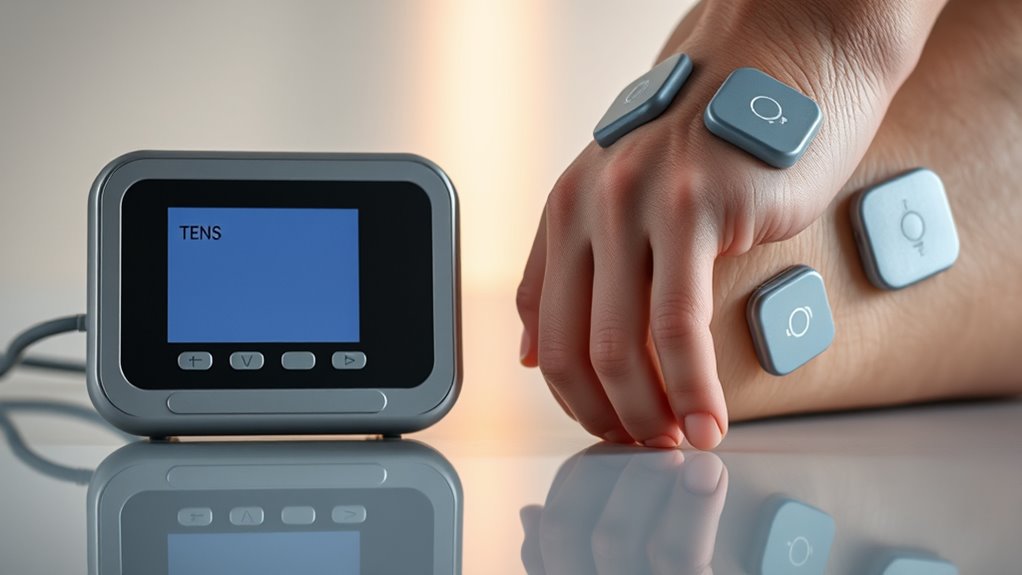

TENS delivers high-frequency, low-intensity electrical pulses to block pain signals and release natural painkillers, making it ideal for pain relief during rest. EMS uses low-frequency, higher-intensity impulses to stimulate muscle contractions, helping with muscle strengthening and recovery. Use TENS when managing pain and EMS when targeting muscle activation or recovery. Understanding these differences helps you choose the right device. If you keep exploring, you’ll discover more about how each can support your goals.
Key Takeaways
- TENS primarily relieves pain by blocking nerve signals and releasing endorphins, while EMS stimulates muscles to promote strength and recovery.
- TENS uses high-frequency, low-intensity signals for pain management; EMS employs low-frequency, higher-intensity signals for muscle contractions.
- Use TENS during rest or pain episodes for immediate relief; choose EMS to activate muscles, improve strength, or aid recovery post-activity.
- TENS is ideal for managing chronic or acute pain; EMS is suited for muscle rehabilitation, performance enhancement, and preventing atrophy.
- Combining both therapies can optimize recovery by addressing pain and muscle activation simultaneously, depending on individual needs.

TENS 7000 Digital TENS Unit with Accessories – Muscle Stimulator Machine for Back Pain Relief, Sciatica, Neck, Nerve, Shoulder, Hip, Elbow, Muscle Pain Relief
- Pain Relief Type: Muscle stimulator and massager
- Popular Usage: Back, neck, shoulder, elbow pain
- Sales Milestone: Over 3 million units sold
As an affiliate, we earn on qualifying purchases.
As an affiliate, we earn on qualifying purchases.
What Is TENS and How Does It Work?
Have you ever wondered how TENS therapy helps reduce pain? TENS, or Transcutaneous Electrical Nerve Stimulation, uses electrical stimulation to target nerves and block pain signals. When you apply the device to your skin, it sends low-voltage electrical pulses that interfere with pain messages traveling to your brain. This process promotes pain relief by activating your body’s natural pain control mechanisms. The electrical stimulation also stimulates the production of endorphins, which are your body’s natural painkillers. TENS devices are portable and easy to use, making them a popular choice for managing chronic or acute pain. Proper device electrical safety ensures effective treatment and reduces potential risks. Additionally, understanding how air purifier maintenance can optimize device performance is important for overall health and well-being. Regular upkeep of your devices contributes to device longevity and consistent results. Incorporating natural pain management techniques alongside TENS can further enhance pain relief and support holistic health.

AVCOO 3-in-1 TENS Unit Muscle Stimulator with 30 Modes for Pain Relief
- Multi-functional 3-in-1 Technology: Combines TENS, EMS, and RELAX therapies
- Dual Channel & 40 Intensity Levels: Precise targeting with adjustable settings
- User-friendly Interface: Easy selection with body part indicators
As an affiliate, we earn on qualifying purchases.
As an affiliate, we earn on qualifying purchases.
What Is EMS and How Does It Function?
EMS devices use electrical impulses to stimulate your muscles directly, causing them to contract. These impulses mimic natural nerve signals to improve muscle strength, recovery, or performance. Understanding how EMS works helps you choose the right device for your fitness or rehabilitation needs. Youngster Choice demonstrates how targeted stimulation can support personal goals and enhance physical outcomes. Additionally, the muscle contraction process is similar to what occurs during voluntary movement, but it is initiated externally through electrical stimulation. Recognizing how energy-efficient options can optimize usage may also improve the effectiveness of EMS in comprehensive therapy plans.
How EMS Works
Ever wondered how electrical muscle stimulation actually works? When you use EMS, a device sends electrical impulses through your skin via electrodes. These impulses mimic the signals your nervous system sends during natural muscle activation. As a result, your muscles contract involuntarily, similar to how they do during exercise. This electrical stimulation targets specific muscle groups, prompting them to activate without conscious effort from you. The process increases blood flow, promotes muscle strength, and can aid recovery. EMS devices deliver controlled bursts of electrical current designed to stimulate nerve endings and muscle fibers directly. By understanding how electrical stimulation triggers muscle activation, you can better appreciate how EMS complements traditional training or recovery routines. Additionally, understanding the biography of individuals who have inspired resilience and perseverance can motivate you in your fitness journey. Recognizing the various magnification levels available in esthetician lamps can help optimize precision during skin treatments. Moreover, advancements in home-use technology have made EMS devices more accessible and user-friendly for everyday fitness routines. Furthermore, staying informed about the latest innovations in fitness technology can help you select the most effective EMS devices for your needs. Exploring sustainable and secure cloud solutions, such as those promoted by innovative European cloud servers, can also inspire a commitment to environmentally responsible technology.
EMS Devices Explained
Curious about how EMS devices actually work? EMS, or Electrical Muscle Stimulation, uses electrical stimulation to activate your muscles directly. When you apply an EMS device, tiny electrical impulses pass through electrodes placed on your skin, triggering muscle contractions. This process helps improve circulation, strengthen muscles, and promote pain relief. Unlike other therapies, EMS targets specific muscle groups with controlled electrical pulses, making it effective for both rehabilitation and muscle recovery. Many users turn to EMS for pain relief, especially when dealing with muscle soreness, injuries, or chronic discomfort. The device’s adjustable settings allow you to customize the intensity and frequency of stimulation, ensuring a comfortable experience while maximizing the benefits of electrical stimulation for pain relief and muscle health. electrical stimulation is a targeted approach that can be precisely controlled to suit individual needs, enhancing its effectiveness. Additionally, the use of AI-powered tools can help users optimize their treatment settings for better results. Understanding the difference between TENS and EMS can help you choose the right device for your specific needs and goals. For example, some devices incorporate smart technology that adapts stimulation levels automatically for optimal comfort and efficacy.
TENS 7000 Digital TENS Unit with Accessories – Muscle Stimulator Machine for Back Pain Relief, Sciatica, Neck, Nerve, Shoulder, Hip, Elbow, Muscle Pain Relief
- Pain Relief Type: Muscle stimulator and massager
- Popular Usage: Back, neck, shoulder, elbow pain
- Sales Milestone: Over 3 million units sold
As an affiliate, we earn on qualifying purchases.
As an affiliate, we earn on qualifying purchases.
Main Goals and Benefits of TENS Therapy

Have you wondered how TENS therapy can effectively manage pain and improve your quality of life? Its main goals focus on providing immediate relief and supporting neuromuscular recovery. TENS offers several benefits:
Discover how TENS therapy provides quick pain relief and supports your recovery journey.
- Pain relief by blocking pain signals and releasing endorphins, which can be influenced by proper electrode placement to maximize effectiveness. Additionally, understanding the different stimulation modes can help tailor treatments to individual needs.
- Enhanced blood flow to promote healing and reduce inflammation. Incorporating electrical stimulation techniques can further augment recovery outcomes.
- Reduction of muscle spasms and stiffness for better mobility
- Complementing pain management strategies to support recovery and daily function
- Understanding the different lease types can help you choose the most suitable option for your needs when considering vehicle leasing.
TENS therapy is a versatile tool to help you control chronic or acute pain, making it easier to stay active and improve your overall well-being. It’s an essential part of targeted pain management strategies that focus on your comfort and recovery.
TENS 7000 Digital TENS Unit with Accessories – Muscle Stimulator Machine for Back Pain Relief, Sciatica, Neck, Nerve, Shoulder, Hip, Elbow, Muscle Pain Relief
- Pain Relief Type: Muscle stimulator and massager
- Popular Usage: Back, neck, shoulder, elbow pain
- Sales Milestone: Over 3 million units sold
As an affiliate, we earn on qualifying purchases.
As an affiliate, we earn on qualifying purchases.
Primary Uses and Advantages of EMS

Electrical Muscle Stimulation (EMS) is primarily used to strengthen and rehabilitate muscles, making it a valuable tool for athletes, patients recovering from injuries, and individuals seeking to improve muscle tone. EMS helps reduce muscle fatigue by promoting efficient muscle contractions, aiding recovery and enhancing performance. Its device portability allows you to use it anytime, anywhere, providing convenience for ongoing training or rehabilitation sessions. EMS can target specific muscle groups, making it effective for muscle activation and toning. Many users find it beneficial for maintaining muscle mass during periods of limited activity or immobilization. Overall, EMS offers a versatile approach to muscle health, combining effective rehabilitation with the flexibility of portable devices that fit seamlessly into your routine. Additionally, high‑tech gadgets such as Wi‑Fi/Bluetooth thermometers and smart apps can optimize muscle training and recovery by providing real-time data and personalized feedback. These innovations allow users to monitor progress more precisely and tailor their routines for better results, especially when integrated with essential oils that support muscle recovery and relaxation.
Key Differences in Mechanisms Between TENS and EMS

You’ll notice that TENS and EMS use different types of electrical signals to achieve their goals. TENS primarily targets pain relief through nerve stimulation, while EMS focuses on muscle activation and strengthening. Understanding how their stimulation methods and pain modulation techniques differ helps you choose the right device for your needs. Additionally, the underlying electrical signal types influence how each technology interacts with your body’s tissues.
Electrical Signal Types
Understanding the fundamental differences in signal types is essential when comparing TENS and EMS. TENS typically uses high-frequency, low-intensity signals aimed at pain relief methods, blocking pain signals before they reach your brain. EMS, on the other hand, employs low-frequency, higher-intensity signals to stimulate muscle contractions, promoting muscle recovery.
Here are key distinctions:
- Frequency Range – TENS uses higher frequencies; EMS uses lower frequencies.
- Intensity Levels – TENS signals are more comfortable, EMS signals are stronger.
- Purpose of Signals – TENS targets pain relief; EMS targets muscle activation.
- Mechanism of Action – TENS blocks nerve pain signals; EMS stimulates muscle fibers directly.
Knowing these differences helps you choose the right device for your muscle recovery or pain relief methods.
Muscle Stimulation Methods
While both TENS and EMS devices deliver electrical impulses, they do so through different mechanisms to achieve their respective goals. TENS primarily targets nerve fibers to block pain signals via electrical stimulation, helping with pain relief. In contrast, EMS stimulates muscle fibers directly to induce contractions, promoting muscle recovery and strengthening. EMS devices send electrical pulses that mimic signals from your brain, causing muscles to contract intentionally. This targeted muscle stimulation enhances blood flow, accelerates recovery, and prevents muscle atrophy after injury or intense training. TENS, on the other hand, focuses on modulating pain, not muscle activation. Understanding these key differences helps you choose the right device for your needs, whether you’re aiming for pain relief or muscle recovery through electrical stimulation.
Pain Modulation Techniques
Although both TENS and EMS devices use electrical impulses, they target different components of your nervous system to achieve their respective effects. TENS primarily modulates pain signals, making it effective for neuropathic pain by blocking nerve transmission and stimulating endorphin release. EMS, on the other hand, focuses on muscle activation, aiding in sports recovery by promoting blood flow and reducing soreness.
- TENS interrupts pain signals before reaching your brain, providing immediate relief.
- EMS stimulates motor nerves to enhance muscle strength and endurance.
- TENS can help manage chronic neuropathic pain by altering nerve activity.
- EMS accelerates recovery, decreasing inflammation and muscle fatigue.
Understanding these mechanisms helps you choose the right device for pain relief or sports recovery.
Suitable Conditions and Situations for TENS

TENS is most effective when used for acute or chronic pain conditions that respond well to electrical nerve stimulation. It’s ideal for managing pain from injuries, arthritis, or nerve issues, providing targeted pain relief. If you experience muscle fatigue due to overuse or strain, TENS can help reduce discomfort without invasive procedures. This device works by blocking pain signals before they reach your brain, offering quick relief. TENS is also useful when you need non-pharmacological pain management, especially if you prefer to avoid medications. It’s not suitable for conditions requiring muscle strengthening or stimulating, but for pain relief, it’s a practical, non-invasive option. Overall, use TENS when you need immediate, localized pain control, especially for conditions responsive to electrical nerve stimulation.
When to Opt for EMS for Muscle Stimulation

Opting for EMS is ideal when you want to actively stimulate and strengthen your muscles, especially during rehabilitation or training. Use EMS when aiming to improve sports performance, recover from injury, or enhance cosmetic applications like muscle toning. Consider these situations:
EMS is perfect for targeted muscle strengthening, recovery, and enhancing aesthetics effectively.
- You need targeted muscle activation to boost strength and endurance.
- You’re recovering from an injury and want to prevent muscle atrophy.
- You seek to improve muscle tone and aesthetics without intense workouts.
- You want a non-invasive supplement to traditional training routines.
EMS provides precise stimulation, making it a valuable tool for athletes, patients, and cosmetic enthusiasts alike. It’s especially effective when you want controlled, consistent muscle engagement to achieve specific goals.
Comparing Safety and Side Effects of Both Methods

Both TENS and EMS are generally safe when used correctly, but they have different safety profiles to contemplate. You should be aware of potential side effects like skin irritation or discomfort, which can vary between the two methods. Understanding these risks helps you choose the safest option for your needs.
Safety Profiles Compared
When evaluating the safety profiles of TENS and EMS, it’s important to recognize that each method generally has a favorable safety record when used properly. Both prioritize electrical safety and user comfort, but differences matter. Here are key points to contemplate:
- Proper device use minimizes electrical safety risks, reducing chances of shocks or burns.
- User comfort varies; incorrect placement can cause discomfort or skin irritation.
- TENS devices often have adjustable intensity for personalized comfort, enhancing safety.
- EMS devices, especially during intense sessions, require careful monitoring to prevent overstimulation.
Potential Side Effects
While TENS and EMS are generally safe when used correctly, each method can cause specific side effects you should know. TENS may lead to skin irritation or increased electrical sensitivity in some users. EMS might cause muscle soreness or fatigue if overused, especially with high-intensity settings. Both devices’ portability means you can use them anywhere, but improper placement or prolonged use can cause discomfort. Here’s a quick comparison:
| Side Effect | TENS | EMS |
|---|---|---|
| Skin irritation | Possible, due to electrode contact | Less common, but possible with prolonged use |
| Electrical sensitivity | May increase temporarily | Usually minimal, but possible |
| Muscle soreness | Less common | Can occur with intense stimulation |
| Device portability issues | Minimal, depends on design | Depends on battery life and size |
Combining TENS and EMS for Optimal Results
Combining TENS and EMS can enhance your pain relief and muscle recovery strategies by leveraging their complementary effects. Using both devices together allows you to target different aspects of recovery—TENS reduces pain signals, while EMS stimulates muscle activity. This synergy can accelerate healing and improve function. To maximize benefits, consider these points:
- Alternate sessions to prevent overstimulation and maintain effectiveness.
- Use TENS during rest periods for pain management without interrupting muscle stimulation.
- Schedule EMS sessions post-activity to promote quicker muscle recovery.
- Consult a professional to develop a tailored plan that balances pain relief and muscle activation.
Factors to Consider When Choosing Between TENS and EMS

Choosing between TENS and EMS depends on your specific goals and needs. To make an informed decision, consider an alternatives comparison: TENS is primarily for pain relief, while EMS targets muscle strengthening and recovery. Your user preferences play a key role; if you’re seeking pain management, TENS might be your best option. However, if muscle stimulation and performance enhancement are your goals, EMS could be more suitable. Think about your activity level, condition, and comfort with electrical stimulation. Additionally, consult with a healthcare professional to ensure safety and effectiveness. By evaluating these factors—your goals, preferences, and the device’s purpose—you can select the device that aligns with your needs and helps you achieve excellent results.
Frequently Asked Questions
Can TENS or EMS Be Used Simultaneously for Better Results?
Yes, you can use TENS and EMS simultaneously for combination therapy, but you should consult your healthcare provider first. Combining them may enhance pain relief and muscle stimulation, but safety considerations are vital to avoid overstimulation or adverse effects. Always follow professional advice to guarantee proper settings and timing. Using both devices together can be effective, but only when done safely and under medical supervision.
Are There Specific Age Groups More Suitable for TENS or EMS?
Like a knight in shining armor, age can influence whether TENS or EMS suits you best. Generally, both are safe for adults and seniors, but children and teens should use them under medical supervision. Age appropriateness and demographic considerations matter because younger skin and developing tissues respond differently. Always consult a healthcare professional to guarantee safe, effective use tailored to your age group and individual health needs.
How Long Should Each Session Last for Optimal Benefits?
For ideal benefits, you should aim for session durations of about 20 to 30 minutes. This allows you to maximize muscle stimulation or pain relief without overdoing it. Keep in mind that the optimal timing depends on your goals and tolerance—start with shorter sessions and gradually increase if needed. Consistency is key, so try to stick to a regular schedule for the best results.
Can TENS or EMS Be Used During Physical Activity or Exercise?
You can use TENS or EMS during physical activity, but do so carefully. Applying these devices during exercise may help reduce muscle fatigue and support injury prevention if used correctly. However, avoid intense stimulation that could interfere with your workout or cause discomfort. Always listen to your body and consult a professional to guarantee safe use, especially during activity, to maximize benefits and minimize risks.
Are There Any Long-Term Health Risks Associated With Regular Use?
You might wonder if using TENS or EMS regularly could turn you into a health hazard. While these devices are generally safe when used properly, long-term safety isn’t fully studied, and chronic risks could include nerve irritation or muscle imbalance. If you use them excessively or improperly, you risk more than just temporary discomfort. Always follow guidelines, consult a professional, and avoid overuse to prevent potential long-term health issues.
Conclusion
Whether you choose TENS or EMS, think of each as a different brushstroke on your wellness canvas. TENS eases your pain like a gentle whisper, while EMS sparks your muscles into action like a lightning bolt. By understanding their unique roles, you can paint a clearer path to relief and recovery. So, pick your tool wisely and let your body’s harmony shine through, turning the storm of discomfort into a calm, radiant sunrise.