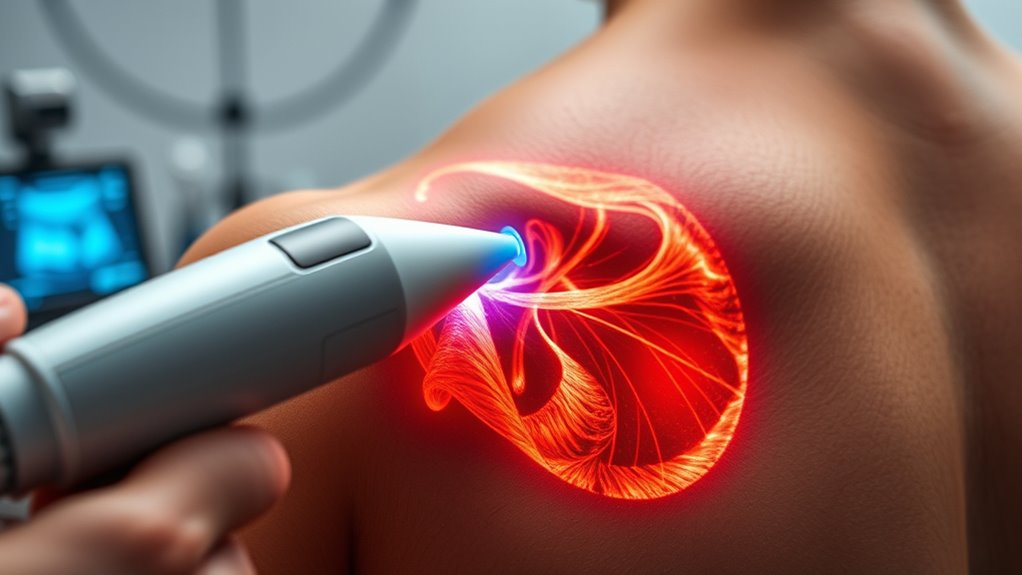

Ultrasound for shoulder injuries, especially rotator cuff tears, can be very helpful in your healing process. It provides real-time images that help your doctor accurately diagnose issues and guide precise treatment, like injections. Ultrasound can also monitor your progress and make certain your therapy stays on track. While it doesn’t directly heal the tear, it plays a key role in supporting effective treatment and recovery. Keep exploring how this technology can help you stay active and healthy.

Get wellness gear delivered free with Prime
- Fast, free delivery on millions of items
- Prime Video, Amazon Music and more included
- Member-only deals all year
Key Takeaways
- Ultrasound accurately diagnoses rotator cuff tears and tendinitis, enabling targeted treatment plans.
- It guides precise corticosteroid injections to reduce inflammation and promote healing.
- Ultrasound monitoring tracks tissue repair progress during recovery, supporting effective rehabilitation.
- Combining ultrasound with therapies like physical therapy enhances overall shoulder healing.
- Early detection via ultrasound can prevent worsening injuries and facilitate quicker, more effective healing.

Have you ever wondered how ultrasound can help diagnose shoulder injuries? Ultrasound imaging offers a real-time, non-invasive way to assess soft tissue damage, making it a valuable tool for identifying issues like rotator cuff tears, tendinitis, or bursitis. Unlike X-rays, which primarily show bones, ultrasound provides detailed images of muscles, tendons, and ligaments around the shoulder joint. This allows your healthcare provider to detect problems early, often leading to more effective treatment options. Additionally, understanding the field‑of‑view and imaging‑scale examples helps in appreciating how ultrasound captures detailed soft tissue structures accurately. When it comes to managing shoulder injuries, ultrasound isn’t just about diagnosis. It can also guide minimally invasive procedures such as injections directly into the affected area, enhancing precision and reducing discomfort. For example, if you need corticosteroid injections to reduce inflammation, ultrasound helps ensure the medication is delivered exactly where it’s needed. This targeted approach can speed up recovery and improve results. Furthermore, ultrasound can monitor the healing process over time, giving your doctor a clear view of tissue repair without repeated invasive tests.
But ultrasound isn’t the only solution. Many people explore alternative therapies to complement traditional treatments. Techniques like physical therapy, acupuncture, or even chiropractic adjustments can help restore shoulder function and alleviate pain. These approaches often focus on strengthening muscles, improving flexibility, and reducing inflammation, which can help prevent further injury. Prevention strategies are essential because the best way to avoid shoulder problems is to maintain good shoulder health through regular exercise, proper posture, and ergonomic adjustments. Strengthening the rotator cuff and shoulder stabilizers can greatly lower your risk of injury, especially if you’re involved in sports or physically demanding work.
Using ultrasound as part of your injury management plan can also support these prevention strategies. For instance, ultrasound-guided therapy sessions can help identify weak points or early signs of damage before they develop into more serious issues. This proactive approach allows you to address problems early, reducing the need for more aggressive treatments later on.
As an affiliate, we earn on qualifying purchases.
Frequently Asked Questions
How Quickly Can Ultrasound Therapy Improve Shoulder Pain?
You might notice pain relief within a few sessions of ultrasound therapy, but this varies depending on your injury. As an alternative therapy, ultrasound stimulates blood flow and promotes healing, helping with pain management. Consistent treatments over several weeks can lead to significant improvements. Keep in mind, individual responses differ, so staying patient and following your healthcare provider’s advice guarantees the best results for shoulder pain relief.
Are There Any Risks Associated With Ultrasound Treatment?
You should be aware that ultrasound treatment carries some risks, including potential tissue damage if not applied correctly. It’s important to follow contraindications for ultrasound, such as avoiding use over areas with infections, tumors, or fractures. Always make certain a trained professional conducts the therapy, as improper use can lead to adverse effects. Discuss your medical history thoroughly to minimize risks and ensure safe, effective treatment.
How Many Ultrasound Sessions Are Typically Needed?
You might need anywhere from 6 to 12 ultrasound sessions, depending on your injury severity. Ultrasound session frequency typically involves 2-3 treatments per week, with treatment duration planning tailored to your progress. While some patients see improvements after a few sessions, others require more. Trust your healthcare provider’s guidance to develop a personalized plan, as consistency and patience are key to ideal healing.
Can Ultrasound Prevent Future Shoulder Injuries?
Ultrasound isn’t a preventative measure for future shoulder injuries, but it can aid in reducing injury recurrence when combined with proper rehab and strengthening exercises. Regularly consulting with your healthcare provider, maintaining good posture, and doing targeted shoulder exercises are essential preventative measures. While ultrasound helps heal existing issues, actively engaging in injury prevention strategies is key to avoiding future shoulder problems.
Is Ultrasound Effective for Chronic Rotator Cuff Tears?
Ultrasound can be somewhat effective for chronic rotator cuff tears, but it’s often considered an alternative therapy rather than a primary treatment. You might experience some pain relief and improved blood flow, which could aid healing timelines. However, for significant tears, combining ultrasound with physical therapy or surgery may be necessary. Always consult your healthcare provider to determine the best approach for your specific condition.
As an affiliate, we earn on qualifying purchases.
Conclusion
So, could ultrasound be your secret weapon against shoulder injuries? It’s promising, offering targeted healing and reducing recovery time. Think of it as a gentle whisper guiding your shoulder back to strength. While it’s not a miracle cure, it’s a tool worth exploring if you’re ready to take action. Don’t let pain silence your active life—embrace the potential of ultrasound and let it light the way to recovery.
shoulder ultrasound therapy device
As an affiliate, we earn on qualifying purchases.
As an affiliate, we earn on qualifying purchases.
As an affiliate, we earn on qualifying purchases.
Cold & flu season Picks
humidifiers
As an affiliate, we earn on qualifying purchases.