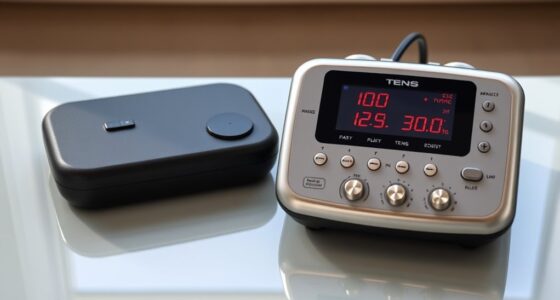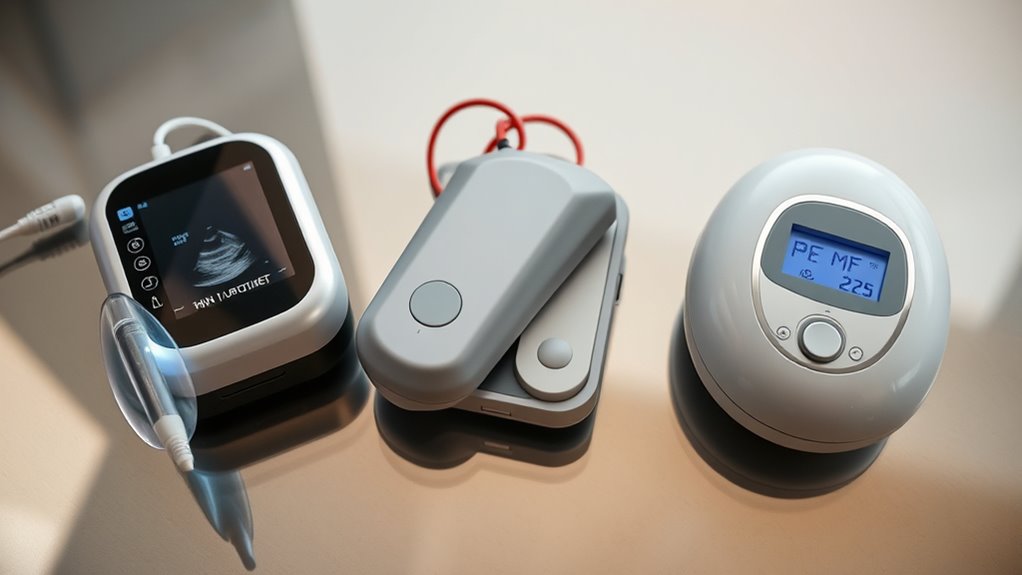

Ultrasound uses high-frequency sound waves to penetrate deep tissues, promoting healing by stimulating cellular activity, blood flow, and tissue repair. TENS delivers electrical impulses through skin electrodes to block pain signals and boost muscle function. PEMF employs pulsed electromagnetic fields to encourage cellular repair and reduce inflammation. Each therapy offers unique advantages and potential drawbacks, making your choice depend on your specific needs and lifestyle. Explore further to discover which option best fits your recovery goals.
Key Takeaways
- Ultrasound penetrates deep tissues to promote healing but requires professional guidance, unlike portable TENS and PEMF devices for at-home use.
- TENS provides immediate pain relief through electrical impulses, making it user-friendly and suitable for quick, targeted pain management.
- PEMF stimulates cellular repair and reduces inflammation non-invasively but often involves higher upfront costs and longer-term benefits.
- Combining therapies can enhance overall pain management, with each targeting different mechanisms such as blood flow, nerve signaling, and cellular repair.
- Choosing the best device depends on individual needs, lifestyle, and budget, considering factors like ease of use, treatment goals, and scientific support.
How Each Therapy Works and Their Mechanisms of Action

Understanding how each therapy works begins with examining their mechanisms of action. Ultrasound uses high-frequency sound waves to penetrate deep tissue, promoting muscle stimulation and increasing blood flow. This process helps break down scar tissue and accelerates cellular repair, aiding recovery. Deep tissue penetration enhances the effectiveness of ultrasound in targeting specific areas of pain. Ultrasound can also influence tissue healing by stimulating cellular activity at a deeper level. Additionally, ultrasound’s ability to stimulate blood flow can facilitate nutrient delivery and waste removal, further supporting healing processes. The depth of penetration allows ultrasound to reach internal structures that might be difficult to target with other modalities. TENS works by sending electrical impulses through electrodes on your skin, which disrupt pain signals and stimulate muscles. This electrical stimulation can reduce pain perception and enhance muscle function. PEMF therapy employs pulsed electromagnetic fields that penetrate tissues, encouraging cellular repair at a fundamental level. By stimulating cellular activity, PEMF encourages the regeneration of damaged tissues and reduces inflammation. Additionally, these therapies can influence cellular mechanisms, impacting healing processes at a molecular level. Overall, each therapy targets different aspects of pain and healing through mechanisms that involve muscle stimulation or cellular repair, making them versatile tools for managing pain and promoting recovery.
Advantages and Potential Drawbacks of Ultrasound, TENS, and PEMF

Each therapy offers unique advantages that make them appealing options for pain relief and tissue healing, but they also come with potential drawbacks.
- Ultrasound can promote deep tissue healing but may require professional guidance and can be costly over time.
- TENS units are portable and easy to use, offering immediate pain relief, yet their effectiveness varies and they might cause skin irritation.
- PEMF devices are non-invasive and promote cellular repair, but their long-term benefits are still under study, and initial costs can be high.
- When considering alternative therapy combinations, it’s important to weigh the cost effectiveness analysis to find the best fit for your needs. Balancing benefits and drawbacks helps ensure you choose a therapy that’s both effective and sustainable for at-home use.
- Additionally, understanding the astrological signs associated with attractiveness and charm can help tailor personal wellness routines or enhance confidence during recovery and self-care practices.
Choosing the Right At-Home Pain Relief Method for Your Needs
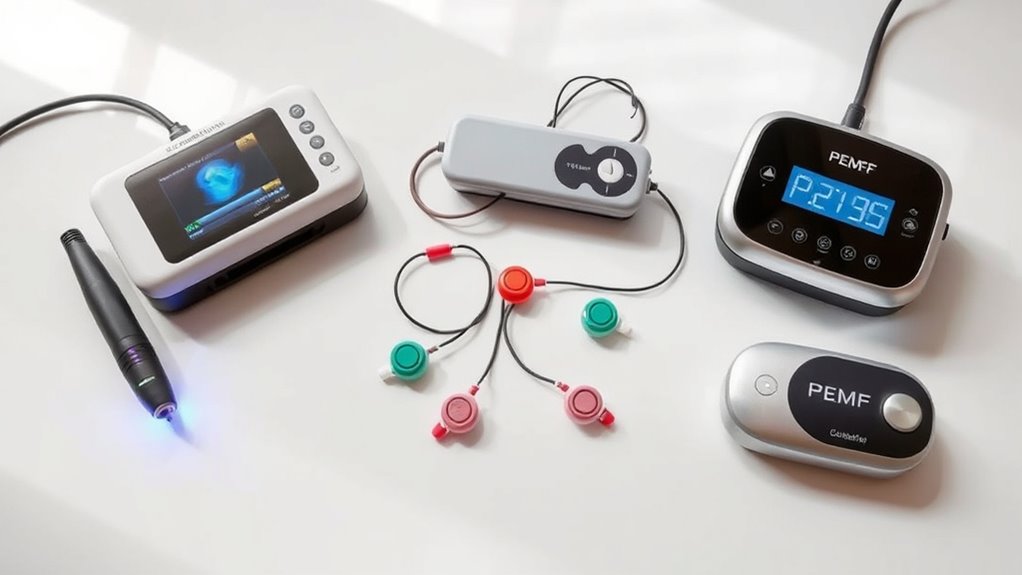
Choosing the right at-home pain relief method depends on your specific needs, lifestyle, and budget. Your user experience matters—whether you prefer ease of use, portability, or specific treatment features. Cost considerations also play a role; some devices are more affordable but may offer fewer features, while others are pricier but provide advanced benefits. To help decide, consider this comparison:
| Feature | Ultrasound | TENS | PEMF |
|---|---|---|---|
| User Experience | Slight learning curve | User-friendly, portable | Easy setup, versatile |
| Cost Considerations | Moderate to high | Budget-friendly | Higher initial cost |
| Suitability | Deep tissue therapy | Pain management | Overall wellness |
Additionally, understanding the science behind each technology can help you make a more informed choice. For example, electric therapy devices utilize different mechanisms to target pain relief, which may influence your preferred method. When evaluating options, consider the long-term benefits offered by each technology to choose the most effective solution for your needs. Incorporating knowledge about natural healing processes can also aid in selecting a therapy that complements your overall health goals. Match your needs with these factors to find the best fit.
Frequently Asked Questions
Are These Therapies Safe for Long-Term Use at Home?
These therapies can be safe for long-term home use if you follow the manufacturer’s instructions and consult your healthcare provider. Proper use mitigates risks like tissue damage or skin irritation. Regular monitoring helps ensure safety over time. Keep in mind that individual responses vary, so discussing your plans for long-term use with a professional ensures you’re making the best choices for your health and safety.
Can Ultrasound, TENS, or PEMF Treat All Types of Pain?
You can’t depend on ultrasound, TENS, or PEMF to treat all types of pain. Pain type suitability varies—these therapies work well for muscle, joint, or nerve pains but have treatment limitations for conditions like deep internal pain or inflammation. Always consider your specific pain type and consult your healthcare provider to ensure these therapies are appropriate and effective for your individual needs.
How Quickly Can I Expect Pain Relief With Each Method?
You can expect different times to relief depending on the method. TENS often provides immediate pain relief during use, targeting nerve signals quickly. PEMF may take a few sessions to show noticeable results, gradually easing discomfort over time. Ultrasound typically requires multiple treatments to achieve significant relief, as it promotes tissue healing rather than instant pain reduction. Each method’s effectiveness varies based on your condition and response.
Are There Any Medical Conditions That Prevent Use of These Therapies?
You should check for medical contraindications and health restrictions before using ultrasound, TENS, or PEMF. Conditions like pregnancy, pacemakers, or certain skin issues can prevent safe use. Always consult your healthcare provider to verify these therapies won’t interfere with existing medical conditions. Ignoring health restrictions could worsen your condition or cause adverse effects, so professional guidance is essential for safe at-home pain management.
Do These Treatments Require Professional Supervision or Training?
You might wonder if you need professional guidance for these therapies. The truth is, while some devices are designed for safe home setup, proper use can be tricky without training. Misuse could cause harm or reduce effectiveness. That’s why it’s wise to consult a healthcare professional first. They can guide you on correct application, ensure safety, and help you get the most benefit from ultrasound, TENS, or PEMF treatments at home.
Conclusion
Choosing between ultrasound, TENS, and PEMF is like picking the perfect tool for your pain relief toolbox. Each has its unique strengths and potential drawbacks, so consider your specific needs and preferences. Remember, no single therapy is the silver bullet—your pain management journey is a personal story. By understanding these options, you’re better equipped to make an informed choice. After all, in the quest for comfort, isn’t knowledge your greatest ally?