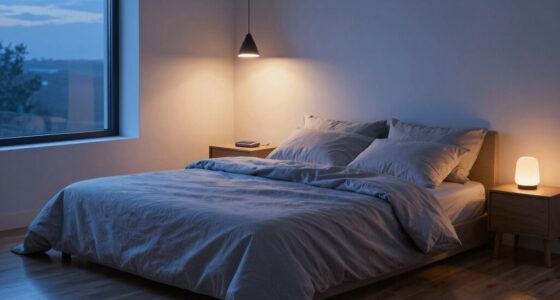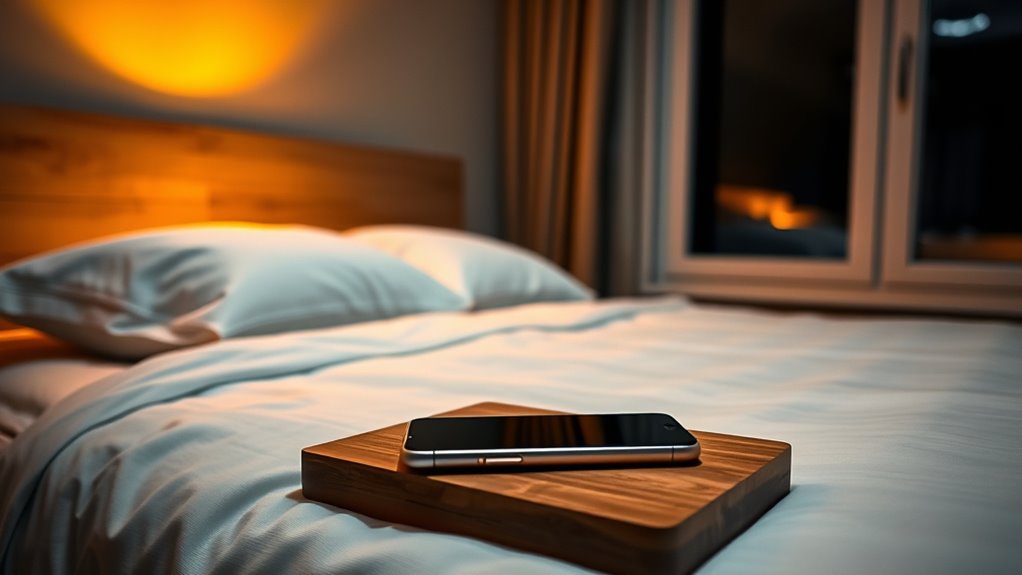

Limiting your tech use before bed can considerably improve your sleep quality. Blue light from screens suppresses melatonin, making it harder to fall asleep and reducing sleep restorative effects. Turning on blue light filters, avoiding screens an hour before bed, or creating a tech-free zone in your bedroom can help. These simple changes support a healthier sleep routine and better rest. Keep exploring to discover more effective tips for a restful night’s sleep.

Get wellness gear delivered free — and shop member deals
- Fast, free delivery on millions of items
- Access to Prime Big Deal Days deals on October 6–7
- Prime Video, Amazon Music and more included
Key Takeaways
- Limiting screen time before bed reduces blue light exposure, allowing melatonin production and improving sleep quality.
- Engaging in relaxing, non-screen activities signals the brain to wind down, making sleep easier to achieve.
- Using device features like night mode or blue light filters minimizes blue light’s negative impact on sleep.
- Creating a tech-free bedroom environment eliminates late-night device use, promoting healthier sleep routines.
- Establishing consistent digital boundaries enhances sleep cycles and overall restfulness through routine and reduced stimulation.
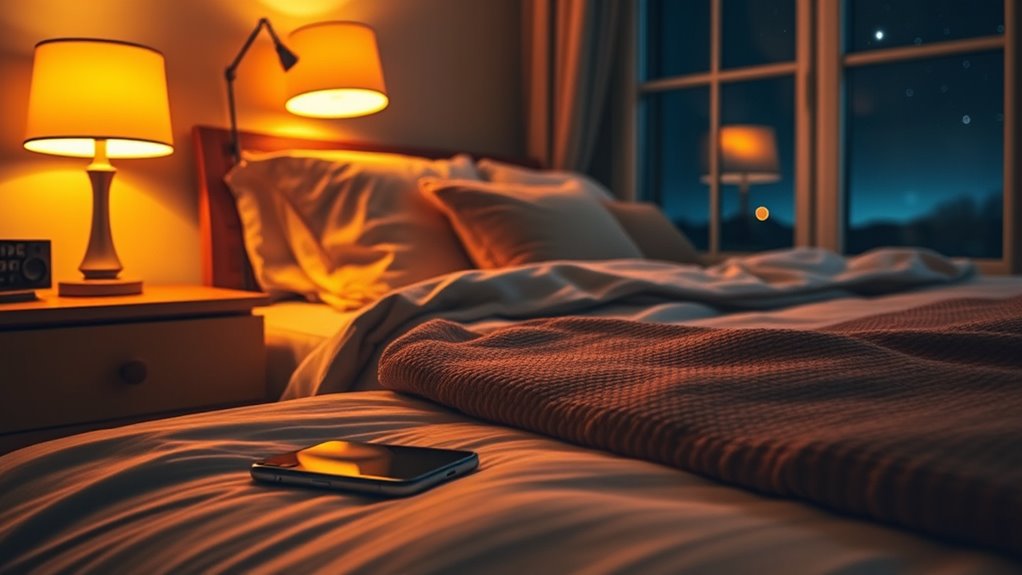
In today’s connected world, it’s easy to fall into the habit of scrolling through your devices late into the night. Whether it’s checking social media, replying to messages, or binge-watching videos, your screen time tends to creep up as bedtime approaches. While these activities may seem harmless, they can substantially impact your sleep quality. One of the main culprits is blue light, a type of high-energy visible light emitted by screens. When you expose yourself to blue light before bed, it tricks your brain into thinking it’s daytime, suppressing the production of melatonin—the hormone responsible for regulating sleep. As a result, falling asleep becomes harder, and your rest may become less restorative.
Limiting your screen time in the hour or two before bed can make a noticeable difference. By reducing your exposure to blue light, you help your body naturally prepare for sleep. Instead of scrolling through your phone or laptop, try engaging in relaxing activities like reading a physical book, practicing meditation, or listening to calming music. These alternatives can signal to your brain that it’s time to wind down, making it easier to drift off when you’re ready. Additionally, many devices now offer blue light filters or night mode settings, which minimize blue light emissions during evening hours. Turning these on can be a simple step toward improving your sleep hygiene, especially if you find it tough to completely cut back on screen time.
Another effective strategy is creating a tech-free zone in your bedroom. Keep devices out of the sleeping area or at least away from your bedside table. When you’re not constantly checking your phone or tablet, you reduce the temptation to engage with screens late at night. Setting boundaries around your digital habits also involves establishing a consistent bedtime routine—one that doesn’t involve screens. This consistency trains your body to recognize when it’s time to sleep, helping you fall asleep faster and enjoy more restful sleep cycles. Incorporating blue light reduction techniques can further enhance your sleep environment and promote better overall rest.
blue light blocking glasses for sleep
As an affiliate, we earn on qualifying purchases.
As an affiliate, we earn on qualifying purchases.
Frequently Asked Questions
How Long Should I Limit Screen Time Before Bed?
You should aim to limit your screen time at least 30 to 60 minutes before bed, following recommended screen time guidelines. This helps you wind down and establish effective bedtime routines. By reducing exposure to blue light, you’ll improve your sleep quality and make it easier to fall asleep naturally. Consistently sticking to this routine can lead to better rest and overall well-being.
Can Blue Light Filters Replace Turning off Devices?
Blue light filters can help reduce blue light exposure from devices, but they shouldn’t replace turning off devices altogether. While filters make screens easier on your eyes and may improve sleep quality, they don’t eliminate the stimulating effects of screen time. To truly improve sleep, it’s best to limit device use at least 30 minutes before bed and use blue light filters as a supplementary measure.
Does Digital Detox Improve Sleep Quality Immediately?
Yes, a digital detox can immediately improve your sleep quality. When you limit screen time before bed, you enhance your sleep hygiene and support your circadian rhythm, making it easier to fall asleep and enjoy restful sleep. Reducing exposure to blue light helps your body produce melatonin naturally. Start tonight by turning off devices an hour before bed, and you’ll likely notice a quicker, more restorative sleep.
Are There Any Risks to Completely Disconnecting at Night?
Think of disconnecting at night as unplugging from a lively, buzzing city. While it can boost your sleep, it might also lead to emotional detachment or social isolation if taken to extremes. You risk missing important updates or feeling cut off from loved ones. Balance is key—set boundaries that protect your sleep without sacrificing meaningful connections. That way, you enjoy restful nights and stay emotionally connected.
How Can I Manage Urges to Check My Phone at Bedtime?
To manage urges to check your phone at bedtime, try mindfulness techniques like deep breathing or progressive muscle relaxation to calm your mind. Create a sleep environment free of screens—use blackout curtains and keep devices out of reach. Establish a relaxing pre-sleep routine, such as reading or listening to calming music, to reduce the temptation. Consistent habits help train your brain to associate these routines with sleep, making it easier to resist tech urges.
night mode blue light filter for smartphones
As an affiliate, we earn on qualifying purchases.
As an affiliate, we earn on qualifying purchases.
Conclusion
You might worry that giving up screens at night feels impossible, but even small changes make a difference. Imagine falling asleep faster and waking up refreshed, all because you cut back on screen time before bed. It’s not about perfection, but progress. By limiting your tech use, you create a calming bedtime routine that benefits your sleep and overall well-being. Start tonight—you’ll thank yourself for the restful nights ahead.
As an affiliate, we earn on qualifying purchases.
As an affiliate, we earn on qualifying purchases.
Fall Picks
fall essentials
As an affiliate, we earn on qualifying purchases.