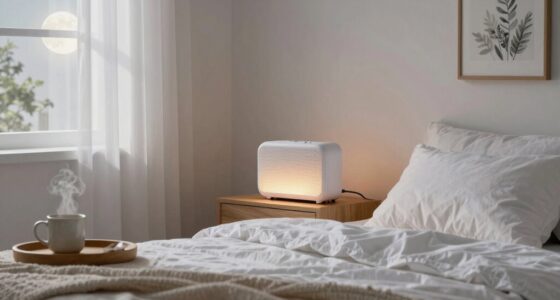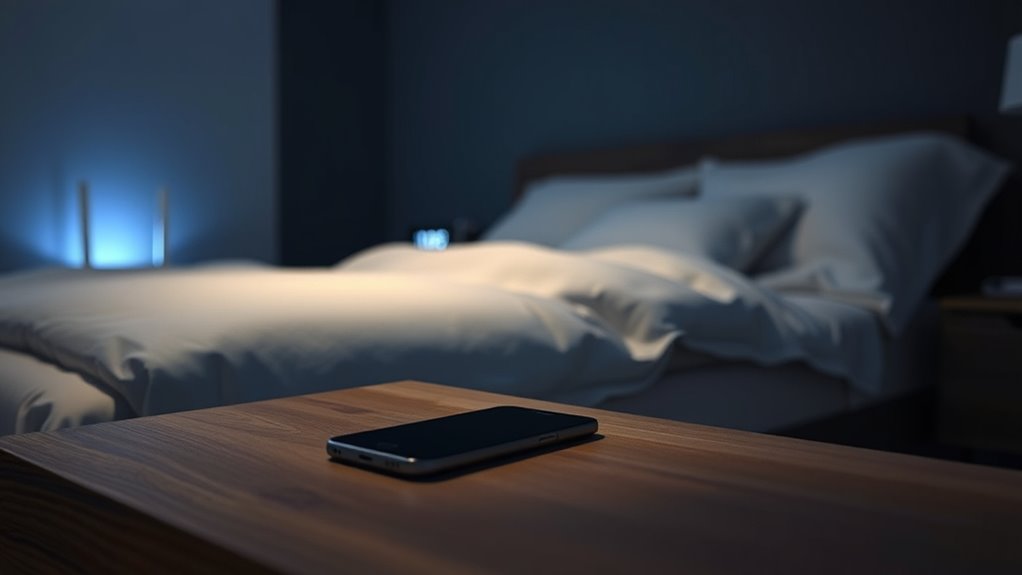

Wireless devices and Wi-Fi emit electromagnetic fields that can subtly disrupt your sleep by interfering with melatonin production and sleep patterns. If these signals are close to your bed, they may make it harder to fall asleep or stay asleep, leading to lower sleep quality. Prolonged exposure might even affect your overall rest and health over time. To learn simple ways to reduce your exposure and improve your sleep, keep exploring this topic.
Key Takeaways
- Wireless radiation from Wi-Fi and electronics can interfere with melatonin production, affecting sleep quality.
- Prolonged EMF exposure near the bed may subtly disrupt sleep patterns and architecture.
- Keeping Wi-Fi routers away from the bedroom and switching off devices can reduce electromagnetic interference.
- Using wired connections and removing electronics from the sleeping area promotes better rest.
- Ongoing research suggests minimizing EMF exposure during sleep supports overall health and well-being.
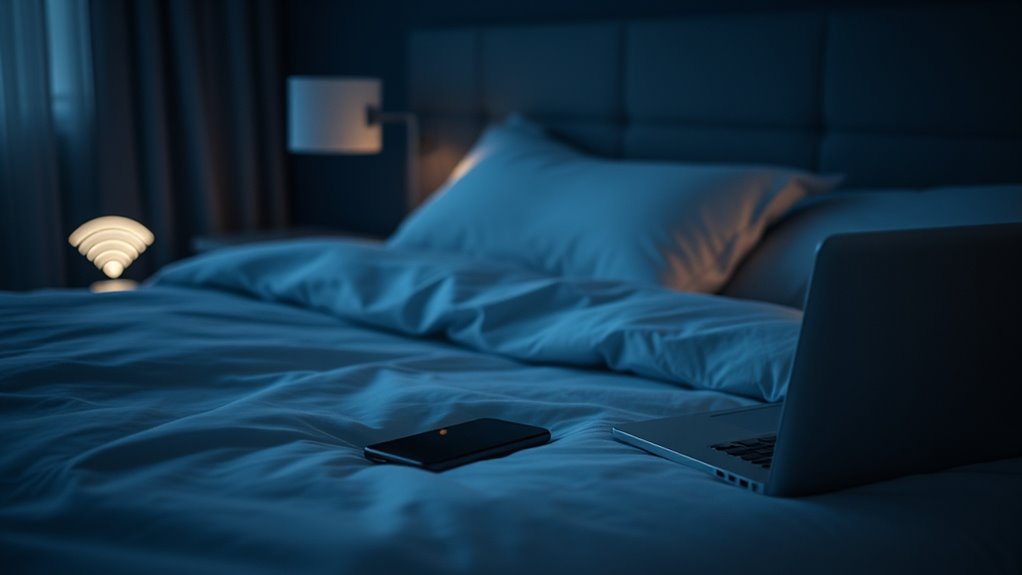
Electromagnetic fields (EMF) are everywhere in our modern environment, and many people wonder how these invisible forces might affect their sleep. One common concern revolves around wireless radiation emitted by devices like Wi-Fi routers, smartphones, and tablets. This wireless radiation, a form of non-ionizing electromagnetic radiation, continuously bathes your surroundings. While it’s not as powerful as radiation from nuclear sources, studies suggest that prolonged exposure to wireless radiation could influence your sleep quality. You might not notice it consciously, but subtle disruptions in your sleep cycles could be linked to this constant exposure.
When your body is exposed to wireless radiation, it can interfere with the production of melatonin, the hormone responsible for regulating your sleep-wake cycle. Melatonin levels naturally rise in the evening to help you fall asleep and stay asleep through the night. However, electromagnetic fields from Wi-Fi and other electronic devices can suppress melatonin production, making it harder for you to fall asleep or stay asleep. If you’ve ever noticed difficulty sleeping after binge-watching late into the night on your phone or having your Wi-Fi router nearby, wireless radiation might be a factor. It’s especially concerning because the effects are often subtle and cumulative, meaning they can impact your overall sleep quality without immediate noticeable symptoms.
Your bedroom environment plays a vital role in how wireless radiation influences your sleep. Devices emitting wireless signals are often found close to your bed, and this proximity can increase your exposure. Even if you turn off devices at night, their signals may still be present, especially if you leave your Wi-Fi router on constantly. This persistent exposure can create a low-level electromagnetic environment that disrupts your sleep architecture. Poor sleep quality can then lead to daytime fatigue, reduced concentration, and overall lower well-being. Additionally, electromagnetic pollution in the bedroom can accumulate over time, further exacerbating sleep disturbances and impacting long-term health.
To minimize these effects, consider reducing wireless radiation exposure in your sleeping area. Turning off Wi-Fi routers or placing them away from your bedroom can help. Using wired connections instead of wireless ones reduces the electromagnetic fields around you. Additionally, keep electronic devices out of your bedroom altogether, or at least away from your bed, to limit your exposure. Creating a sleep-friendly environment free from unnecessary electromagnetic interference can improve your sleep quality and help you wake up feeling more rested and refreshed. While the science is still evolving, taking these practical steps allows you to better protect your sleep from the subtle impacts of wireless radiation.

EMP & EMF Shield for Home (Gen 2) | Compact EMF Blocker & Harmonizer | Whole House Electromagnetic Protection Device | 2000 Sq Ft Coverage | Plug-in for Outlet, Inverter, Generator
Next-Gen Dual Protection Technology – Our 2nd Generation shield provides enhanced EMP & EMF protection for home, acting…
As an affiliate, we earn on qualifying purchases.
As an affiliate, we earn on qualifying purchases.
Frequently Asked Questions
Can EMF Exposure Cause Long-Term Health Issues?
Yes, electromagnetic sensitivity from chronic exposure to EMF may cause long-term health issues. You might notice symptoms like headaches, fatigue, or sleep disturbances, which could worsen over time. While research is ongoing, minimizing your exposure—especially if you’re sensitive—can help reduce potential risks. Using wired devices, turning off electronics when not in use, and keeping a safe distance from sources can protect your health from prolonged EMF effects.
Are There Specific Times to Avoid Wi-Fi Before Bed?
Imagine you’re in the year 3000, but Wi-Fi interference still affects your sleep! You should avoid using Wi-Fi at least 30 to 60 minutes before bed. Electromagnetic sensitivity can make it harder to wind down, disrupting your circadian rhythm. Turning off your Wi-Fi router during this time minimizes electromagnetic exposure, helping you relax naturally and get better rest. Prioritize unplugging for peak sleep health.
How Do EMF Levels Vary Between Devices?
Device emissions vary markedly, with smartphones and tablets generally emitting higher EMF levels compared to laptops or smartwatches. EMF variation depends on factors like device age, usage, and whether Wi-Fi or Bluetooth is active. You can reduce exposure by turning off devices when not in use, keeping them at a distance, and choosing low-EMF options. Being aware of these differences helps you manage your EMF exposure better.
Do EMF Shielding Products Effectively Improve Sleep?
Electromagnetic interference from devices can subtly disturb your sleep, but the truth about emf shielding products remains uncertain. While some claim they reduce sleep disruption, scientific evidence is limited. You might feel more at ease using shielding, but don’t rely solely on them. Instead, create a sleep-friendly environment by turning off electronics and minimizing exposure before bed. Staying informed and cautious helps you protect your rest better.
Is There a Recommended Distance to Keep From Electronics While Sleeping?
You should keep your electronics at least three feet away from your bed to minimize EMF exposure. Proper electronic placement in your sleep environment helps reduce potential disruptions. Avoid having devices like phones, tablets, or laptops on your nightstand or near your head. Instead, place them across the room or in a different area. Creating space between you and electronics supports better sleep quality and lowers exposure to electromagnetic fields.

TP-Link USB to Ethernet Adapter (UE306), Supports Nintendo Switch, 1Gbps Gigabit RJ45 to USB 3.0 Network Adapter, Foldable & Portable Design, Plug and Play, Compatible with Windows, macOS, and Linux
𝐇𝐢𝐠𝐡-𝐒𝐩𝐞𝐞𝐝 𝐔𝐒𝐁 𝐄𝐭𝐡𝐞𝐫𝐧𝐞𝐭 𝐀𝐝𝐚𝐩𝐭𝐞𝐫 – UE306 is a USB 3.0 Type-A to RJ45 Ethernet adapter that adds a…
As an affiliate, we earn on qualifying purchases.
As an affiliate, we earn on qualifying purchases.
Conclusion
While the debate continues, it’s clear that EMF exposure from Wi-Fi and electronics might impact your sleep. To keep your nights peaceful, consider turning off devices before bed—think of it as your personal “Do Not Disturb” sign in the digital age. Just like old-fashioned radios needed tuning, your sleep needs a quiet, EMF-free zone to truly rest. So, unplug and recharge your body—your future self will thank you, just like a knight grateful for a good night’s sleep.

MiemieAi 100% Silver Fiber EMF Protection Faraday Tent attenuate WiFi 5G Block RF Shielding Canopy Single Bed Cover (86.6''Lx 47.2''W x 86.6''H)
[Attenuate electromagnetic waves] This canopy can weaken or block the electromagnetic wave to protect your body.This excellent canopy…
As an affiliate, we earn on qualifying purchases.
As an affiliate, we earn on qualifying purchases.

Fengind Large WiFi Router Cover – Blocks 90% of Router Emf & 5G, Allows Uninterrupted Use – Faraday Cage Emf Protection – Two Year Warranty
【Large Size for Compatibility】WIFI router emf shield is 12 inches long x 11 7/8 inches high x 5…
As an affiliate, we earn on qualifying purchases.
As an affiliate, we earn on qualifying purchases.