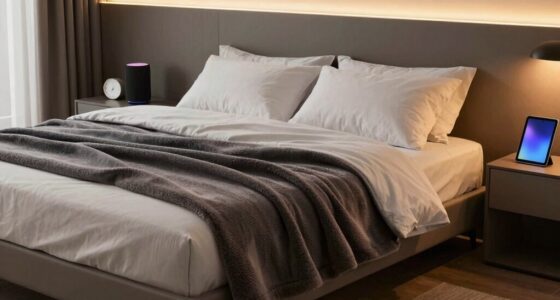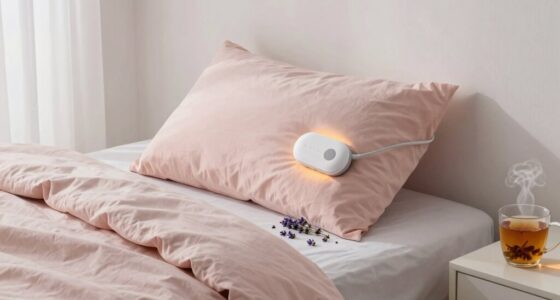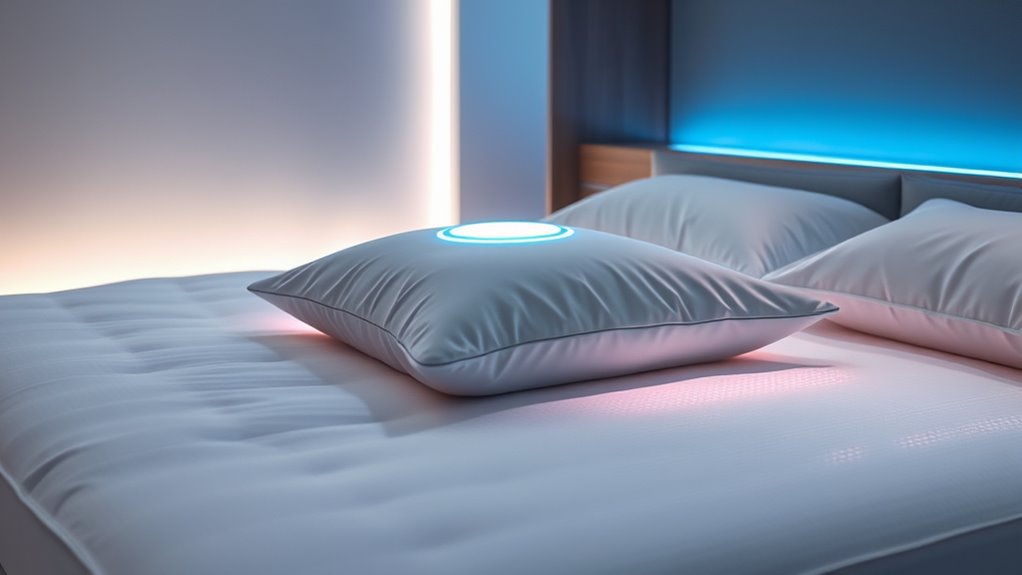

Smart pillows and mattresses can actually improve your sleep by using sensors to monitor your movements, heart rate, and breathing. They adjust firmness and temperature in real-time to match your sleep stage or environment, promoting better spinal alignment and less tossing and turning. These innovations help identify sleep issues and offer personalized solutions for deeper, more restful sleep. If you’re curious about how they work, keep exploring the details that could transform your nights.
Key Takeaways
- Smart pillows and mattresses use sensors to monitor sleep patterns, helping identify issues and improve sleep quality through data insights.
- Their ergonomic design supports proper alignment, reducing discomfort and promoting deeper, more restful sleep.
- Dynamic adjustments in firmness or temperature create a personalized sleep environment, enhancing comfort throughout the night.
- Advanced sensor technology increases measurement accuracy and responsiveness, enabling targeted interventions for sleep issues.
- Overall, these features contribute to better sleep, increased refreshment, and healthier sleep habits over time.
Have you ever wondered how technology is transforming your sleep experience? Smart pillows and mattresses are at the forefront of this revolution, offering features designed to improve your rest. One of the key benefits is sleep tracking, which helps you understand your sleep patterns better. These devices use sensors to monitor your movements, heart rate, and breathing, providing detailed insights into your sleep cycles. With this data, you can identify disruptions or habits that may be be affecting your sleep quality. Knowing when you wake up frequently or experience restless sleep allows you to make targeted adjustments to your bedtime routine or environment. Many smart mattresses sync with apps that present your sleep data in easy-to-understand formats, empowering you to take control of your sleep health.
Smart sleep devices use sensors to track your patterns and improve your rest.
Beyond tracking, a significant advantage of smart pillows and mattresses is their ergonomic design. These products are crafted to support your body in ideal ways, promoting better alignment and reducing discomfort that can interrupt your sleep. For example, smart pillows often feature adjustable firmness levels or contouring that adapts to your head and neck shape, ensuring proper spinal alignment. This not only enhances comfort but also minimizes neck pain and stiffness in the morning. Smart mattresses frequently incorporate customizable firmness zones or adaptive materials that respond to your body’s pressure points, helping you find the most comfortable sleeping position. The ergonomic focus of these products means you’re less likely to toss and turn throughout the night, leading to deeper, more restorative sleep.
Technology also allows smart sleep products to respond dynamically to your needs. Some smart mattresses can automatically adjust their firmness or temperature based on your sleep stage or ambient conditions, creating an ideal environment for rest. For instance, if sensors detect that you’re too warm, the mattress may cool down slightly, helping you stay comfortable. Likewise, smart pillows can adjust their height or support level during the night to maintain proper alignment as your position shifts. These adaptive features work in tandem with ergonomic design principles to create a sleep environment that’s both comfortable and health-conscious. Additionally, the integration of sensor technology enhances the accuracy of sleep data collection and responsiveness, making these products more effective at addressing sleep issues.
In the end, smart pillows and mattresses are about more than just novelty. They leverage advanced sleep tracking and ergonomic design to help you sleep better and wake up feeling refreshed. With continuous improvements in sensor technology and material science, these products are becoming increasingly effective at addressing common sleep issues. By investing in smart sleep solutions, you’re taking a proactive step towards healthier, more restorative nights, making the promise of better sleep a tangible reality.

Avenco Queen Mattress 12 Inch, Luxury Hotel-Level Cooling Hybrid Mattress
- Cooling Gel Technology: Dual-layer NanoGEL for all-night cooling
- Support for All Sleep Positions: Hybrid support with pocketed coils and foam
- Enhanced Airflow System: Open-cell foam and breathable fabric layers
As an affiliate, we earn on qualifying purchases.
As an affiliate, we earn on qualifying purchases.
Frequently Asked Questions
How Accurate Are Sleep Trackers in Smart Pillows?
Sleep trackers in smart pillows can be fairly accurate, but their accuracy varies. You should consider an accuracy assessment before trusting the data completely. These devices often use sensors to monitor movement and heart rate, giving you insights into your sleep patterns. However, factors like pillow placement and individual differences can impact results. For the best sleep tracking, compare your device’s data with other methods to guarantee reliability.
Are Smart Mattresses Suitable for All Sleeping Positions?
Smart mattresses are generally suitable for most sleep postures thanks to their ergonomic design, but they might not be ideal for everyone. If you switch between side, back, or stomach sleeping, look for a mattress that adapts to your sleep posture. Some models offer customizable firmness and support features, ensuring comfort across various positions. Always check the mattress specifications to find one that supports your unique sleep style.
Do Smart Pillows Require Frequent Software Updates?
Smart pillows do require firmware updates, but they’re usually infrequent and easy to install, guaranteeing your sleep tech stays current. You might even think of these updates as tiny miracles that enhance user compatibility and performance. While some may see it as a hassle, staying up-to-date ensures your pillow works seamlessly with your devices and features, making your sleep experience smarter and more comfortable every night.
Can Smart Mattresses Help With Sleep Disorders?
Smart mattresses can help with sleep disorders by enhancing your sleep hygiene and optimizing your sleep environment. They monitor your sleep patterns, adjust firmness or temperature, and provide insights to improve rest. This personalized approach supports better sleep quality, especially if you struggle with insomnia or other issues. Keep in mind, though, that smart mattresses complement professional treatment and good sleep habits, rather than replacing them entirely.
What Is the Average Lifespan of Smart Sleep Products?
Smart sleep products typically last around 5 to 8 years, depending on product durability and usage. You should check the warranty coverage, as it often protects against manufacturing defects and early failure. Regularly updating firmware and following care instructions can extend their lifespan. Keep in mind that technology evolves quickly, so investing in a product with solid durability and warranty coverage ensures you get the most value over time.
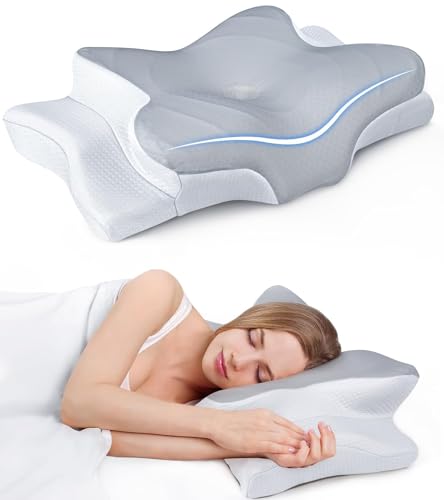
Ultra Pain Relief Cooling Pillow for Neck Support, Adjustable Cervical Pillow Cozy Sleeping, Odorless Ergonomic Contour Memory Foam Pillows, Orthopedic Bed Pillow for Side Back Stomach Sleeper
- Innovative Hollow Concave Design: Cradles head and aligns neck naturally
- Six Contour Zones for Support: Supports neck, shoulders, and arms effectively
- Cooling Pillowcase with Arc-Chill: Reduces skin temperature by 5℃ instantly
As an affiliate, we earn on qualifying purchases.
As an affiliate, we earn on qualifying purchases.
Conclusion
Ultimately, whether smart pillows and mattresses truly enhance your sleep depends on your personal needs and preferences. Like a trusted friend, they can offer valuable insights and gentle adjustments, guiding you toward better rest. But don’t forget—technology is only part of the story. Your habits, environment, and mindset play a vital role. So, as you explore these innovations, remember they’re tools, not magic wands, in your journey to peaceful, restorative sleep.

Withings Sleep – Sleep Tracking Pad Under The Mattress With Sleep Cycle Analysis
- Sleep Pattern Analysis: Detects snoring and monitors sleep stages
- Innovative Under-Mattress Sensor: World's first under-mattress sleep sensor
- Improves Sleep Quality: Provides insights and advice for better sleep
As an affiliate, we earn on qualifying purchases.
As an affiliate, we earn on qualifying purchases.

Patting Pillow Hugging With Heating Eggplant Hugging Pillow Supports Bluetooth Voice Recording Features A Removable and Washable Design Specifically Engineered Patting + Heat Therapy 47.2×11.8×9.8in
- Material: Soft plush fabric with high-resilience filling
- Design: Ergonomic for back, leg, or side support
- Patting Mode: Bionic rhythmic patting for sleep aid
As an affiliate, we earn on qualifying purchases.
As an affiliate, we earn on qualifying purchases.