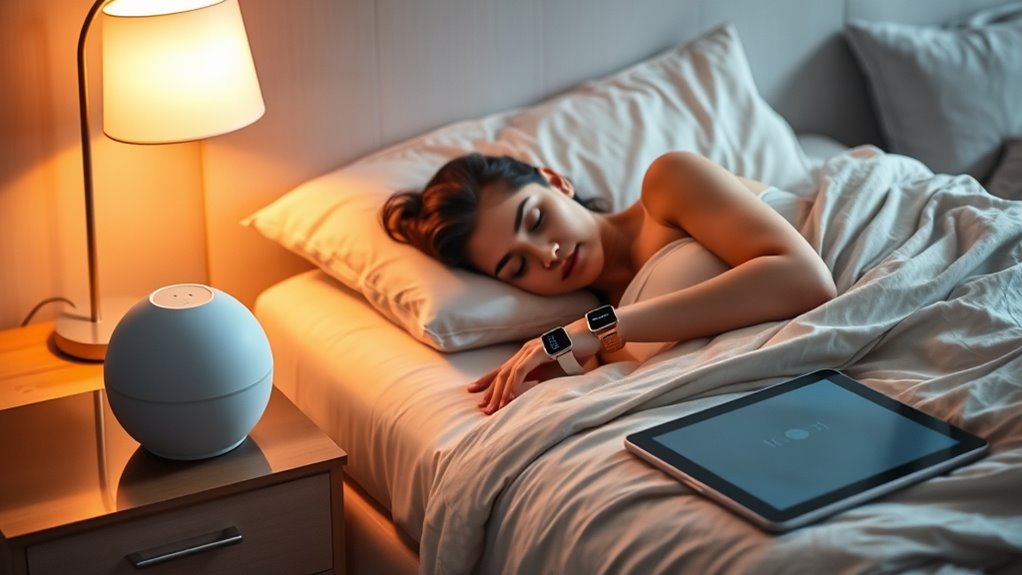
Tech solutions like sleep trackers and calming apps can help manage insomnia when used consistently alongside good sleep habits. Sleep trackers monitor your sleep quality and reveal patterns, while relaxation apps guide you through meditation and breathing exercises to ease pre-sleep stress. Creating a dark, comfortable environment further boosts your chances of restful nights. Combining these tools with healthy routines makes a noticeable difference—keep exploring, and you’ll discover how to make tech work best for your sleep.

Get wellness gear delivered free with Prime
- Fast, free delivery on millions of items
- Prime Video, Amazon Music and more included
- Member-only deals all year
Key Takeaways
- Sleep trackers objectively monitor sleep patterns and identify disruptions, aiding personalized improvements.
- Smartphone apps with relaxation techniques and sleep hygiene tips enhance pre-sleep routines.
- Consistent use of sleep technology alongside good sleep environment practices improves overall sleep quality.
- Combining environmental controls, like dark rooms with tech tools, creates a conducive sleep setting.
- Technology supports better sleep by providing insights and relaxation methods but isn’t a substitute for fundamental habits.
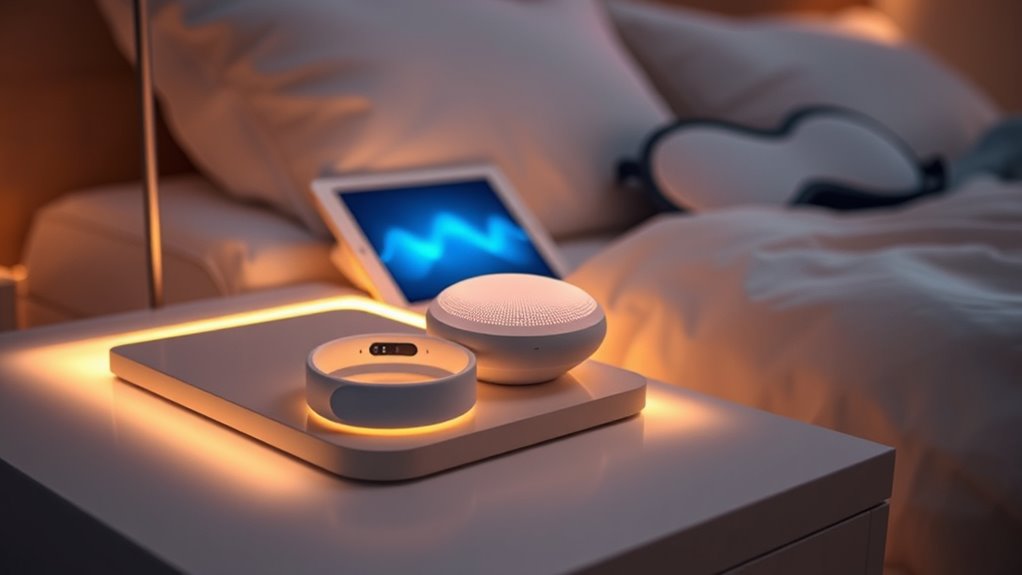
If you’re struggling to fall asleep, technology offers a range of solutions designed to help you achieve better rest. One of the most accessible tools is smartphone apps, which can guide you through relaxation techniques, provide sleep hygiene tips, or even track your sleep patterns. Many apps feature calming sounds, guided meditations, or breathing exercises that can ease your mind before bed. These apps often include features to set consistent sleep schedules, remind you to wind down, and reduce screen time, all of which support healthier sleep habits. By using these tools consistently, you might find it easier to drift off and stay asleep longer.
Using apps and trackers can make falling asleep easier and improve sleep habits over time.
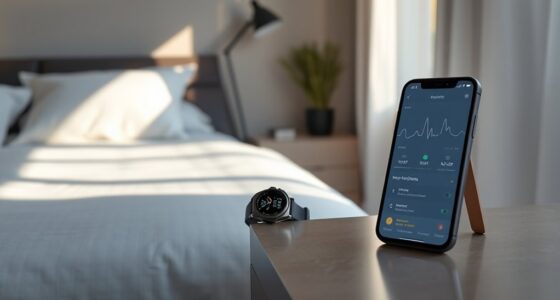
In addition to smartphone apps, sleep trackers have gained popularity for their ability to monitor your sleep quality objectively. These devices, which can be standalone or integrated into smartwatches or fitness bands, analyze your movements and heart rate throughout the night. With this data, you get insights into your sleep cycles, duration, and disturbances, helping you identify patterns or habits that may be disrupting your rest. For instance, if your sleep tracker shows frequent awakenings or restless sleep, you can make targeted adjustments—like changing your bedtime routine or reducing caffeine intake. Over time, these insights empower you to take proactive steps towards improving your sleep quality.
Many sleep trackers also sync with smartphone apps, providing a seamless way to review your sleep data. Some apps even offer personalized recommendations based on your tracked patterns, such as adjusting sleep schedules or incorporating relaxation techniques before bed. This integration makes it easier to stay motivated and engaged in your sleep improvement journey. The key is consistency—using these tools nightly helps establish a clearer picture of your sleep habits and enables you to recognize triggers or behaviors that impact your rest.
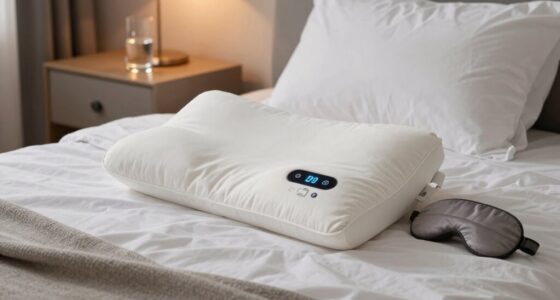
While these technological solutions aren’t magic cures, they do give you valuable information and tools to support better sleep. Combining the insights from sleep trackers with the calming features of smartphone apps can create a holistic approach to tackling insomnia. Remember, technology should complement good sleep hygiene—like maintaining a dark, cool room and avoiding screens an hour before bed—and not replace them. When used thoughtfully, these tools can serve as effective aids on your path to restful nights and energized mornings. Additionally, understanding the importance of contrast ratio in projectors can help you create an ideal sleep environment, such as a dark room with deep blacks that promote relaxation.
As an affiliate, we earn on qualifying purchases.
Frequently Asked Questions
Are Sleep Tracking Devices Accurate for Diagnosing Insomnia?
Sleep tracking devices aren’t always accurate for diagnosing insomnia because their device accuracy can vary. They monitor your sleep cycle by detecting movement or heart rate, but they might miss subtle signs of sleep issues. While they give a general idea of your sleep patterns, you shouldn’t rely solely on them for diagnosis. For precise results, consult a healthcare professional who can evaluate your sleep cycle thoroughly.
Can Smartphone Apps Effectively Replace Traditional Sleep Therapy?
Imagine trying to navigate a dark room with a flashlight—that’s how smartphone apps can feel when replacing traditional sleep therapy. They offer helpful tools like sleep meditation and herbal supplements guidance, but they might not address underlying issues fully. While some find apps effective, combining them with expert advice often yields better results. You could consider apps as a helpful starting point, but personalized therapy remains essential for deeper sleep issues.
How Safe Are Blue Light Filters for Evening Device Use?
Blue light filters are generally safe for evening device use, helping reduce blue light exposure that can disrupt your sleep. They are designed to improve blue light safety by limiting eye strain and melatonin suppression. When you enable these filters on your device, you protect your sleep cycle without risking any harm. Just make sure you adjust the settings correctly and use them consistently to benefit from better sleep hygiene.
Do Wearable Tech Devices Improve Sleep Quality Long-Term?
Wearable tech devices can improve your sleep quality long-term by helping you establish better bedtime routines and monitor environmental factors like light and noise. When you use these devices consistently, they encourage healthier habits and alert you to disruptions that may affect sleep. Over time, this active approach can lead to more restful nights, especially when combined with adjustments to your environment and consistent sleep schedules.
What Are the Privacy Concerns With Sleep Monitoring Technology?
Privacy pitfalls plague sleep tech, posing serious concerns. You risk data security breaches and personal privacy leaks when sharing sleep stats with third parties. Sensitive sleep information could be mishandled or misused, jeopardizing your confidentiality. Always scrutinize privacy policies, secure your data, and choose reputable brands. Protecting your personal privacy is paramount, so stay vigilant about how sleep monitoring technology handles your data, ensuring your sleep secrets stay safe and sound.
relaxation and meditation app for sleep
As an affiliate, we earn on qualifying purchases.
As an affiliate, we earn on qualifying purchases.
Conclusion
So, next time you’re battling insomnia, don’t forget to try some of these modern tech tricks—whether it’s a calming app, blue light filters, or a gentle sleep tracker. Remember, even in a world full of smartphones and smart beds, sometimes the simplest fixes, like sticking to a routine or avoiding your phone before bed, work best. Don’t be a digital damsel in distress; take control and conquer your sleep like a true tech-savvy knight!
As an affiliate, we earn on qualifying purchases.
As an affiliate, we earn on qualifying purchases.
Fall Picks
fall essentials
As an affiliate, we earn on qualifying purchases.