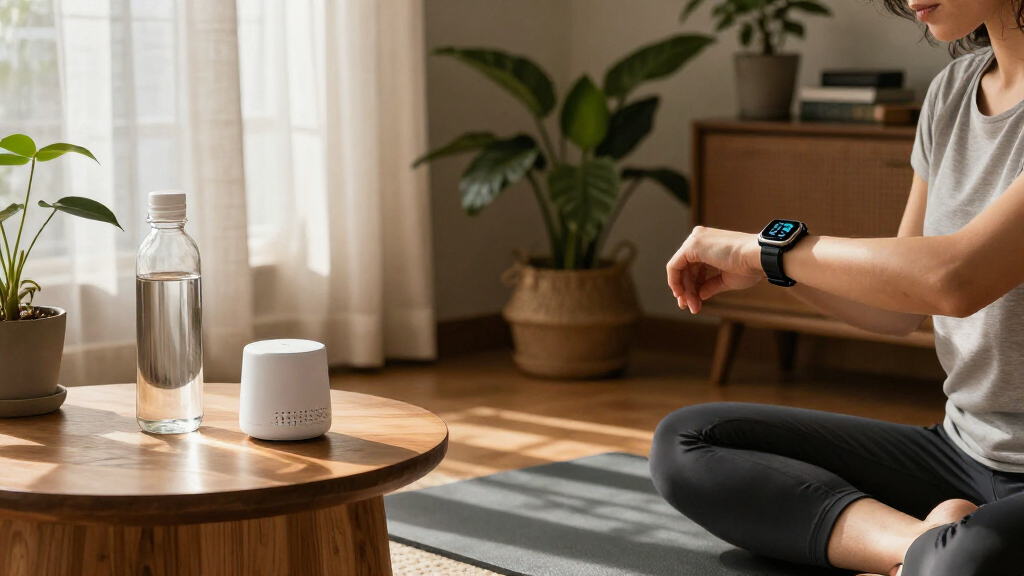


Get wellness gear delivered free with Prime
- Fast, free delivery on millions of items
- Prime Video, Amazon Music and more included
- Member-only deals all year
Smart scales vs. wearable wellness devices
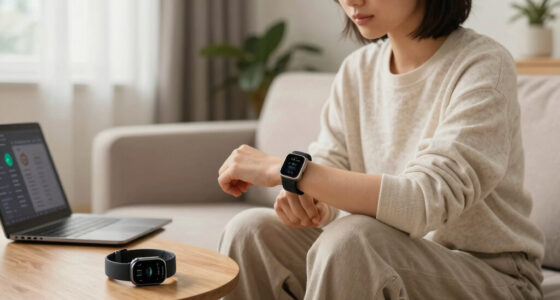
At-home wellness tech can mean a smart scale that records a weigh-in or a wearable such as a fitness band or smartwatch that tracks activity throughout the day. Readers compare them because both promise personal health data, but they answer different questions. A scale is most useful for following weight trends; a wearable is more useful for understanding movement, routines and, depending on the model, sleep or heart-rate patterns. Wearables collect data more often and usually cost more, while scales are simpler and cheaper to maintain. Choose a scale if weight tracking is your main goal and a wearable if you will use ongoing activity feedback. Neither device diagnoses illness, and its readings should not replace professional care.

Etekcity Smart Body Weight Scale with Body Fat and BMI Tracking
- ✔ Biometrics: 13 tracked through the VeSync app
- ✔ Capacity: 400 lb / 180 kg / 28 st
- ✔ Measurement increments: 0.05 lb / 0.02 kg at lower weights; 0.1 lb / 0.05 kg above 10 kg
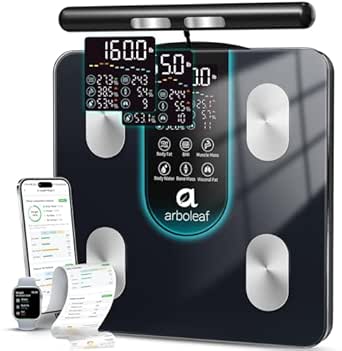
arboleaf Smart Scale with Dual-Frequency 8-Electrode BIA
- ✔ Measurement technology: Dual-frequency BIA with 8 electrodes
- ✔ App metrics: More than 50, with trend charts, segmental views, and reports
- ✔ On-scale readouts: Seven key measurements

REVO Original 4-in-1 Smart Cupping Massager with Heat, Vibration, LED Light, and Dynamic Suction
- ✔ Functions: Dynamic suction cupping, vibration massage, LED light, adjustable heat
- ✔ Intensity levels: 12
- ✔ Power: Cordless, rechargeable
Etekcity Smart Body Weight Scale with Body Fat and BMI Tracking
The Etekcity scale makes the most sense for households that want one accessible hub for recurring weigh-ins. It tracks 13 biometrics through the VeSync app, where users can view progress graphs and personalized health plans. Bluetooth syncing with popular health apps and Apple Watch can also help connect scale readings to an existing routine. Compared with arboleaf, Etekcity emphasizes broad household use and flexible weighing modes over a more extensive set of body-composition views.Those extra modes give it a practical edge beyond personal weigh-ins: baby and light-item weighing supports tracking smaller weights, while zero-current mode is included for a more specialized weigh-in option. The platform supports unlimited users, so it can fit a household with more than the eight profiles listed for arboleaf. A large LED display and tempered-glass platform keep the main interaction straightforward, and the stated increments provide fine readings at lower weights.The tradeoff is that the app experience depends on compatible devices and operating systems, and the product information cautions that some features may vary or be unavailable on older systems. As with the arboleaf model, body-composition numbers should be understood as consumer tracking information, not professional analysis. Buyers seeking detailed segmental reporting may prefer arboleaf; buyers seeking a flexible, shared scale for everyday use are better matched here.
Pros:
- Tracks 13 biometrics with app-based plans and progress graphs.
- Supports unlimited users and syncs with popular health apps and Apple Watch.
- Includes baby, light-item, and zero-current weighing modes.
- Large LED display and tempered-glass platform.
Cons:
- Some app features may vary or be unavailable on older operating systems.
- Not intended for professional athletes or professional body-composition analysis.
Best for: Households seeking a connected everyday scale with broad user support, health-app syncing, and baby or light-item weigh-ins.
Not ideal for: Professional athletes or buyers who need clinical body-composition analysis, or whose older phone operating system cannot support the app features they want.
Bottom line: For a shared home scale that balances useful tracking with flexible weighing modes, Etekcity is the most adaptable choice in this lineup.
“For a shared home scale that balances useful tracking with flexible weighing modes, Etekcity is the most adaptable choice in this lineup.”
arboleaf Smart Scale with Dual-Frequency 8-Electrode BIA
arboleaf is the scale for buyers who want more context than a weight number and are prepared to set up a richer app profile. Its dual-frequency, eight-electrode BIA system supports readings for body fat, muscle mass, body water, bone mass, and visceral fat, while the app offers more than 50 metrics, trend charts, segmental views, and reports. Compared with Etekcity, it leans further into body-composition detail and provides seven key measurements directly on its LED display.That on-scale information can make a routine less dependent on opening the app after each weigh-in. Automatic recognition for up to eight profiles also helps a multi-person household keep readings organized. This is a more focused proposition than Etekcity’s unlimited-user support and special baby or light-item modes: arboleaf centers the experience on personal body-composition tracking, rather than accommodating as many weighing scenarios.Its central limitation matters: the manufacturer describes BIA measurements as estimates for long-term trend tracking, not a substitute for professional body-composition analysis. The listed safety notice says not to use the scale with a pacemaker or during pregnancy. Initial app pairing and profile setup are required, so buyers wanting a simple scale with minimal configuration may find Etekcity more approachable. For those who want richer reporting and understand what the numbers can and cannot tell them, arboleaf is the more data-oriented scale.
Pros:
- Dual-frequency, eight-electrode BIA supports multiple body-composition estimates.
- Displays seven key measurements on the scale itself.
- App provides 50+ metrics, trend charts, segmental views, and reports.
- Supports up to eight profiles with automatic recognition.
Cons:
- BIA measurements are estimates and are not professional body-composition analysis.
- The listed safety notice says not to use it with a pacemaker or during pregnancy.
- App pairing and profile setup are required before first use.
Best for: Buyers who want multiple body-composition estimates on the scale and expanded app reports for tracking trends over time.
Not ideal for: People with a pacemaker or who are pregnant, buyers seeking professional analysis, or anyone who wants to avoid app pairing and profile setup.
Bottom line: arboleaf is the more detailed scale for trend-focused buyers, provided they treat its BIA readings as estimates and can use the device safely.
“arboleaf is the more detailed scale for trend-focused buyers, provided they treat its BIA readings as estimates and can use the device safely.”
REVO Original 4-in-1 Smart Cupping Massager with Heat, Vibration, LED Light, and Dynamic Suction
REVO stands apart from the two scales because it supports a physical massage routine rather than measurement and tracking. The cordless device combines dynamic suction, vibration, LED light, and adjustable heat, and its functions can be used separately or together. With 12 intensity levels, buyers can adjust the experience to their preference. That makes it a more tactile, session-based wellness gadget than either scale, which is designed to gather and organize data over time.Its portability may suit people who want a rechargeable device they can move around the home. The ability to combine functions also offers more ways to shape a session than a single-function massager. Compared with Etekcity and arboleaf, however, REVO does not provide a connected tracking system or household profiles. It serves a narrower purpose, so it will make sense only if cupping and massage are already appealing parts of the buyer’s at-home routine.The key practical drawback is that one pack includes one device. Anyone who wants to use two devices at once for dual placement would need a second unit. The supplied details do not list a specific battery runtime or dimensions, making it harder to judge charging cadence and storage before purchase. Buyers seeking broad wellness tracking should choose one of the scales; those who want an adjustable massage tool and are comfortable with a single-device setup may find REVO the distinct choice in this set.
Pros:
- Combines dynamic suction, vibration, LED light, and adjustable heat.
- Offers 12 intensity levels for a customizable session.
- Cordless and rechargeable for use around the home.
- Functions can be used independently or together.
Cons:
- The pack includes one device; dual placement requires a second unit.
- Does not provide the app-based biometric tracking offered by the scales.
- Specific battery runtime and device dimensions are not listed in the supplied specifications.
Best for: People who want a cordless cupping and massage device with adjustable intensity and heat for an at-home session routine.
Not ideal for: Buyers who want biometric tracking, prefer a scale-based wellness routine, or need two-device placement in one package.
Bottom line: For buyers who want hands-on massage rather than data tracking, REVO is the lineup’s most distinct at-home wellness tool, with single-device placement as its main constraint.
“For buyers who want hands-on massage rather than data tracking, REVO is the lineup’s most distinct at-home wellness tool, with single-device placement as its main constraint.”
As an Amazon Associate we earn from qualifying purchases.
At a Glance
| Criteria | Smart scales | Wearable wellness devices | Winner |
|---|---|---|---|
| Primary use | Weight and weight trends | Activity and selected daily health signals | Depends |
| Tracking frequency | At weigh-ins; frequency is user-controlled | Repeatedly throughout wear, depending on device and settings | B |
| Setup and daily effort | Low effort once connected; requires standing on the scale | Requires wearing and charging; setup often includes an app | A |
| Types of data | Weight and, on some models, estimated body composition | May include steps, movement, heart rate and sleep estimates | B |
| Purchase and upkeep cost | Usually lower; batteries or occasional charging | Often higher; some features or analysis may require a subscription | A |
| Privacy and data dependence | May require an app and account for syncing; use varies by model | Often relies on app accounts, cloud services and device permissions | Depends |
| Best fit | People who want an at-home record of weight | People who want ongoing activity feedback | Depends |
Key Differences
The first difference is what each device can help you monitor. A smart scale provides a result when you weigh yourself. Over time, those measurements can show a weight trend, though readings can vary with timing, hydration, clothing and other factors. Many scales also display body-fat or other composition estimates, but those figures are not direct clinical measurements. A wearable adds a running record of activity and may estimate sleep or track heart rate. That broader view can be helpful for noticing patterns, but the quantity of data does not make every reading precise or medically meaningful.
The second difference is the routine each one asks of you. A scale takes little attention between weigh-ins, while a wearable only gathers useful data when you wear it, charge it and keep it connected as required. The wearable wins for continuous tracking; the scale wins for simplicity. In cost, scales usually have the advantage, especially if you want a basic record. Wearables can justify a higher price when activity prompts, sleep estimates or other supported features help you follow a routine. Those features are model-specific, and a subscription can increase the ongoing cost.
Either device may send information to an app or online account, so check its data settings and policies before buying. Start with the behavior you actually want to support: periodic weight tracking or regular movement and activity awareness. If repeated weighing is stressful, a scale may be a poor fit. If charging and wearing a device feels like a chore, a wearable’s extra measurements may go unused. A simple paper record, phone-based step count or advice from a health professional may suit some needs better than buying either gadget.
Detailed Comparison
Primary use (major difference)
Depends on your goal. A smart scale wins for a straightforward record of weight over time; a wearable wins for activity and related daily signals. The gap is major because the devices answer different questions. A scale cannot tell you how active you were between weigh-ins, and most wearables are not a substitute for a dependable weight record. Pick the measurement that supports a useful habit, rather than treating one device as a complete picture of wellness.
Tracking frequency (Wearable wellness devices wins — major)
Wearables win by a major margin. They can collect data repeatedly while being worn, though frequency and available signals vary by model and settings. A scale records only when you step on it. Ongoing data may help reveal patterns in movement or sleep estimates, but it can also invite overchecking or false confidence in noisy readings. Choose a wearable when regular feedback will change your actions; choose a scale if occasional measurements are enough.
Setup and daily effort (Smart scales wins — moderate)
Smart scales win, moderately. After setup, a scale requires a brief weigh-in and little upkeep. A wearable must be worn consistently and charged, and some features depend on an app connection. That difference matters for people who dislike notifications, charging schedules or devices on their body. Wearables suit users who already wear a watch or enjoy activity prompts; the scale is easier to keep using when convenience is the priority.
Types of data (Wearable wellness devices wins — moderate)
Wearables win, moderately, in breadth. Depending on the model, they can combine movement data with heart-rate measurements or sleep estimates. Smart scales focus on weight and may add body-composition estimates that also carry limitations. More measurements are useful only if they are relevant and reasonably interpreted. For a user who wants activity context, the wearable gives more to work with. For someone who only wants a weight trend, that breadth offers little advantage.
Purchase and upkeep cost (Smart scales wins — moderate)
Smart scales usually win, moderately. They tend to cost less than wearables and do not usually need daily charging. Some wearable makers charge for advanced insights, so compare the full cost over the period you expect to use the device. A higher price is worthwhile only when you will use its extra tracking features regularly. If basic weight records meet your need, a scale is better value; if activity feedback supports a routine you value, a wearable can earn its premium.
Privacy and data dependence (moderate difference)
Neither has a universal advantage; the gap is moderate and model-specific. Both devices may use a companion app, but wearables often collect more frequent and varied data. Before purchase, check what the app stores, whether an account or cloud sync is required, what data can be deleted and whether the device works without a paid plan. A privacy-conscious buyer may prefer the device that offers local use and clear controls, regardless of category. Avoid assuming that a brand’s privacy claims mean every feature works offline.
Best fit for maintaining a routine (moderate difference)
Depends, with a moderate practical difference. A scale works well for someone comfortable with planned weigh-ins and interested in a slow-moving trend. A wearable works better for someone who responds to movement reminders or wants to see how daily habits vary. A device can become counterproductive if its readings increase anxiety or encourage unhealthy behavior. If tracking weight is emotionally difficult, skip the scale; if continuous monitoring feels intrusive, skip the wearable.
Smart scales: Pros and Cons
Pros:
- Usually less expensive than a wearable
- Quick, low-maintenance way to keep a weight record
- Useful for viewing weight trends over time
Cons:
- Provides little information about activity between weigh-ins
- Weight readings fluctuate and need consistent measurement conditions
- Body-composition estimates on consumer scales can be imprecise
Wearable wellness devices: Pros and Cons
Pros:
- Can track activity throughout the day while worn
- Some models offer sleep estimates and heart-rate measurements
- Prompts and trends may help users build movement habits
Cons:
- Usually costs more and may require a subscription for some features
- Needs regular wearing, charging and app setup
- Frequent readings can be noisy, distracting or mistaken for medical guidance
Who Should Choose What
Choose Smart scales if:
- You mainly want to monitor weight trends at home.
- You prefer a quick measurement without wearing a device all day.
- You want a lower-cost option with little charging or maintenance.
Choose Wearable wellness devices if:
- You want ongoing activity feedback and will wear and charge the device consistently.
- Movement prompts or tracking trends help you stick with a routine.
- The specific sleep or heart-rate features on the model you are considering serve a real need.
Skip both if: You need diagnosis or treatment advice, repeated tracking causes distress, or you would not use the measurements to guide a healthy routine.
Value for Money
A smart scale is generally the better value for someone who wants a weight record: it costs less and does that job directly. Paying more for a wearable makes sense when its ongoing activity feedback or supported features will be used often enough to support a habit. Compare the total cost, including any subscription, and check that the features you want are available on the exact model. Do not pay a premium for a long list of measurements you are unlikely to act on. Neither gadget’s price guarantees medically accurate results.
Final Verdict
For most people choosing between these categories, the deciding factor is whether they need a periodic weight trend or ongoing activity feedback. Choose a smart scale for affordable, low-effort weight tracking. Choose a wearable if regular movement data, prompts or model-specific health signals will help you follow a routine, and accept the higher cost and charging burden. Wearables are the more capable trackers, but they are not automatically the better buy. If neither kind of tracking would improve your habits—or if tracking would cause distress—skip both and seek guidance suited to your goals.
Frequently Asked Questions
Can a wearable replace a smart scale?
Usually not if you specifically want consistent weight measurements. Some wearables may estimate related metrics, but a scale is designed for weigh-ins. If weight tracking is not your goal, you may not need a scale at all.
Are smart-scale body-fat readings accurate?
They are estimates and can vary with hydration and measurement conditions. Treat them cautiously and avoid relying on a single reading for health decisions. Ask a qualified professional about clinical assessment.
Is a more expensive wearable worth it?
Only if the extra features match a goal you will act on and the total cost, including any subscription, feels reasonable. For basic weight tracking, a smart scale is usually better value.
Which option is better for beginners?
Choose the simplest device that supports the habit you want. A scale is easier if you want occasional weight records; a wearable can help if activity reminders motivate you. Neither is required to start a wellness routine.