
TL;DR
Fit&Well published a writer’s four-exercise arms workout designed for home use and shorter training sessions. It combines a single-arm press, a bent-over row, a hammer curl and a knee-supported triceps push-up, with three rounds prescribed; the writer’s account is not evidence that the routine produces results for everyone.
Fit&Well has published a four-move dumbbell arms routine from a writer who says they now train at home after giving up longer gym sessions. The workout pairs upper-body pushing and pulling exercises with a curl and a triceps push-up, offering a structured option for people who want to fit strength training into a shorter session; the source reports the writer’s experience, not a tested result for all users.

Get wellness gear delivered free with Prime
- Fast, free delivery on millions of items
- Prime Video, Amazon Music and more included
- Member-only deals all year
The writer says their previous CrossFit training could involve sessions of up to two hours, five times a week. They now do three 30-minute workouts weekly, with one session combining arm-focused movements rather than splitting pushing and pulling into separate workouts. Their stated aim is to maintain mobility and strength.
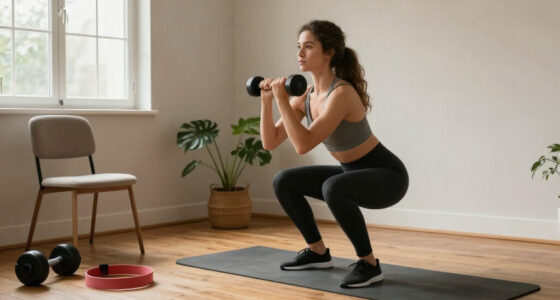
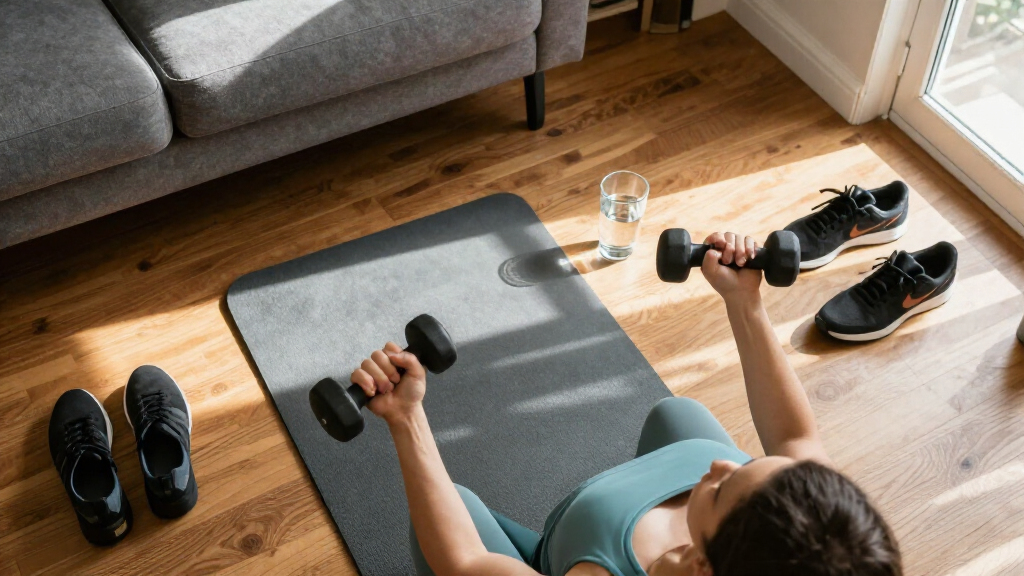
The sequence is a half-kneeling single-arm press, a single-arm bent-over row, a single-arm hammer curl and a triceps push-up performed from the knees. The writer prescribes six to eight repetitions per side for each dumbbell exercise, as many push-ups as possible, then two minutes of rest. Complete three rounds in total.
The source recommends choosing a weight that makes the final repetitions challenging while keeping the movement controlled. It says to increase the weight slightly once eight repetitions are easy, and reduce it if completing eight is difficult. The routine uses one dumbbell at a time for its weighted movements; the article names equipment sold in the United Kingdom and the United States, but the workout does not depend on those particular brands.
A Shorter Format for Strength Training
The report’s practical point is its time-saving structure: opposing movements are placed in one circuit, which the writer uses in place of separate push and pull sessions. The format may help readers organize a home workout when access to a gym or time for a longer session is limited. The article does not establish that this routine is more effective than other training plans or that it will produce a particular physical result.
The exercise choices also show that a workout described as an arms routine can involve more than the arms alone. The press and row recruit the shoulders and upper back, while the push-up challenges the upper body and core, according to the writer’s explanation. That broader involvement is the writer’s rationale for combining these moves, rather than isolating the biceps and triceps throughout.
The writer says the half-kneeling press suits them while recovering from a lower-back disc injury, describing it as a way to reduce momentum from the legs and limit excessive back arching. That is a personal adaptation, not medical guidance or a guarantee that the movement is appropriate for other people with back problems.
Products Worth Considering

BowFlex Results Series SelectTech Adjustable Dumbbells (Pair)

Bowflex SelectTech 840 Adjustable Kettlebell

Garmin Venu 4 GPS Smartwatch, 45 mm, Slate with Black Silicone Band
As an affiliate, we earn on qualifying purchases.
How the Writer Built the Circuit
The source is a Fit&Well exercise report based on the writer’s own training changes. It describes a move from a high-volume schedule associated with CrossFit competition to three shorter weekly sessions. The report gives no publication date in the supplied material, so its timing cannot be stated more precisely here.
Rather than assigning separate days to pushing and pulling, the writer pairs a press with a row, followed by a biceps exercise and a triceps exercise. The press is done from a half-kneeling position: one knee stays on the floor while the opposite foot is planted, and the dumbbell is pressed overhead with the opposite arm. For the row, the writer hinges forward and uses a sturdy support for the free hand while drawing the weight toward the ribs.
The hammer curl keeps the palm facing inward as the dumbbell is lifted, while the final movement is a narrow-hand-position push-up. The source’s instructions say to begin on hands and knees, then step the knees back into a straight-body position. Readers should use a position and range of motion they can control; the article does not report independent testing, participant data or a comparison with other routines.
““Now I do three 30-minute sessions a week to meet my goal of maintaining mobility and strength.””
— Fit&Well writer
What the Workout Report Does Not Show
The supplied report does not provide clinical or comparative evidence about the routine’s effectiveness, nor does it quantify changes in strength, mobility or muscle size. “Still get results” appears in the headline framing, but the source offers the writer’s account rather than measured outcomes or evidence that readers will get similar results.
It is also unclear how long the writer has followed this exact routine, how they determine whether the program is meeting their goals, or whether they do additional exercises in their other weekly sessions. The report does not specify a fixed dumbbell weight, a pace for each repetition, or a progression plan beyond increasing the load when eight repetitions feel easy.
The knee-supported push-up instructions include stepping the knees back until the body forms a line from head to heels, which may be difficult for some readers. The source does not give alternatives for people who cannot perform that version. Anyone with an injury or relevant health condition should seek guidance from a qualified health professional before attempting exercises that may aggravate symptoms.
How Readers Can Apply the Plan
The article gives readers a repeatable structure rather than a promised outcome: perform the four movements in order, use the stated repetition ranges, rest for two minutes, and complete three rounds. A reader considering the circuit can start with a manageable load and controlled repetitions, adjusting the weight according to the source’s guidance. Stop if an exercise causes pain or cannot be performed with control.
No follow-up results or further milestones are included in the supplied material. It is not clear whether Fit&Well or the writer plans to publish progress data, revisions to the workout or additional guidance. Any assessment of the routine’s effect for a particular person would depend on their circumstances and training over time.
Key Questions
What exercises are in the home arms workout?
The circuit includes a half-kneeling single-arm press, a single-arm bent-over row, a single-arm hammer curl and a triceps push-up performed from the knees.
How many repetitions and rounds does the source recommend?
The Fit&Well report recommends six to eight repetitions per side for each dumbbell exercise and as many triceps push-ups as possible. Rest for two minutes after the sequence and complete three rounds.
Does the report prove the workout will produce results?
No. It presents one writer’s experience and routine, but the supplied material includes no measured outcomes or comparative evidence showing that the workout produces specific results for everyone.
What should someone with a back injury know?
The writer says they use the half-kneeling press while recovering from a lower-back disc injury, but that is a personal account, not medical advice. People with a back injury or other health concerns should ask a qualified professional whether the movements are suitable for them.
Source: fitandwell.com