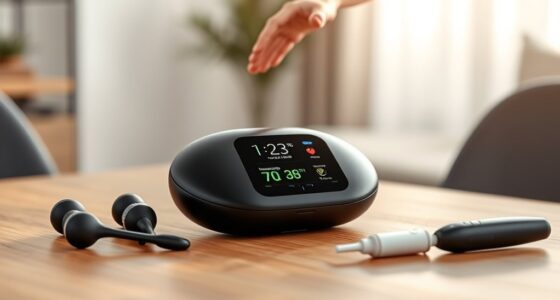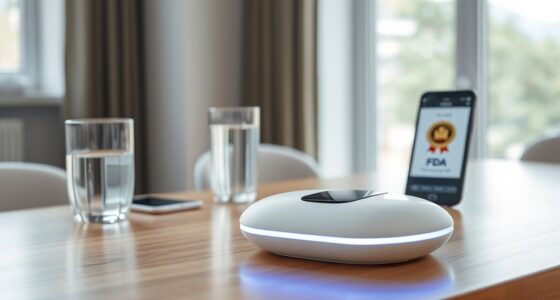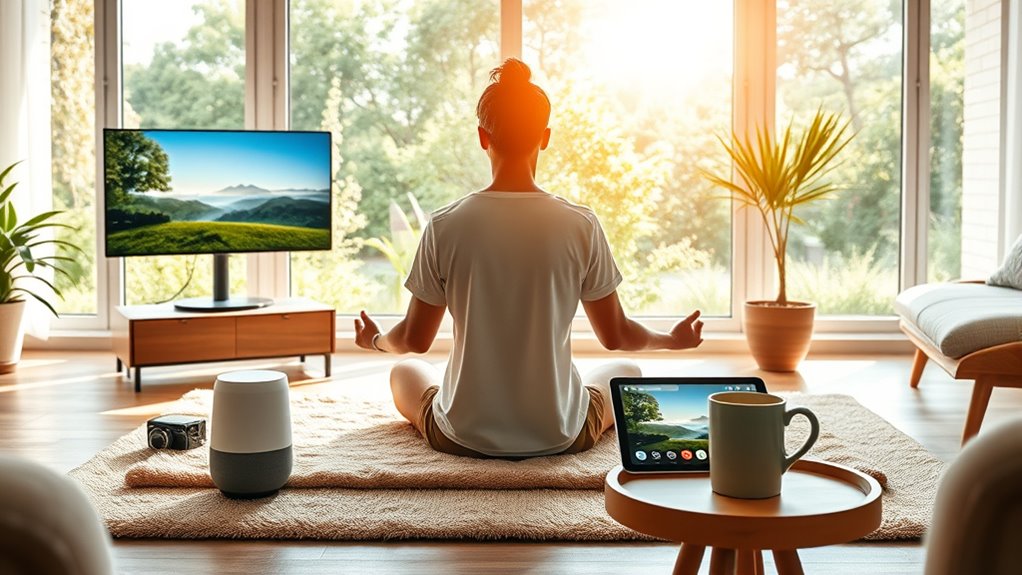
After the pandemic, at-home wellness tech became essential to managing your health and mental well-being. Smart devices like fitness trackers and smartwatches help you monitor your progress, while digital mental health apps offer convenient support for stress and anxiety. At-home workout platforms make staying active easier and more engaging. These innovations remove barriers, giving you flexibility, privacy, and control over your wellness routines. If you keep exploring, you’ll discover how these tools can truly transform your health journey.
Key Takeaways
- The pandemic accelerated adoption of wearable devices and digital mental health apps, making remote wellness management standard.
- At-home fitness tech, like virtual trainers and interactive platforms, became essential for maintaining exercise routines.
- Digital health tools offer personalized, convenient solutions, reducing barriers to consistent mental and physical self-care.
- Remote access to health professionals and virtual support networks increased, reinforcing ongoing wellness practices.
- The integration of at-home wellness technology is now a permanent, normalized part of post-pandemic lifestyle routines.
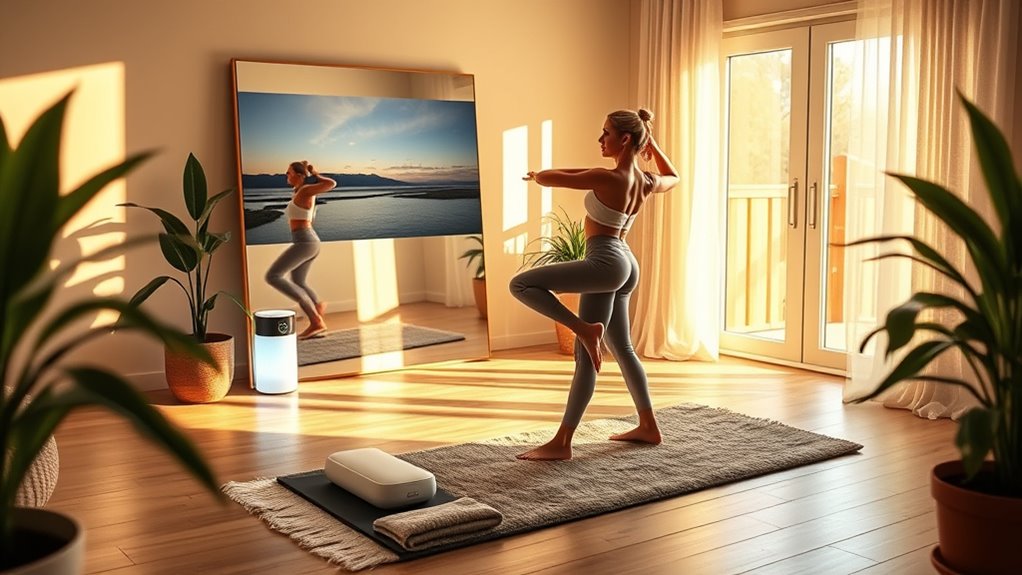
After the upheaval of the pandemic, prioritizing your wellness has become more important than ever. With so many routines disrupted and social interactions limited, you’ve had to find new ways to care for your mental health and stay physically active. At-home tech has stepped into this space, transforming how you approach wellness daily. Instead of relying on crowded gyms or in-person therapy sessions, you now have a vast array of digital tools that make maintaining your mental health and fitness routines more accessible and personalized.
You might have noticed how wearable devices, like smartwatches and fitness trackers, have become essential for monitoring your activity levels, heart rate, sleep patterns, and even stress levels. These gadgets give you real-time feedback, helping you understand your body better and make informed decisions about your health. By integrating these devices into your daily schedule, you can set achievable fitness goals, track progress, and stay motivated—even when you’re working out at home. This seamless integration of technology means you don’t need to worry about missed gym sessions or inconsistent routines; your device becomes your personal trainer and health tracker rolled into one.
Wearable devices track your activity, sleep, and stress in real time, making health management simple and personalized.
Mental health apps have also gained prominence, offering tools for meditation, mindfulness, and cognitive behavioral therapy. These apps provide convenient, private ways to manage stress and anxiety, especially during uncertain times. You can carve out a few minutes each day to breathe deeply, practice gratitude, or journal your thoughts—all within your comfort zone. The accessibility of these digital resources helps you establish consistent mental health practices, reinforcing resilience and emotional well-being. They also enable you to connect with mental health professionals remotely if needed, removing barriers like travel or scheduling conflicts.
When it comes to fitness routines, at-home tech has revolutionized how you work out. Interactive workout platforms, live-streamed classes, and virtual personal trainers make exercise engaging and adaptable to your space and schedule. You can follow high-intensity interval training, yoga, or strength training from your living room, guided by expert instructors. Many platforms even offer personalized workout plans based on your fitness level and goals, reducing the guesswork and helping you stay committed. The convenience of at-home tech means you’re more likely to stick with your routines, and you can modify workouts in real-time if your energy levels or schedule change.
In this new normal, technology empowers you to take control of your wellness journey. It removes many obstacles that once made maintaining mental health and fitness routines challenging, offering flexibility, privacy, and motivation. As you continue to adapt, embracing these tools can help you cultivate a balanced, resilient lifestyle, emphasizing self-care that fits into your everyday life. Additionally, wearable devices can now incorporate advanced features like biofeedback and real-time stress monitoring to further personalize your health management.
Frequently Asked Questions
How Do At-Home Wellness Devices Compare to Professional Health Services?
At-home wellness devices often provide good wearable accuracy and easy device integration, making them convenient for daily health tracking. However, they can’t fully replace professional health services, which offer personalized assessments, expert guidance, and advanced diagnostics. You should see healthcare professionals for serious concerns, but at-home tech is great for monitoring minor issues, setting health goals, and staying engaged in your wellness journey. It’s all about complementing, not replacing, expert care.
What Are the Privacy Concerns With At-Home Health Monitoring Tech?
Did you know that 81% of consumers worry about data security when using health tech? You should be concerned about user privacy, as at-home health monitoring devices collect sensitive information. These devices pose privacy risks if data security isn’t strong, potentially exposing your personal health data to breaches. Always make sure your devices have robust security measures, and understand how your data is stored and shared to protect your privacy.
How Affordable Is At-Home Wellness Technology for Average Consumers?
At-home wellness technology is becoming more affordable for you. A cost analysis shows prices have decreased, making devices like fitness trackers and health monitors more accessible. Affordability factors include device features, brand, and subscription costs. You can find options across a range of budgets, especially if you compare models and look for discounts. Overall, these tools are now within reach for many average consumers seeking to improve their health at home.
Can At-Home Wellness Gadgets Effectively Replace In-Person Therapy?
At-home wellness gadgets are like a lifeboat, but they can’t fully replace in-person therapy. Virtual therapy offers real-time connection, while wearable diagnostics provide valuable data, yet they lack the human touch and nuanced understanding only a trained therapist can offer. These tools are great supplements, enhancing your mental health journey, but for deep issues, face-to-face sessions remain irreplaceable.
What Are Future Innovations Expected in At-Home Health Technology?
Future innovations in at-home health technology will likely include more advanced wearable sensors and AI diagnostics. You can expect sensors that monitor your essential signs more accurately and seamlessly, providing real-time data. AI diagnostics will analyze this data to detect health issues early, offering personalized insights and recommendations. These advancements will make managing your health easier, more proactive, and tailored to your unique needs, transforming how you approach wellness daily.
Conclusion
As you embrace at-home wellness tech, remember that the same devices designed for relaxation can also keep you connected and productive. In a world where screens often isolate, they’ve become tools for community and self-care. The line between work and leisure blurs, yet this blend offers newfound balance. So, while technology keeps you grounded in your personal space, it also opens doors to a healthier, more connected life—proof that the future of wellness is in your hands.